
 cat
cat Cody
Cody dog
dog Danny
Danny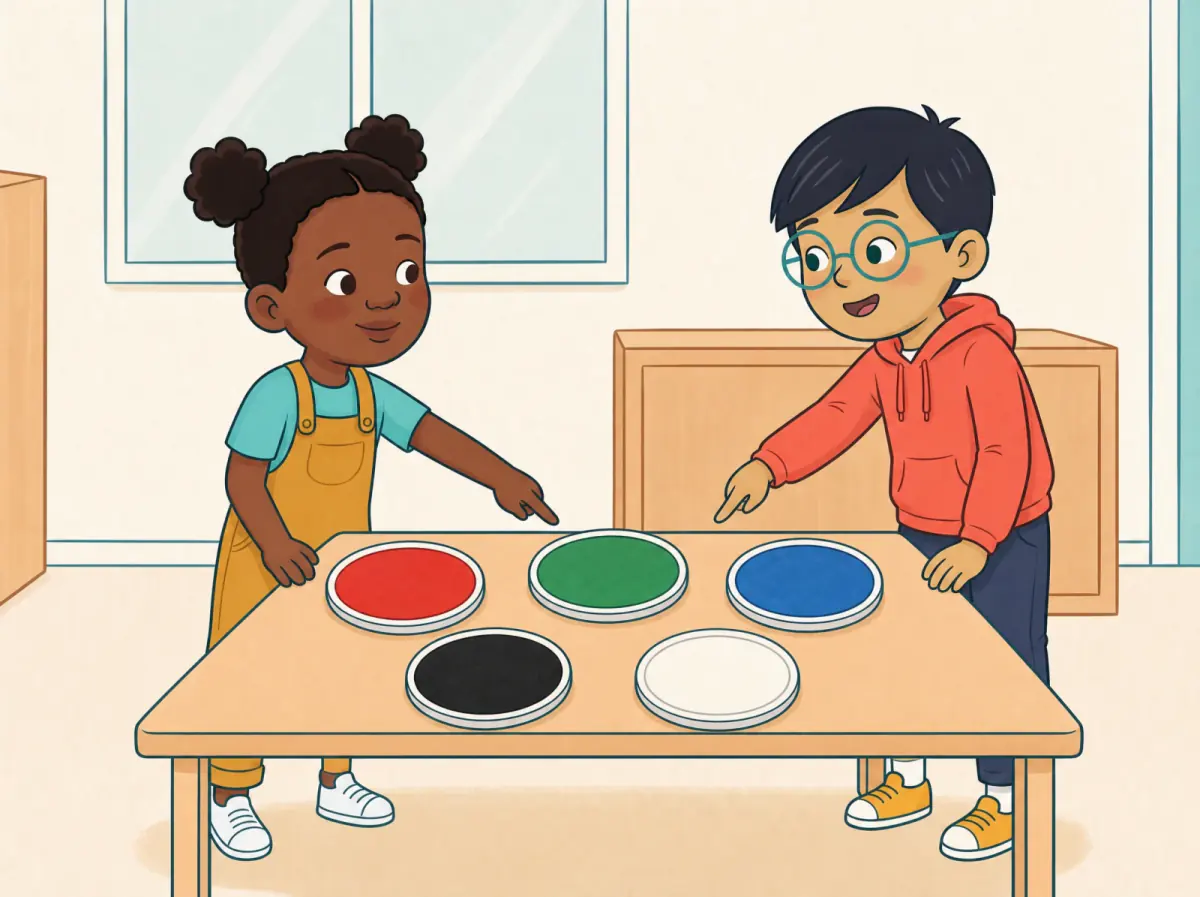
Five colours to start with
Five colours are plenty for a start. They look very different, and all five are in any kitchen or park. Play the colour cards above one at a time and point to something of that colour as you listen.
Before your child says anything, play a listening game: hold up two things, say one colour, and let your child point. Understanding comes before speaking, so a correct point is already a good answer.
- red: a tomato, a toy car
- green: a leaf, grass
- blue: the sky, jeans
- black: a cat, shoes
- white: milk, paper
The colour goes before the thing
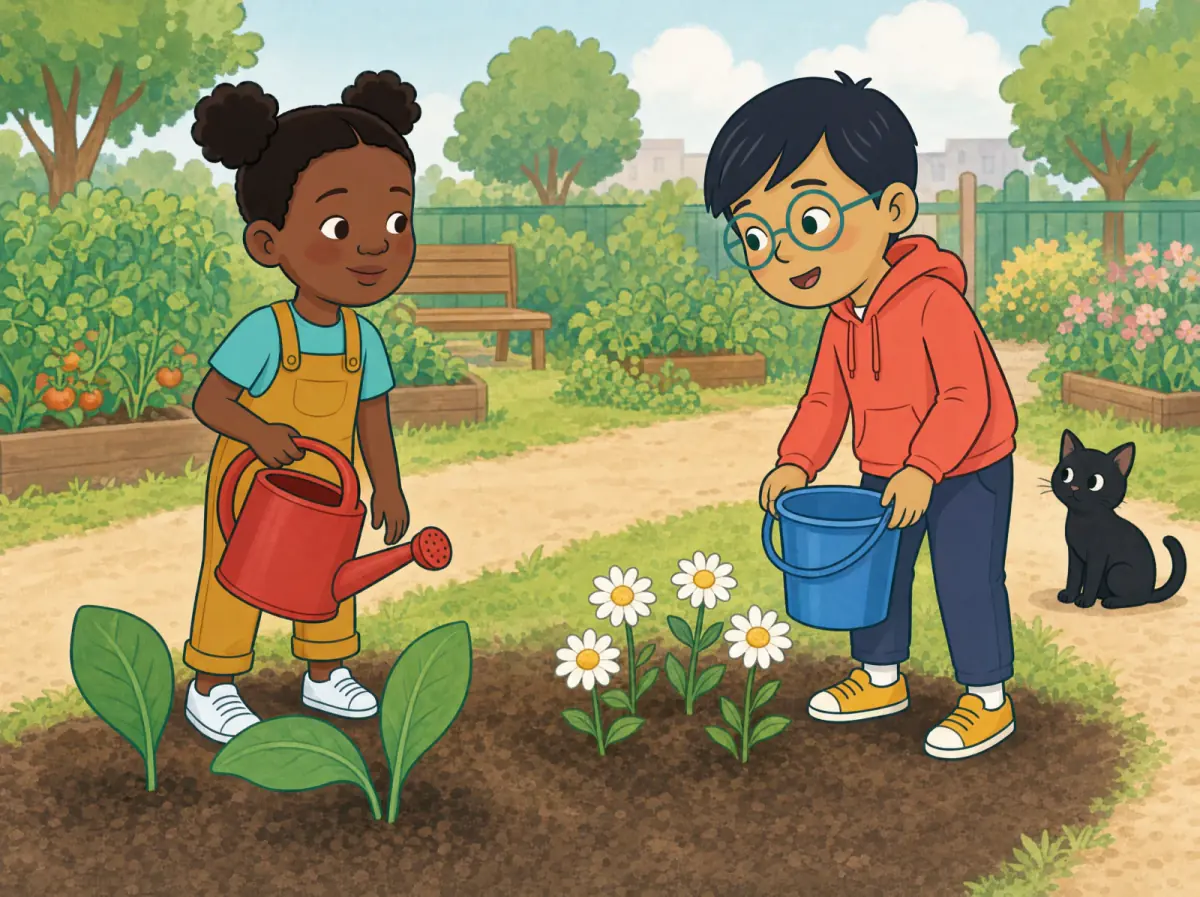
In English the colour comes before the thing: “a red watering can”, “a blue bucket”. The colour word never changes: “a red car”, “two red cars”. Listen to the two lines below, then do the same with things around you: “Look! A white cup.” “And a black shoe!”
Nia Look! A red watering can.
Leo And a blue bucket!
The question and the answer
The question is “What colour is it?” The answer is “It’s” plus the colour: “It’s green.” “It’s” is short for “it is”. There is no “a” before a colour on its own: “It’s green.”, not “It’s a green.” You need “a” only when a thing follows: “It’s a green leaf.”
You can swap “it” for a thing: “What colour is the leaf?” The answer still starts with “It’s”. In the exchange below, one child asks, the other answers, and then they swap. The swap matters: your child should ask, not only answer.
Nia What colour is the leaf?
Leo It's green!
Leo What colour is the cat?
Nia It's black.
Three short games at home
Keep each game to a few minutes and stop while your child still wants more.
- Colour hunt: say “Find something red!” and race to touch something red. Then swap: your child calls a colour and you hunt.
- Silly answers: hold up a green leaf, ask “What colour is it?” and answer “It’s blue!” Children usually enjoy correcting you: “No! It’s green!” Then let your child ask you.
- Draw and say: each of you draws and colours a leaf, a ball or a cat, then asks about the other’s drawing: “What colour is it?” “It’s black.”
Which one is different? Patterns and counting
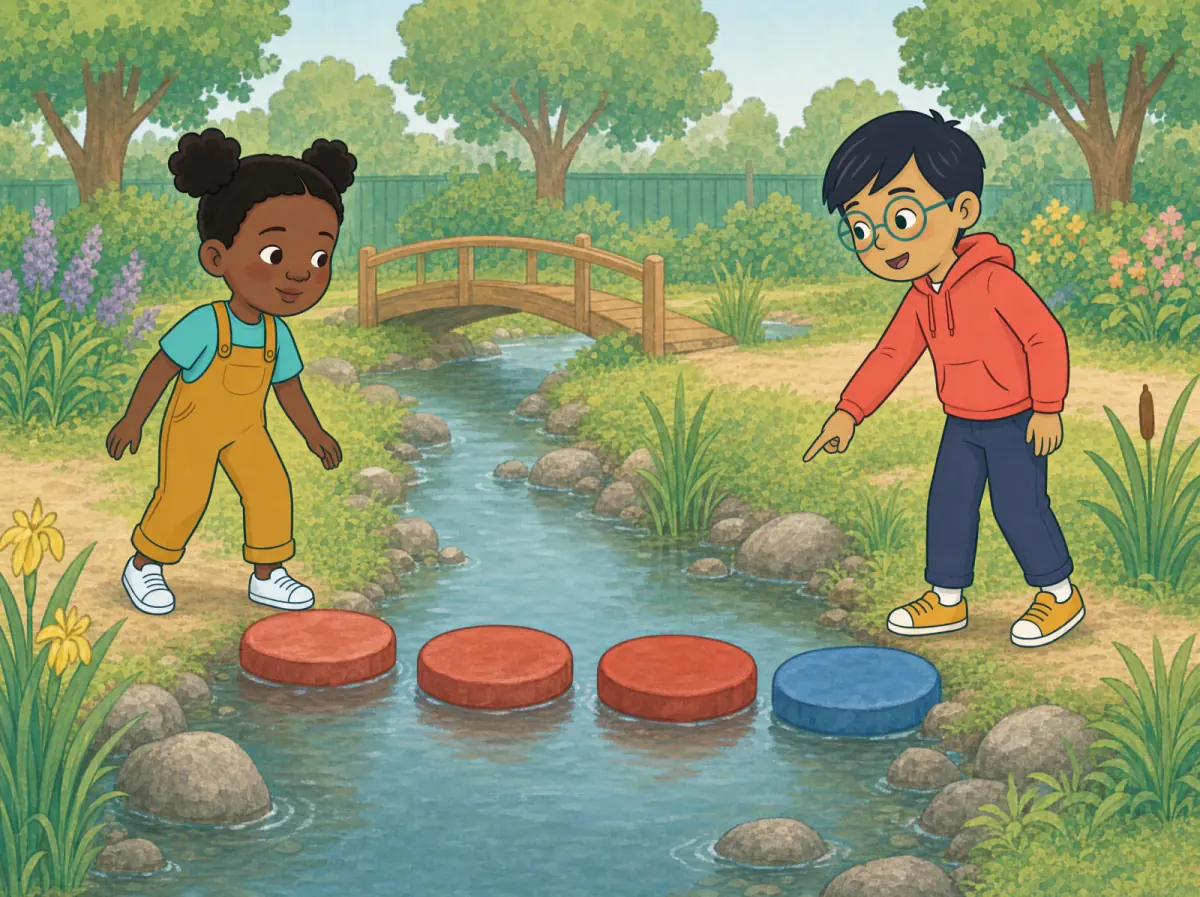
Colours also lead into patterns and counting. Put four things in a row: three red bricks and one blue one. Point to each one, starting from the left, as you say “Red, red, red … blue!”, then help your child say “Blue is different.”
Now count together, touching each thing once: “One, two, three red. And one blue.” Then all of them: “Four!” Moving your finger from left to right is also how English is read, a useful habit before books. The “Follow the pictures” recording above uses the same pattern.
- Change the colours: three white socks, one black.
- Move the different one to a new place in the row.
- Let your child build a row for you to check.
If your child gets stuck
If your child says “It’s a green.” or “It green.”, don’t explain the rule; repeat the answer correctly with a smile, “Yes, it’s green!”, and keep playing. Hearing the right form often works better than correcting.
If your child repeats the question, answer it yourself, then ask again and whisper “It’s …”: your child only adds the colour. A one-word answer, “Green!”, is fine too; in a quick game it is natural English.
Some mix-ups come from the home language. In many languages the colour comes after the thing, so children may say “a bucket blue”. Point to the colour first and then the thing as you say “a blue bucket”.
What comes next
When your child asks and answers about these five colours without help, add one new colour at a time: yellow, pink, orange, purple and brown. Use the question on walks: “What colour is the bus?” Then try spotting differences between two pictures, and toy patterns where your child guesses what comes next; the links below show how.