Skip to content
Flalingo

English practice

How to teach your child toy words and “Is it a …?” in English with guessing games (Pre-A1, ages 4–7)

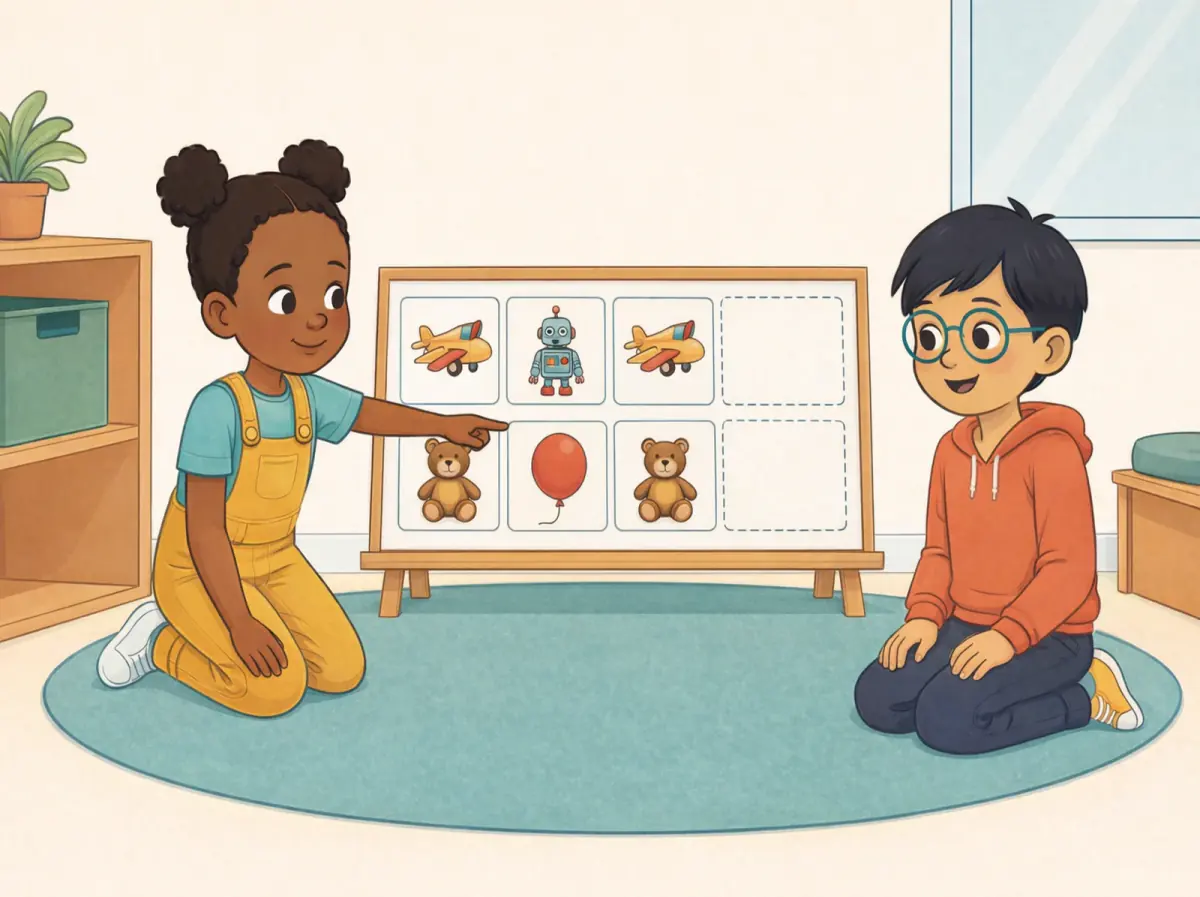
A board shows two picture patterns. Top row: plane, robot, plane, then an empty card. Bottom row: teddy, balloon, teddy, then an empty card. A child points to the board while another child smiles at it.

Five toy words, “What comes next?” picture patterns and the yes/no question “Is it a robot?” with “Yes, it is.” or “No, it isn’t.”, with audio and home games for children aged 4–7 (Pre-A1).

A guessing game is a simple way to teach a young child their first English yes/no question: one of you hides a toy, the other asks “Is it a robot?”, and the answer is “Yes, it is!” or “No, it isn’t!” Start with five toy words (plane, puppet, robot, balloon, teddy) and warm up with picture patterns: “Plane, robot, plane… What comes next?” This is the very first level (Pre-A1), for children of about 4–7 who know a few English words. Three or four minutes a day is enough, and you don’t need to speak English yourself: every line has audio here.

Who this is for

  • Children who know a few English words: toys are a topic they already care about, and a guessing game gives them a real reason to ask a question.
  • Parents who aren’t confident in English: every toy word, the question and the answer have audio on this page, and everything you need to say is written out here.
  • Children starting English at nursery or school: toys are a common early topic in beginner classes, so a short game at home helps them join in.
  • Too early: if your child doesn’t name any objects in English yet, start with school things and “What’s this?” in the spot-the-difference article linked below.
  • Too easy: if your child already asks and answers “Is it a …?” without help, move on to family words and “Who’s this?”, also linked below.

Open the sample pages

Open the sample pages

Word cards

planeplane
puppetpuppet
robotrobot
balloonballoon
teddyteddy

Conversation

Leo Plane, robot, plane… What comes next?

Nia Robot!

Leo Teddy, balloon, teddy… What comes next?

Nia Balloon!

Nia Guess my toy!

Leo Is it a robot?

Nia No, it isn't!

Leo Is it a teddy?

Nia Yes, it is!

Language pattern

Is it a plane?

Yes, it is!

  • Is it a robot? No, it isn't.
  • Is it a teddy? Yes, it is.

More practice

Nia and Leo talk

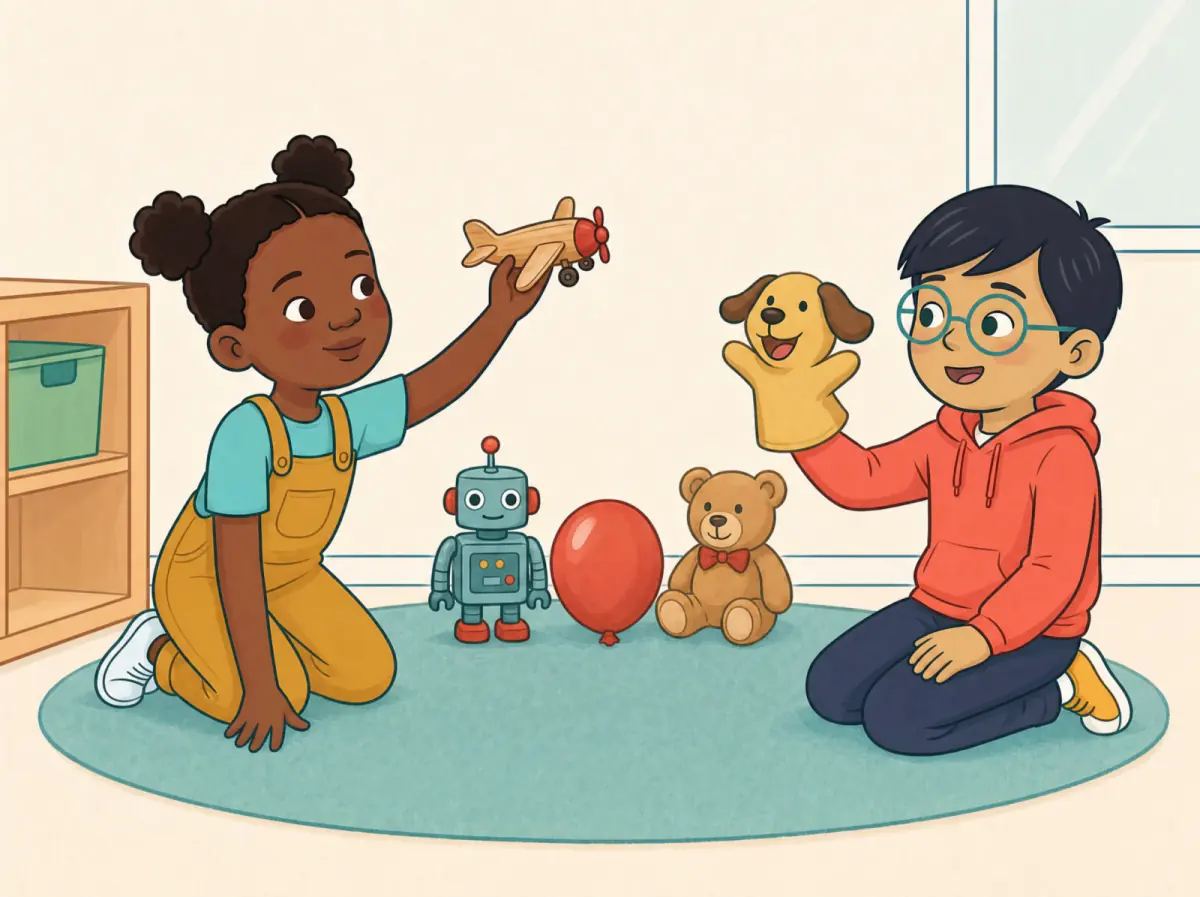
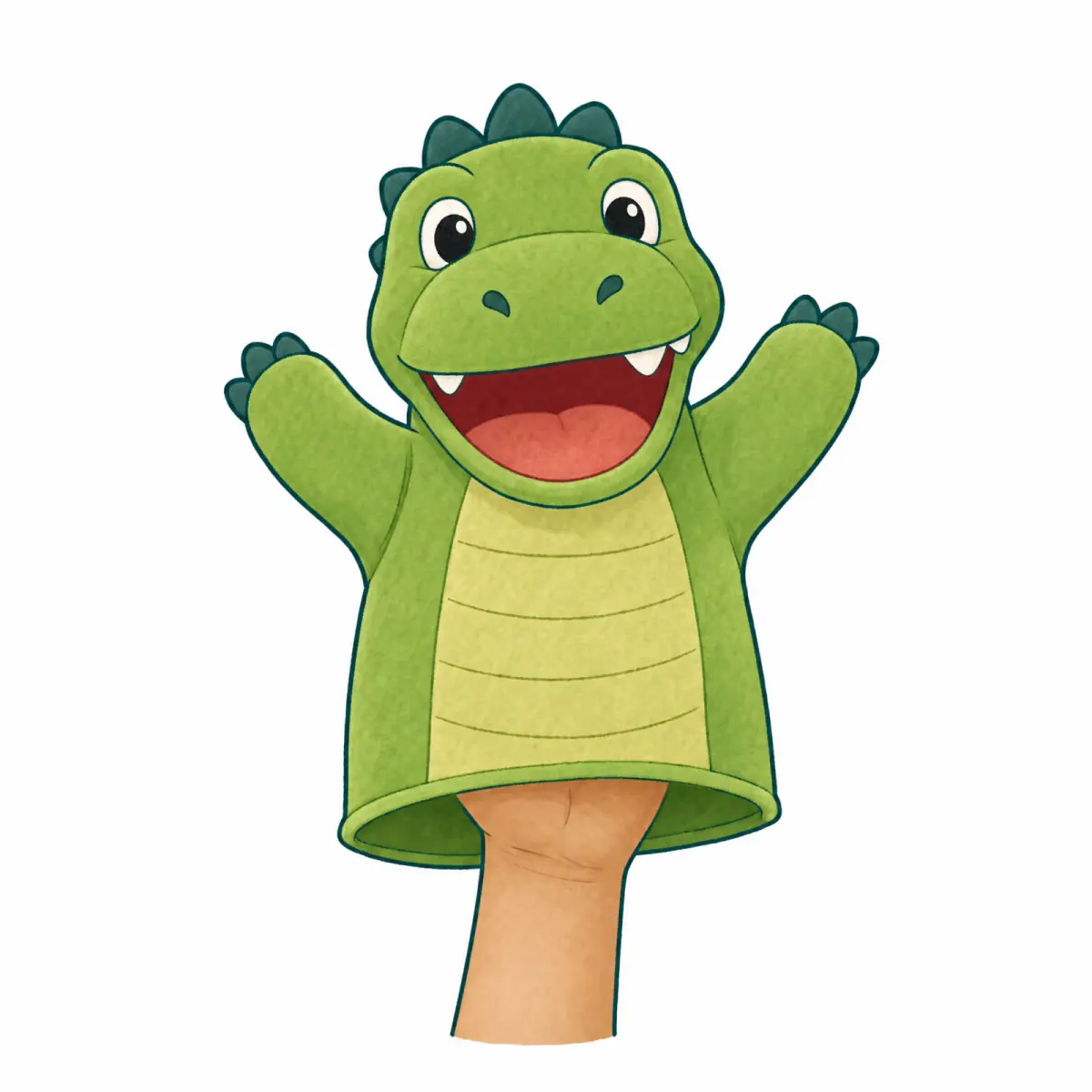
On a playroom rug, Nia flies one small wooden plane while Leo holds a cheerful hand puppet. One toy robot, one balloon and one teddy sit in a clear row behind them.

Nia Guess my toy!

Leo Is it a plane?

Nia Yes, it is!

Leo Guess my toy.

Nia Is it a robot?

Leo No, it isn't. It's a puppet!

Is it a plane?

Yes, it is!

  • Is it a robot? No, it isn't.
  • Is it a teddy? Yes, it is.
Learn this unit
How would you like to learn?

Five toy words to start with

Toys are an easy first topic: your child already has them and wants to talk about them. Play a toy card on this page, find the same toy at home and hold it up as you listen. Pointing to the right toy counts, even before your child says the word.

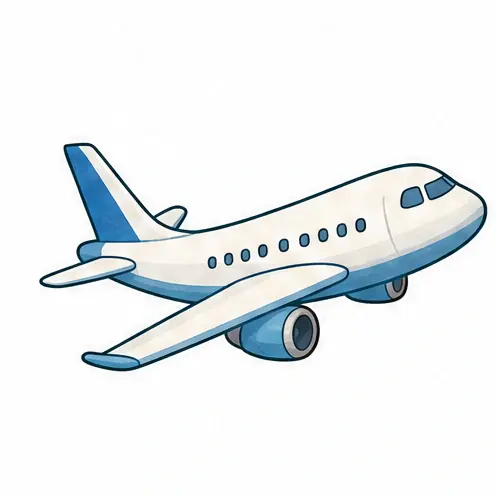
  • “plane”: spread your arms and fly it
  • “puppet”: a toy you move with your hand
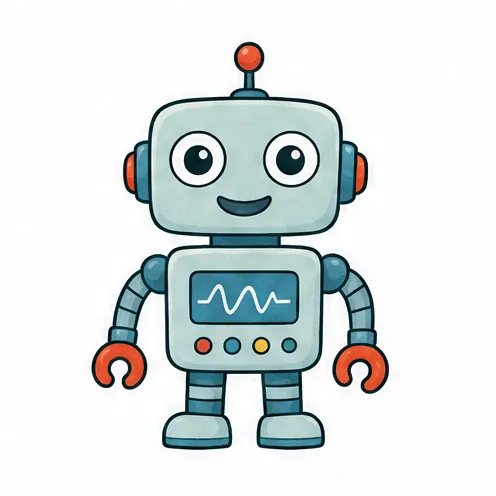
  • “robot”: the stress is at the start, RO-bot
  • “balloon”: the stress is at the end, ba-LOON
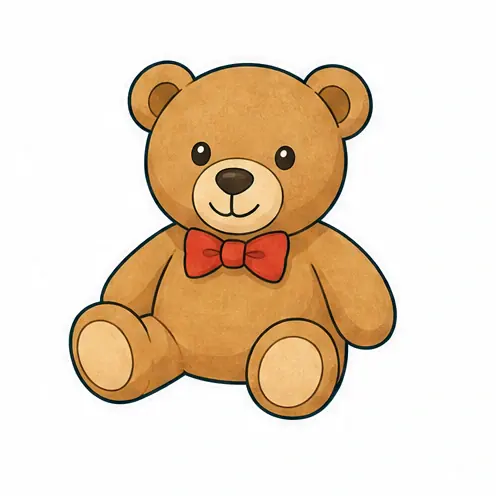
  • “teddy”: a soft toy bear, or “teddy bear”

Patterns: “What comes next?”

A pattern is a row that repeats in the same order. The simplest has two things taking turns: plane, robot, plane, robot. Touch each toy from left to right as you say it, stop at the gap and ask “What comes next?” Your child has to follow the order, not just repeat the last word.

In the two patterns below, one child names three toys and the other names the missing one.

Leo Plane, robot, plane… What comes next?

Nia Robot!

Leo Teddy, balloon, teddy… What comes next?

Nia Balloon!

The guessing question: “Is it a …?”

In a guessing game, one person secretly chooses a toy and the other guesses. The question starts with “Is”: “It is a robot.” becomes “Is it a robot?” Your voice usually rises at the end, which helps your child hear the question.

Below, the first guess is wrong, so the guesser tries again until the answer is yes.

Nia Guess my toy!

Leo Is it a robot?

Nia No, it isn't!

Leo Is it a teddy?

Nia Yes, it is!

Yes, it is. No, it isn’t.

Short answers repeat the start of the question: “Is it …?” – “Yes, it is.” At the end of a sentence “it is” stays as two words, so “Yes, it’s.” is wrong. For no, “No, it isn’t.” and “No, it’s not.” are both correct. The question and answer have audio on this page.

After “No”, name the right toy, so even a wrong guess teaches a word:

  • “Is it a plane?” – “Yes, it is.”
  • “Is it a robot?” – “No, it isn’t. It’s a puppet!”
  • “Is it a balloon?” – “No, it isn’t. It’s a teddy!”
  • “Is it a teddy?” – “Yes, it is.”
Learn this unit your way

Three games at home

Keep each game to two or three minutes and stop while your child still wants more.

  • Toy rows: line up two kinds of toys in turn (teddy, car, teddy, car) and leave a space. Ask “What comes next?” and let your child fill it. Then your child builds a row for you, and you count the toys together.
  • Mystery bag: hide a toy in a bag. Your child asks “Is it a plane?” and you answer until they guess it. Then swap.
  • Draw and guess: draw a toy slowly while your child guesses: “Is it a robot?” Then swap, and make a silly guess now and then (“Is it a cat?”) so your child can say “No, it isn’t!”

Common mistakes and how to help

“It is a robot?” Many languages make a question just by raising the voice, and some have no small word like “a”, so you may also hear “Is it robot?” Don’t explain the rule; repeat the question correctly as you pick up the toy.

“Yes” to every guess. Make the answer easy to check: hold up a plane and ask “Is it a plane?”, then “Is it a teddy?” A head shake is a good start; add “No, it isn’t!” for your child.

Any toy in the gap. Go back to the start of the row and say it again slowly, tapping each toy.

Where to go next

When your child finishes a two-toy pattern and asks and answers “Is it a …?” without help, try three-toy patterns (plane, robot, teddy, plane, robot, teddy) and colours: “Is it a red balloon?” The same question leads into family words: “Is it your mum?” The links below show the topics around this one.

Frequently asked questions

How do you answer “Is it a …?” in English?

“Yes, it is.” or “No, it isn’t.” (“No, it’s not.” is also correct). “Yes, it’s.” is wrong: “it is” can’t be shortened at the end of a sentence. In a quick game, “Yes!” or “No!” is fine.

What is an AB pattern for young children?

Two things taking turns: red, blue, red, blue, or plane, robot, plane, robot. It is the simplest kind of pattern, so start there, then try AAB (plane, plane, robot) or ABC (plane, robot, teddy).

Should I say “teddy” or “teddy bear”?

Both are correct. “Teddy” is short for “teddy bear”; British children often say just “teddy”, and “teddy bear” is understood everywhere.

Learn this unit
How would you like to learn?

What comes next?

One-to-one lessons with a live teacher

In Flalingo kids lessons, your child practises units like this one-to-one with a live teacher, through games on the same screen.

Book a free trial lesson