
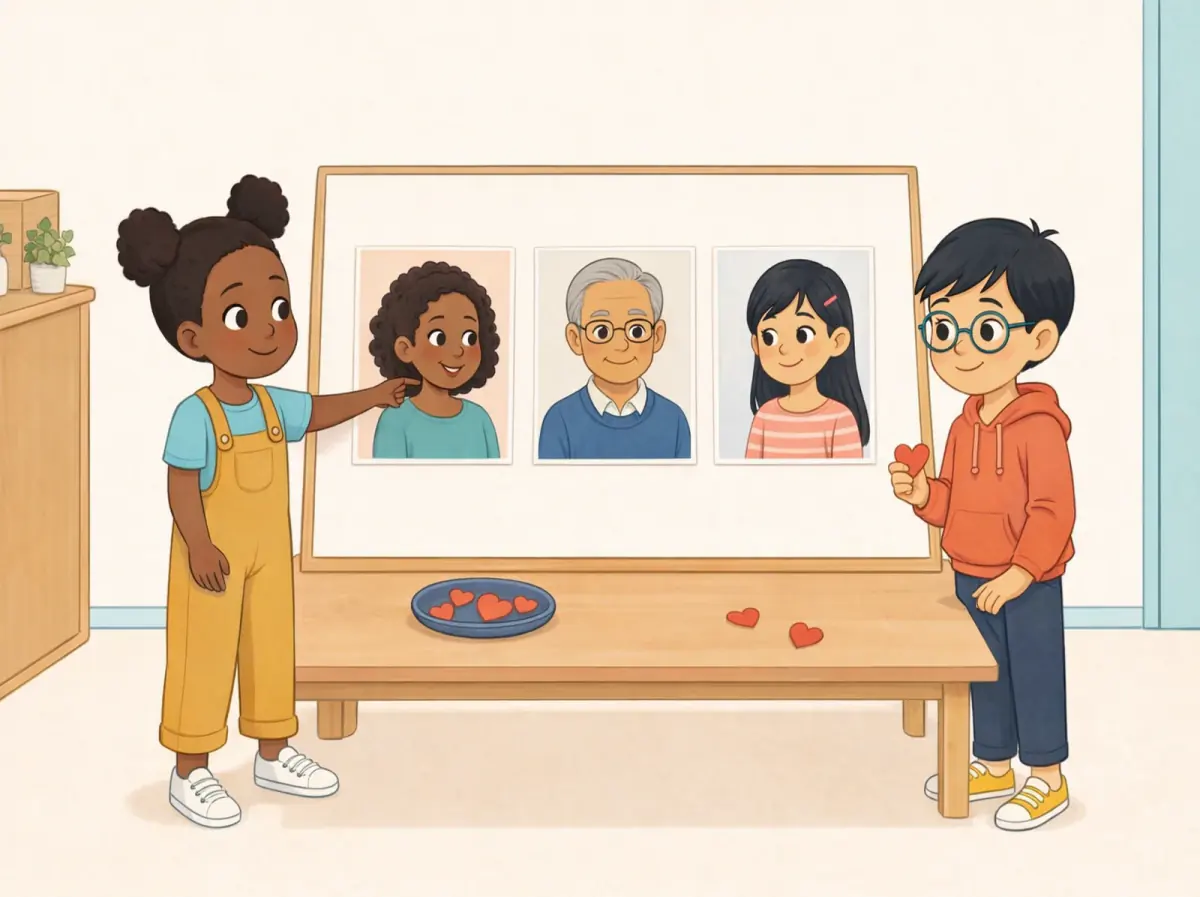
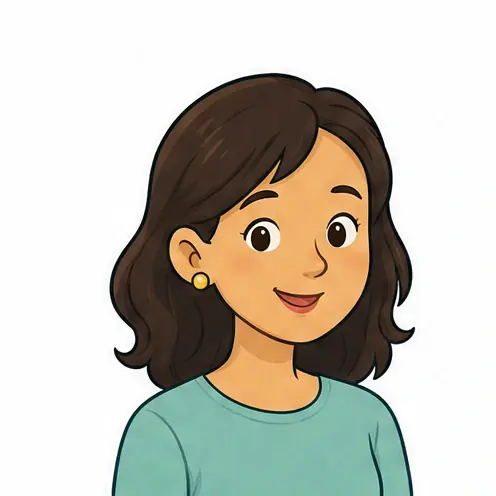
 mum
 dad
 brother
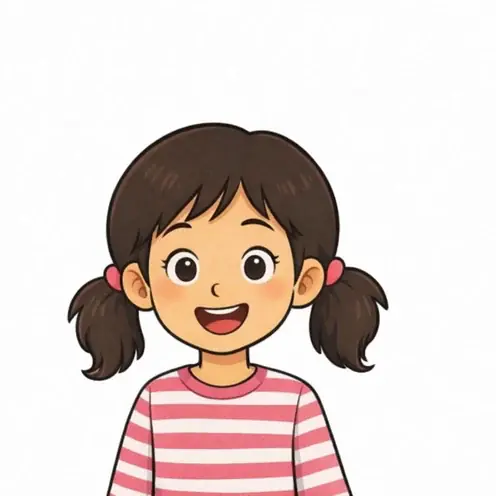 sister
 grandpa
 grandma
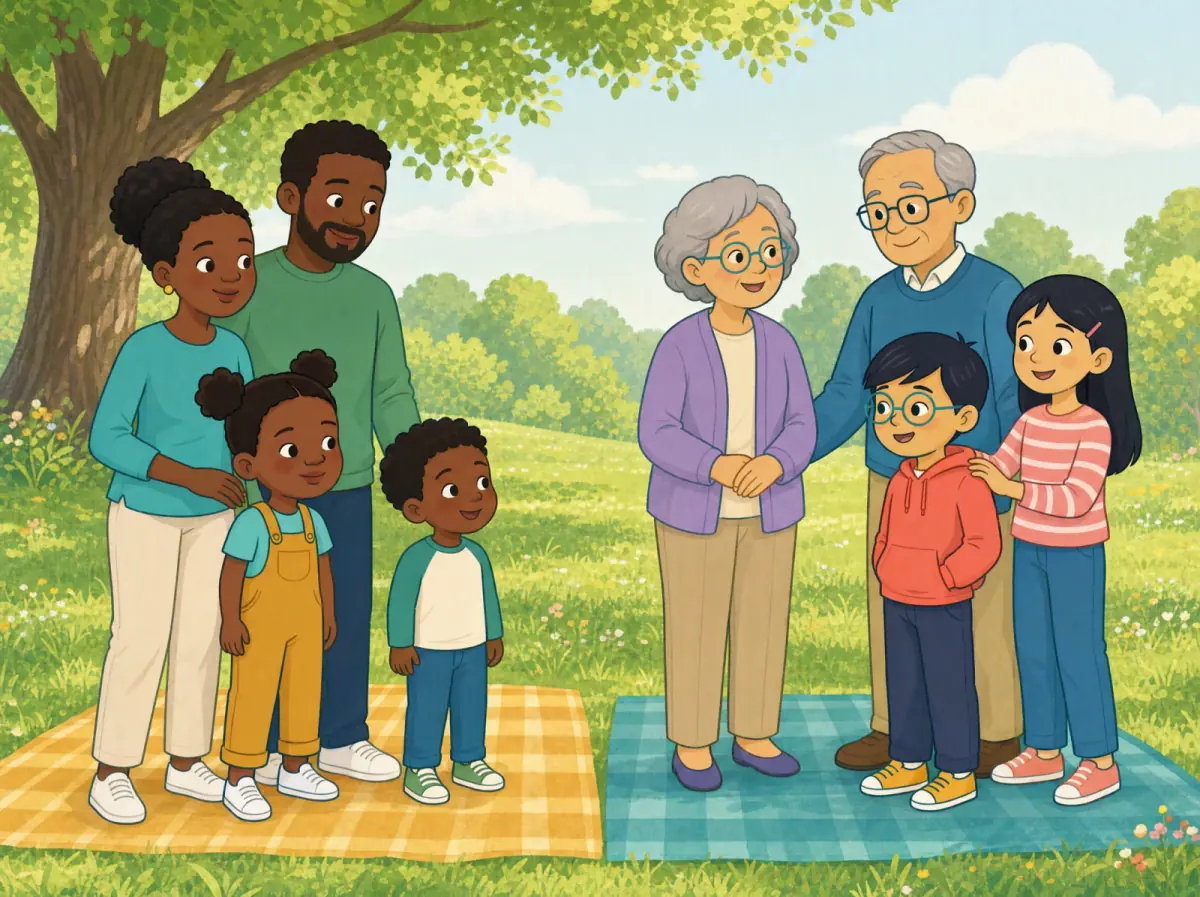
Six family words to start with
Play a family card on this page and point to that person in a photo, or in the room, as you listen. Pointing to the right person counts, even before your child says the word. Teach the words your family needs, and use toys or picture books for the rest.
- “mum”: British English; American English says “mom”
- “dad”: the same in both
- “brother”: a soft “th”, with the tongue lightly between the teeth
- “sister”: two syllables, SIS-ter
- “grandma”: also “granny” or “nan”
- “grandpa”: also “grandad”
The question and answer: “Who’s this?” – “This is my …”
“Who’s this?” is short for “Who is this?”, the question about a person. “This” is for the picture or person you are pointing to, close by. The answer always starts the same way, so your child only changes the last word; both lines have audio on this page.
When your child talks to the person directly, the family word works like a name and takes a capital letter: “This is my mum.” but “Hello, Mum!”
- “Who’s this?” – “This is my dad.”
- “Who’s this?” – “This is my sister.”
- “Who’s this?” – “This is my grandpa.”
First and last: following a row of pictures
Line up three family photos or drawings and say “Look at the first picture.” In English the first picture is the one on the left, where reading starts; “Now the last picture.” sends your child to the right-hand end. The one in between is “the middle picture”.
Let your child point first, then name the person: finding the picture from a spoken instruction is a listening skill of its own.
Your mum or my mum? Whose family it is
In the conversation below, two children look at a row of family pictures. One asks “Is it your mum?” and the other answers “This is my mum.” The question says “your” because it is about the other child’s family; the answer says “my” because that child is talking about their own. For the last picture the roles swap.
When you play, point to yourself on “my” and to your child on “your”, and use your own real family.
Nia Look at the first picture.
Leo Is it your mum?
Nia This is my mum.
Leo Now the last picture.
Nia Is it your sister?
Leo This is my sister.
Four photo games at home
Keep each game to two or three minutes and stop while your child still wants more.
- Photo row: lay three photos in a row and say “Look at the first picture. Who’s this?”, then “Now the last picture.” Then swap, so your child gives the instructions.
- Hidden photo: cover a photo with paper and slide it away slowly. Ask “Is it your grandpa?” Your child answers “Yes!” or “No! This is my grandma.”
- Hello chant: wave at each photo: “This is my mum. Hello, Mum! This is my dad. Hello, Dad!”
- Draw and say: your child draws one person and finishes “This is my …”; five- and six-year-olds can also copy the word.
Common mistakes and how to help
“This is your mum.” about their own mum. Children copy the last word they heard, and in “Is it your mum?” that word is “your”. Don’t explain the rule: let your child tap their own chest on “my”, and say the right sentence back.
“This mum.” or “This my mum.” Many languages need no word for “is” here, so the small words drop out. Repeat the full sentence, “This is my mum!”, and carry on.
Brother and sister mixed up: hold up both cards, play one and let your child point.
Where to go next
When your child names everyone in a family photo without help, add “that” for someone further away (“Who’s that?” – “That’s my brother.”) and one more sentence about each person: “This is my brother. He’s happy.” Feelings with “he” and “she”, and animals in ones and many, are good next topics; see the links below.