
Skip to content
Flalingo

English practice

How to teach your child feelings in English with “I’m hungry” and “She’s cold” (Pre-A1, ages 4–7)

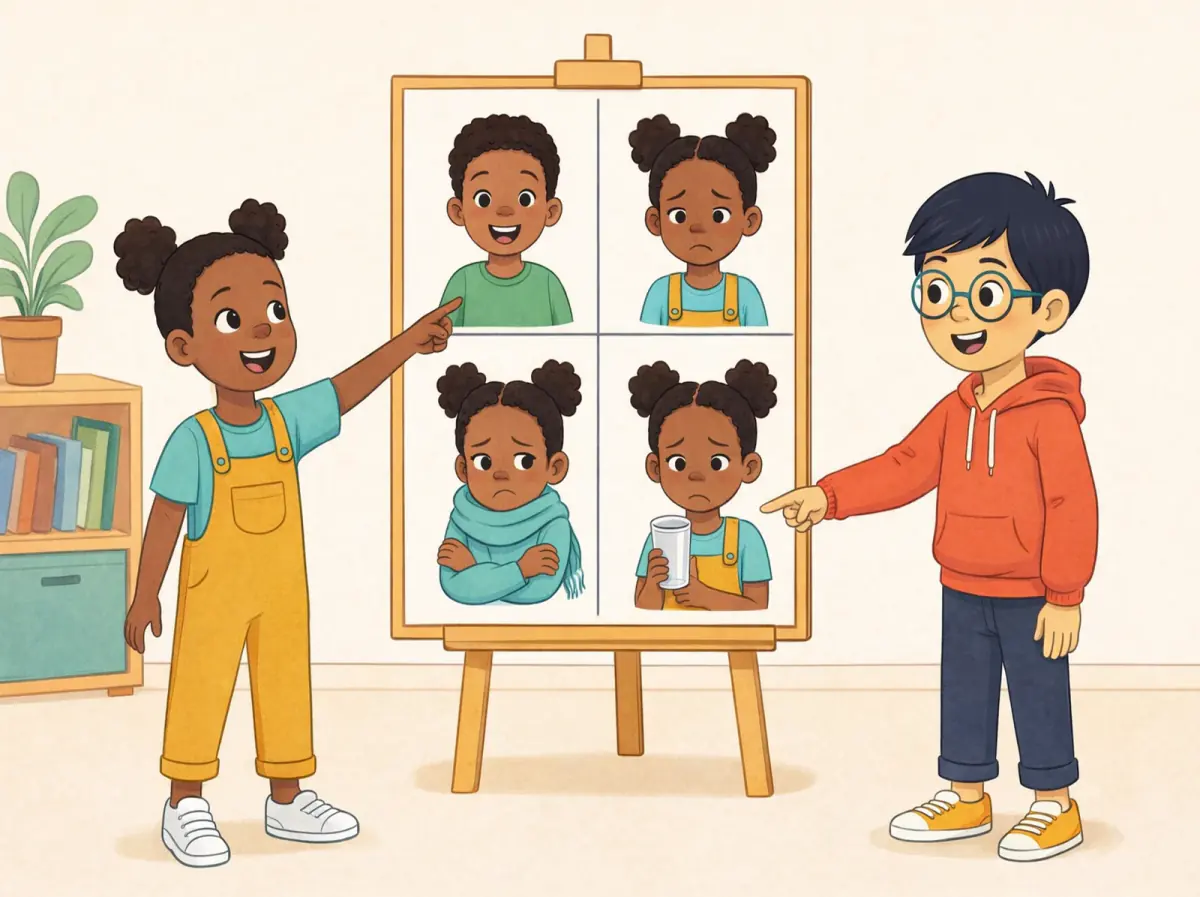
A four-panel expression board without text shows a happy boy, a sad girl, a cold girl in a scarf and a thirsty girl with an empty cup. Two children point to different faces.

Six first feeling words (happy, sad, hungry, thirsty, hot, cold), “I’m …” about yourself and “He’s …” or “She’s …” about someone in a picture, with audio and home games for children aged 4–7 (Pre-A1).

To teach a young child feelings in English, start with six words they can act out: happy, sad, hungry, thirsty, hot and cold. Then show two ways to use them: “I’m hungry.” about themselves, and “He’s happy.” or “She’s cold.” about someone else, pointing at the person or picture. This is the very first level (Pre-A1), for children of about 4–7. Three or four minutes a day is enough, and every word and line has audio here, so you don’t need to speak English yourself.

Who this is for

  • Children who know a few English words: feelings come up all day, at snack time, outside and after a fall, so there is always a real reason to use them.
  • Parents who aren’t confident in English: every feeling word and every line of the picture talk has audio on this page, and everything you need to say is written out here.
  • Children starting English at nursery or school: “How do you feel?” and a few feeling words are common in beginner classes, so a short game at home helps them join in.
  • Too early: if your child doesn’t yet point to people in pictures and say who they are, start with family words and “Who’s this?” in the family photo article linked below.
  • Too easy: if your child already describes pictures with “He’s …” and “She’s …” without help, move on to “They’re …” with animals, also linked below.

Open the sample pages

Open the sample pages

Word cards

happyhappy
sadsad
hungryhungry
thirstythirsty
hothot
coldcold

Conversation

Nia Look at him.

Leo He's happy.

Nia Look at her.

Leo She's cold.

Nia And this girl?

Leo She's thirsty.

Language pattern

How does Leo feel?

He's happy.

  • She's cold.
  • He's hungry.
  • She's thirsty.

More practice

Nia and Leo talk

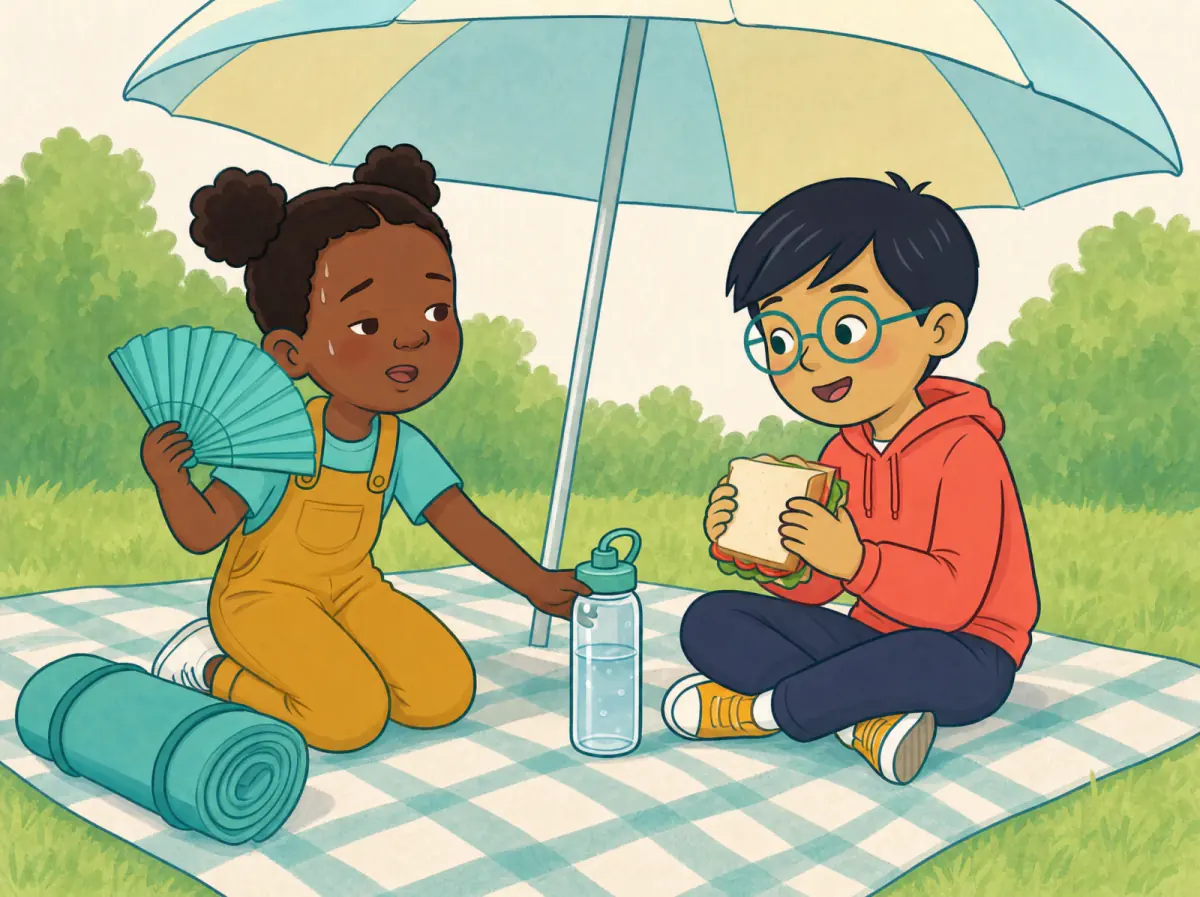
At a picnic under a sunshade, Nia fans her warm face and reaches for water; Leo smiles while holding a sandwich. A folded blanket and water bottle make the feelings easy to infer.

Leo I'm happy!

Nia I'm hot.

Leo Are you thirsty?

Nia Yes, I am.

Nia How do you feel?

Leo I'm hungry!

How does Leo feel?

He's happy.

  • She's cold.
  • He's hungry.
  • She's thirsty.
Learn this unit
How would you like to learn?

Six feeling words to act out

Feelings are easy to teach with the whole body. Play a feeling card on this page, make the face or action together, and let your child copy you before saying anything. Four of the words are about the body, not mood, so they come up many times a day.

  • “happy”: a big smile, arms up
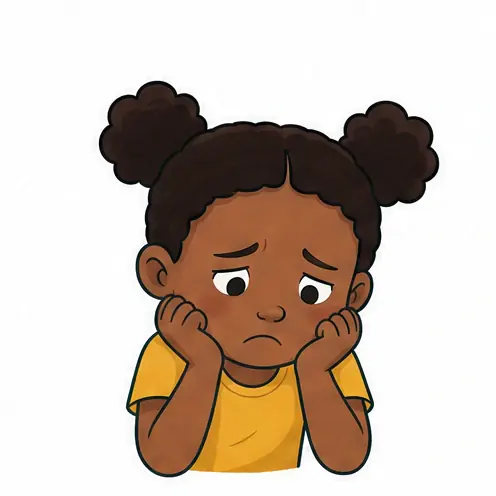
  • “sad”: mouth turned down, pretend to rub your eyes
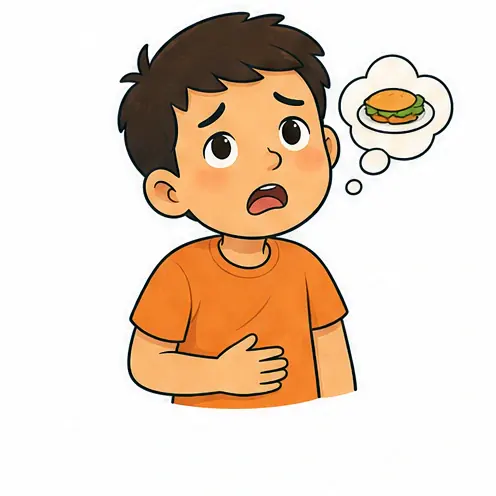
  • “hungry”: rub your tummy
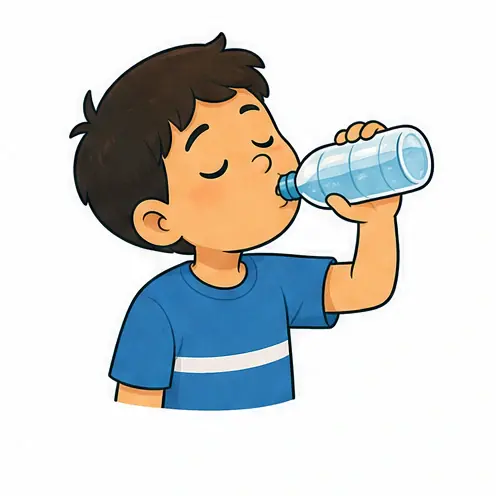
  • “thirsty”: pretend to drink from a cup
  • “hot”: fan your face with your hand
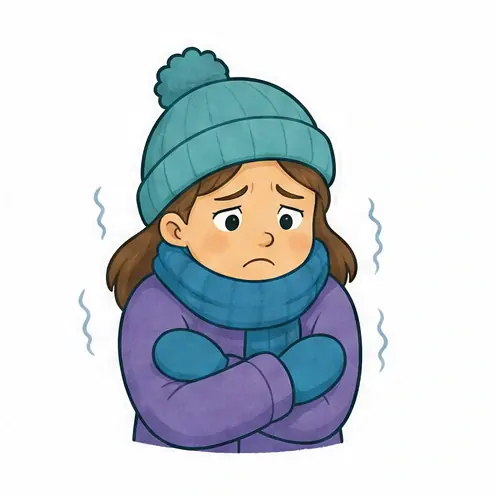
  • “cold”: hug yourself and shiver

“I’m …” for me, “He’s …” and “She’s …” for someone else

About themselves, your child says “I’m …”: “I’m hungry!” About someone else, the start changes and the feeling word stays the same: “He’s hungry.” for a boy or a man, “She’s hungry.” for a girl or a woman. “I’m” is short for “I am”, “he’s” for “he is” and “she’s” for “she is”.

The question shows which one to use: “How do you feel?” – “I’m cold.”, but “How does he feel?” – “He’s happy.” Show the change with your hand:

  • “I’m hot.”: touch your chest
  • “He’s hot.”: point to a boy or a man
  • “She’s hot.”: point to a girl or a woman

Showing who you mean: “Look at him.” and “Look at her.”

Before describing someone, point and say who you mean. After “Look at”, English uses “him” for a boy and “her” for a girl, not “he” and “she”. In the short picture talk below, one child points to three people and the other says how each one feels; “And this girl?” moves on to the next person. Listen once, then say the answers along with the recording.

Nia Look at him.

Leo He's happy.

Nia Look at her.

Leo She's cold.

Nia And this girl?

Leo She's thirsty.

A picture walk at home

Picture books, family photos and cartoons are full of people to describe. Point to one person at a time and use the same two steps: “Look at her.” then “She’s sad.” A big smile says happy; a scarf and snow say cold. If your child picks another word that fits, accept it: a child in the snow can be cold and happy. What matters is “he” for the boy and “she” for the girl.

Learn this unit your way

Three games at home

Keep each game to two or three minutes and stop while your child still wants to play.

  • Teddy feels: decide whether a toy is a boy or a girl, then make it shiver, fan itself or rub its tummy. Your child says how it feels: “He’s cold!” Then swap roles.
  • Mirror faces: at a mirror, say “I’m sad!” and make the face; your child copies you. Then your child calls out a feeling for you to show.
  • Real moments: at snack time, “I’m hungry!” After running in the park, “I’m hot!” When a brother or sister grabs a drink, “Look at him. He’s thirsty.” or “Look at her. She’s thirsty.”

Common mistakes and how to help

“He happy.” Many languages need no word like “is” here, so the “’s” goes missing. Don’t explain the rule; repeat the full line with a smile: “Yes, he’s happy!”

“He” for a girl, or “she” for a boy. Some languages use one word for both, so this takes time. Point to the girl and say it again: “She’s cold.”

“Look at he.” After “Look at”, say “him” and “her”. Just repeat: “Look at him!”

“I’m cold.” or “It’s cold.”? “I’m cold.” is how a person feels; “It’s cold.” is about the weather, a room or a drink. On a winter day, say both.

Where to go next

When your child describes pictures with “He’s …” and “She’s …” without help, add a yes/no question: “Is she cold?” – “Yes, she is.” or “No, she isn’t.” Then try groups with “They’re …”: “They’re hungry.” The links below show the topics around this one.

Frequently asked questions

Is it “I am hungry” or “I have hungry” in English?

“I am hungry.”, or the shorter “I’m hungry.” English uses “am”, “is” and “are” with hungry, thirsty, hot and cold. “I have hungry” is a common slip when the home language says “I have hunger”, as Spanish and French do.

What is the difference between “he” and “him”?

“He” usually comes before the verb: “He’s happy.” “Him” comes after a verb or a small word like “at”: “Look at him.” For a girl or a woman, the pair is “she” and “her”: “She’s cold.” and “Look at her.”

Which feelings should a young child learn first in English?

Start with words your child feels every day: happy, sad, hungry, thirsty, hot and cold. Hungry and thirsty also let your child tell you what they need. Tired, scared and angry are good words to add next.

Learn this unit
How would you like to learn?

What comes next?

One-to-one lessons with a live teacher

In Flalingo kids lessons, your child practises units like this one-to-one with a live teacher, through games on the same screen.

Book a free trial lesson