
Skip to content
Flalingo

English practice

How to teach your child plurals in English with animals: “It’s a tiger” and “They’re bears” (Pre-A1, ages 4–7)

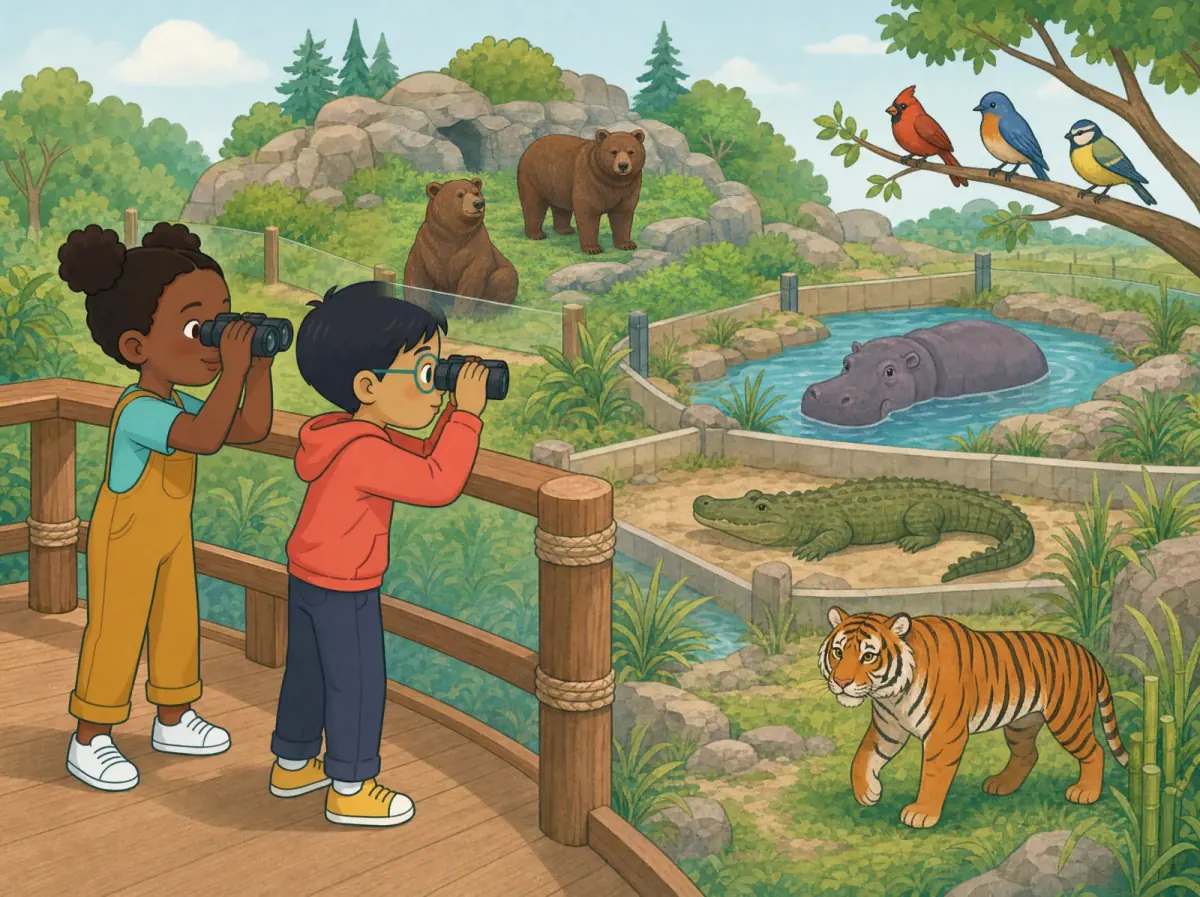
At a child-friendly wildlife viewing deck, two children use binoculars to see two bears, three birds, one hippo, one crocodile and one tiger in clearly separated safe habitats.

One animal or more? Help your child hear the -s in “bears” and “birds”, ask “What are they?” and answer “They’re bears.”, with audio and counting games for children aged 4–7 (Pre-A1).

To teach a young child plurals in English, start with animals they can count. For one animal, say “It’s a tiger.”; for two or more, add a small -s and say “They’re tigers.” The question changes too: “What is it?” for one, “What are they?” for a group. This is the very first level (Pre-A1), for children of about 4–7. A few minutes a day of counting toy animals is enough, and the animal words and the short conversation have audio here, so you don’t need to speak English yourself.

Who this is for

  • Children who already name a few things in English: animals are a favourite topic, and counting them gives a real reason to say the -s.
  • Parents who aren’t confident in English: the five animal words and the short conversation have audio on this page, and every line you need is written out here.
  • Children learning numbers or animals at nursery or school: “What are they?” and plural animal names are common in beginner classes, so a short counting game at home helps them join in.
  • Too early: if your child doesn’t yet answer “What’s this?” about one thing, start with single words and “It’s a …” in the first questions article linked below.
  • Too easy: if your child already says “They’re birds.” and “two tigers” without help, move on to yes/no questions about groups, such as “Are they teachers?”, also linked below.

Open the sample pages

Open the sample pages

Word cards

birdbird
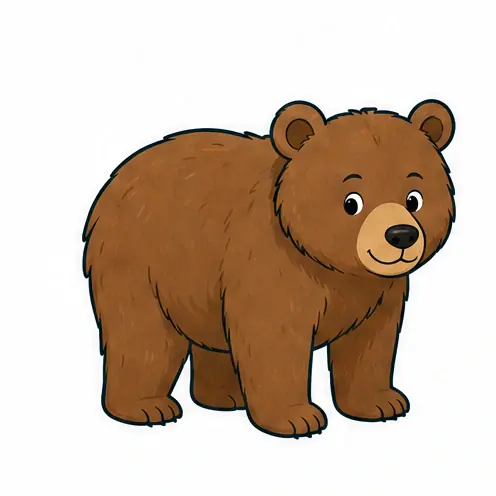
bearbear
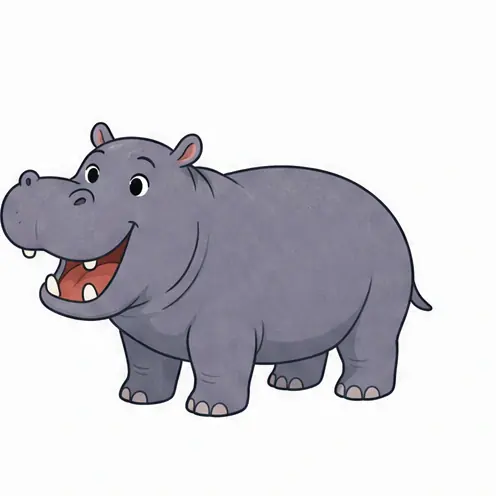
hippohippo
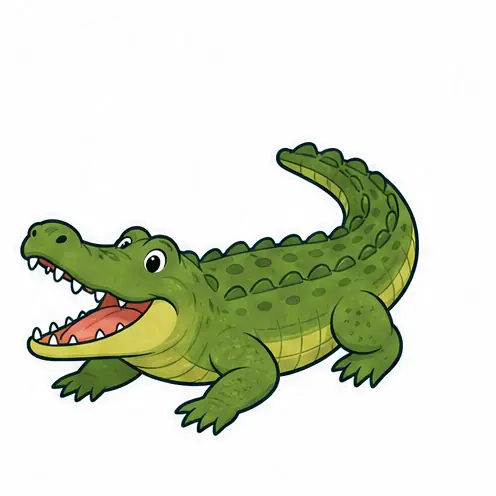
crocodilecrocodile
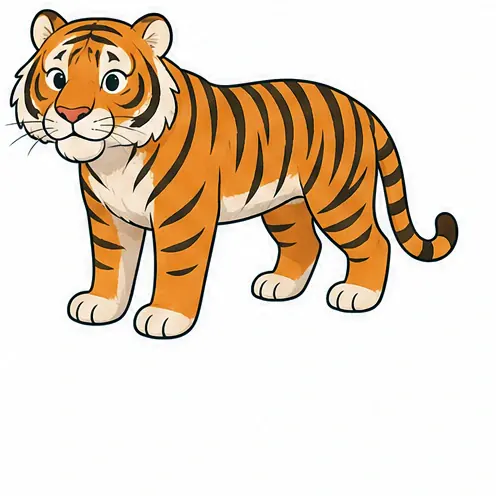
tigertiger

Conversation

Nia Look over there!

Leo What are they?

Nia They're bears.

Leo And up there?

Nia They're birds!

Leo Animal count day!

Language pattern

What are they?

They're bears.

  • They're birds.
  • It's a tiger.
  • It's a hippo.

More practice

Follow the pictures

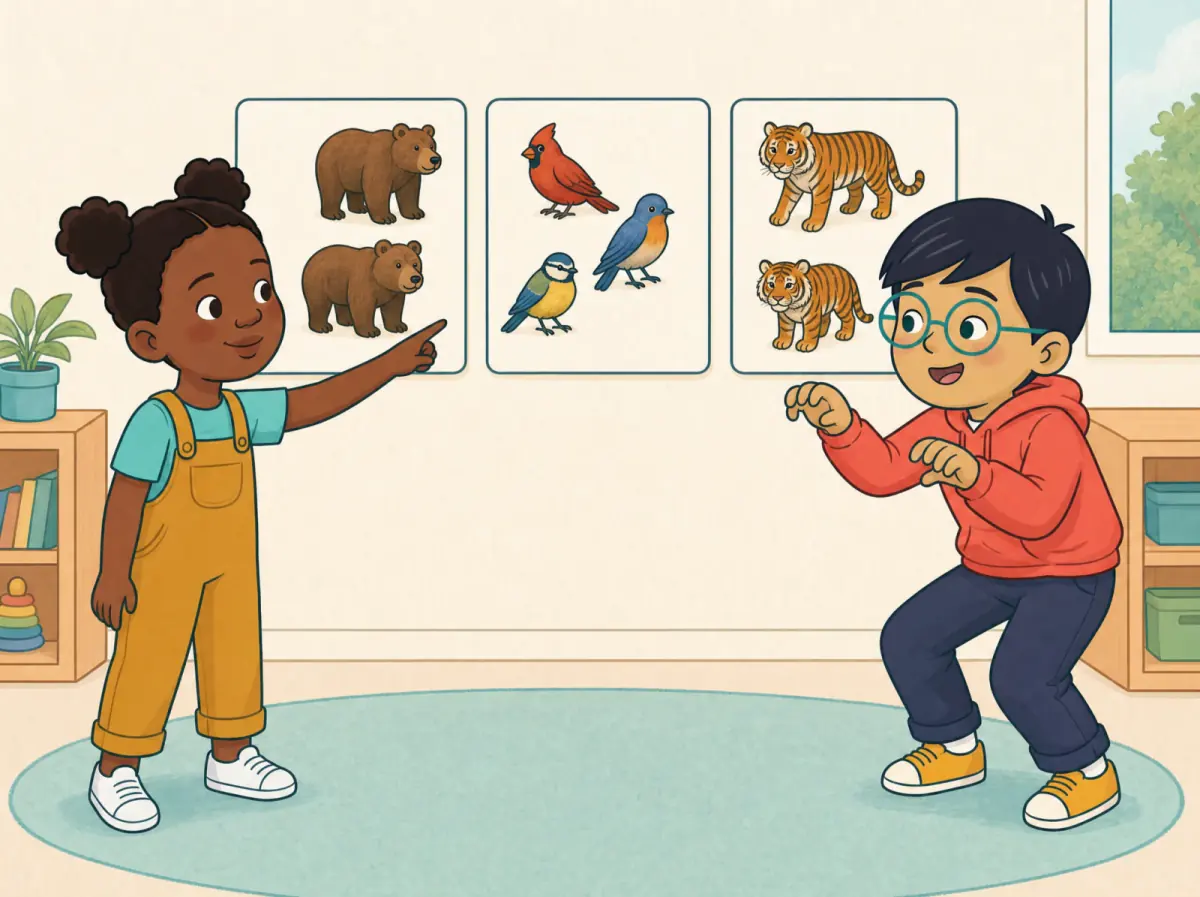
Three large picture cards in a left-to-right row show two bears, three birds and two tigers. Nia points to the bear card while Leo makes a playful bear pose.

Leo Two big bears.

Nia They're bears.

Leo Three little birds.

Nia They're birds.

Leo Two orange tigers.

Nia They're tigers.

Make your page

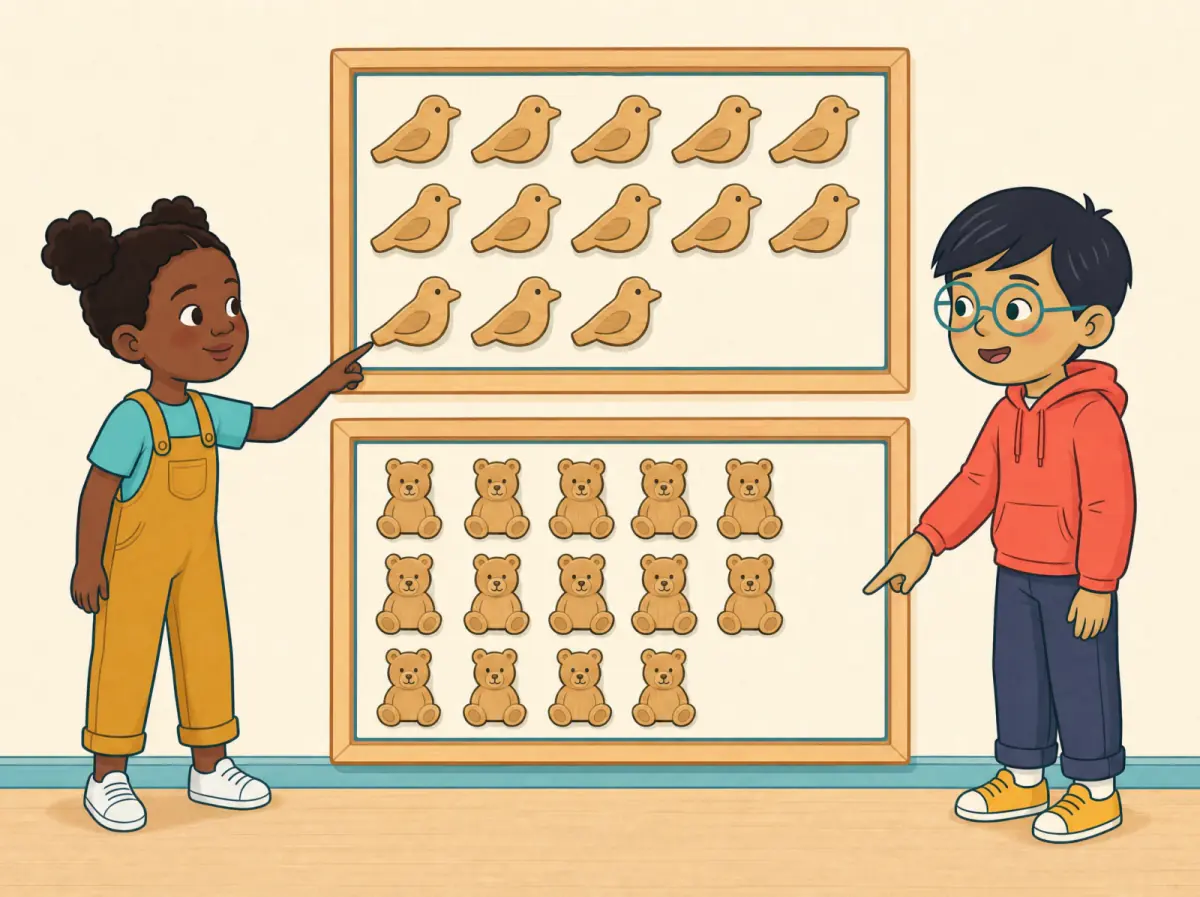
A counting wall displays thirteen bird-shaped wooden counters in one frame and fourteen bear-shaped counters in another; Nia and Leo point to the final counter in each frame.

What are they?

They're bears.

  • They're birds.
  • They're tigers.
  • They're hippos.
Learn this unit
How would you like to learn?

Five animals to start with

Children love to name and count animals, which makes them a good way into plurals. Play each animal card on this page, act the animal out together and let your child copy the action before saying the word.

  • “bird”: flap your arms like wings
  • “bear”: big heavy steps and a growl
  • “hippo”: open your mouth as wide as you can
  • “crocodile”: snap your arms together like jaws
  • “tiger”: show your claws and roar

One animal or more: “It’s a …” and “They’re …”

For one animal, English says “It’s a tiger.” For two or more, three small things change at once: “it’s” becomes “they’re”, the “a” disappears, and the animal word gets an -s at the end. “They’re” is short for “they are”.

There is no need to explain this. Say the pairs below as you hold up one toy and then several.

  • “It’s a bear.” → “They’re bears.”
  • “It’s a bird.” → “They’re birds.”
  • “It’s a hippo.” → “They’re hippos.”

Hearing the -s at the end

The plural -s is a tiny sound at the very end of the word, so it is easy to miss. On these five animals it sounds like a soft, buzzing “z”: bears, birds, hippos, crocodiles, tigers. On words like cats and ducks it is a hissing “s”.

When you say a plural, make the end a little longer, “bearzz”, and add a signal: one finger for one animal, a wiggling open hand for more.

Asking about a group: “What are they?”

For one animal, ask “What is it?” or “What’s this?” For a group, ask “What are they?” In the short conversation below, two children spot animals far away and then up high: “Look over there!” points into the distance, and “And up there?” moves the question upwards.

Listen once, pointing where the children point. Then pause after each “What are they?” so your child answers first.

Nia Look over there!

Leo What are they?

Nia They're bears.

Leo And up there?

Nia They're birds!

Leo Animal count day!

Learn this unit your way

Counting keeps the -s

Counting is the easiest reason to use plurals: as soon as you count past one, the -s appears. Touch each toy as you count: “one bear, two bears, three bears”. Describing words such as big, little or orange never take an -s; only the animal does.

  • “one tiger” – “two tigers”
  • “two big bears”, not “two bigs bears”
  • “three little birds”

Animal count: games at home

Keep each game short and stop while your child still wants to play.

  • Toy zoo: put toy animals in small groups around the room. Point to a group and ask “What are they?”; your child answers “They’re bears!” and you count them together.
  • One or many?: hold up one toy, “It’s a tiger.”, then two, “They’re tigers.” Then swap roles, and sometimes drop the -s on purpose so your child can catch you.
  • Draw and add the -s: draw two birds, write “bird” underneath and let your child add a big “s” in another colour; six- and seven-year-olds can copy the whole word. Then say “They’re birds.”
  • Real animals: at the park, point at ducks or dogs: “Look over there! What are they?”

Common mistakes and how to help

“Two bear.” Many languages don’t change the word after a number, so the -s feels unnecessary. Don’t explain the rule; answer with the right form: “Yes, two bears!”

“They’re a bears.” The “a” means one, so it goes when there are more: “They’re bears.”

“It’s birds.” Mixing up one and many is normal at first. Count on your fingers, then say the line: one finger, “It’s a bird.”; three fingers, “They’re birds.”

“It’s tiger.” Many languages have no small word like “a”, so it gets left out. Say it back: “It’s a tiger!”

Where to go next

When your child answers “What are they?” with the -s most of the time, add a yes/no question: “Are they bears?” – “Yes, they are.” or “No, they aren’t.” Later, “There are three birds.” says how many in a full sentence.

Frequently asked questions

Do all animal words just add -s in English?

Most do: bears, birds, tigers, hippos. A few don’t: one mouse, two mice; one sheep, two sheep; and fish usually stays fish. Start with the regular -s and add these later, one at a time.

What is the difference between “What is it?” and “What are they?”

Ask “What is it?” about one thing: “It’s a tiger.” Ask “What are they?” about two or more: “They’re tigers.” The question tells your child whether to answer with one or many.

Why does my child say “two bear” instead of “two bears”?

The number already shows there is more than one, and many languages don’t change the word after a number. Keep using the right form in your own answers and keep counting together; the -s takes time.

Learn this unit
How would you like to learn?

What comes next?

One-to-one lessons with a live teacher

In Flalingo kids lessons, your child practises units like this one-to-one with a live teacher, through games on the same screen.

Book a free trial lesson