
انتقل إلى المحتوى
Flalingo

تدريبات على الإنجليزية

الكتابة في B1 Preliminary، الجزء الثاني: كيف تكتب قصة تبدأ بجملة أولى معطاة

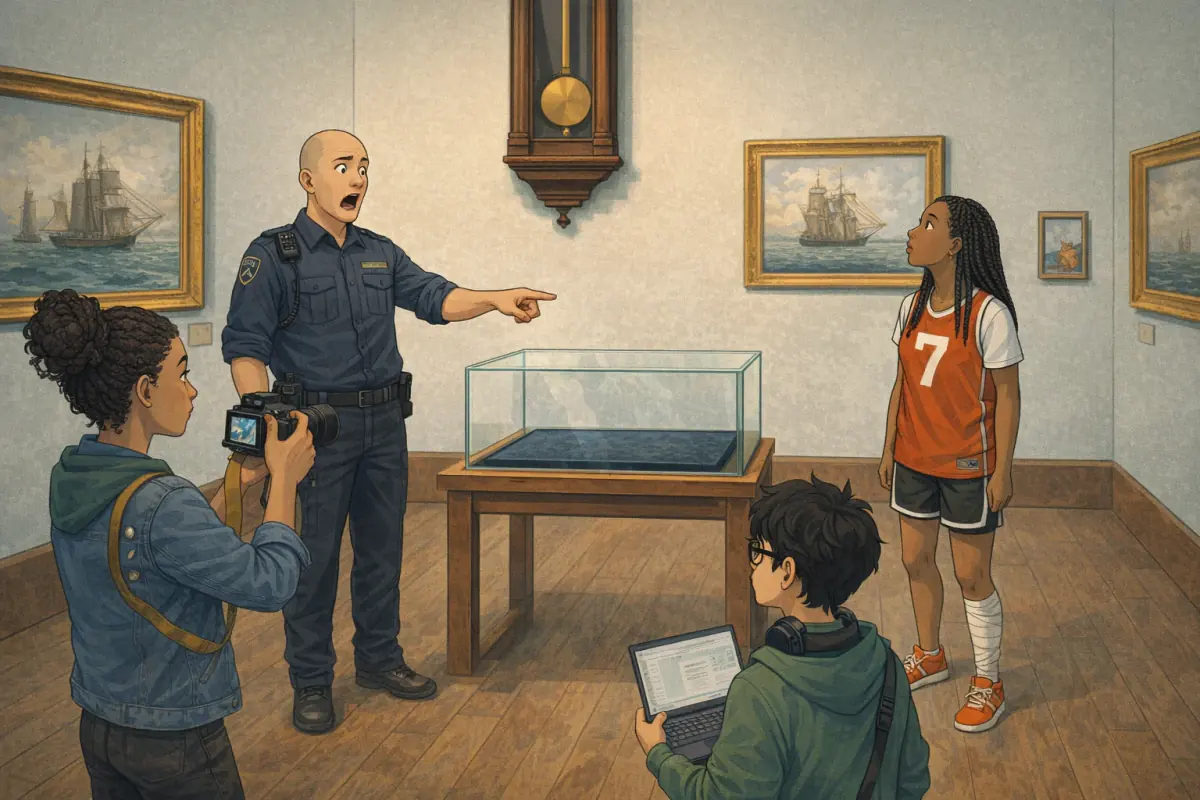
In the museum's Sea Gallery the guard points at an empty display case while one teenager films and another looks up at the clock.

كيف تكتب القصة في B1 Preliminary وB1 Preliminary for Schools: البدء بالجملة المعطاة، وتخطيط ثلاث فقرات، والتمييز بين past continuous وpast simple، وربط الأحداث بكلمات الزمن، وختام مفاجئ.

في الجزء الثاني من الكتابة في B1 Preliminary يمكنك اختيار قصة من نحو 100 كلمة تبدأ بالجملة المعطاة لك حرفيًا. خطّط لثلاث فقرات: ارسم المشهد، ثم صعّد المشكلة، ثم اختم بمفاجأة يفسّرها دليل صغير وضعته قبلها. استخدم past continuous للخلفية (“I was walking home”) وpast simple للأحداث الرئيسية (“I heard a noise”)، واربط بينها بـwhile وuntil وas soon as. هذا الدليل موجّه إلى الطلاب في المستوى المتوسط (B1) الذين تتراوح أعمارهم بين 12 و16 عامًا تقريبًا.

لمن هذا المقال؟

  • الطلاب الذين يستعدون لـB1 Preliminary أو B1 Preliminary for Schools، وأعمارهم بين 12 و16 عامًا تقريبًا، ويفكرون في اختيار القصة في الجزء الثاني من الكتابة.
  • لديك أفكار جيدة، لكن قصتك تتحول إلى قائمة “and then … and then …”، أو تأتي النهاية من العدم.
  • لأولياء الأمور: قبل الكتابة، اطلبوا من ابنكم أو ابنتكم أن يحكي القصة بصوت عالٍ في دقيقة واحدة. إذا استطعتم متابعة ما حدث وفاجأتكم النهاية، فالخطة ناجحة.
  • ما زال الوقت مبكرًا: إذا كانت أزمنة الماضي لا تزال تختلط عليك في نصوص A2 القصيرة، فابدأ برسالة A2 Key لترتيب لقاء مع وصف الطريق (الرابط أدناه).
  • سهل جدًا: إذا كنت تكتب بالفعل قصصًا من 100 كلمة فيها مفاجأة، فجرّب الخيار الآخر في الجزء الثاني، المقال، أو انتقل إلى مهمة الكتابة التالية، سيرة ذاتية لشخصية خيالية (الروابط أدناه).

افتح الصفحات النموذجية

افتح الصفحات النموذجية

بطاقات الكلمات

while

during the time that a longer action was happening

While the children were singing, a young man went upstairs.

until

up to the moment when something happens, and then it stops

Mr Pike stayed downstairs until the singing stopped.

as soon as

immediately after something happens

As soon as Kai opened the video, he saw the young man.

before

earlier than something

Professor Parsons went downstairs before Josh opened the case.

after

later than something

After Josh cleaned the compass, he put it back.

المحادثة

Narrator At four o'clock the next day, The Loop walked into Kingsbay Museum. The museum wanted a video about its new exhibition, but the first day was not going well.

Narrator 'It's gone!' shouted Mr Pike, the security guard. 'The antique compass has disappeared from its display case!'

Zara OK, everyone, stay calm. I'll keep filming. We'll talk to everyone who was here this afternoon.

Narrator 'I was drawing the compass at three o'clock,' said Professor Parsons. 'It was definitely there. Then I went downstairs to watch the school group.'

Narrator 'I was selling tickets at the entrance,' said Mrs Quinn, a volunteer. 'While the children were singing, a young man went upstairs.'

Narrator 'I was only away for a minute!' said Mr Pike. 'When I went down, the clock said half past three. When I came back, it still said half past three!'

Theo Everyone remembers the afternoon differently. This is a real mystery.

Kai The museum has security cameras. Maybe I can check the video on my laptop.

Amara Wait. There's something strange about that clock…

تركيب الجملة

Your story must begin with: 'As soon as I opened the door, I knew something was wrong.'

As soon as I opened the door, I knew something was wrong. The kitchen was silent, and there was flour all over the floor. While I was looking around, I suddenly noticed some small white marks on the floor. They went across the room and stopped behind the curtain. I didn't move until I heard a quiet noise. Was it a thief? I pulled back the curtain and laughed. My little brother was hiding there with a bowl. 'I wanted to make you a birthday cake,' he said. Shortly afterwards, Mum came home, and we cleaned the kitchen before we made the cake together.

The model has 105 words. Plan first (2 minutes): Where are you? What's wrong? What happens next? How does it end? Then write three paragraphs. Don't copy the model's ideas.

  • While I was …, …
  • … when, suddenly, …
  • I didn't … until …
  • Meanwhile, …
  • Shortly afterwards, …
  • In the end, …

تدريبات إضافية

Which action was longer?

While everyone was watching the children, Josh took the compass.

LONGER ACTION in the background: was / were + -ing (past continuous). SHORT ACTION in the middle of it: past simple.

Professor Parsons was drawing the compass when Mr Pike walked past.

when + past simple: a short action in the middle of the longer past continuous action.

Amara looked at the clock, checked her phone and called Kai.

MAIN EVENTS one after another: past simple for each step of the story.

When Mr Pike came back, the compass had disappeared.

JUST NOTICE: had + past participle (the past perfect) shows something that happened even earlier. You don't have to use it yet.

What were the children doing when Josh took the compass?

They were singing. While everyone was watching them, Josh took the compass.

Use the past continuous for a longer action in the background. Use the past simple for the main events, one after another, and for a short action in the middle of a longer one.

  • was / were + -ing = a longer action in the background
  • past simple = a short action or the main events
  • when + past simple
  • while + was / were + -ing

Tell it with suspense

I opened the door… and the room was empty.

Stop for a moment before the most important words. Then say them clearly.

The case was there. The cushion was there. But the compass… was gone.

Say the first two parts slowly, with the voice going up. Then stop, and say 'was gone' strongly.

Suddenly, the lights went out.

Say 'Suddenly' strongly, then stop for a moment.

Amara looked at the clock. It still said… half past three.

Stop before the surprising fact, then say it slowly.

Nobody moved. Nobody spoke.

Short sentences, a quiet voice and slow speed make people listen.

Check your story

Is my story ready?

Yes. I used the first sentence exactly. I've got three paragraphs, two time words, the past continuous and the past simple, and the adverb suddenly. It's about 100 words.

Tick each point. If a point is missing, add it now.

  • first sentence exactly as given
  • past simple + past continuous
  • two or more time words (while, until …)
  • suddenly / meanwhile / shortly afterwards
  • a clear ending
  • about 100 words
تعلّم هذه الوحدة
كيف تريد أن تتعلّم؟

كيف تبدو مهمة القصة؟

في الجزء الثاني تكتب مقالًا أو قصة، واحدًا منهما فقط. مهمة القصة تعطيك الجملة الأولى والطول المطلوب، كما في مهمة التدريب هذه التي كتبناها:

  • “Your story must begin with this sentence: The lights went out in the middle of my school concert.”
  • “Write your story in about 100 words.”

خطّط لثلاث فقرات في دقيقتين

حافظ على زمن الجملة المعطاة وعلى الراوي: هنا الماضي و“I”. ثم أجب عن أربعة أسئلة، فتصبح إجاباتك فقراتك الثلاث:

  • أين كنت، وماذا كان يحدث؟ (الخلفية)
  • ما الذي سار على نحو خاطئ؟ (المشكلة)
  • ماذا حدث بعد ذلك؟ (أحداث ودليل واحد)
  • كيف انتهى الأمر؟ (مفاجأة يفسّرها الدليل)

قصة نموذجية، فقرة فقرة

بعد السهم تجد وظيفة كل فقرة. الدليلان، اليد الباردة والأصدقاء الذين يضحكون، يجعلان النهاية مقنعة لا عشوائية.

  • “The lights went out in the middle of my school concert. I was standing on the stage with my guitar, and the hall was silent.” ← البداية: الجملة المعطاة والمشهد
  • “While our teacher was looking for a torch, I heard footsteps behind me. I didn’t move until the footsteps stopped. Suddenly, a cold hand touched my shoulder. Meanwhile, my friends were laughing quietly at the back.” ← الوسط: الأحداث والتوتر ودليلان
  • “As soon as the lights came back on, I turned around. It was our head teacher with a huge birthday cake for me. Her hand was cold because the cake had come straight from the fridge! Shortly afterwards, everyone was singing ‘Happy Birthday’.” ← النهاية: المفاجأة التي يفسّرها الدليلان

خلفية أم حدث؟ past continuous وpast simple

يرسم past continuous (was / were + -ing) الخلفية، أي فعلًا كان جاريًا بالفعل. أما past simple فيروي الأحداث الرئيسية بالترتيب، والفعل القصير الذي يقطع فعلًا أطول: “I was standing on the stage when the lights went out.” وهذا يشبه «كنت أمشي» في العربية.

لكن أفعال الحالة مثل “know” و“want” تبقى في past simple: «كنت أعرف» تقابل “I knew” لا “I was knowing”. و“had come” في النموذج هو past perfect (had ثم التصريف الثالث): حدث وقع قبل ذلك، وهو إضافة جميلة في مستوى B1.

ابحث عن الخلفية والحدث في إفادة هذه الشاهدة:

الراوي 'I was selling tickets at the entrance,' said Mrs Quinn, a volunteer. 'While the children were singing, a young man went upstairs.'

كلمات الزمن التي تربط الأحداث

مثال واحد لكل منها:

  • while (بينما) + فعل أطول: “While I was waiting for the bus, my phone rang.”
  • until (حتى): “I stayed under the bed until the noise stopped.”
  • as soon as (ما إن … حتى): “As soon as I saw the clock, I knew something was wrong.”
  • before / after: “I locked the door before I went to bed.”
  • “Suddenly,” تأتي بمفاجأة، و“Meanwhile,” تنقلك إلى مكان آخر في الوقت نفسه، و“Shortly afterwards,” تنقل القصة إلى الخطوة التالية. تأتي عادةً في أول الجملة وبعدها فاصلة.
تعلّم هذه الوحدة بطريقتك

اصنع التشويق، ثم فاجئ القارئ

التشويق يجعل القارئ يريد أن يعرف ماذا سيحدث بعد ذلك. أبطئ وسط القصة: سؤال (“Was it a thief?”)، وجمل قصيرة جدًا (“Nobody moved. Nobody spoke.”)، ووقفة قبل المعلومة المهمة مباشرة.

ثم اجعل المفاجأة عادلة: ضع دليلًا تفسّره النهاية. نهاية مثل “Then I woke up. It was a dream.” تبدو خدعة. في تسجيل الغموض هذا، الدليل ساعة:

الراوي 'I was only away for a minute!' said Mr Pike. 'When I went down, the clock said half past three. When I came back, it still said half past three!'

الطالبة Wait. There's something strange about that clock…

أخطاء شائعة وكيف تصححها

ابحث عنها عندما تنتهي (الخطأ قبل السهم، والتصحيح بعده):

  • تغيير الجملة المعطاة ← انسخها كلمة بكلمة.
  • “While I walked home, I was hearing a noise.” ← “While I was walking home, I heard a noise.”
  • “I was knowing it was a trick.” ← “I knew it was a trick.” يأتي هذا الخطأ من ترجمة «كنت أعرف» حرفيًا.
  • “Suddenly the door opens.” ← “Suddenly, the door opened.”

روتين تدريب من 20 دقيقة

مرتين في الأسبوع، جرّب هذه البداية: “As soon as I opened the door, I knew something was wrong.”

  • دقيقتان: انسخ الجملة وأجب عن الأسئلة الأربعة.
  • 12 دقيقة: اكتب ثلاث فقرات، نحو 100 كلمة.
  • 4 دقائق: راجع الجملة الأولى والأزمنة وكلمتَي زمن والدليل.
  • دقيقتان: اقرأ القصة بصوت عالٍ مع وقفة قبل المفاجأة، وحسّن جملة واحدة.

خطوتك التالية

عندما تصبح القصص سهلة، جرّب المقال، الخيار الآخر في الجزء الثاني، أو انتقل إلى مهمة الكتابة التالية: سيرة ذاتية لشخصية خيالية (الروابط أدناه).

الأسئلة الشائعة

كم كلمة يجب أن تكون قصة B1 Preliminary؟

نحو 100 كلمة. لا تعدّ كل كلمة؛ تأكد أن للقصة بداية ووسطًا ونهاية واضحة.

هل يجب أن أبدأ بالجملة المعطاة كما هي؟

نعم. انسخها دون تغيير الكلمات أو الزمن، ثم تابع بزمن الماضي.

هل أختار القصة أم المقال في الجزء الثاني؟

تكتب واحدًا فقط: القصة إذا كنت تحب ابتكار الأحداث، والمقال إذا كنت تفضّل إبداء الرأي.

لا تربط Flalingo علاقة انتساب بـCambridge English، الجهة المقدّمة لامتحانَي A2 Key وB1 Preliminary، ولا تحظى بتأييدها.

تعلّم هذه الوحدة
كيف تريد أن تتعلّم؟

ما الخطوة التالية؟

دروس فردية مع معلم مباشر

في Flalingo، يدرس المراهقون وحدات مثل هذه في درس فردي مع معلم مباشر، وبالسرعة التي تناسبهم.

احجز درسًا تجريبيًا مجانيًا