
انتقل إلى المحتوى
Flalingo

تدريبات على الإنجليزية

كيف تروي ذكرى مرتبطة بالطعام بالإنجليزية؟ (C1+) مفردات الحواس وأفعال الأكل والتفاصيل الصادقة

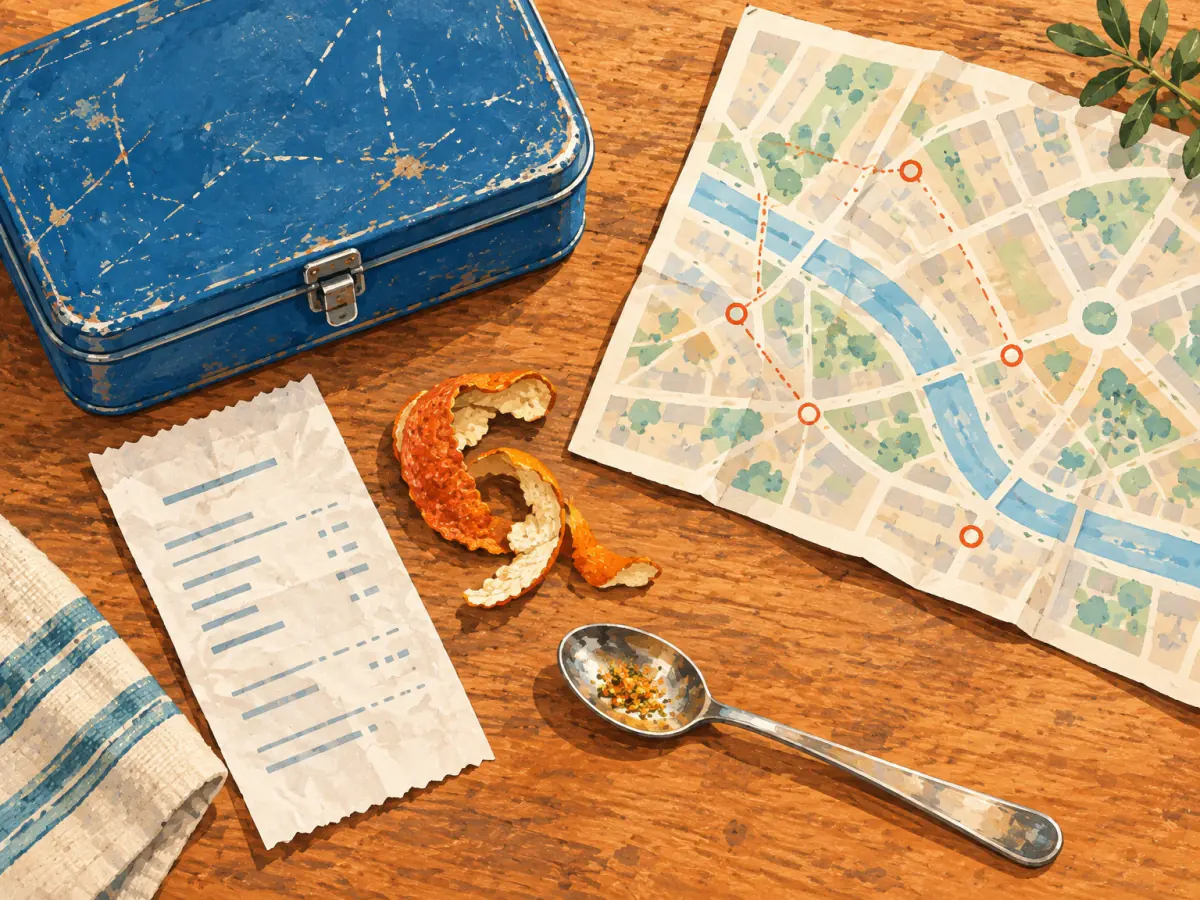
A blue lunch tin, receipt, citrus peel, spoon and marked map lie together on a desk.

دليل بمستوى C1+ (فوق المتقدم) لرواية ذكرى أثارها الطعام بالإنجليزية: كلمات دقيقة للرائحة والطعم، وأفعال الأكل والشرب، وخمسة أصوات علّة قصيرة، والفصل بين ما تتذكره وما يمكن التحقق منه.

لكي تروي ذكرى مرتبطة بالطعام بالإنجليزية جيدًا، ابدأ بما أثارها، وصِف الإحساس بكلمات دقيقة، ثم افصل بين ما تتذكره وما يمكن التحقق منه. “whiff” رائحة خفيفة عابرة، و“aroma” رائحة طيبة في الغالب، أما “sip” و“slurp” و“guzzle” فثلاث طرق مختلفة للشرب. حيوية الذكرى لا تعني دقتها، لذا بيّن درجة يقينك: “I suspect it was me that had changed.” هذا الموضوع من المستوى C1+ (فوق المتقدم)، وهو موجّه للبالغين الذين يتحدثون بطلاقة ويريدون أن تكون قصصهم دقيقة وصادقة.

لمن هذا المقال؟

  • البالغون في المستوى المتقدم الذين يتحدثون بطلاقة لكنهم يصفون الطعام دائمًا بالكلمات القليلة نفسها: “eat” و“drink” و“nice” و“smell”.
  • من يروون القصص بالإنجليزية: في الأحاديث اليومية، والمقابلات، والبودكاست، ومشاريع التاريخ الشفهي وتوثيق تاريخ العائلة.
  • المتعلّمون الذين يريدون أن تكون رواياتهم حيّة دون مبالغة، خاصة حين تتضمن القصة أشخاصًا آخرين.
  • ما زال الوقت مبكرًا: إذا كان دعم الادعاء بالأدلة ما زال صعبًا عليك، فابدأ بمقال المستوى C1 الذي يربط السياحة السينمائية بتكاليف الإدارة.
  • سهل جدًا: إذا كانت الأفعال الدقيقة والصياغة الحذرة تأتيك بشكل طبيعي، فانتقل إلى تصحيح تعميم ثقافي بالنبر التقابلي، أو إلى رأي متوازن عن العمل منفردًا.

افتح الصفحات النموذجية

افتح الصفحات النموذجية

بطاقات الكلمات

Personal · a taste of the past

Is there a dish that instantly brings back a particular place or person for you? What exactly do you remember about it?

Useful: ‘The moment I catch a whiff of…, I’m back in…’ · ‘If I had to recreate it, I’d start with…’ · ‘What I remember most vividly is…’

Personal · going back

Have you ever gone back to a food or a place from your past and found it was not as you remembered? What had changed, it or you?

Useful: ‘Had I known…, I might not have gone back.’ · ‘It tasted nothing like…’ · ‘I suspect it was me that had changed.’

المحادثة

Gammon, cabbage, carrots, pineapple: the vowel in cat.

Herring, pepper, cherries, lettuce: the vowel in bed.

Sniff, dill, dribble, kipper: the vowel in sit.

Scoff, chopped, broccoli, porridge: in British English, the vowel in hot.

Guzzle, stuffed, mussels, Brussels sprouts: the vowel in cup.

After a w sound, the written a in swallow, quarrel, swapped, squabble, quarry and waddle sounds like the vowel in hot.

Sip becomes sipped, and hot becomes hotter: double the final consonant after one stressed short vowel before a vowel-initial ending.

تركيب الجملة

Sensory meanings

  • sniff (noun or verb) — a short act of breathing in through the nose to detect a smell: “Owen gave the tin a cautious sniff before describing it.”
  • whiff — a slight smell that is noticed briefly: “A whiff of scorched peel escaped when Maya lifted the felt.”
  • aroma — a noticeable smell, often a pleasant one associated with food or drink: “The tea left a warm citrus aroma inside the tin.”

تدريبات إضافية

Eleven actions, not eleven synonyms

Mouth and throat actions

  • chew — bite food into pieces and move it around the mouth: “Chew the dried pear before judging its texture.”
  • lick — move the tongue over a surface: “Maya licked sauce from the tasting spoon.”
  • suck — keep something in the mouth and pull on it with the lips or tongue: “Owen sucked a mint during the journey.”
  • swallow — make food or drink pass down the throat: “She swallowed the capsule with water.”

Quantity, speed and attitude

  • devour — eat all of something quickly because of strong hunger: “After the night shift, Maya devoured the rice bowl.”
  • guzzle — informally and disapprovingly drink, or sometimes eat, a large amount quickly: “He guzzled two energy drinks during the briefing.”
  • scoff — informally and disapprovingly eat a lot very fast: “They scoffed the pastries before the guests arrived.”

Sound, size and rhythm

  • munch — eat steadily and often noisily, especially something crisp: “She munched raw carrots while editing.”
  • nibble — take small bites: “He nibbled a corner of the unfamiliar cheese.”
  • sip — drink a very small amount at a time: “Maya sipped the hot broth cautiously.”
  • slurp — make a loud noise while drinking: “Owen slurped the noodles and apologized.”

The blue lunch tin

A blue lunch tin, receipt, citrus peel, spoon and marked map lie together on a desk.

When sound archivist Owen opened a donated blue lunch tin, a faint aroma of scorched orange peel escaped from its lining. He held the tin beneath his nostrils—the two openings at the end of the nose through which a person breathes—and sniffed once more. The whiff made him picture his first radio job: a windowless studio, a nervous producer and a winter broadcast interrupted by a fire alarm. He was certain the producer had brought citrus cake that afternoon. The memory felt complete, down to the sugar on his fingers.

Instead of putting that recollection into the public catalogue, Maya asked him to test it. They sniffed the tin again, examined the hinge and found a bakery receipt trapped beneath the felt. Its date was six years later than Owen’s broadcast. A former owner then explained that she had carried smoked-orange tea in the tin during overnight bus shifts. The smell had not recovered Owen’s event; it had supplied vivid detail to a different event that already mattered to him.

At a tasting session the next day, a sharp sweet made Owen’s taste buds—the small structures on the tongue that detect flavours—react strongly. Lemon syrup began to dribble, or run in a thin stream, from the corner of his mouth. This intense sensation produced no confident story at all. The contrast persuaded him that intensity is not proof of accuracy. The archive now records sensory memories in two layers: the recollection itself and the independent evidence, if any, that supports it.

Sensory meanings

  • sniff (noun or verb) — a short act of breathing in through the nose to detect a smell: “Owen gave the tin a cautious sniff before describing it.”
  • whiff — a slight smell that is noticed briefly: “A whiff of scorched peel escaped when Maya lifted the felt.”
  • aroma — a noticeable smell, often a pleasant one associated with food or drink: “The tea left a warm citrus aroma inside the tin.”

Record a responsible sensory memory

A blue lunch tin, receipt, citrus peel, spoon and marked map lie together on a desk.
تعلّم هذه الوحدة
كيف تريد أن تتعلّم؟
لديك حساب؟

يفتح الحساب المجاني وحدة واحدة تبقى مفتوحة دائمًا.

الرائحة والطعم: ست كلمات دقيقة

كثيرًا ما تبدأ الذكرى برائحة، فسمّها بدقة. في العربية تغطي كلمة الرائحة معظم الحالات، أما الإنجليزية فتغيّر الكلمة بحسب مدة الرائحة ومدى طيبها:

  • “sniff”: شهيق قصير من الأنف، وتأتي فعلًا واسمًا.
  • “whiff”: رائحة خفيفة تُلاحظ لحظة. “I caught a whiff of smoke.”
  • “aroma”: رائحة واضحة وطيبة في الغالب تصدر عن طعام أو شراب، وهي قريبة من العبير أو الشذى: “the aroma of fresh coffee”. وللرائحة الكريهة قل “odour”، وإن كانت نفّاذة جدًا فقل “stench”.
  • “nostrils”: فتحتا الأنف أو المنخران.
  • “taste buds”: براعم التذوق، وهي تراكيب صغيرة على اللسان تلتقط الطعم.
  • “dribble”: يسيل في خيط رفيع، غالبًا من الفم. “Lemon syrup dribbled from the corner of his mouth.”

الأكل والشرب بدقة أكبر

يضيف كل فعل معنى الكمية أو السرعة أو الصوت أو الموقف. يبدو “guzzle” و“scoff” انتقاديين، و“scoff” بهذا المعنى بريطاني في الغالب.

  • حركات الفم: “chew” (يمضغ)، و“lick” (يلعق)، و“suck” (يمصّ)، و“swallow” (يبلع).
  • الجوع والسرعة: “devour” (يلتهم كل شيء بسرعة من شدة الجوع)، و“guzzle” (يشرب كثيرًا وبسرعة)، و“scoff” (يأكل كثيرًا وبسرعة). “We scoffed the pastries before the guests arrived.”
  • الحجم والصوت: “nibble” (يقضم لقيمات صغيرة)، و“munch” (يأكل بانتظام وبصوت غالبًا)، و“sip” (يرتشف)، و“slurp” (يشرب أو يأكل محدثًا صوتًا). “He slurped his noodles and apologised.”
  • البداية: “dig in” (دعوة في الغالب، مثل: تفضّلوا!) و“tuck into” (يُقبل على الطعام بشهية).
  • النهاية: “eat up” (يُنهي حصته كلها)، و“polish off” (يُجهز على ما تبقّى)، و“put away” (يأكل كمية مدهشة)، و“wolf down” (يزدرد الطعام بسرعة).
  • فقدان الشهية: “pick at” (ينقر الطعام بلا شهية) و“toy with” (يعبث بالطعام في الطبق). “She toyed with her pasta while she waited for the news.”

ما تتذكره وما يمكن التحقق منه

قد تعيد رائحة قوية بناء مشهد كامل وتمنحك شعورًا باليقين، لكن شدة الإحساس ليست دليلًا. تخيّل أمين أرشيف يشمّ رائحة قشر برتقال محترق في علبة طعام قديمة تبرّع بها أحدهم، فيظن أنه يتذكر كعكة في أول وظيفة له. لكن إيصالًا داخل العلبة يعود إلى ما بعد اليوم الذي يتذكره بست سنوات. كانت الرائحة حقيقية، أما القصة فلا.

لذلك اروِ الذكرى على طبقات:

  • ما أثار الذكرى، برواية حيّة: “What I remember most vividly is the steam on the windows.”
  • ما تعتقده، مع الإشارة إلى أنه ذكرى: “I’m fairly sure it was a Sunday, but I couldn’t swear to it.”
  • ما يمكن التحقق منه: صورة، أو إيصال، أو تاريخ، أو شخص آخر.
  • ما الذي تغيّر: “It tasted nothing like I remembered.”

عبارات العودة إلى الماضي وقواعدها

احفظها كقوالب كاملة:

  • “The moment I catch a whiff of…, I’m back in…” تعني “the moment” هنا “as soon as”، أي: ما إن، والمضارع البسيط يدل على أن ذلك يتكرر كل مرة.
  • “If I had to recreate it, I’d start with…” جملة شرطية من النوع الثاني لمهمة متخيَّلة.
  • “Had I known…, I might not have gone back.” جملة شرطية من النوع الثالث مع تقديم الفعل: “Had I known” تعني “If I had known”، أي: لو كنت أعلم.
  • “I suspect it was me that had changed.” جملة مُجزّأة للتوكيد تنقل التركيز من الطعام إليك.
تعلّم هذه الوحدة بطريقتك

استمع: خمسة أصوات علّة قصيرة في كلمات الطعام

تشترك كلمات كل سطر في صوت علّة قصير واحد، وغالبًا ما يدل الحرف الساكن المضاعف عليه: قارن “dinner” بـ“diner”. ولهذا أيضًا نكتب “chopped” و“hotter”. في العربية ثلاث حركات قصيرة فقط، لذلك يصعب التمييز بين أصوات العلة في “cat” و“bed” و“cup” و“hot”. وانتبه كذلك إلى صوت “p” في “pepper” و“pineapple” و“porridge”، فهو غير موجود في العربية: أخرجه مع نفَس خفيف حتى لا يصبح “b”. سطر “hot” بالنطق البريطاني، وفي الإنجليزية الأمريكية يكون هذا الصوت أكثر انفتاحًا.

Gammon, cabbage, carrots, pineapple: the vowel in cat.

Herring, pepper, cherries, lettuce: the vowel in bed.

Sniff, dill, dribble, kipper: the vowel in sit.

Scoff, chopped, broccoli, porridge: in British English, the vowel in hot.

Guzzle, stuffed, mussels, Brussels sprouts: the vowel in cup.

أخطاء شائعة

راجع قصتك بحثًا عن هذه الأخطاء:

  • “It smells well.” قل “It smells good.” أما “smell well” فتعني أن حاسة الشم لديك جيدة.
  • “an awful aroma” كلمة “aroma” طيبة عادةً، فقل “an awful smell”.
  • “I drank my soup.” في العربية نقول إننا نشرب الشوربة، لكن الإنجليزية تقول عادةً “eat soup” أو “have soup” حين تؤكل بالملعقة.
  • “choped” أو “hoter”. ضاعِف الحرف الساكن: “chopped” و“hotter”.
  • تفصيل حيّ يُروى كأنه حقيقة: “My aunt made it every Friday.” والأفضل: “I remember it as a Friday dish, but I may be mixing up two visits.”

تدريب يومي لمدة 15 دقيقة

تكلّم أولًا، ثم صحّح.

  • 3 دقائق: كرّر الأسطر الخمسة المسجّلة، ثم استخدم كلمة من كل سطر في جملة.
  • 4 دقائق: صِف وجبات الأمس بخمسة أفعال من هذه الصفحة، دون “eat” أو “drink”.
  • 4 دقائق: سجّل ذكرى خاصة بك مرتبطة بالطعام، مستخدمًا قالبين مما سبق.
  • 4 دقائق: استمع إليها، وصنّف كل تفصيل: متذكَّر أم قابل للتحقق، ثم أعد روايتها. بعد ذلك ناقش: “Is a memory that is partly rebuilt or invented still true in any meaningful sense?”

الخطوة التالية

انقل العناية نفسها إلى ادعاءات أخرى: صحّح تعميمًا ثقافيًا بالضغط على ما كان خاطئًا بالضبط، أو اشرح نسبة مئوية تنخفض بينما يزداد المجموع، أو اكتب رأيًا متوازنًا عن العمل منفردًا.

الأسئلة الشائعة

ما الفرق بين “whiff” و“aroma”؟

“whiff” رائحة خفيفة عابرة، طيبة كانت أو لا. أما “aroma” فرائحة واضحة وطيبة في الغالب، تصدر عادةً عن طعام أو شراب.

ما الفرق بين “sip” و“slurp” و“guzzle”؟

“sip” الشرب برشفات صغيرة، و“slurp” الشرب مع إحداث صوت، و“guzzle” شرب كمية كبيرة بسرعة، وغالبًا ما تحمل استهجانًا.

كيف أروي ذكرى بالإنجليزية دون مبالغة؟

اروِ ما أثار الذكرى بحيوية، وبيّن درجة يقينك بعبارات مثل “I’m fairly sure” و“I suspect”، وافصل بين ما تتذكره وما يمكن أن تؤكده صورة أو إيصال أو شخص آخر.

تعلّم هذه الوحدة
كيف تريد أن تتعلّم؟
لديك حساب؟

يفتح الحساب المجاني وحدة واحدة تبقى مفتوحة دائمًا.

ما الخطوة التالية؟

واصل التدرّب مع Flai

Flai هو تطبيق Flalingo للتدرب على المحادثة بالذكاء الاصطناعي، ويقدم محادثات صوتية وتصحيحات وتقارير للدروس تساعدك على توجيه تدريبك.

التعلّم مع معلم مباشر

في دروس Flalingo تتدرّب على وحدات مثل هذه في درس فردي مع معلم مباشر.