
140–190 kelimelik fotoğraf betimlemesi için dört bölümlü plan
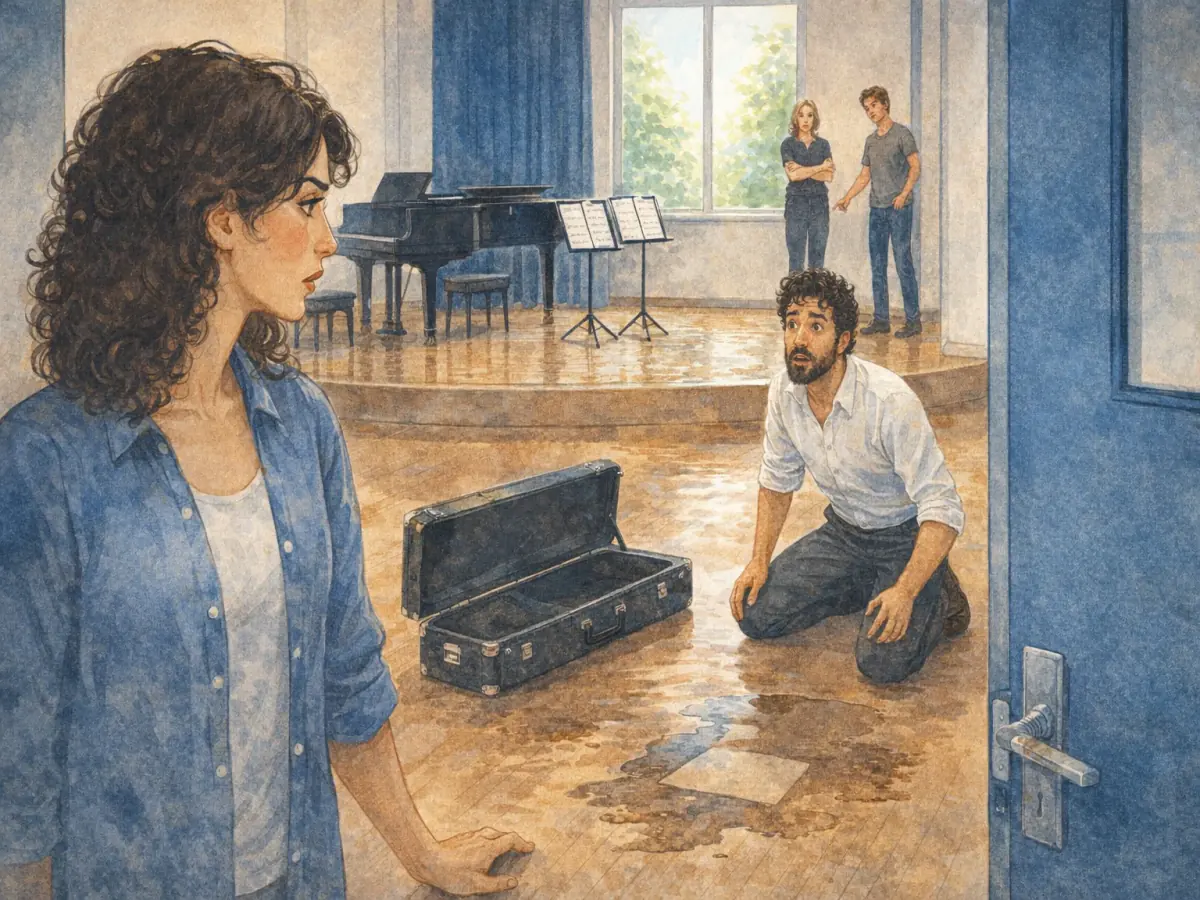
Bir prova odası düşünün: kapı eşiğinde bir kadın, hasarlı bir kutunun yanında diz çökmüş bir adam. Dört yer ifadesi ve bedenle ilgili altı kelime kullanın:
- Genel bakış: “The photo shows a rehearsal room with four people and a damaged case.”
- Mekân ayrıntısı: “In the centre, a man is kneeling next to the case.”
- Kanıta bağlı, temkinli çıkarım: “The case may have been moved: a dry rectangle marks where it stood.”
- Kişisel yorum: “The photo reminds me of the moment before a practical decision.”
Okurun gözünü yönlendiren yer ifadeleri
Tek yönde ilerleyin: önden arkaya ya da soldan sağa. Türkçedeki -de eki hem in hem on karşılığıdır; “ön planda” in the foreground olur ama “solda” on the left olur.
- Derinlik ve yanlar: in the foreground, in the centre, in the background, on the left, on the right. “In the foreground, a woman is standing in the doorway.”
- İlişkiler: in front of (önünde, izleyiciye daha yakın), behind, next to, opposite (karşısında; ardından of gelmez). “The man is opposite the window, behind the case.”
Beden dili: kesin adlandırın, temkinli okuyun
Eylemler için present continuous, duruşlar için ortaç kullanın: “She is pointing at the window.” “Her arms are folded.”
Bir jest kanıttır, sözlük maddesi değil: kavuşturulmuş kollar savunmacı bir tavrı da üşümeyi de rahatlığı da gösterebilir. Yazmadan önce tartışın: “Should interviewers judge candidates by their body language?” “Why do we feel so sure about other people’s feelings when the evidence is weak?”
- Duruş ve eller: folded arms (kavuşturulmuş kollar), a raised shoulder, a clenched fist (sıkılmış yumruk), a hand on the hip.
- Yüz: raised eyebrows (kalkık kaşlar), a frown, a furrowed brow (kırışmış alın), pressed lips.
- Eylemler: kneeling, pointing, shrugging, staring, leaning against a wall.
Look, seem, look like mı, look as if mi?
Duyu fiilleri kesinlik değil izlenim bildirir ve zarf değil sıfat alır. Türkçedeki “gibi” hem like hem as if olabilir, ama “yorgun görünüyor” cümlesinde gibi yoktur. Aşağıda sonradan gelen bir ayrıntı, sessiz bir sahnenin ilk okumasını değiştiriyor:
- Look, feel ya da sound + sıfat: “Her shoulders look tense.”
- Look ya da feel + like + isim: “The prop feels like real stone.”
- Look ya da sound + as if ya da as though + yan cümle: “It looks as if rain has come in overnight.”
- Seem, her türlü kanıttan gelen izlenim için: “He seems worried after reading the schedule.”
Maya Her folded arms look defensive at first.
Owen Yes, but the raised shoulder later looks as if it is protecting her.
Owen And the door feels like stone, but it is a painted prop.
Ne kadar eminsiniz? Çıkarım kipleri
Türkçede çıkarım fiile eklenen eklerle kurulur; İngilizcede kip ve have + past participle ayrı kelimelerdir: “taşınmış olmalı” must have been moved, “taşınmış olabilir” may have been moved, “taşınmış olamaz” can’t have been moved. Şimdi için kip + be, fotoğraftan önce olanlar için kip + have + past participle kullanın:
- Neredeyse kesin, must: “They must have arrived a while ago: their coats are hanging up.”
- Olası, may, might ya da could: “She may be waiting for someone.”
- Neredeyse kesinlikle değil, can’t ya da couldn’t: “The door can’t be real stone: one actor is carrying it with one hand.”
- Must have bir çıkarım, should have bir eleştiridir: “She must have called; she should have called me too.”
Her çıkarımı kontrol edin
Kameranın kaydettiğinin ötesine geçen her cümlenin altını çizin ve kanıtını not edin. Kanıt yoksa silin. Zayıfsa yumuşatın. Güçlüyse tutun.
- “She is angry.” yerine “She is frowning with her arms folded; she may be annoyed, or simply cold.”
- “Rain came in overnight.” yerine “It looks as if rain came in: there is a wet patch below the window.”
- “The performers damaged the case.” yerine “Nothing in the photo shows who damaged the case.”
Sık yapılan hatalar
Betimlemenizde bunları kontrol edin:
- “on the foreground” ya da “in the left”. Doğrusu in the foreground ve on the left.
- “She looks like tired.” Doğrusu “She looks tired.” Like isimden önce gelir.
- “He must went.” ya da “He must of gone.” Doğrusu “He must have gone.” Konuşmada: must’ve.
- “It remembers me of my first job.” Doğrusu “It reminds me of my first job.” Remember “hatırlamak”, remind “hatırlatmak” demektir.
Günde 10 dakikalık pratik
Herhangi bir fotoğraf olur. Haftada bir, betimlemenin tamamını yazıp kontrol edin.
- 2 dakika: Yukarıdaki üç repliği dinleyin ve her birinin kalıbını söyleyin.
- 3 dakika: Bir fotoğrafı dört yer ifadesiyle sesli betimleyin.
- 3 dakika: must have, might have ve can’t have ile, her biri because içeren üç tahmin yapın.
- 2 dakika: Bir genel bakış ve reminds me of ile bir yorum yazın.
Sonraki adım
B2’de sırada düzeltmelerini görünür tutan bir görüş yazısı, ardından ortalamanın yerel sorunları gizlediği bir şehir raporu var. C1’de ise bir sanat eleştirisi her görüşü kanıtla destekler.