

본문으로 바로가기
Flalingo

영어 연습

B1 Preliminary 읽기 Part 1과 조동사: 시험 주간 규칙 여섯 개로 익히는 should, must, mustn’t, needn’t

A teenager shares out the work at the whiteboard, and a friend points at a surprise email on his laptop.

B1 Preliminary와 B1 Preliminary for Schools를 위한 조언, 규칙, “할 필요 없음” 표현: should, ought to, must, have to, mustn’t, don’t have to, needn’t의 차이, 읽기 Part 1 안내문에서 쓰이는 방식, 규칙 여섯 개 예시와 흔한 실수.

조언에는 should나 ought to, 꼭 필요한 일에는 must나 have to, 허용되지 않는 일에는 mustn’t, 필요 없는 일에는 don’t have to나 needn’t를 써요. 먼저 이 두 가지를 구별하세요. “You mustn’t use your phone”은 규칙상 안 된다는 뜻이고, “You don’t have to bring lunch”는 원하면 가져와도 된다는 뜻이에요. B1 Preliminary 읽기 Part 1의 안내문 중 많은 것이 이런 규칙이에요. 이 글은 B1 Preliminary나 B1 Preliminary for Schools를 준비하는 12–16세 정도의 B1 학생을 위한 글이에요.

이 글이 맞는 분

  • B1 Preliminary나 B1 Preliminary for Schools를 준비하는 12–16세 정도의 학생.
  • must와 should는 알지만 mustn’t와 don’t have to를 헷갈리거나 “must to”라고 쓰는 학생.
  • 부모님께: 표지판이나 학교 규칙을 소리 내어 읽고 자녀에게 물어보세요. “조언이야, 꼭 해야 하는 거야, 하면 안 되는 거야, 안 해도 되는 거야?” 완벽한 영어는 필요 없어요.
  • 아직 일러요: must, mustn’t, don’t have to가 아직 낯설다면 A2 Key 수준의 학교 규칙 글부터 시작하세요(아래 링크).
  • 너무 쉬워요: had to와 will have to까지 일곱 가지 표현을 모두 정확히 쓴다면 듣기와 이야기 쓰기 글로 넘어가세요(아래 링크).

예시 학습 페이지 열기

예시 학습 페이지 열기

단어 카드

exhausted

extremely tired

Zara was exhausted after only four hours of sleep.

advise

tell someone what you think they should do

The nurse advised us to sleep more.

attempt

a try, often at something difficult; also a verb: try to do something difficult

It was Zara's first attempt to share her work.

대화

Zara I'm sorry about yesterday. I've tried to do everything myself, and I'm exhausted.

Amara We know. So let us help. What do you need?

Zara Kai, could you finish the interview videos? Theo, could you write the music? Amara, you don't have to do anything this week. Rest your ankle.

Kai See? Sharing isn't so hard.

Theo And we mustn't forget to sleep!

문장 형태

The Loop's rules

RULES FOR SURVIVING EXAM WEEK 1 You must sleep for at least eight hours. 2 You should take a short break every hour. 3 You don't have to answer messages after ten o'clock. 4 You mustn't drink coffee to stay awake. 5 You ought to go for a twenty-minute walk every day. 6 You needn't do everything alone. Ask for help!

Six short rules. Mix the forms: at least one must, one mustn't, one should or ought to, and one don't have to or needn't. Use your own ideas.

  • You must …
  • You mustn't …
  • You should / ought to …
  • You don't have to / needn't …
  • sleep, breaks, food, exercise, phones, help

추가 연습

Advice or rule?

You ought to rest your ankle for a week.

ADVICE: ought to = should (Mrs Price)

You should keep your foot up on a cushion.

ADVICE: should + verb (Mrs Price)

Players must wear their team shirts on Saturday.

RULE: must (Coach Bell)

Amara has to see a doctor on Friday.

NECESSARY: have to / has to (Mrs Price)

You don't have to come to training this week.

NOT NECESSARY: don't have to (Coach Bell)

You needn't bring your kit.

NOT NECESSARY: needn't + verb (Coach Bell)

You mustn't play in the final.

NOT ALLOWED: mustn't (Coach Bell)

What's the difference between mustn't and don't have to?

You mustn't play on an injured ankle: it's not allowed. You don't have to come to training: it isn't necessary, but you can if you want.

Should and ought to give advice. Must and have to say something is necessary. Mustn't means: don't do it! Don't have to and needn't mean: it isn't necessary.

  • advice: should / ought to + verb
  • a rule or something necessary: must / have to
  • not necessary: don't have to / needn't
  • not allowed: mustn't
  • ought TO and have TO, but should and must with no to

Five short texts

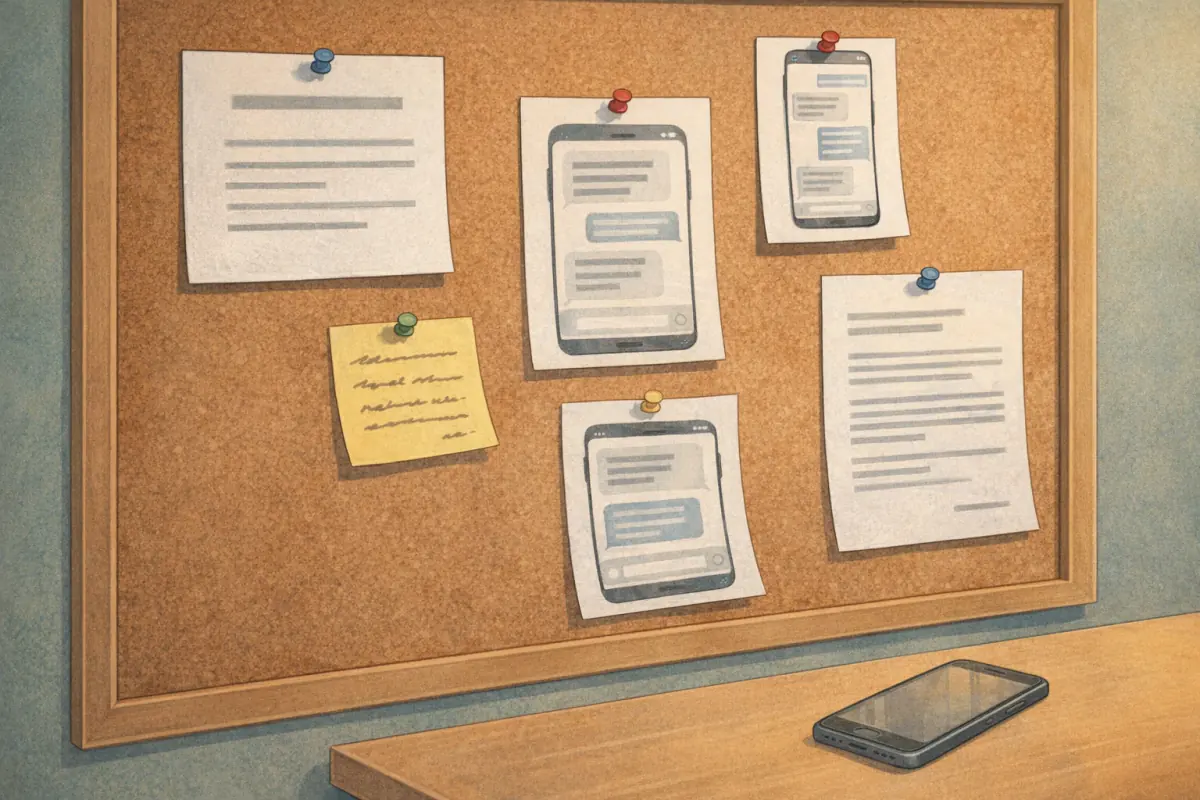
A noticeboard with five short texts: a sign, two messages, a note and a notice.

1 · Sign on the nurse's door

Feeling unwell? Knock and wait. If there is no answer, go to Reception. Please do not come in without knocking.

2 · Message from Hana

Zara, at my school in Busan lots of us study late before exams, and we all get tired. So my class made a rule: phones off at 10 and bed by 11. You ought to try it! Hana

3 · Note from the basketball coach

Amara, you needn't come to training this week. Rest your ankle! But please come and watch the final on Saturday. Coach Bell

4 · Message from Deniz

Our exams in Izmir start next week too! My friends and I study together in the library every afternoon. It's much less stressful than studying alone. Deniz

5 · Notice from Ms Rivera

Loop members: there's no club meeting on Thursday because of the exams. You don't have to bring your filming notes until next week, but you must tell Zara which interview you're working on by Wednesday.

이 단원 배우기
어떻게 배우고 싶나요?

네 가지 뜻, 일곱 가지 표현

각 표현은 네 가지 뜻 중 하나를 가져요. 먼저 뜻을 정하고, 그다음 표현을 고르세요.

  • 조언: “You should take short breaks.” “You ought to eat breakfast.”
  • 필요: “You must switch off your phone.” “I have to finish my project.”
  • 금지: “You mustn’t talk during the exam.”
  • 필요 없음: “You don’t have to come.” “You needn’t bring a pen.”

must일까 have to일까? should일까 ought to일까?

must와 have to는 아주 비슷해요. must는 글로 적힌 규칙이나 말하는 사람 자신의 강한 느낌처럼 들릴 때가 많고(“I must call my grandma”), have to는 밖에서 정해진 규칙을 말할 때가 많아요(“We have to wear a uniform”). must에는 과거형과 미래형이 없으니 had to와 will have to를 써요(“Last year we had to stay late”).

should와 ought to는 뜻이 같지만 should가 더 흔하고, 부정문에서는 특히 그래요. “You shouldn’t drink coffee at night.” 친구처럼 조언하고 싶다면 “If I were you, I’d ask for help.”라고 해 보세요.

mustn’t일까 don’t have to일까: 간단한 테스트

부정문이 되면 두 표현은 갈라져요. mustn’t는 “하지 마”, don’t have to와 needn’t는 “할 필요 없어”라는 뜻이에요. 테스트: 문장 끝에 “…but you can if you want.”를 붙여 보세요. 말이 되면 don’t have to나 needn’t를 써요. 한국어로 생각하면 쉬워요. “You mustn’t …”는 “…하면 안 돼요”, “You don’t have to …”는 “…안 해도 돼요”예요.

  • “You mustn’t run by the pool. The floor is wet.” → 금지
  • “Lunch is free, so you don’t have to bring food.” → 필요 없음
  • “You needn’t come to training, but come and watch the match.” → 필요 없음

들어 보세요: 바쁜 한 주에 일을 나누기

그룹 프로젝트를 혼자 다 하려던 학생이 사과하고 일을 나눠요. “could you…?”, “you don’t have to”, “we mustn’t”에 주목하세요(“mustn’t”의 첫 번째 t는 소리 나지 않아요: /ˈmʌsnt/).

학생 1 I'm sorry about yesterday. I've tried to do everything myself, and I'm exhausted.

학생 2 We know. So let us help. What do you need?

학생 1 Kai, could you finish the interview videos? Theo, could you write the music? Amara, you don't have to do anything this week. Rest your ankle.

학생 3 And we mustn't forget to sleep!

읽기 Part 1: 먼저 뜻을 정하세요

읽기 Part 1에서는 표지판이나 메시지 같은 짧은 글 다섯 개를 읽고, 선택지 세 개 중 같은 뜻인 것을 골라요. 선택지를 읽기 전에 뜻부터 정하세요. 조언, 필요, 금지, 필요 없음 중 무엇일까요? 흔한 함정은 “필요 없음”을 “금지”로 바꿔 놓은 선택지예요. 저희가 만든 예시예요.

  • “Bags must be left outside the exam room.” → 뜻: “You can’t take your bag into the exam room.”
  • “No need to bring paper. We’ll give you some.” → 뜻: “You don’t have to bring paper.” 함정: “You mustn’t bring paper.”
나에게 맞는 방법으로 이 단원 배우기

예시: 시험 주간 규칙 여섯 개

규칙을 쓰면 네 가지 뜻을 모두 연습할 수 있어요. 시험 과제는 아니에요. 제목 하나, 번호를 붙인 규칙 여섯 개, 적어도 네 가지 표현, 그리고 stress나 exhausted 같은 주제 단어 두 개를 넣으세요. 저희 예시예요.

  • 제목: “Exam week: six rules to get you through”
  • 1. “You must go to bed by eleven, or you’ll be exhausted.” → 필요
  • 2. “You should revise in short blocks with breaks.” → 조언
  • 3. “You mustn’t take your phone to bed.” → 금지
  • 4. “You don’t have to study all weekend.” → 필요 없음
  • 5. “You ought to test yourself, not just read your notes.” → 조언
  • 6. “You needn’t deal with stress alone: talk to a friend.” → 필요 없음

흔한 실수와 고치는 법

쓴 글에서 이런 실수를 찾아보세요(화살표 왼쪽이 실수, 오른쪽이 고친 문장).

  • “You must to sleep more.” → “You must sleep more.” must, should, needn’t 뒤에는 to를 쓰지 않아요.
  • “She have to rest.” → “She has to rest.”
  • “Yesterday I must study.” → “Yesterday I had to study.”
  • 선택 사항인데 “You mustn’t bring food”라고 쓰기 → “You don’t have to bring food.” “안 가져와도 돼요”는 mustn’t가 아니에요.
  • “She gave me an advice.” → “She gave me some advice.” advice는 셀 수 없는 명사이고, 동사는 advise예요: “She advised me to rest.”
  • “I’m very exhausted.” → “I’m really exhausted.”

15분 시험 주간 루틴

일주일에 서너 번 해 보세요.

  • 3분: 주변의 규칙이나 안내문 세 개를 보고 뜻을 말해요.
  • 5분: 모의고사에서 읽기 Part 1 글 하나를 풀어요. 선택지를 읽기 전에 뜻부터 말해요.
  • 5분: 스포츠 동아리 같은 새 주제로 네 가지 뜻을 모두 넣어 규칙 여섯 개를 써요.
  • 2분: 집에 있는 사람에게 규칙을 읽어 주고, “rule”인지 “advice”인지 말해 달라고 해요.

다음 단계

이 표현들을 말하기 Part 1에서도 써 보세요. “On school nights I have to be in bed by ten.” 그다음 아래의 듣기와 이야기 쓰기 글로 넘어가세요.

자주 묻는 질문

mustn’t와 don’t have to는 어떻게 달라요?

mustn’t는 허용되지 않는다는 뜻이에요: “You mustn’t use your phone in the exam.” don’t have to는 필요 없다는 뜻이에요: “You don’t have to bring a pen.”

needn’t는 요즘도 쓰나요?

네, 주로 영국 영어에서 써요. 말할 때는 don’t need to가 더 흔해요. needn’t 뒤에는 to 없이 동사를 써요: “You needn’t come.”

B1 Preliminary에 문법 시험이 따로 있나요?

아니요. 문법은 각 시험 안에서 평가돼요. 예를 들어 읽기 Part 6에서는 빈칸마다 단어 하나를 채워요.

Flalingo는 A2 Key와 B1 Preliminary를 제공하는 Cambridge English와 제휴 관계가 없으며, 해당 기관의 승인을 받은 서비스가 아닙니다.

이 단원 배우기
어떻게 배우고 싶나요?

다음에는 무엇을 할까요?

라이브 선생님과 1:1 수업

Flalingo에서 청소년은 이런 단원을 라이브 선생님과 1:1로, 자기 속도에 맞춰 공부합니다.

무료 체험 수업 예약하기