
본문으로 바로가기
Flalingo

영어 연습

아이와 배우는 영어 과거진행형과 과거형 (A2, 10–12세): when과 while로 지난 일 이야기하기

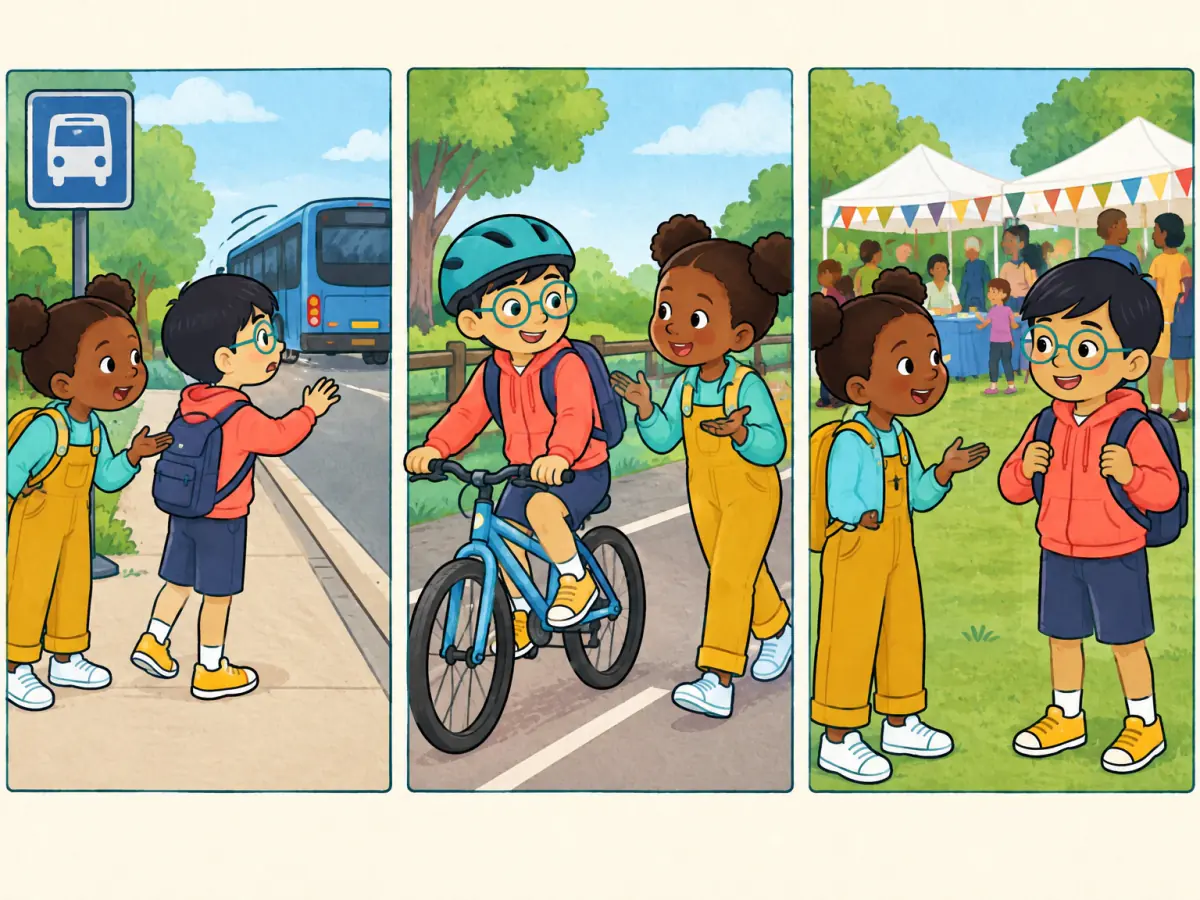
A three-part picture timeline shows a child missing a bus, cycling safely and arriving at a community event while another child asks follow-up questions.

10–12세 아이가 A2 단계에서 지난 일을 영어로 말하도록 도와주세요. 진행 중이던 배경은 과거진행형, 일어난 일은 과거형으로 말하고 when과 while로 이은 뒤 짧은 뉴스 글로 써 봅니다.

영어로 지난 일을 이야기할 때 아이들은 두 시제를 함께 씁니다. 과거진행형(was 또는 were + -ing)은 배경을 깔아 주고, 과거형은 그 중간에 끼어든 짧은 사건과 그 뒤의 각 단계를 말합니다: “I was checking the timetable when the bus left.” “when”은 짧은 사건 앞에, “while”은 길게 이어지던 동작 앞에 옵니다. 이 A2 주제는 이미 과거형을 쓰고, 자기 소식을 더 자세히 말하고 싶은 10–12세 정도의 아이에게 알맞습니다.

이 글이 맞는 분

  • 이미 과거형을 쓰는 아이의 부모님: 아이가 “Yesterday I went to the park.”라고 말하고 불규칙 동사를 몇 개 압니다.
  • 방학 뒤 영어를 다시 시작하는 가족: 방학 동안의 소식은 과거 시제를 다시 꺼내기에 자연스러운 주제입니다.
  • 학교 글쓰기를 돕고 싶은 부모님: 아래의 네 부분 이야기 틀은 일기, 뉴스, 짧은 이야기에 모두 쓸 수 있습니다.
  • 아직 이른 경우: 아이가 아직 “I go to the park yesterday.”라고 말한다면 과거형부터 따로 연습하세요. 아래 링크의 usually, now, yesterday로 쓰는 일기 글이 좋은 출발점입니다.
  • 너무 쉬운 경우: “While we were walking home, it started to rain, so we ran.” 같은 문장을 도움 없이 쓴다면 맨 아래 ‘다음 단계’로 넘어가세요.

예시 학습 페이지 열기

예시 학습 페이지 열기

단어 카드

waiting for the bus
the bus left
cycling to the event
go → went
take → took
see → saw
make → made

대화

Nia What were you doing when the bus left?

Leo I was checking the timetable.

Nia What did you do next?

Leo I called an adult and cycled on the safe path.

Nia Did you miss the event?

Leo No. I arrived before it started.

문장 형태

What were you doing when the bus left?

I was checking the timetable.

  • The bus left while I was looking away.
  • I cycled to the event and arrived safely.

추가 연습

Share an update

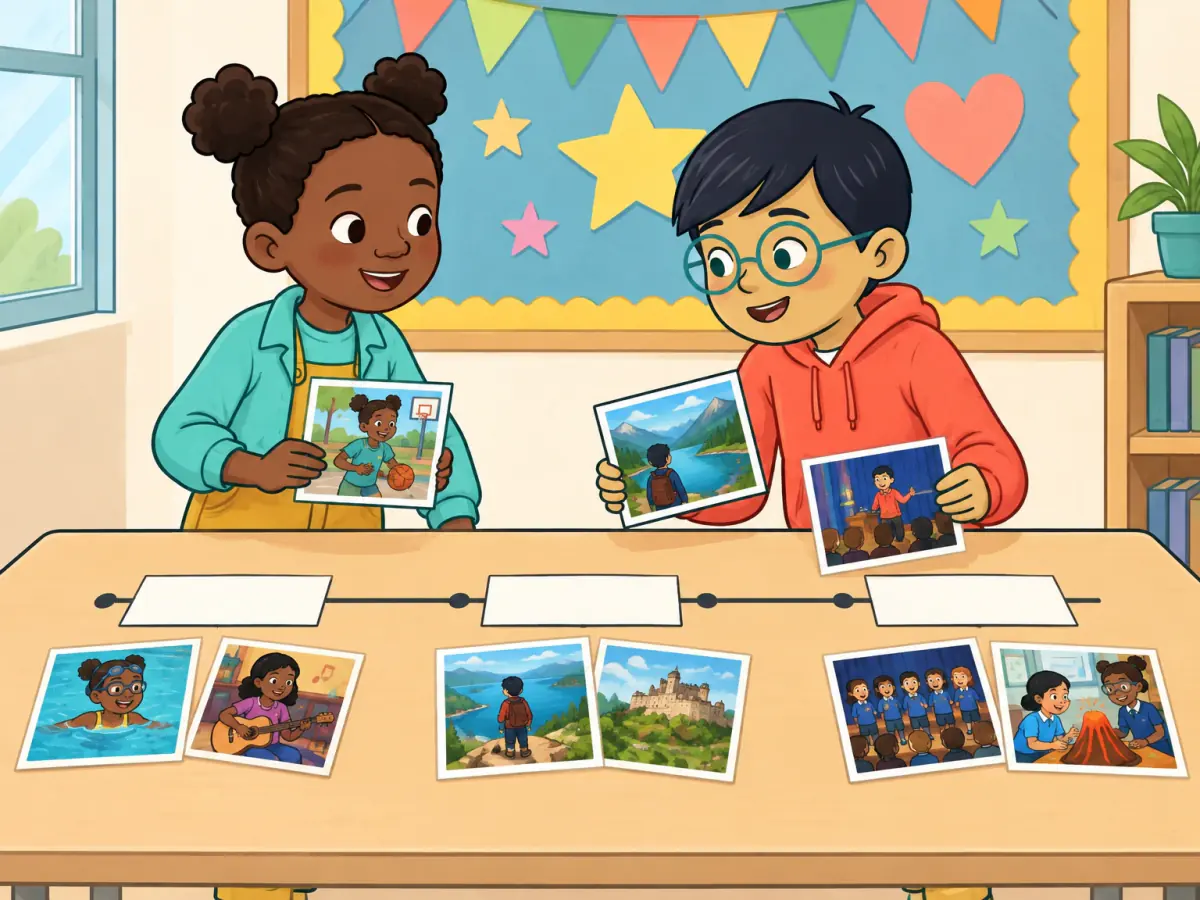
At a welcome-back display, Nia and Leo compare photos of current hobbies, a recent trip and a school event using blank timeline cards.

Nia What are you working on now?

Leo I am preparing a photo display.

Leo What did you do yesterday?

Nia I visited my cousin and took photos.

Nia Do you still cycle every week?

Leo Yes, I do.

What are you working on now?

I am preparing a photo display.

  • I visit the club every week.
  • We finished the mural yesterday.

Writer's studio

A three-part picture timeline shows Leo missing a bus, cycling safely and arriving at a community event while Nia asks follow-up questions.

Nia Who will read your text?

Leo My teacher will read my news.

What happened?

I was checking the timetable when the bus left. I called an adult, chose the safe cycle path and arrived before the event started.

  • while
  • when
  • next
  • finally
이 단원 배우기
어떻게 배우고 싶나요?

배경과 사건: 두 가지 역할, 두 가지 시제

지난 일을 말하는 이야기에는 보통 이미 진행 중이던 긴 동작과 그 중간에 일어난 짧은 사건이 있습니다. 긴 동작은 배경이고 과거진행형으로 말합니다: “I was waiting for the bus.” 짧은 사건은 과거형으로 말합니다: “The bus left.”

과거진행형은 was 또는 were에 동사의 -ing 형태를 붙입니다. I, he, she, it에는 “was”, you, we, they에는 “were”를 씁니다. 한국어의 “-고 있었다”와 비슷합니다: “버스가 떠났을 때 시간표를 확인하고 있었어요.” 다만 한국어는 주어에 따라 동사 모양이 바뀌지 않아서 “We was”라고 말하기 쉬우니 주의하세요.

  • 배경: “We were playing football.”
  • 사건: “It started to rain.”
  • 함께: “We were playing football when it started to rain.”

when과 while, 무엇을 쓸까?

“when”은 짧은 사건과 함께 옵니다: “I was checking the timetable when the bus left.” “while”은 길게 이어지던 배경 동작과 함께 옵니다: “The bus left while I was looking away.” 한국어의 “-(으)ㄹ 때”, “-는 동안”과 비슷합니다. 한국어에서는 이 부분이 보통 문장 앞쪽에 오지만, 영어에서는 앞에도 뒤에도 올 수 있습니다. 문장이 “when”이나 “while”로 시작하면 그 부분 뒤에 쉼표를 찍습니다: “While I was looking away, the bus left.”

한 가지 더: 과거형 동사 두 개를 “when”으로 이으면 동시가 아니라 순서를 나타냅니다. “When the bus left, I called an adult.”는 버스가 떠난 뒤에 전화를 했다는 뜻입니다. 아이에게 물어보세요: “어느 쪽이 먼저 시작됐을까?”

있었던 일 묻고 답하기

“What were you doing when…?”은 배경을 묻는 질문이라 was나 were + -ing로 답합니다. “What did you do next?”는 다음 단계를 묻고, 과거형으로 답합니다. “did” 뒤에는 동사원형을 씁니다: “Did you missed…?”가 아니라 “Did you miss the event?”입니다. 아래에서 세 질문을 모두 들어 보세요.

Nia What were you doing when the bus left?

Leo I was checking the timetable.

Nia What did you do next?

Leo I called an adult and cycled on the safe path.

Nia Did you miss the event?

Leo No. I arrived before it started.

이야기에 필요한 불규칙 과거형

목록으로 외우기보다 완전한 문장 속에서 연습하세요. “did”가 오면 동사원형으로 돌아갑니다: “I took the bus.” 하지만 “I didn’t take the bus.”

  • go → went: “We went to the sports centre.”
  • take → took: “I took the safe path.”
  • see → saw: “I saw the bus at the corner.”
  • make → made: “We made a new plan.”
나에게 맞는 방법으로 이 단원 배우기

말한 소식을 짧은 글로

아이가 일어난 일을 소리 내어 말할 수 있다면 글로 쓰는 것은 작은 한 걸음입니다. 한두 문장씩 네 부분으로 쓰면 됩니다. 아이가 바꿔 쓸 수 있는 예시입니다: “Last Saturday, my sister and I were waiting at the bus stop. While we were talking, the bus went past without stopping. We called Dad, and he drove us to the stadium. In the end, we arrived just before the match started.”

  • 장면: 누가, 어디서, 무엇을 하고 있었나
  • 사건: 무슨 일이 일어났나 (when이나 while로)
  • 다음 단계: then, after that
  • 마무리: in the end, finally

흔한 실수와 쉬운 해결법

A2 단계에서는 자연스러운 실수입니다. 올바른 문장으로 다시 말해 주고 아이가 이야기를 이어 가게 하세요.

  • “I was check the timetable.”: was 또는 were와 -ing가 함께 필요합니다: “I was checking the timetable.”
  • “We was waiting.”: we, you, they에는 “were”를 씁니다.
  • “While the bus left, I was reading.”: 짧은 사건에는 “when”을 씁니다: “When the bus left, I was reading.”
  • “I was calling an adult and I was cycling there.”: 차례로 일어난 단계는 과거형으로 말합니다: “I called an adult and cycled there.”
  • “He goed home.”: 불규칙 동사는 과거형이 따로 있습니다: “He went home.”

집에서 하는 놀이: 끊긴 이야기

저녁 식사 때 15분 정도 해 보세요. 1라운드: “at seven o’clock yesterday evening”처럼 시간을 하나 말하면 모두 그때 무엇을 하고 있었는지 말합니다. 2라운드: 한 사람이 “I was reading in bed…”처럼 배경 문장을 시작하면 다음 사람이 사건으로 끼어듭니다: “…when the lights went out.” 3라운드: 그다음에 무슨 일이 있었는지 말합니다. 일주일에 한 번, 아이가 이야기 하나를 쓰고 배경 동사와 사건 동사에 서로 다른 색으로 밑줄을 긋게 하세요.

다음 단계

다음에는 동시에 일어난 두 동작을 더해 보세요: “While I was cooking, my brother was laying the table.” 그다음 so로 결과를 이어 봅니다: “The bus left, so I called an adult.”

자주 묻는 질문

과거형과 과거진행형은 어떻게 다른가요?

과거형은 끝난 동작과 차례로 일어난 단계에 씁니다: “I called an adult.” 과거진행형은 과거의 어느 순간에 진행 중이던 동작에 씁니다: “At eight o’clock I was checking the timetable.”

“while”을 과거형과 함께 써도 되나요?

짧고 갑작스러운 사건에는 쓰지 않습니다: “while the bus left”가 아니라 “when the bus left”라고 합니다. 길게 이어지는 동작이라면 가능하지만(“While I waited, I read a book.”), A2 단계에서는 “while” + was/were + -ing가 안전한 규칙입니다.

“did you miss”인가요, “did you missed”인가요?

“Did you miss the event?”가 맞습니다. “did”가 이미 과거를 나타내므로 본동사는 원형을 씁니다: “I didn’t miss it.”

이 단원 배우기
어떻게 배우고 싶나요?

다음에는 무엇을 할까요?

라이브 선생님과 함께 배워요

Flalingo 어린이 수업에서는 아이가 이런 단원을 라이브 선생님과 1:1로, 같은 화면의 게임으로 연습합니다.

무료 체험 수업 예약하기