
本文へ移動
Flalingo

英語の練習

B1 Preliminary対策 used toとdidn’t use to:昔の習慣を話す・書くコツ

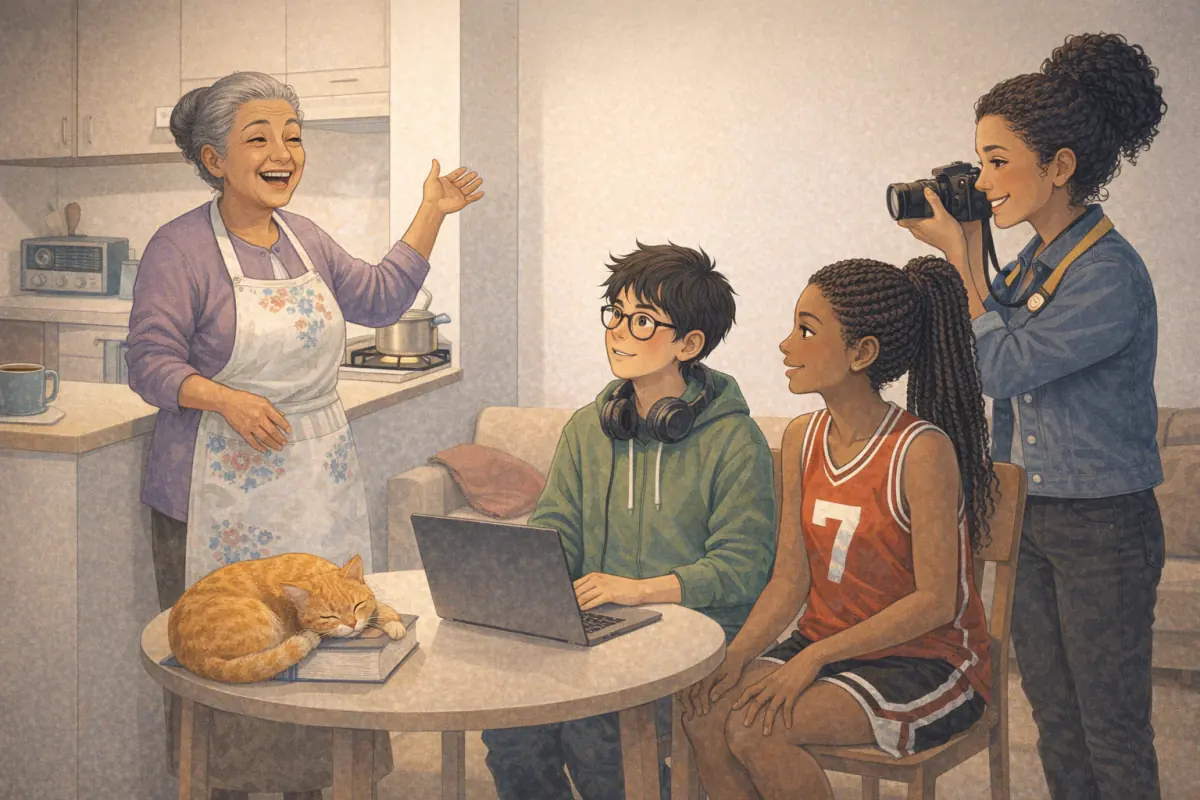
A grandmother tells her story in her small kitchen corner while three friends listen and film; an orange cat sleeps on a dictionary.

B1 Preliminary(B1)を目指す中高生向け:used to、didn’t use to、Did you use to …?の使い方、過去形・過去進行形との組み合わせ、40~50語の「昔と今」の段落の書き方。

過去にくり返していた習慣や、昔は本当だったけど今はちがう状態を言うときは、used to + 動詞の原形を使う:“I used to learn English from cartoons.” didとdidn’tのあとはuse toになる:“I didn’t use to speak much.”、“Did you use to sing?” 一度で終わった動作は過去形(past simple)、そのとき進行中だった動作は過去進行形(past continuous)で言うよ。これを使えば、B1 Preliminaryのスピーキングで自分の過去についてもっと長く答えられる。この記事は12~16歳くらいの中級(B1)の人向け。

この記事が向いている人

  • B1 PreliminaryやB1 Preliminary for Schoolsの準備をしている12~16歳くらいの人。
  • 先週末にしたことは言えるけど、小さいころの話になると1文で終わってしまう人、“didn’t used to” と書いてしまう人。
  • 保護者の方へ:お子さんに、小さいころどうやって英語を覚えたか、今はどうしているかを聞いてみてください。答えに「昔」「変化」「今」がそろっていれば、段落の計画はもうできています。
  • まだ早い:“How often do you …?” や今の毎日の習慣がまだ難しいなら、まず頻度についてのA2 Keyの記事から始めよう(下のリンク)。
  • 簡単すぎる:「昔と今」の段落を間違えずに書けるなら、ライティングPart 1の100語のメールと、留学生を迎えるホストの紹介文に進もう(下のリンク)。

サンプルページを開く

サンプルページを開く

単語カード

vocabulary

all the words you know in a language

The Language Swap is helping everyone's vocabulary grow.

translate

to say or write something in another language

Can you translate 'window' into Turkish? It's 'pencere'.

repeat

to say or do something again

Deniz repeated the word slowly three times.

revise

to study something again before a test

Kai revises his Turkish words on the bus.

会話

Kai Abuela, tell everyone how you learned English.

Abuela Rosa I grew up in Mexico City, and I didn't speak much English then. When I first moved to Kingsbay, I used to learn English from song lyrics.

Abuela Rosa Every evening, while the radio was playing, I wrote the words in a little notebook.

Abuela Rosa One evening I was singing in my kitchen when my neighbour knocked on the door.

Abuela Rosa I thought she was angry, but she asked me to join her choir! That's how I made my first English friend.

Kai Did you use to sing in Mexico too?

Abuela Rosa No, I didn't use to sing in front of people at all. Now I sing with her choir every week!

Amara That's like me. When I was little, I used to switch between English and Twi at home, sometimes in the same sentence!

文の形

Hana's paragraph: How I used to learn English

When I was eight, I used to learn English from cartoons. I didn't use to understand much, but I loved the songs. Later I started drawing comics with English words. Now I read English websites every day, and I'm not afraid of mistakes.

Hana's paragraph has 43 words: then (used to), a change (later), and now.

  • When I was …, I used to …
  • I didn't use to …
  • Later I …
  • Now I …

追加の練習

Abuela Rosa's story

Abuela Rosa tells her story in her small kitchen corner while Kai, Amara and Zara listen and film; an orange cat sleeps on a dictionary.
lyrics

the words of a song

Rosa wrote the lyrics in a little notebook.

choir

a group of people who sing together

Rosa sings with her neighbour's choir every week.

Kai Abuela, tell everyone how you learned English.

Abuela Rosa I grew up in Mexico City, and I didn't speak much English then. When I first moved to Kingsbay, I used to learn English from song lyrics.

Abuela Rosa Every evening, while the radio was playing, I wrote the words in a little notebook.

Abuela Rosa One evening I was singing in my kitchen when my neighbour knocked on the door.

Abuela Rosa I thought she was angry, but she asked me to join her choir! That's how I made my first English friend.

Kai Did you use to sing in Mexico too?

Abuela Rosa No, I didn't use to sing in front of people at all. Now I sing with her choir every week!

Amara That's like me. When I was little, I used to switch between English and Twi at home, sometimes in the same sentence!

used to + verb: a past habit or state that is not true now

  • I used to learn English from song lyrics.
  • I didn't use to sing in front of people.
  • Did you use to sing?

was / were + -ing: an action in progress

  • while the radio was playing
  • I was singing in my kitchen

Past simple: a finished action; it can stop an action in progress

  • … when my neighbour knocked on the door.
  • She asked me to join her choir.

Speaking Part 1: when you were younger

Examiner Kai, what did you use to do in your free time when you were younger?

Kai I used to build games on my grandmother's old computer. It was really slow, but I loved it.

Examiner Do you still do that?

Kai Yes, but now I use the club laptop. At the moment I'm making a quiz game for the Language Swap.

Examiner How did you use to learn new words?

Kai I used to write them on sticky notes and put them on the fridge. My grandmother still finds some!

What did you use to do in your free time when you were younger?

I used to build games on my grandmother's old computer. It was really slow, but I loved it.

Compare then and now. Add a reason or an example to make your answer longer.

  • When I was younger, I used to …
  • I didn't use to …, but now I …
  • At that time I was living in …
  • These days I …
この単元を学ぶ
どの方法で学びますか?

used to:今は変わった過去の習慣

used to + 動詞の原形は、過去に何度もくり返したことや長いあいだ本当だったことで、今はもうちがうことを表す。日本語の「以前は〜していた」「よく〜したものだ」は、多くの場合used toで言える。used toに現在形はないから、今の習慣は現在形(present simple)で言おう。

形(used toのあとの動詞は原形のまま):

  • 肯定:“I used to watch cartoons in English.”
  • 否定:“I didn’t use to understand much.”
  • 疑問:“Did you use to read comics?” “Yes, I did.” / “No, I didn’t.”
  • 状態にも使える:“I used to be shy.”
  • 発音:used toは1語のようにすばやく /ˈjuːstə/ と言う。真ん中の音はzじゃなくてs。

習慣、進行中の動作、終わった動作

過去の話には、ふつう3つの時制が必要。習慣はused to、そのとき進行中だった動作は過去進行形(was / were + -ing)、終わった動作は過去形。過去形はwhenのあとで、進行中の動作をさえぎることができる。日本語の「〜していた」は進行中にも習慣にも使うけど、英語では過去の習慣をふつう “I was watching …” とは言わないよ。

おばあさんが孫に、どうやって英語を覚えたかを話している会話を聞こう。used to learn(習慣)、was singing(進行中)、knocked(さえぎる動作)に注目して、続くdidの疑問文とdidn’tの否定文も見つけよう。

祖母 I grew up in Mexico City, and I didn't speak much English then. When I first moved to Kingsbay, I used to learn English from song lyrics.

祖母 One evening I was singing in my kitchen when my neighbour knocked on the door.

孫 Did you use to sing in Mexico too?

祖母 No, I didn't use to sing in front of people at all. Now I sing with her choir every week!

40~50語の「昔と今」の段落を書こう

試験の問題ではないけど、ライティングPart 2の物語や記事に必要な力がつく。はっきりした始まり、変化、終わりだ。4つの部分を計画しよう:When I was …, I used to …; I didn’t use to …; Later I …(過去形); Now I …(現在形)。

この例は43語。自分の過去について書こう。

  • “When I was nine, I used to learn English from video games.” → 昔:used toで習慣
  • “I didn’t use to speak much because I was shy.” → 理由つきの否定文
  • “Later my cousin in Canada started sending me funny voice messages.” → 変化:過去形
  • “Now I reply in English, and we chat every weekend.” → 今:現在形

学ぶことについての単語

気持ちを表す形容詞のあとの小さな単語に注目しよう。

  • revise, repeat, translate(復習する、くり返す、訳す):“I used to revise new words on the bus.”
  • afraid of, good at:“I used to be afraid of speaking. Now I’m good at it.”
  • interested in, proud of:“Now I’m proud of my accent.”
自分に合った方法でこの単元を学ぶ

スピーキングPart 1:小さいころについての答え方

B1 PreliminaryのスピーキングPart 1では、試験官から自分自身について質問される。その中には過去についての質問もありうる。昔、今、そして理由か例を言おう。最初の質問には模範解答があるよ。

  • “What did you use to do after school when you were younger?” → “I used to play football in the park every day. Now I have more homework, so I only play on Saturdays.”
  • “How did you use to learn English at first?”
  • “How is your life different now from when you were eight?”

よくある間違いと直し方

見直すときにこれを探そう(矢印の左が間違い、右が直した文)。

  • “I didn’t used to like reading.” → “I didn’t use to like reading.”
  • “I use to play football on Saturdays.” → “I usually play football on Saturdays.” 「土曜日はサッカーをする」は今の習慣。
  • “I used to visit London twice.” → “I visited London twice.” 回数を言うときはused toを使わない。
  • “I’m used to watch cartoons.” → “I used to watch cartoons.” “I’m used to + -ing” は「〜に慣れている」という意味。
  • “I was singing when she was knocking.” → “I was singing when she knocked.”

15分の練習ルーティン

週3回で十分。1回はこんな流れ:

  • 3分:過去の習慣を2つ、変化を1つ、今していることを1つメモする。
  • 5分:40~50語で段落を書く。
  • 3分:didのあとがusedじゃなくてuseか、Nowのあとが現在形かを確認する。
  • 4分:スピーキングの質問にひとつ声に出して答えて、録音する。

次のステップ

これが簡単になったら、ライティングPart 1の100語のメールと、留学生を迎えるホストの紹介文に進もう(下のリンク)。

よくある質問

“didn’t use to” と “didn’t used to”、どっちが正しい?

“didn’t use to” と “Did you use to …?” と書こう。過去はもうdidが表しているから。話すときは同じに聞こえるので、ちがいが大事なのは書くとき。

used toとbe used toのちがいは?

“I used to get up early” は、昔は早起きしていたけど今はしない、という意味。“I’m used to getting up early” は早起きに慣れている、という意味で、be used toのあとには名詞か-ing形が来る。

used toの代わりに過去形を使ってもいい?

過去の習慣なら、たいていOK。“I watched cartoons every day” も正しい文。used toを使うと、その習慣がもう終わったことがはっきりする。一度で終わった動作には過去形しか使えない。

Flalingoは、A2 KeyおよびB1 Preliminaryを提供するCambridge Englishと提携しておらず、同機関の承認を受けていません。

この単元を学ぶ
どの方法で学びますか?

次は何をしましょうか?

ライブの先生とマンツーマン

Flalingoでは、ティーンがこのような単元をライブの先生とマンツーマンで、自分のペースで学びます。

無料体験レッスンを予約