
本文へ移動
Flalingo

英語の練習

B1 Preliminaryの現在形の受け身:料理の作り方を説明してレシピカードを書こう

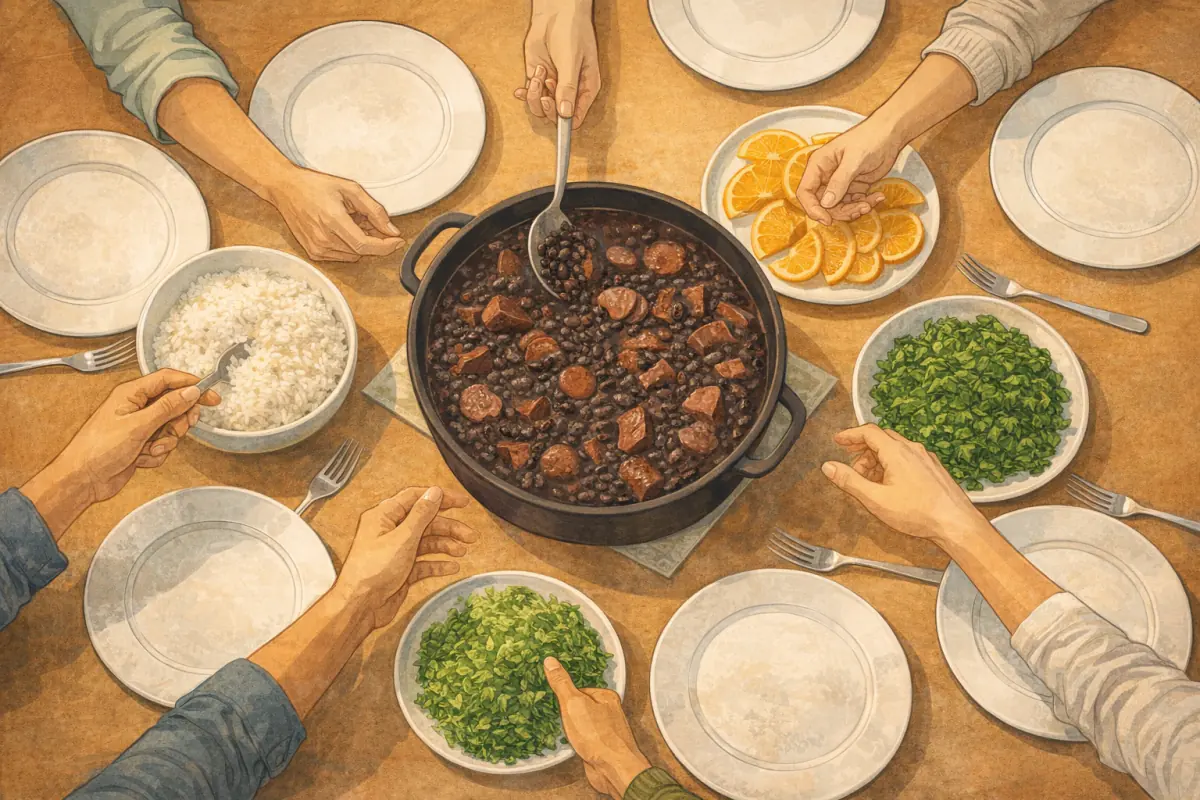
A Sunday lunch table seen from above: a pot of feijoada in the middle, with rice, orange slices, green vegetables and hands reaching for the food.

B1 Preliminary(B1)をめざす中高生向け:現在形の受け身、a few・a little・plenty of、料理の動詞、順番を表す言葉で作り方を説明し、80語のレシピカードを書く方法。

料理の作り方を説明するときは、現在形の受け身を使う。is か are のあとに過去分詞を置くんだ。たとえば “The rice is boiled.”。誰がするかより、食べ物に何が起きるかが大事だから、食べ物が文の最初に来る。量は a few、a little、plenty of で言い、手順は First、Then、After that、Finally で順番に並べよう。B1 PreliminaryのリーディングPart 6の空所も、こうした小さな単語で埋めることが多いよ。この記事は12~16歳くらいの中級(B1)の人向け。

この記事が向いている人

  • B1 PreliminaryやB1 Preliminary for Schoolsの準備をしている12~16歳くらいの人。
  • 家で何を作るかは言えるけど、作り方を説明するとどの文も “you” や “my mum” で始まったり、a few と a little を混同してしまったりする人。
  • 保護者の方へ:今度いっしょに料理をするとき、お子さんに手順を英語で説明してもらってください(“The onions are cut, then …”)。First、Then、Finally で4つの手順が言えれば、レシピカードはもう半分できています。
  • まだ早い:A2 Keyの短いメールでも難しいなら、泊まりに来る友だちへのメールを扱ったA2の記事から始めよう(下のリンク)。
  • 簡単すぎる:受け身で手順をミスなく説明できるなら、B1 Preliminaryのリーディングのマッチング問題と、ライティングPart 2のスクリーンの使い方の記事に進もう(下のリンク)。

サンプルページを開く

サンプルページを開く

単語カード

mix

to put different foods together and move them round

The cabbage is mixed with a spicy sauce.

add

to put one more thing in with the others

Salt is added to the cabbage first.

serve

to give food to people at a meal

Feijoada is served with rice.

taste

to put a little food in your mouth to see if it is good

Hana's grandfather always tastes the sauce first.

会話

Kai So, Hana, how is kimchi made?

Hana First, the cabbage is cut into big pieces and salt is added.

Kai And then?

Hana Then it is left overnight. In the morning, the salt is washed off.

Kai What about the red sauce?

Hana The sauce is made with garlic, hot pepper and a little sugar. Then the cabbage is mixed with the sauce by my grandfather. He always does that part.

Hana Finally, the kimchi is put in big jars and kept somewhere cold.

文の形

Write a recipe card for a family dish (about 80 words).

Lemon chicken with rice (for four people) Ingredients: four pieces of chicken, two lemons, a little oil, plenty of garlic, a few fresh herbs, rice, salt. Method: First, a little salt is added to the chicken. Then the garlic and lemon juice are mixed and poured over the chicken. After that, it is roasted in the oven for an hour. Meanwhile, the rice is boiled. Finally, everything is served with the fresh herbs on top. It's my favourite Sunday dish!

The model has 80 words. It has a name, ingredients with amounts (a little, plenty of, a few) and a method with passive verbs (is added, are mixed, is roasted, is boiled, is served) and order words (First, Then, After that, Finally).

  • Name: … (for … people)
  • Ingredients: a few …, a little …, plenty of …
  • First, … is / are …
  • Then …
  • After that, …
  • Finally, … is served with …

追加の練習

How is kimchi made?

Kai So, Hana, how is kimchi made?

Hana First, the cabbage is cut into big pieces and salt is added.

Kai And then?

Hana Then it is left overnight. In the morning, the salt is washed off.

Kai What about the red sauce?

Hana The sauce is made with garlic, hot pepper and a little sugar. Then the cabbage is mixed with the sauce by my grandfather. He always does that part.

Hana Finally, the kimchi is put in big jars and kept somewhere cold.

How is kimchi made?

The cabbage is cut and salt is added. Then everything is mixed with a spicy sauce.

Present simple passive: am / is / are + past participle (cut, added, made, mixed, kept). Use it when the food and the action are more important than the person. Add by + person only when it matters: The kimchi is mixed by my grandfather.

  • is cut
  • is added
  • is made
  • are mixed
  • are kept
  • is mixed by …

Lucas's recipe post

A Sunday lunch table seen from above: a pot of feijoada in the middle, with rice, orange slices, green vegetables and hands reaching for the food.

Our Sunday feijoada, by Lucas

Every Sunday, my family gets together for a big lunch, and the star of the table is always feijoada. It's a traditional Brazilian dish of black beans and meat. People say that every family in Brazil has its own recipe, and this is ours.

Our feijoada starts the night before: the black beans are washed and left in cold water. On Sunday morning, they are boiled slowly with the meat for about three hours. A few onions and plenty of garlic are fried in a little oil and then added to the pot. We don't add many herbs, because we want the beans to have the strongest flavour.

Feijoada is served with white rice, green vegetables and slices of orange. The orange isn't just there for its colour: its fresh, sour taste is perfect with the heavy beans.

My favourite part isn't the eating, though. It's the three hours in the kitchen, when everyone talks and laughs while the pot cooks. And every five minutes, someone asks when lunch is ready!

Want to try it? You'll need a big pot, a lot of time and some hungry friends.

On camera

What dish are you showing us today?

Hi, everyone! Today I'm showing you my family's lemon chicken. It's made every Sunday in our house. First, the chicken is covered in garlic and lemon, and then it's roasted. It smells delicious, and it tastes like home!

  • Hi, everyone! Today I'm showing you …
  • It's made …
  • First, … Then, …
  • It smells / tastes …
この単元を学ぶ
どの方法で学びますか?

現在形の受け身:is / are + 過去分詞

誰がするかより、物に何が起きるかが大事なときに受け身を使う。レシピを読む人が知りたいのは、誰がお米を混ぜるかじゃなく、お米がどうなるか。1つのものや数えられない名詞には is、複数には are を使うよ。

日本語のレシピは「玉ねぎを切る」のように誰がするかを言わないけど、英語では命令文でなければ主語が必要。だから “The onions are cut.”(受け身)か “Cut the onions.”(命令文)にする。作り方を説明するなら受け身が自然だよ。

  • 肯定:“The peppers are filled with rice.”
  • 否定:“The fish isn’t fried. It’s grilled.”
  • 疑問:“How is kimchi made?”
  • 不規則な過去分詞:cut → cut、put → put、make → made、keep → kept、leave → left

聞いてみよう:家庭の料理はどう作られる?

2人の生徒がキムチについて話している。受け身の動詞を7つ見つけよう。“by my grandfather” は、その人が大事だから入っている。最後の行では、2つの動詞が1つの is を共有しているよ。

生徒1 So, Hana, how is kimchi made?

生徒2 First, the cabbage is cut into big pieces and salt is added.

生徒2 The sauce is made with garlic, hot pepper and a little sugar. Then the cabbage is mixed with the sauce by my grandfather. He always does that part.

生徒2 Finally, the kimchi is put in big jars and kept somewhere cold.

量:a few、a little、plenty of、none

量を表す言葉は名詞に合わせる。英語は数えられるもの(eggs、onions)と数えられないもの(salt、oil、milk)を分けるんだ。日本語には名詞の複数形がないから、a few のあとの -s を忘れやすいよ。

  • “a few” + 複数名詞:“a few onions”、“a few spoonfuls of sugar”
  • “a little” + 数えられない名詞:“a little salt”
  • “plenty of”(たっぷり、十分すぎるほど)+ どちらも:“plenty of garlic”、“plenty of eggs”
  • “none” は単独で、“no” は名詞の前に:“How much sugar is left?” “None.”
  • 冠詞:最初は “a bowl”、次からは “the bowl”。一般的な話には冠詞なし:“Kimchi is made from cabbage.” 日本語には冠詞がないから、特に見直そう。

料理の動詞と -ed の3つの音

役に立つ動詞:boil(ゆでる)、fry(油で焼く・揚げる)、roast と bake(オーブンで焼く)、grill(網で焼く)、stir(かき混ぜる)、slice(薄く切る)、mash(つぶす)、pour(注ぐ)。-ed の音は3種類。カタカナの「ミックスド」のように母音を足さず、mixed は1音節で言おう。

  • /t/:k、s、p、sh、ch、f の音のあと:mixed、sliced、baked
  • /d/:それ以外のほとんどの音のあと:served、poured、boiled
  • /ɪd/、1音節増える:t か d のあと:added、roasted

80語のレシピカードを書こう

レシピカードはB1 Preliminaryの問題ではないけど、正確な文法とわかりやすい順番の練習になる。料理の名前、量つきの材料、作り方を書き、受け身の動詞を4つ、量の表現を3つ、順番の言葉を4つ入れよう。私たちの例は約80語。自分の家の料理で書いてみよう。

  • “Banana pancakes (for two people)” → 名前
  • “Ingredients: two ripe bananas, two eggs, a few spoonfuls of flour, a little milk, a little butter, plenty of honey.” → 量つきの材料
  • “Method: First, the bananas are mashed with a fork. Then the eggs, flour and milk are added, and everything is mixed well.” → 順番の言葉と受け身3つ
  • “After that, a little butter is heated in a pan, and small spoonfuls of the mixture are cooked for two minutes on each side.” → 受け身をさらに2つ
  • “Finally, the pancakes are served with plenty of honey on top.” → 最後の手順
自分に合った方法でこの単元を学ぶ

B1 Preliminaryでどう役立つ?

fresh、spicy、herbs のような食べ物の単語は、写真を1分ほど説明するスピーキングPart 2でも役に立つ。

リーディングPart 6はオープンクローズ。空所が6つある短い文章で、それぞれに1語を書く。多くの空所が、まさにこうした小さな単語を求めているよ。やってみよう:

  • “The peppers ___ filled with rice and lamb.” → are
  • “You only need a ___ salt.” → little
  • “Use plenty ___ fresh herbs.” → of

よくある間違いと直し方

カードを書き終えたら、これを探そう(矢印の左が間違い、右が直した文)。

  • “The cabbage cut into pieces.” → “The cabbage is cut into pieces.” 日本語の受け身は「切られる」のように動詞の形で表すけど、英語には is / are が必要。
  • “Salt is add first.” → “Salt is added first.”
  • “The onions is fried.” → “The onions are fried.”
  • “The cabbage is cutted.” → “The cabbage is cut.”
  • “Add a few salt.” → “Add a little salt.”

15分の練習ルーティン

週3回で十分:

  • 3分:家の料理をひとつ選び、材料と量を書く。
  • 6分:順番の言葉を使って、受け身の手順を4~5つ書く。
  • 3分:is / are、過去分詞、a few / a little を確認する。
  • 3分:料理を30秒で声に出して説明し、録音する。

次のステップ

次はリーディングのマッチング問題とライティングPart 2の記事(下のリンク)に挑戦して、過去形の受け身も使ってみよう:“This cake was first made by my grandmother.”

よくある質問

英語の現在形の受け身はどう作る?

is か are + 過去分詞:“Salt is added.” 疑問文では is か are が主語の前に来る:“How is it made?”

a few と a little の違いは?

a few は複数名詞(a few eggs)、a little は数えられない名詞(a little milk)といっしょに使う。a をつけない few、little は「ほとんどない」という意味になるよ。

受け身の文で by はいつ使う?

その人が大事なときだけ:“The sauce is mixed by my grandfather.” ふつうは省く:“The bread is baked daily.”

Flalingoは、A2 KeyおよびB1 Preliminaryを提供するCambridge Englishと提携しておらず、同機関の承認を受けていません。

この単元を学ぶ
どの方法で学びますか?

次は何をしましょうか?

ライブの先生とマンツーマン

Flalingoでは、ティーンがこのような単元をライブの先生とマンツーマンで、自分のペースで学びます。

無料体験レッスンを予約