
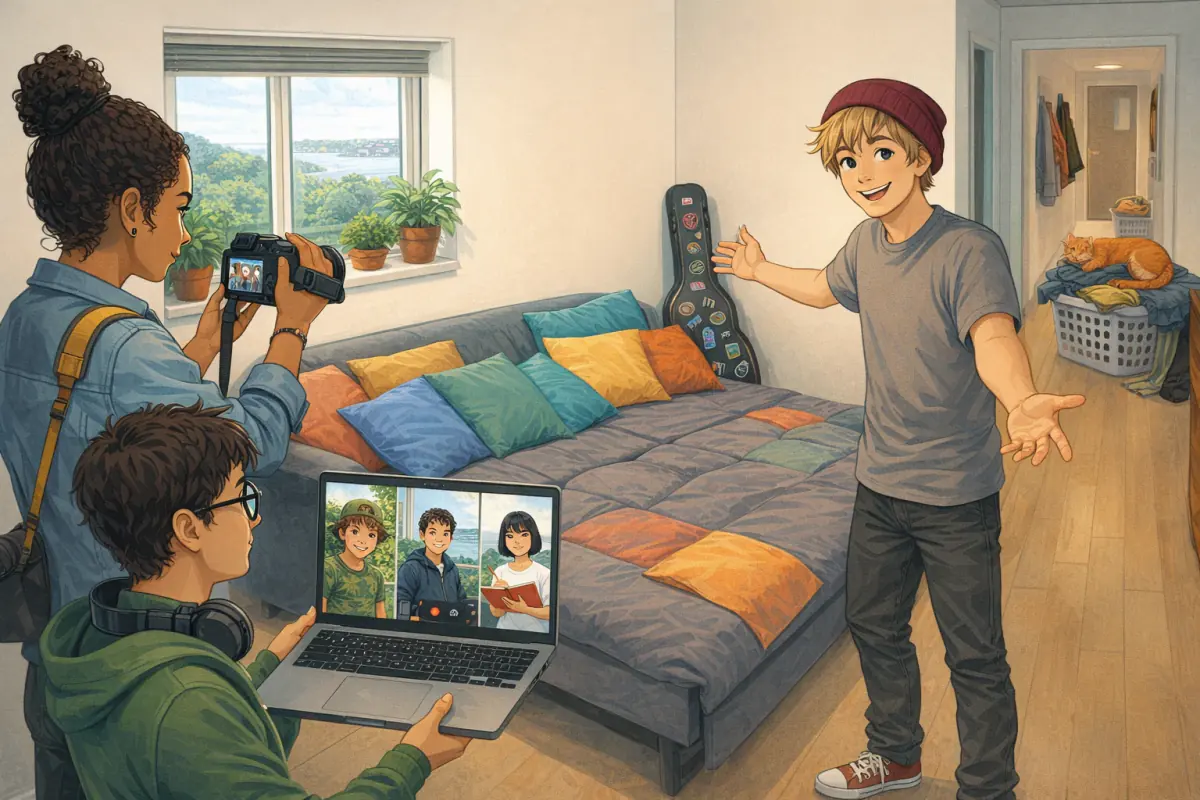
4つのパートで書くホストプロフィール
ホストプロフィールは、たとえば学校の交換留学で家族のところに泊まるゲストに向けた短い文章。60語くらいで4つのパート(場所、寝る所、習慣、誘い)を書いて、正直な比較をひとつ加えよう。下の例には各パートの役割を書いておいたよ。自分の家について書こう。
- “Hi! I live in a small flat near the city centre with my mum and my little brother.” → どこに、誰と住んでいるか
- “It isn’t as big as a house, but it’s cosy and convenient: the bus stop is right outside.” → 理由つきの正直な比較
- “You’ll have the spare room, which is quiet enough to study in.” → ゲストが寝る場所(または “You’ll share my room.”)
- “We usually have dinner at seven,” → 家族の習慣
- “and you’re welcome to join us!” → 誘い
正直に比べる:not as … as、much、a bit
“Not as … as” は、一方がある性質で及ばないことを表す:“My flat isn’t as big as your house.” 日本語の「〜ほど〜ない」(あなたの家ほど大きくない)と同じ形だよ。2つのasは弱く発音して、形容詞を強く言おう:as BIG as。notがなければ「同じくらい」の意味:“as quiet as a library”。
差が大きいときは比較級の前にmuchかfar、小さいときはa bitを使う:“much closer”、“a bit shorter”。「ずっと」はveryではなくmuchだよ。ホストと友だちの会話を聞いてみよう。
ホスト OK, welcome to my flat. It isn't as big as your house, Lucas. It's much smaller, to be honest.
友だち Small is fine! My house is bigger, but it's far from everything. Your flat is much closer to the city centre.
too … toとenough:大きさのせいでできないとき
“Too” は「ちょうどいい程度を超えている」、つまり何かができないという意味:“This hall is too narrow to film in.” 日本語の「〜すぎて〜できない」(狭すぎて撮影できない)に当たる。tooはveryを強くした言葉じゃないから、“The room is too cosy” は文句のように聞こえるよ。“Enough” は「必要なだけ」という意味で、「十分広い」とは語順が逆。形容詞の後ろ、名詞の前に置く:“big enough”、“enough beds”。
最後のinを忘れないで。部屋の中で勉強するから “quiet enough to study in” になる。tooとenoughを探しながら聞いてみよう。
友だち1 My flat has a balcony with a great view of the bay. But our spare room is too small to fit two beds.
友だち2 Theo, this hall is too narrow to film in. I can't get far enough back!
家とゲストの単語
正確な単語を使うと、短い文章も本物らしくなる。flat(イギリス)とapartment(アメリカ)は同じ意味だよ。
- 場所:balcony、view、neighbourhood、spare room、sofa bed。
- 説明:convenient(お店やバス停が近い)、cosy(小さくて暖かくて居心地がいい)、peaceful、noisy、tidy。
- 部屋の中:wardrobe、shelf、curtains、cushion、duvet、pillow。
- おもてなし:host、guest、share。accommodationはイギリス英語では数えられない名詞:“The school needs accommodation for all the guests.”
- 注意:日本語の「マンション」は英語ではflatかapartment。英語のmansionは、とても大きくて豪華な家のことだよ。
声に出して言おう:理由と誘い
ゲストに、どうしてあなたの家が自分に合うのかと聞かれるかもしれない。理由を2つ言って、そのうちひとつは比較にしよう:“It’s close to the sea, so you can watch the boats, and it’s much quieter than your street.”
スピーキングPart 2では写真を1分くらい説明する。部屋の写真なら、比較をひとつ入れてみよう。
- 誘う:“Would you like to come to the market with us?”
- 答える:“I’d love to!” または “Thanks, but I’d rather stay in.” I’d ratherの後ろはtoなしの動詞の原形。
よくある間違いと直し方
書き終わったらこれを探そう(矢印の左が間違い、右が直した文)。
- “My flat isn’t as big than your house.” → “My flat isn’t as big as your house.”
- “The sofa bed is enough big.” → “The sofa bed is big enough.” 「十分大きい」の語順のまま訳さないこと。
- “The hall is too much narrow for film.” → “The hall is too narrow to film in.”
- “Your view is very better than mine.” → “Your view is much better than mine.” 「ずっといい」はmuch better。
15分の練習ルーティン
週3回で十分。1回はこんな流れ:
- 3分:実際の家をひとつ決めて、4つのパートをメモする。
- 6分:比較をひとつ入れて60語くらい書く。
- 3分:4つのパートとenoughの位置を確認する。
- 3分:声に出して言ってから、ゲストがあなたの家を選ぶ理由を2つ言う。
次のステップ
次はもっと長い問題に挑戦しよう。ライティングPart 1のメールでは場所の説明を求められることもあるし、リーディングPart 2では5人の人物を8つの短い文章と結びつける。次のガイドはレシピカードがテーマだよ(下のリンク)。