
ルールの表現は6つ、意味は4つ
学校のルールの多くは、6つの短い表現で言えます。1つずつではなく、意味でまとめて覚えよう:「していい」「しなさい」「してはいけない」「しなくていい」。
- “can”(していい):“You can borrow three books.”
- “can’t”(してはだめ):“You can’t use your phone in lessons.”
- “must”(ルール):“You must be in class by 8.30.”
- “have to” / “has to”(必要):“We have to wear trainers in the gym.”
- “mustn’t”(してはいけない):“You mustn’t run in the corridors.”
- “don’t have to”(必要ない):“You don’t have to buy lunch.”
mustn’tとdon’t have to:いちばん大事な違い
肯定文では“must”も“have to”も「必要だ」という意味です。でも否定文になると意味が分かれます。“mustn’t”はルール違反、つまり禁止。“don’t have to”はルールがないので自分で選べる、という意味です。日本語に置きかえるとわかりやすくなります:「〜してはいけない」→“mustn’t”、「〜しなくてもいい」→“don’t have to”。確かめ方:後ろに「でも、したければしてもいい」をつけられるなら“don’t have to”です。
- “You mustn’t eat in the lab. It isn’t safe.” → してはいけない。
- “You don’t have to wear a uniform.” → 好きな服を着ていい。
- “It’s Saturday, so I don’t have to get up early.” → その必要はない。
聞いてみよう:新しい学校のルール
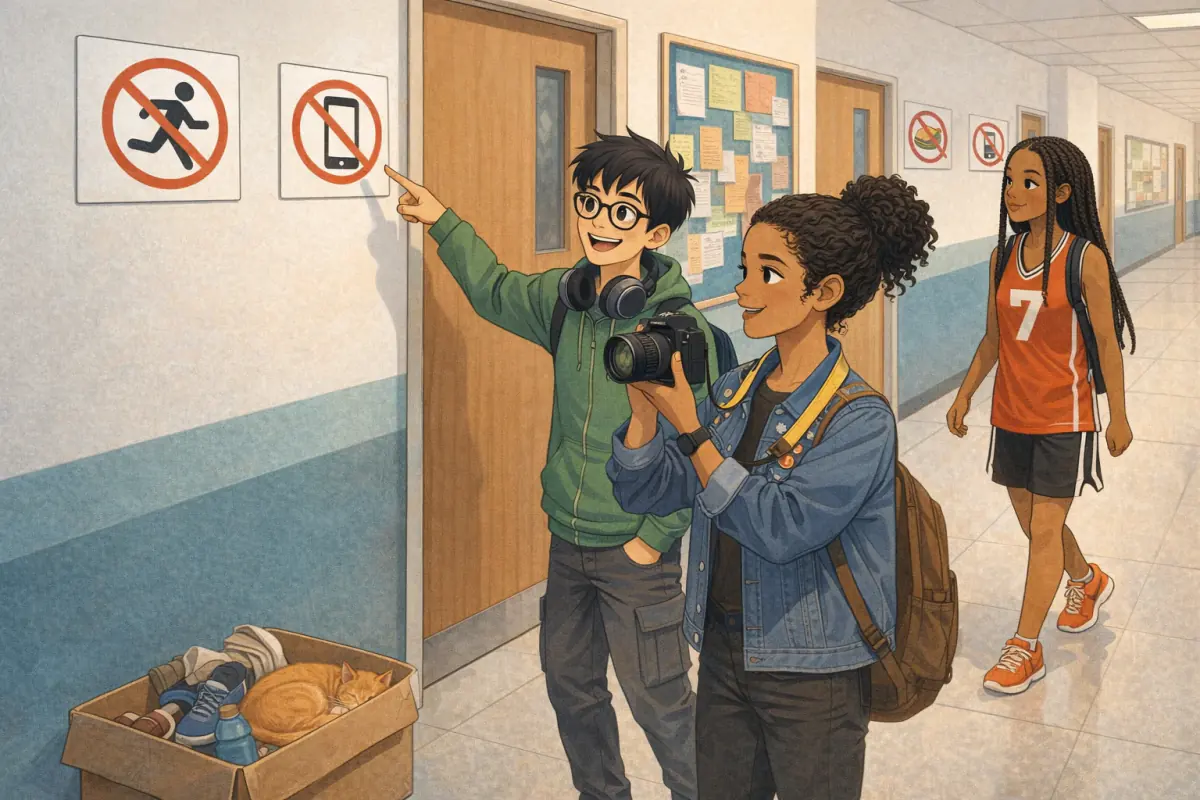
3人の生徒が学校の標識を見ています。1人は転校してきたばかりで、ガーナのアクラにあった前の学校を思い出しています。“had to”に注目しよう。“must”には過去形がないので、“must”と“have to”の過去はどちらも“had to”です。
Student Look at these signs for the guide. This one means you mustn't run.
Friend And that one means you can't use your phone in the library.
New student At my school in Accra, we had to wear a uniform.
Friend Here we don't have to wear one. I can wear my green hoodie every day!
Student But you have to be on time. The notice says pupils must be in class at 8.45.
ルールを聞く:“Can I…?”と“Are we allowed to…?”
していいかを聞くときは“Can I…?”か“Are we allowed to…?”、しなければならないかを聞くときは“Do I have to…?”を使います。短い答えでは、質問の最初の語をくり返します。日本語の疑問文には“do”に当たる語がないので、“We have to wear a uniform?”のように言いがちですが、正しくは“Do we have to wear a uniform?”です。
- “Can I sit here?” “Yes, you can.”
- “Are we allowed to use calculators?” “No, we aren’t.”
- “Do I have to bring a dictionary?” “No, you don’t.”
New student Are we allowed to eat in the science lab?
Student No, we aren't. It's a new rule this term.
標識のルール:A2 Keyリーディング Part 1
リーディング・ライティングのPart 1では、標識、掲示、メッセージなどの短い文を6つ読み、3つの文から同じ意味のものを選びます。正解は、同じルールを別の言葉で言いかえていることが多いです。下は私たちが作った例です:
- “POOL: Students must wear a swimming cap.” → “You need a cap to swim here.”
- “No food in the computer room.” → “You can’t eat in the computer room.”
- “Sports Day: no uniform needed.” → “You don’t have to wear a uniform on Sports Day.”
- ひっかけ:掲示が“No…”なのに“can”を使った選択肢や、必要ないだけなのに“mustn’t”を使った選択肢。
よくある間違いと直し方
“can”と“must”のあとの動詞には、“to”も-sもつけません。“to”が残るのは“have to”だけで、he、she、itのときは“has to”になります。書き終えたら、次の間違いを探そう(矢印の前が間違い、後ろが正しい形)。
- “No running! You don’t have to run.” → “No running! You mustn’t run.”
- “You must to be on time.” → “You must be on time.”
- “She have to take the bus.” → “She has to take the bus.”
- “Yesterday we must stay late.” → “Yesterday we had to stay late.”
練習:新しく来た生徒への5つのアドバイス
これは試験の課題ではなく練習です。学校に新しく来た人に向けて、アドバイスを5つ書こう。書き出しは少なくとも3種類にして、1つは“don’t have to”を使います。私たちの例と、10分のルーティンです:
- “1 You must be at school by 8.30. 2 You can borrow library books. 3 You mustn’t eat in the computer room. 4 You don’t have to wear a uniform on Fridays. 5 Always pack your bag the night before.”
- 1〜4分:アドバイスを5つ書く。
- 5〜7分:保護者か友だちが1つずつ聞いて、「していい」「しなさい」「してはいけない」「しなくていい」のどれかで答える。
- 8〜10分:スピーキングPart 1のように、“Tell me something about your school.”に声に出して答える。ルールを2つ入れよう。
次のステップ
次は、これらの表現を、家に泊まりに来る友だちへのメールで使ってみよう。B1 Preliminaryでは、もっと長い文章でルールを説明したり比べたりします。