
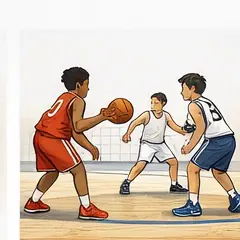
 match
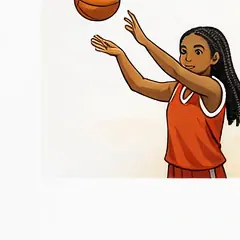 throw
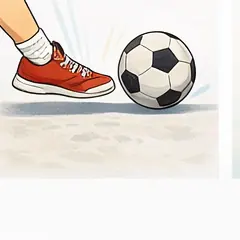 kick
今?ふだん?それとも一瞬のプレー?
レポートには2つの現在形がどちらも必要です。am/is/are + -ingは今まさに進行中のことを表し、“Look!”や“at the moment”とよく一緒に使います。現在形は習慣を表し、“usually”や“every week”と一緒に使います。日本語の「〜している」は「毎週練習している」のように習慣にも使えるので、“They are practising every week.”と書きがちですが、習慣なら“They practise every week.”が基本です。
実況では、一瞬で始まって終わる短い動作にも現在形を使います:“She takes the ball, she runs, she scores!” だから、レポートの中の現在形がいつも「ふだん」の意味とは限りません。見分け方:素早く終わる動作なら現在形、まだ続いていることなら-ing。
- 今:“Look! The fans are singing.” “Our goalkeeper isn’t moving!”
- ふだん:“The team practises twice a week.” “She usually scores from there.”
- 一瞬のプレー:“Number 7 throws the ball, and it goes in.” “Hillview score first.”
聞いてみよう:学校の試合の生中継
生徒たちが学校のバスケットボールの試合をライブ配信用に撮影していて、1人が実況を担当しています。-ingの形と、習慣を表す表現(“usually scores”)を聞き取ろう。イギリス英語では、チーム名に“are”を使うことがよくあります。
Zara We're live! Hi, everyone. We're in the school sports hall, and the match is starting.
Theo Look at the fans. They're singing already!
Zara Kai, you're the commentator. What's happening?
Kai Amara is running down the court with the ball. She usually scores from there!
Theo Yes! Two points! Harbour Park are winning!
スポーツの単語:play、go、doとスコア
自分の競技に合うスポーツの単語を、少なくとも3つ使おう。
- ボールを使う競技やゲームには“play”:play football、play tennis、play chess
- -ingの活動には“go”:go swimming、go sailing、go skateboarding
- 運動やスポーツ全般には“do”:do exercise、do sport
- 動作と人:throw、catch、kick、hit、jump/player、team、coach、fan、commentator
- 結果:win a match、beat a team、lose to a team、score a goal
- スコア:“The final score is 2–1.”(“two–one”と読む)。1–1は“one all”。イギリスのサッカーでは0をよく“nil”と言います。
モデルレポートを1文ずつ
私たちが作った例です。スコア入りの見出しの下に約75語。どの文にも役割が1つあります。
- “Riverside 2, Hillview 1” → 見出し。
- “It’s Saturday afternoon, and our school football team, Riverside, is playing Hillview in the town park.” → 1:いつ、どこで、誰が。
- “Hillview score first, but our players are running hard and the fans are singing.” → 2:最初の出来事と、-ingで描く場面。
- “In the second half, Mia kicks the ball from the middle of the pitch, and it’s a goal!” → 3:決定的な場面。
- “Ten minutes later, our number 4 scores another goal, and the final score is 2–1.” → 4:スコア。
- “We usually lose to Hillview, so everyone is very happy today.” → 5:締めくくり(習慣を添えて)。
よくある間違いと直し方
書き終えたら動詞を1つずつ確認しよう(矢印の前が間違い、後ろが正しい形)。日本語の動詞は主語によって形が変わらないので、“she plays”の-sを忘れやすくなります。また「勝つ」1語でwinとbeatの両方を表すので、“We won Hillview.”とも書きがちです。
- “Look! The fans sing.” → “Look! The fans are singing.”
- “She running with the ball.” → “She is running with the ball.”
- “My brother play tennis.” → “My brother plays tennis.”
- “We play swimming on Sundays.” → “We go swimming on Sundays.”
- “We won Hillview.” → “We beat Hillview.” (試合にはwin、相手チームにはbeat)
- “The match is very excited.” → “The match is very exciting.” (わくわくしているファンはexcited、わくわくさせる試合はexciting)
- “runing”, “swiming” → “running”, “swimming”
15分の練習ルーティン
週に2回、自分が出た試合、見た試合、または想像した試合について書こう。
- 1〜3分:どの試合でも1分見て、声に出して実況しよう:“Now number 10 is running…”
- 4〜5分:2つのチーム、スコア、スポーツの単語3つをメモしよう。
- 6〜12分:1文に1つの役割で、5文を書こう。
- 13〜15分:スコア、場面を描くis/are + -ing、he・she・itのあとの-sを確認しよう。
次のステップ
A2 Keyのリーディング・ライティングは、3枚の絵を見て書く短い物語(35語以上)で終わります。試合をはっきりした順序で伝える練習は、同じ力を伸ばしてくれます。スピーキングではスポーツや趣味について話すこともあるので、enjoy、love、hate、don’t mindのあとは-ingにしよう:“I don’t mind playing chess, but I love swimming.”