
背景と出来事:2つの役割、2つの時制
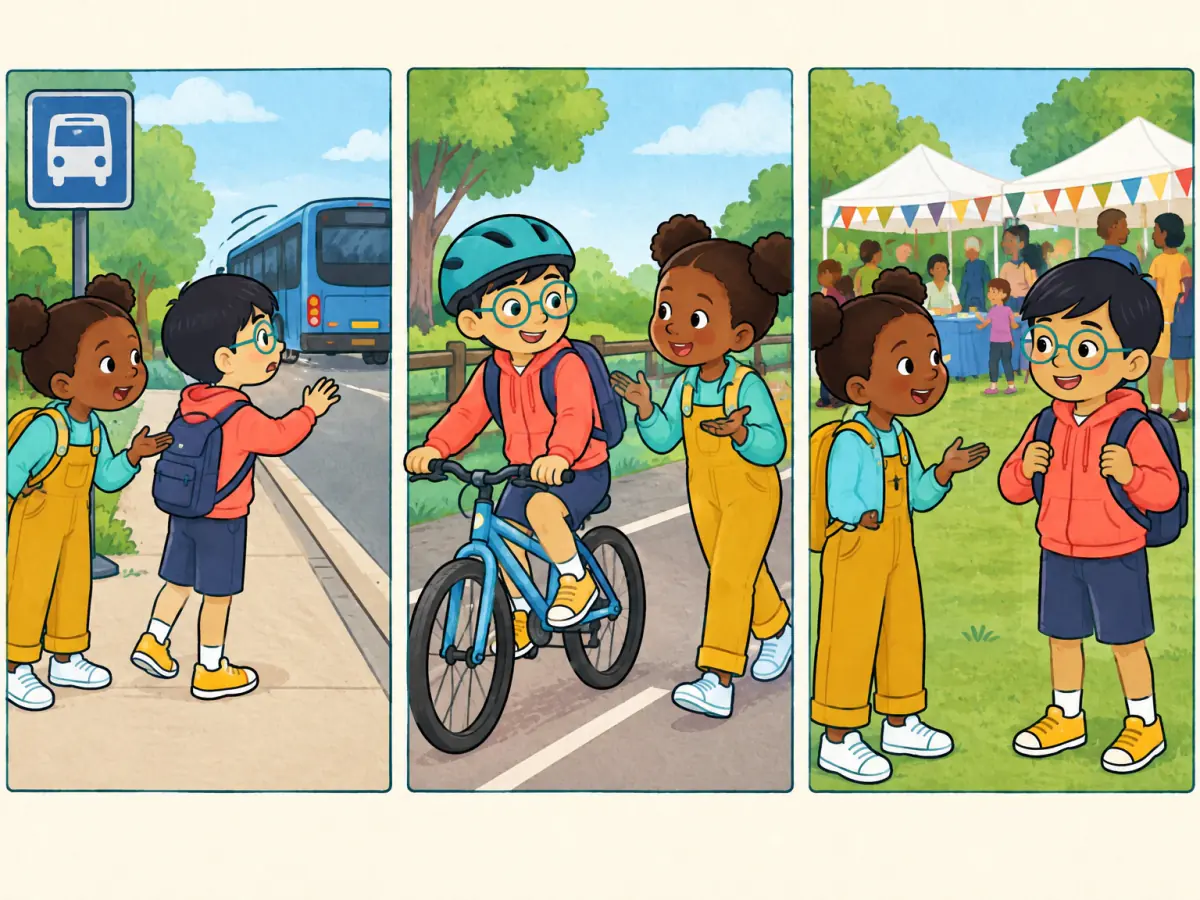
過去の物語には、たいていすでに続いていた長い動作と、その途中に起きた短い出来事があります。長い動作は背景で、過去進行形で言います:“I was waiting for the bus.” 短い出来事は過去形で言います:“The bus left.”
過去進行形は、wasまたはwereに動詞の-ing形をつけます。I、he、she、itには“was”、you、we、theyには“were”を使います。日本語の「〜ていた」に近い形です:「バスが出たとき、時刻表を見ていた」。ただし日本語には主語によって動詞の形が変わる決まりがないので、“We was”と言いやすい点に気をつけましょう。
- 背景:“We were playing football.”
- 出来事:“It started to rain.”
- いっしょに:“We were playing football when it started to rain.”
whenとwhileの使い分け
“when”は短い出来事といっしょに使います:“I was checking the timetable when the bus left.” “while”は長く続いていた背景の動作といっしょに使います:“The bus left while I was looking away.” 日本語の「〜とき」「〜している間に」に近い言葉です。日本語ではこの部分がふつう文の前半に来ますが、英語では前にも後ろにも置けます。文が“when”や“while”で始まるときは、その部分のあとにコンマを打ちます:“While I was looking away, the bus left.”
もう1つ大事な点があります。過去形の動詞2つを“when”でつなぐと、同時ではなく順番を表します。“When the bus left, I called an adult.”は、バスが出たあとで電話をしたという意味です。子どもに聞いてみましょう:「どっちが先に始まった?」
起きたことをたずねる
“What were you doing when…?”は背景をたずねる質問なので、wasかwere + -ingで答えます。“What did you do next?”は次の行動をたずね、過去形で答えます。“did”のあとは動詞の原形です:“Did you missed…?”ではなく“Did you miss the event?”です。下で3つの質問をすべて聞いてみましょう。
Nia What were you doing when the bus left?
Leo I was checking the timetable.
Nia What did you do next?
Leo I called an adult and cycled on the safe path.
Nia Did you miss the event?
Leo No. I arrived before it started.
物語に必要な不規則動詞の過去形
リストで覚えるより、完全な文の中で練習しましょう。“did”があると原形にもどります:“I took the bus.”、でも“I didn’t take the bus.”
- go → went:“We went to the sports centre.”
- take → took:“I took the safe path.”
- see → saw:“I saw the bus at the corner.”
- make → made:“We made a new plan.”
話したニュースを短い文章に
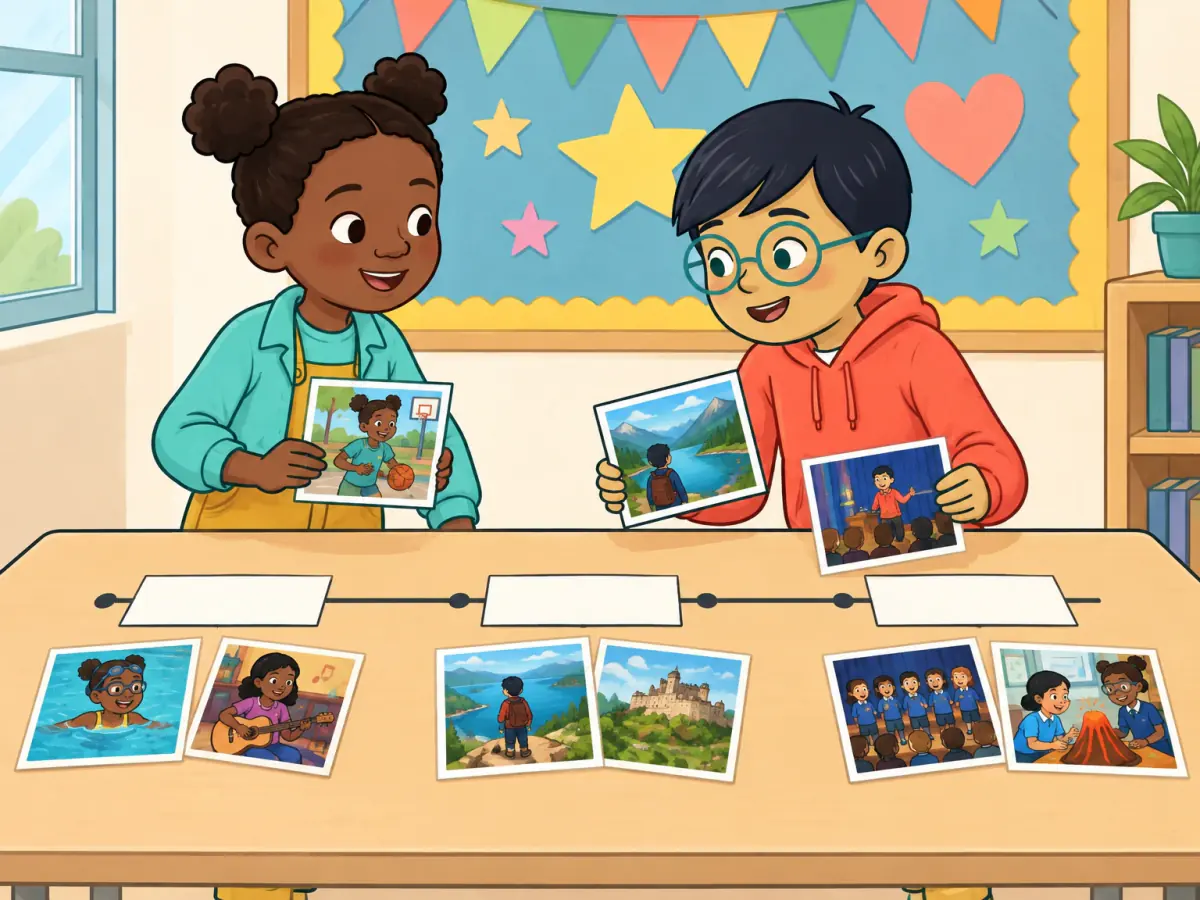
出来事を声に出して話せるようになったら、書くのは小さな一歩です。1~2文ずつ、4つの部分で書きます。子どもが書きかえられる例です:“Last Saturday, my sister and I were waiting at the bus stop. While we were talking, the bus went past without stopping. We called Dad, and he drove us to the stadium. In the end, we arrived just before the match started.”
- 場面:だれが、どこで、何をしていたか
- 出来事:何が起きたか(whenかwhileで)
- 次の行動:then、after that
- 結末:in the end、finally
よくある間違いと簡単な直し方
A2の段階では自然な間違いです。正しい文で言い直して、子どもに話を続けさせましょう。
- “I was check the timetable.”:wasかwereと-ingの両方が必要です:“I was checking the timetable.”
- “We was waiting.”:we、you、theyには“were”を使います。
- “While the bus left, I was reading.”:短い出来事には“when”を使います:“When the bus left, I was reading.”
- “I was calling an adult and I was cycling there.”:順番に起きた行動は過去形で言います:“I called an adult and cycled there.”
- “He goed home.”:不規則動詞には決まった過去形があります:“He went home.”
家でできるあそび:とちゅうで止まる物語
夕食のときに15分ほどやってみましょう。1回目:“at seven o’clock yesterday evening”のように時間を1つ言い、全員がそのとき何をしていたかを言います。2回目:1人が“I was reading in bed…”のように背景の文を始め、次の人が出来事で割りこみます:“…when the lights went out.” 3回目:そのあと何が起きたかを言います。週に1回、子どもが物語を1つ書き、背景の動詞と出来事の動詞に別の色で線を引きましょう。
次のステップ
次は、同時に起きた2つの動作を加えましょう:“While I was cooking, my brother was laying the table.” それから、soで結果をつなげます:“The bus left, so I called an adult.”