
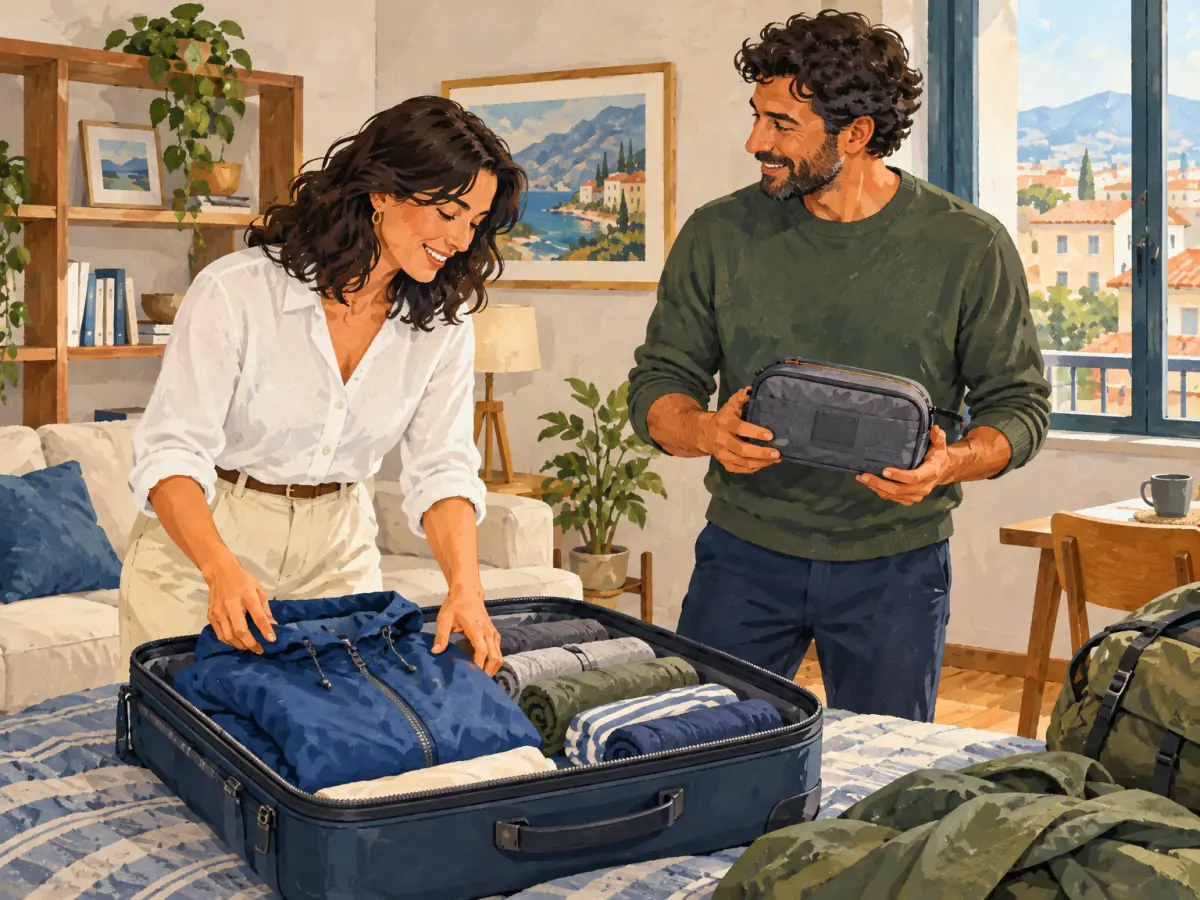
一つの話を伝える5通のメッセージ
旅行のメッセージは日記でも旅程表でもありません。一つの状況を、計画からトラブル、対処、結末まで追いかけ、どのメッセージにも時間を示す語があります。4日間の海辺の旅なら:
- 前日の夜、確定した計画:“All packed. Train leaves at 06.40 tomorrow; meeting Dan at the station at six.”
- 1日目、トラブル発生:“Arrived! Just realized I’ve packed the wrong adaptor.”
- 2日目、対処:“Problem solved: the guesthouse lent me one. Walking to the lighthouse today.”
- 最後の夜、残っていること:“Last evening here. Ferry leaves at 08.15, so packing after dinner.”
- 翌日、結末:“Back home. Note for next time: check the plug type before packing!”
省略してよいもの、いけないもの
友人へのメッセージでは、分かりきった主語や助動詞(“I”“we”“I’m”“I’ve”)がよく省略されます。ホテルや勤務先へのメールでは省略しません。日本語も主語をよく省きますが、英語で“I’m”を省くと残るのは“-ing”だけなので、動詞の形と時間を表す語がいっそう大切になります。比べてみましょう:
- 完全な文:“I’m waiting at the harbour, and I’ve just received the equipment list.”
- 短くした文:“Waiting at the harbour. Just received the equipment list.” “Waiting”は今のこと、“just received”は終わったことを表したままです。
- 時間をはっきり:“Boat leaves at six. Meeting the instructor at five.” “leaves”は時刻表、“meeting”は自分の予定です。
- 指すものをはっきり:“Bought the boots; collecting them from the hardware shop now.” “them”がないと、何を受け取りに行くのか分かりません。
- 反応は短く、情報はそろえて:“Charger left at home, of course! Borrowing one from reception.”
現在形か現在進行形か:意味が決める
どちらの時制も、現在と未来の両方を表せます。日本語では「明日友達に会います」のように予定を現在形で言いますが、英語の個人的な予定は現在進行形が自然です。動詞が何をしているかを考えましょう:
- 習慣や一般的な事実は現在形:“I usually pack the night before.”
- 進行中の動作や一時的な状況は現在進行形:“I’m rolling up the shirts; we’re staying with friends this week.”
- 個人的な予定は現在進行形:“We’re meeting the guide at the port at 17.20.”
- 時刻表は現在形:“The ferry leaves at 07.20, and check-in closes at 06.50.”
- 知識、所有、好み、必要を表す動詞は、今この瞬間のことでもふつう現在形のままです:“I know the route, and we need an adaptor.” 日本語の「知っています」「持っています」は「〜ている」の形ですが、英語では“I know”“I have”です。
聞いてみましょう:フェリーの欠航で計画が変わる
朝のフェリーが欠航になり、2人の旅行者が荷物を詰め直しています。習慣を1つ、予定を2つ、時刻表を1つ探しましょう。“isn’t running tomorrow”は一時的な変更を表します。
Maya Why are you unpacking the towel? You usually take one on coastal trips.
Owen The guesthouse provides towels, and the morning ferry isn’t running tomorrow because the crew are training.
Maya So what are we doing?
Owen We’re taking the evening crossing. It leaves at 18.10, and we’re meeting the technician at the port at 17.20.
荷造り、書類、小さなトラブルの単語
忘れ物が話を動かします。だから正確な名前で言いましょう:
- 電子機器:“adaptor”(変換プラグ)、“phone charger”(スマホの充電器)、“batteries”(電池)、“earphones”(耳に入れるイヤホン)、“headphones”(耳を覆うヘッドホン)。
- “washbag”(洗面用具入れ)の中身:“toothpaste”“shampoo”“sunscreen”(日焼け止め)“insect repellent”(虫よけ)。
- 書類:“passport”または“ID card”、“visa”、“driving licence”(運転免許証)、“booking confirmation”(予約確認書)、“travel insurance documents”(旅行保険の書類)。
- 荷造りの動詞:“fold clothes”(服をたたむ)、“roll up clothes”(服を丸める)、“wrap fragile things”(壊れやすい物を包む)、“unpack”(荷ほどきする)。
- 店で手に入らないとき:“They’re out of adaptors.” “The sun hats have sold out.” “I’m looking for a waterproof case.”
よくある間違い
メッセージで次の点を確認しましょう:
- “I’m knowing the way.” “know”は状態動詞です:“I know the way.”
- “We meet the guide at nine tomorrow.” 印刷された日程表のように聞こえます。自分の予定なら“We’re meeting the guide at nine tomorrow.”と言いましょう。
- “Leaving at six.” 今日ですか、明日ですか?日を表す語を足しましょう。
- “Talked to the hotel and the shop. It’s closed.” どちらのことですか?名詞を繰り返しましょう:“The shop’s closed.”
- 2通目で起きたトラブルが最後まで解決しないこと。後のメッセージで締めくくりましょう。
1日10分の練習法
どの文もまず声に出して言いましょう。週末には次の質問に声に出して答え、その答えをもとに30分でメッセージを5通書きます:“Which forgotten item would cause you the most trouble, and what would you do?”
- 2分:メッセージのカード5枚を聞き、短いメッセージを完全な文に戻してから、もう一度短くします。
- 3分:明日についての3文。時刻表、予定、今していること。
- 3分:忘れ物と自分の解決策を伝えるメッセージを1通。
- 2分:読み返して、時間を表す語と“it”“them”をすべて確認します。
次のステップ
このレベルの次は、実用的なコツを3つ紹介するアドバイス記事を書くか、部屋を4段落で描写しましょう。サービスのトラブルなら、二重請求の説明を練習しましょう。B2では、健康の知らせに個人的なメールで返信します。