
Ir al contenido
Flalingo

Práctica de inglés

El orden de los adjetivos en inglés: describe ropa en un anuncio corto de “for sale” (A2 Key, 11–15 años)

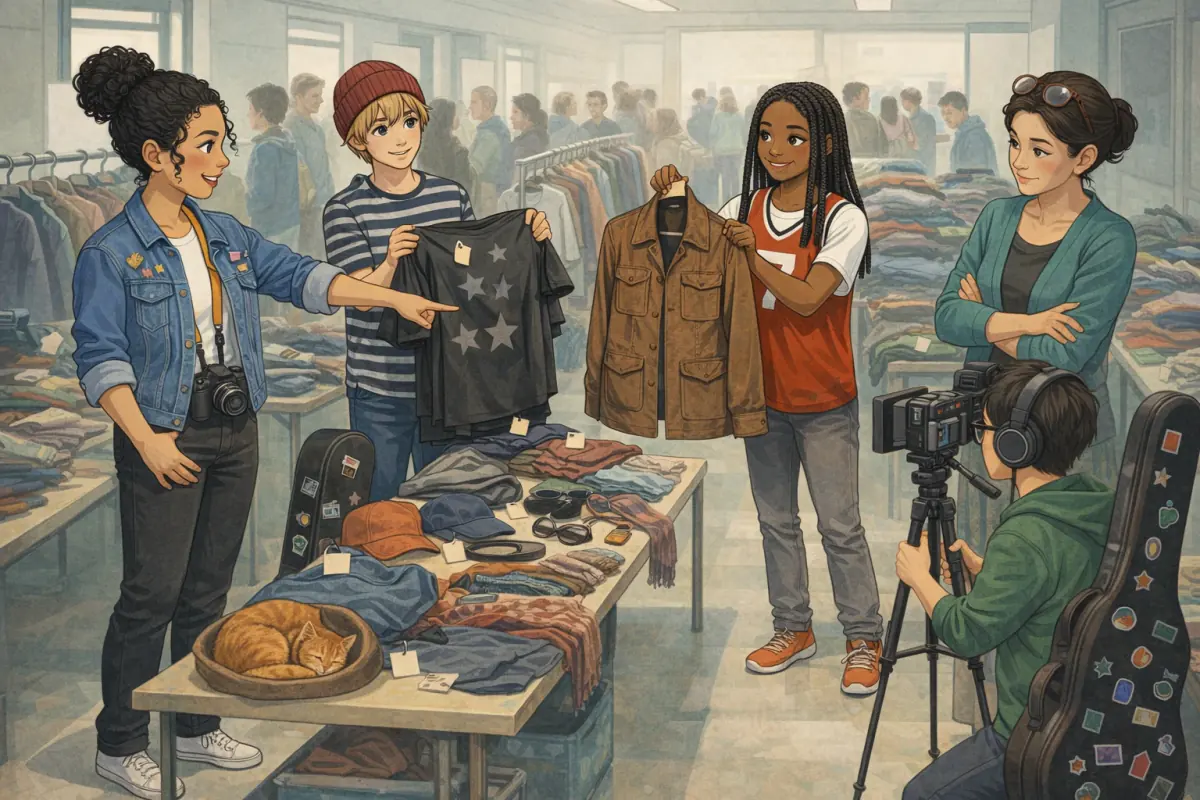
A second-hand market in the school hall: one teenager points at a price tag, another holds old T-shirts, a third holds up a vintage jacket, a fourth films from behind a camera and a teacher watches.

Cómo escribir un anuncio de 30–40 palabras para vender algo: vocabulario de ropa, orden de los adjetivos (“a lovely old blue jacket”), comparativos con “than”, “too” y “enough”. Para A2 Key y A2 Key for Schools, de 11 a 15 años.

Un anuncio corto de “for sale” le da al comprador cinco datos: el artículo con dos o tres adjetivos, la talla, el precio, un motivo para comprarlo y adónde ir. Los adjetivos siguen un orden fijo (opinión, tamaño, antigüedad, color, material): “a lovely old blue denim jacket”. El motivo suele ser una comparación: “It’s much cheaper than a new one.” Estas destrezas también te sirven en A2 Key y A2 Key for Schools, por ejemplo en la parte 2 de Speaking. Esta guía es para estudiantes de nivel A2 (elemental) de unos 11–15 años.

¿Para quién es este artículo?

  • Estudiantes de unos 11–15 años que preparan A2 Key o A2 Key for Schools.
  • Estudiantes que conocen el vocabulario de ropa, pero dudan qué adjetivo va primero o cuándo usar “-er” y cuándo “more”.
  • Para madres y padres: puedes ayudar sin un inglés avanzado; elige una prenda del armario y pídele a tu hijo o hija que te la “venda” en tres frases.
  • Demasiado pronto: si un mensaje corto con un motivo todavía te resulta nuevo, empieza por la guía de la sugerencia para la cafetería del colegio con “because” (A2).
  • Demasiado fácil: si describir y comparar ya te resulta fácil, pasa a B1, por ejemplo con la guía de las normas de la semana de exámenes con “mustn’t” y “don’t have to”.

Abrir las páginas de muestra

Abrir las páginas de muestra

Tarjetas de vocabulario

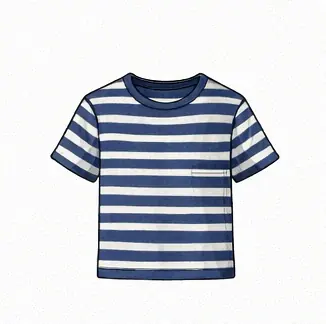
stripedstriped

with lines of different colours

Theo is wearing a dark blue and white striped T-shirt.

wear

to have clothes on your body; He's wearing a hoodie.

Kai wears the same green hoodie every day.

fashion

the kinds of clothes that are popular now

Zara says vintage jackets are in fashion again.

a nice old black T-shirt

what you think + how old + colour + thing

Theo sells a nice old black T-shirt.

a small striped wallet

how big + striped + thing

Zara buys a small striped wallet.

a lovely long red coat

what you think + how big + colour + thing

The girl's mum likes the lovely long red coat.

Conversación

Ms Rivera Excuse me, can I try on this jacket?

Amara Sure. What size are you?

Ms Rivera Small, I think. How much is it?

Amara It's eight pounds. It looks great on you!

Ms Rivera Thank you! Is it in the sale?

Amara Yes, it is. It's usually ten pounds.

Estructura de la frase

What is for sale?

FOR SALE: a lovely old blue denim jacket with two big pockets. Size: small. Price: £8. It's warmer than a hoodie and much cheaper than new jackets in town. Come to The Loop's market in the school hall on Friday!

The model has 40 words. It says the thing, colour, size, price and a reason to buy.

  • FOR SALE:
  • Size:
  • Price: £
  • It's ...er than ...
  • a lovely old blue ...
  • Come to ...!

Más práctica

A nice old black T-shirt

stripedstriped

with lines of different colours

Theo is wearing a dark blue and white striped T-shirt.

wear

to have clothes on your body; He's wearing a hoodie.

Kai wears the same green hoodie every day.

fashion

the kinds of clothes that are popular now

Zara says vintage jackets are in fashion again.

a nice old black T-shirt

what you think + how old + colour + thing

Theo sells a nice old black T-shirt.

a small striped wallet

how big + striped + thing

Zara buys a small striped wallet.

a lovely long red coat

what you think + how big + colour + thing

The girl's mum likes the lovely long red coat.

The order

  1. What you think: nice, lovely, cool, great
  2. How big: big, small, long, short
  3. How old: old, new, vintage
  4. Colour or lines: black, red, striped
  5. The thing: T-shirt, jacket, scarf

The market chat

Zara Market chat! Theo, your T-shirts are cheaper than a bus ticket. Two pounds, please!

Theo OK, OK. But my old T-shirts are softer than new ones. People like soft.

Amara The vintage jacket is bigger than my other jackets, but it's better.

Kai My hoodie is older than all of you. And it's not for sale.

Ms Rivera Good news: the market is busier than I thought. But check your prices!

Short words: + er

  • cheap → cheaper
  • old → older
  • soft → softer
  • nice → nicer
  • big → bigger (double g)
  • busy → busier (y → i)

Long words: more + word

  • expensive → more expensive
  • beautiful → more beautiful

Different words

  • good → better
  • bad → worse
  • far → further

Then use than

  • My hoodie is older than all of you.
  • Two pounds is more expensive than one pound.

Check your advert

Is it "a blue lovely jacket" or "a lovely blue jacket"?

A lovely blue jacket: what you think comes first, then colour.

Check: -er or more? than? What you think, size, age, colour, thing.

  • cheaper than
  • more expensive than
  • better than
  • a nice old black ...
Aprende esta unidad
¿Cómo quieres aprender?

Las cinco partes de un anuncio de “for sale”

Un anuncio para el mercadillo del colegio o para una app de segunda mano debe ayudar al comprador a imaginar el artículo y decidirse rápido. Este es nuestro modelo, de unas 40 palabras:

  • “FOR SALE: a cool old green hoodie with a big front pocket.” → el artículo: tres adjetivos y un detalle.
  • “Size: medium. Price: £5.” → los datos que el comprador mira primero.
  • “It’s softer than a new hoodie and much cheaper than the ones in the shops.” → un motivo para comprarlo.
  • “Come to the school market in the hall on Saturday morning!” → dónde y cuándo.

Vocabulario de ropa que busca el comprador

Aprende el vocabulario de ropa por grupos. “Jeans”, “shorts”, “trousers” y “sunglasses” van siempre en plural, aunque hables de una sola prenda: “These jeans are £3.” “How much are they?”

  • En el cuerpo: “T-shirt” (camiseta), “hoodie” (sudadera con capucha), “jacket” (chaqueta), “coat” (abrigo), “dress” (vestido)
  • En las piernas: “jeans” (vaqueros), “shorts” (pantalones cortos), “skirt” (falda)
  • En los pies: “trainers” (zapatillas de deporte; en inglés americano, “sneakers”), “boots” (botas)
  • Complementos: “cap” (gorra), “scarf” (bufanda), “belt” (cinturón), “sunglasses” (gafas de sol), “wallet” (cartera)
  • Detalles: “pocket” (bolsillo), “striped” (de rayas), “vintage” (antiguo pero con estilo), “denim” (tela vaquera), “leather” (cuero)

El orden de los adjetivos: opinión, tamaño, antigüedad, color, material

En inglés, los adjetivos van delante del sustantivo y en un orden fijo: “a blue lovely jacket” le suena mal a un nativo al instante. En español solemos ponerlos detrás (“una chaqueta azul”) y en plural (“unos bolsillos grandes”); en inglés van delante y nunca llevan “-s”. Usa dos o tres, normalmente sin comas, y pon “and” entre dos colores: “a blue and white striped T-shirt”.

  • 1 Opinión: “nice”, “lovely”, “cool”
  • 2 Tamaño: “big”, “small”, “long”
  • 3 Antigüedad: “old”, “new”, “vintage”
  • 4 Color o dibujo: “black”, “red”, “striped”
  • 5 Material: “denim”, “leather”, “wool”
  • Después, el artículo: “jacket”, “T-shirt”, “scarf”
  • Ejemplos: “a nice old black T-shirt”, “a small striped wallet”, “a lovely long red coat”

Comparativos: el motivo para comprar

Compara tu artículo con algo que el comprador conozca: forma el comparativo y añade “than” (no “that”). “Much” lo refuerza: “much cheaper than”. Como en español decimos “más barato”, es fácil escribir “more cheap” o “more cheaper”: usa “-er” o “more”, nunca los dos.

  • Palabras cortas, + -er: “cheap” → “cheaper”, “soft” → “softer”
  • Terminadas en -e, + -r: “nice” → “nicer”
  • Una vocal y una consonante al final, se dobla la consonante: “big” → “bigger”
  • Terminadas en -y, cambia a -ier: “busy” → “busier”
  • Palabras largas, con “more”: “more expensive”, “more comfortable”
  • Irregulares: “good” → “better”, “bad” → “worse”

Too y enough: cuando algo no te queda bien

“Too” (demasiado) va delante del adjetivo; “enough” (suficiente) va detrás. Si algo te gusta, di “It’s very nice!”: “too” indica que hay un problema.

  • “The coat is too long for her.”
  • “It’s £60 and I’ve only got £15. It’s too expensive.”
  • “These trainers aren’t big enough.”
  • “Is this jacket warm enough for winter?”
Aprende esta unidad a tu manera

Preguntar la talla y el precio en una tienda

En un puesto de segunda mano, alguien se prueba una chaqueta. Fíjate en la pregunta educada, la talla y el precio.

Con “it”, “try on” se separa: “Can I try it on?”, no “Can I try on it?”. “In the sale” significa más barato de lo normal durante un tiempo.

  • Precios: “£8” se dice “eight pounds”; “£2.50”, “two pounds fifty”.

Customer Excuse me, can I try on this jacket?

Seller Sure. What size are you?

Customer Small, I think. How much is it?

Seller It's eight pounds. It looks great on you!

Customer Thank you! Is it in the sale?

Seller Yes, it is. It's usually ten pounds.

Errores típicos y cómo corregirlos

Búscalos al terminar (antes de la flecha, el error; después, la corrección).

  • “a jacket blue” → “a blue jacket”
  • “a blue lovely jacket” → “a lovely blue jacket”
  • “two bigs pockets” → “two big pockets”
  • “more cheaper than” → “cheaper than”
  • “bigger then a hoodie” → “bigger than a hoodie”
  • “It isn’t enough big.” → “It isn’t big enough.”
  • “How much is these jeans?” → “How much are these jeans?”

Tu rutina de 10 minutos

Elige algo que tengas y escribe su anuncio en 10 minutos: 2 para planear, 6 para escribir y 2 para revisar. Luego léelo en voz alta como un anuncio de radio.

  • Plan: artículo, adjetivos, talla, precio, comparación, lugar.
  • Comprobación 1: ¿opinión, tamaño, antigüedad, color, material, en ese orden?
  • Comprobación 2: ¿“-er” o “more” (nunca los dos) y después “than”?
  • Comprobación 3: ¿están la talla, el precio y el lugar?

Qué viene después

En la parte 2 de Reading and Writing de A2 Key, relacionas siete preguntas con tres textos cortos sobre un mismo tema, por ejemplo tres tiendas. A menudo dos textos hablan de lo mismo, por ejemplo de precios, pero solo uno responde a la pregunta. Después: un correo para decirle a un amigo dónde quedar y cómo llegar.

Preguntas frecuentes

¿Cuál es el orden de los adjetivos en inglés?

Opinión, tamaño, antigüedad, forma, color, origen, material, finalidad y, después, el sustantivo: “a lovely old blue denim jacket”. Normalmente bastan dos o tres adjetivos.

¿Cuándo se usa “-er” y cuándo “more” en los comparativos?

“-er” va con palabras de una sílaba (“cheaper”) y de dos sílabas terminadas en -y (“busier”); “more”, con la mayoría de las palabras más largas (“more expensive”). “Good” y “bad” pasan a “better” y “worse”.

¿Qué diferencia hay entre “for sale”, “on sale” e “in the sale”?

“For sale” significa que alguien lo vende. En inglés británico, “in the sale” significa que está rebajado durante un tiempo; en inglés americano se dice “on sale”. En inglés británico, “on sale” suele significar solo que ya se puede comprar en las tiendas.

Flalingo no está afiliado a Cambridge English, entidad que ofrece A2 Key y B1 Preliminary, ni cuenta con su respaldo.

Aprende esta unidad
¿Cómo quieres aprender?

¿Qué viene después?

Clases individuales con un profesor en vivo

En Flalingo, los adolescentes trabajan unidades como esta en clases individuales con un profesor en vivo, a su propio ritmo.

Reserva una clase de prueba gratis