Ir al contenido
Flalingo

Práctica de inglés

Hacer sugerencias en inglés con niños (A2, 9–12 años): Why not, How about y What about en un folleto de reciclaje

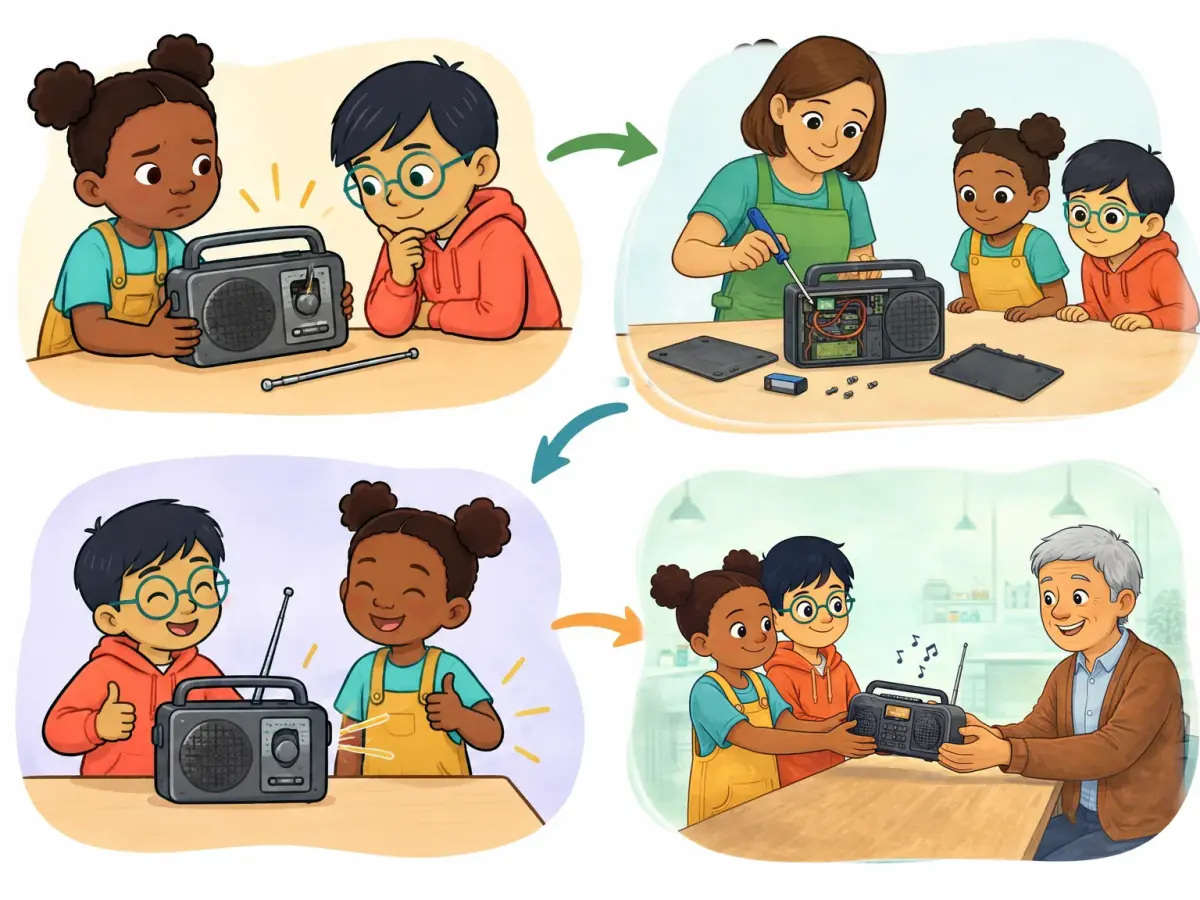
A four-panel repair-café story: the radio will not switch on, an adult volunteer opens it and removes the battery while two children watch, the radio plays again, and the children hand it back to its happy owner.

Ayuda a tu hijo o hija de 9 a 12 años (A2) a hacer sugerencias en inglés con Why not, How about y What about, a dar una razón con will y a escribir un folleto con tres ideas para reparar, reutilizar y reciclar.

Para hacer una sugerencia en inglés, los niños usan tres fórmulas cortas: “Why not” + verbo (“Why not repair a broken lamp?”) y “How about” o “What about” + -ing (“How about reusing carrier bags?”). Después viene una razón, a menudo con will: “It will stay useful for longer.” Es un tema de nivel A2 para niños de unos 9 a 12 años que ya escriben frases sencillas. Termina con un folleto corto con tres ideas seguras para reparar, reutilizar y reciclar.

¿Para quién es este artículo?

  • Familias con hijos que ya escriben frases sencillas: tu hijo o hija sabe decir qué hará el fin de semana y por qué.
  • Niños a los que les gusta arreglar, construir u ordenar cosas: un folleto de reparaciones da a las sugerencias un lector real.
  • Familias que quieren practicar en casa: basta con un juguete roto, un tarro vacío y el cubo de reciclaje, y las tarjetas de esta página tienen el audio de cada palabra.
  • Demasiado pronto: si todavía no une dos ideas con “so” o “because”, empieza por los conectores en un texto sobre una casa ecológica (enlace abajo).
  • Demasiado fácil: si ya escribe sugerencias con razones sin ayuda, pasa a las frases temáticas en un plan sobre fauna (enlace abajo).

Abrir las páginas de muestra

Abrir las páginas de muestra

Tarjetas de vocabulario

recycling centre

a place that sorts used materials for recycling

bottle bank

a container where glass bottles are collected for recycling

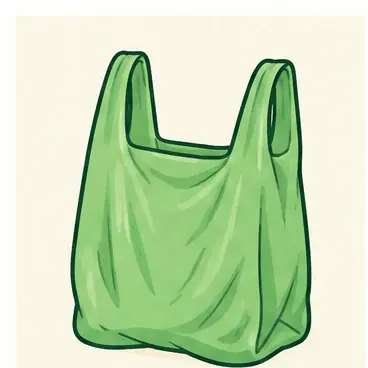
carrier bagcarrier bag
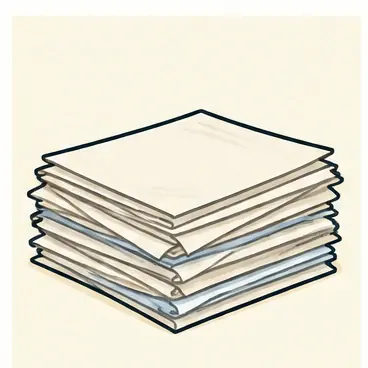
paperpaper
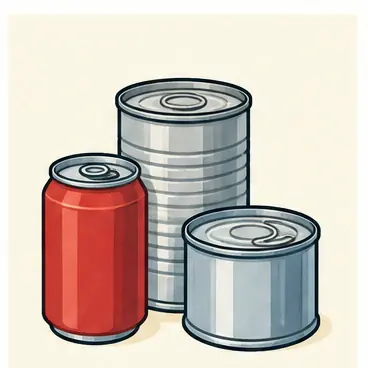
metalmetal
oiloil
batterybattery
chemicals

substances that need careful identification and safe handling

What will happen to the broken lamp?

Study how this model connects form with meaning.

We will repair it, and we are meeting the technician on Saturday.

Study how this model connects form with meaning.

We will not put batteries in this bin.

Study how this model connects form with meaning.

I am taking the bottles tomorrow.

Study how this model connects form with meaning.

Conversación

Nia What will happen to the broken lamp?

Leo We will repair it with the technician on Saturday. Before that, we are taking the bottles tomorrow afternoon.

Leo Will we take the batteries?

Nia Yes, but an adult will carry them safely.

Nia When are you visiting the bottle bank?

Leo I am going there tomorrow afternoon.

Estructura de la frase

What will happen to the broken lamp?

We will repair it, and we are meeting the technician on Saturday.

  • We will not put batteries in this bin.
  • I am taking the bottles tomorrow.

Más práctica

Use the contrast

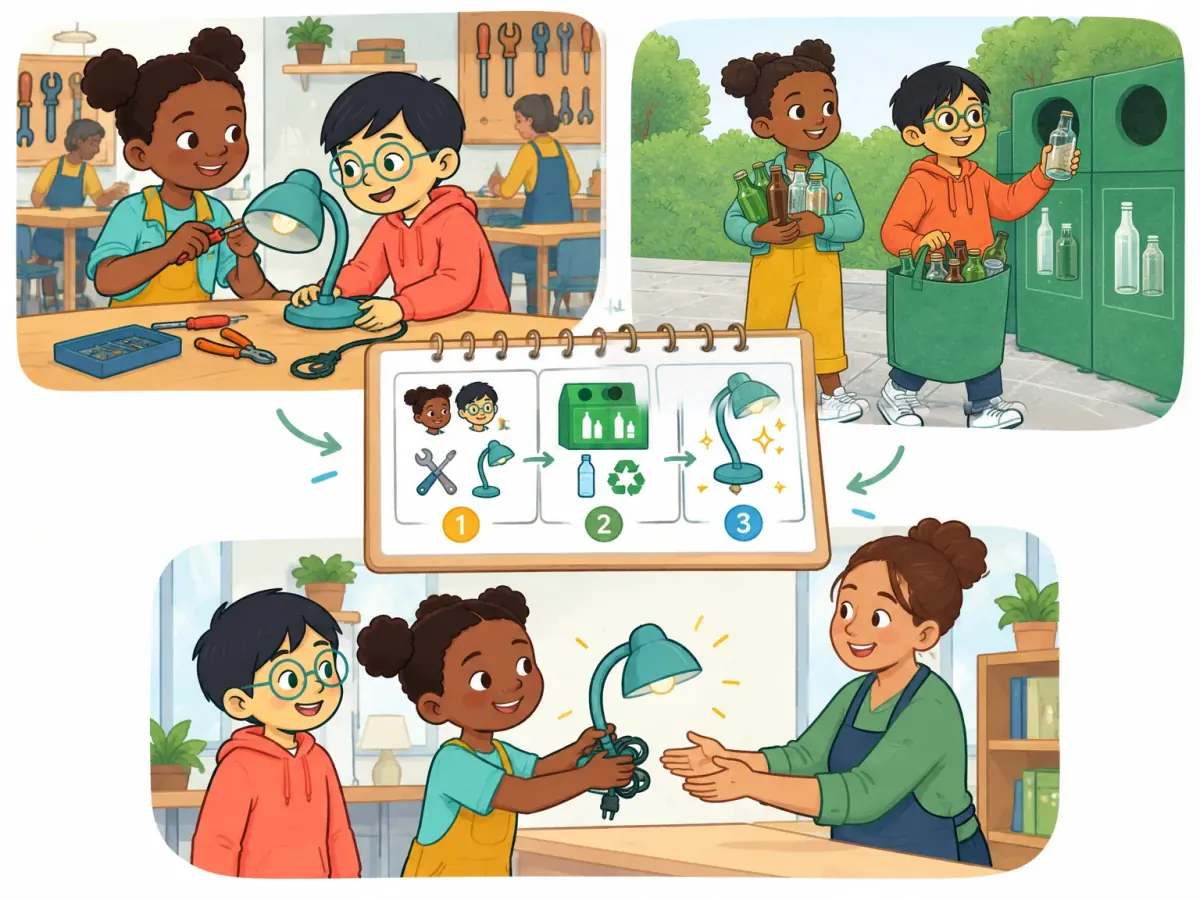
A weekend planning board: Nia and Leo repair a lamp at the repair café, take glass bottles and jars to the bottle bank, and hand the repaired lamp back to its owner.

Nia What will happen to the broken lamp?

Leo We will repair it, and we are meeting the technician on Saturday.

Leo Will we take the batteries?

Nia Yes, but an adult will carry them safely.

Nia When are you visiting the bottle bank?

Leo I am going there tomorrow afternoon.

What will happen to the broken lamp?

We will repair it, and we are meeting the technician on Saturday.

  • We will not put batteries in this bin.
  • I am taking the bottles tomorrow.

A radio gets another chance

A four-panel repair-café story: the radio will not switch on, an adult volunteer opens it and removes the battery while Nia and Leo watch, the radio plays again, and the children hand it back to its happy owner.

A RADIO GETS ANOTHER CHANCE

A radio at our repair café would not switch on. A volunteer first removed the battery safely. Next, she cleaned one loose connection and tested the radio. It played again, so it did not need recycling. The owner will reuse it at home. If it breaks beyond repair one day, a specialist centre will separate its metal, plastic and chemicals safely.

Plan aloud

A four-panel repair-café story: the radio will not switch on, an adult volunteer opens it and removes the battery while Nia and Leo watch, the radio plays again, and the children hand it back to its happy owner.

Nia What suggestions will your leaflet give?

Leo It will suggest three things: repair broken items, reuse bags and take batteries to a specialist centre.

Leo What will you add after each suggestion?

Nia I will add a reason for each one.

What suggestions will your leaflet give?

GIVE OBJECTS ANOTHER CHANCE Why not repair a broken item? It will stay useful for longer. How about reusing carrier bags and clean paper? This will reduce waste. What about taking batteries and oil to a specialist centre? It will keep dangerous chemicals out of ordinary rubbish.

  • heading
  • Why not / How about / What about
  • a reason for each suggestion
  • safe audience advice

Draft and revise

A four-panel repair-café story: the radio will not switch on, an adult volunteer opens it and removes the battery while Nia and Leo watch, the radio plays again, and the children hand it back to its happy owner.

Nia Who will read your text?

Leo Visitors to the repair café will read my leaflet.

Leo What will you check?

Nia I will check my spelling and punctuation.

What suggestions will your leaflet give?

GIVE OBJECTS ANOTHER CHANCE Why not repair a broken item? It will stay useful for longer. How about reusing carrier bags and clean paper? This will reduce waste. What about taking batteries and oil to a specialist centre? It will keep dangerous chemicals out of ordinary rubbish.

  • heading
  • Why not / How about / What about
  • a reason for each suggestion
  • safe audience advice
Aprende esta unidad
¿Cómo quieres aprender?

Palabras de reciclaje y reparación de este tema

Un “recycling centre” es el lugar adonde se llevan materiales usados para separarlos, como un punto limpio en España; un “bottle bank” es un contenedor grande para botellas y tarros de vidrio. Un “repair café” es un encuentro, normalmente gratuito, donde voluntarios ayudan a arreglar cosas rotas.

“Paper”, “metal” y “oil” son incontables. En español decimos “un papel” para una hoja, pero en inglés se dice “a piece of paper”, porque “a paper” significa un periódico.

  • carrier bag – la bolsa que te dan en una tienda
  • battery – pila; en plural, batteries
  • chemicals – productos químicos que un adulto maneja con cuidado

Tres maneras de hacer una sugerencia

Cada fórmula pide su propia forma del verbo. “Why not” va seguido del verbo sin “to”: “Why not repair a broken item?” Parece una pregunta, pero no pide una razón: funciona como “¿Por qué no lo arreglas?” en español. “How about” y “What about” van seguidos de -ing o de un sustantivo: “How about reusing carrier bags?” “What about a swap shelf for old toys?” Aquí el español usa infinitivo (“¿Qué tal reutilizar las bolsas?”), por eso es fácil decir “How about reuse”; en inglés hace falta -ing. Las tres llevan signo de interrogación, solo al final, y una respuesta amable es “Good idea!”

  • Why not + verbo: “Why not fix your bike?”
  • How about + -ing: “How about giving old books to the library?”
  • What about + -ing: “What about taking the bottles to the bottle bank?”
  • También es frecuente: “Why don’t you repair it?”

Cada sugerencia necesita una razón

Una sugerencia convence cuando la frase siguiente dice qué beneficio traerá. En A2, usa “It will…” o “This will…”: “How about reusing paper? This will reduce waste.”

La razón debe explicar esa acción concreta. “Why not repair your bike? Glass can be recycled.” es verdad, pero no explica nada. Pregunta a tu hijo o hija “¿Qué pasa si la gente hace esto?”; la respuesta es la razón.

¿Will o am/are + -ing? Hablar de lo que viene

“Will” expresa un resultado o una decisión: “What will happen to the broken lamp?” “We will repair it.” La negación es “will not” o “won’t”: “We will not put batteries in this bin.”

Am, is o are + -ing con una expresión de tiempo indica un plan ya acordado: “I am taking the bottles tomorrow.” En español decimos “Mañana llevo las botellas”, en presente simple, así que es fácil decir “I take the bottles tomorrow.”; en inglés, para un plan acordado, la forma con -ing suena más natural. Sin “tomorrow”, la frase parece hablar de ahora mismo. Después de escuchar una vez, pregunta “Which happens first, the bottles or the repair?” (the bottles).

Nia What will happen to the broken lamp?

Leo We will repair it with the technician on Saturday. Before that, we are taking the bottles tomorrow afternoon.

Nia When are you visiting the bottle bank?

Leo I am going there tomorrow afternoon.

Palabras con re-: otra vez, de vuelta o ninguna de las dos

Los niños suelen pensar que re- siempre significa “otra vez”. En “reuse”, “retell” y “rewrite” es así, pero “return” significa devolver o volver, y “remove” simplemente significa quitar. “Reuse” es usar algo otra vez tal como está; “recycle” significa que el material se transforma en algo nuevo.

  • “Reuse the jar.” – guárdalo para los lápices
  • “Recycle the jar.” – su vidrio se convierte en vidrio nuevo
Aprende esta unidad a tu manera

Escribir un folleto corto y seguro

Un folleto se dirige a un lector real, como los visitantes de una jornada de reparaciones en el colegio: un título y luego tres sugerencias, cada una con una fórmula distinta y su propia razón. Un modelo: “GIVE OLD THINGS A SECOND LIFE. Why not repair a broken toy? It will stay useful for longer. How about reusing jars? This will reduce waste. What about taking old batteries to a collection point? It will keep chemicals out of the bin.”

Que sea seguro: un adulto se encarga de las pilas, el aceite y los productos químicos, y abre cualquier aparato eléctrico. Al final, tu hijo o hija revisa la ortografía y lee el folleto en voz alta.

Leo Will we take the batteries?

Nia Yes, but an adult will carry them safely.

Errores frecuentes y cómo corregirlos

Son normales en A2: repite la frase bien dicha y seguid.

  • “Why not to repair it?”: “Why not repair it?”
  • “How about reuse the bags?”: “How about reusing the bags?”
  • “I am take the bottles tomorrow.”: “I am taking the bottles tomorrow.”
  • “Why not repair it.”: termina con signo de interrogación.

Un juego en casa: el taller de reparaciones de la familia

Pon sobre la mesa un juguete con una rueda suelta, un tarro vacío y unas hojas de papel usado por una cara. Tu hijo o hija sugiere algo para cada cosa, con una fórmula distinta cada vez; tú preguntas “Why?” y escuchas “It will…”. Cambiad los papeles y luego escribid las tres mejores ideas como un folleto para la nevera.

El siguiente paso

Después, tu hijo o hija organiza textos más largos en párrafos con frases iniciales claras y usa “going to” para planes y predicciones; luego compara dos textos cortos, uno sobre una reparación y otro sobre un hábitat.

Preguntas frecuentes

¿“Why not” y “Why don’t you” significan lo mismo?

Sí. Las dos hacen una sugerencia con el verbo sin “to”: “Why don’t you repair it?” “Why not” no tiene sujeto, así que encaja en folletos escritos para todo el mundo.

¿Se dice “How about to go” o “How about going”?

“How about going”. Después de How about y What about, usa -ing o un sustantivo: “How about a swap day?”

¿Qué diferencia hay entre reuse y recycle?

“Reuse” es usar algo otra vez tal como está: un tarro de mermelada se convierte en lapicero. “Recycle” significa que el material se procesa para hacer algo nuevo: el vidrio viejo se funde para fabricar botellas nuevas.

Aprende esta unidad
¿Cómo quieres aprender?

¿Qué viene después?

Clases individuales con un profesor en vivo

En las clases infantiles de Flalingo, tu hijo practica unidades como esta en clases individuales con un profesor en vivo, con juegos en la misma pantalla.

Reserva una clase de prueba gratis