

Ir al contenido
Flalingo

Práctica de inglés

Conectores en inglés para niños (A2, 9–12 años): and, but, or, so y because en un texto sobre una casa ecológica

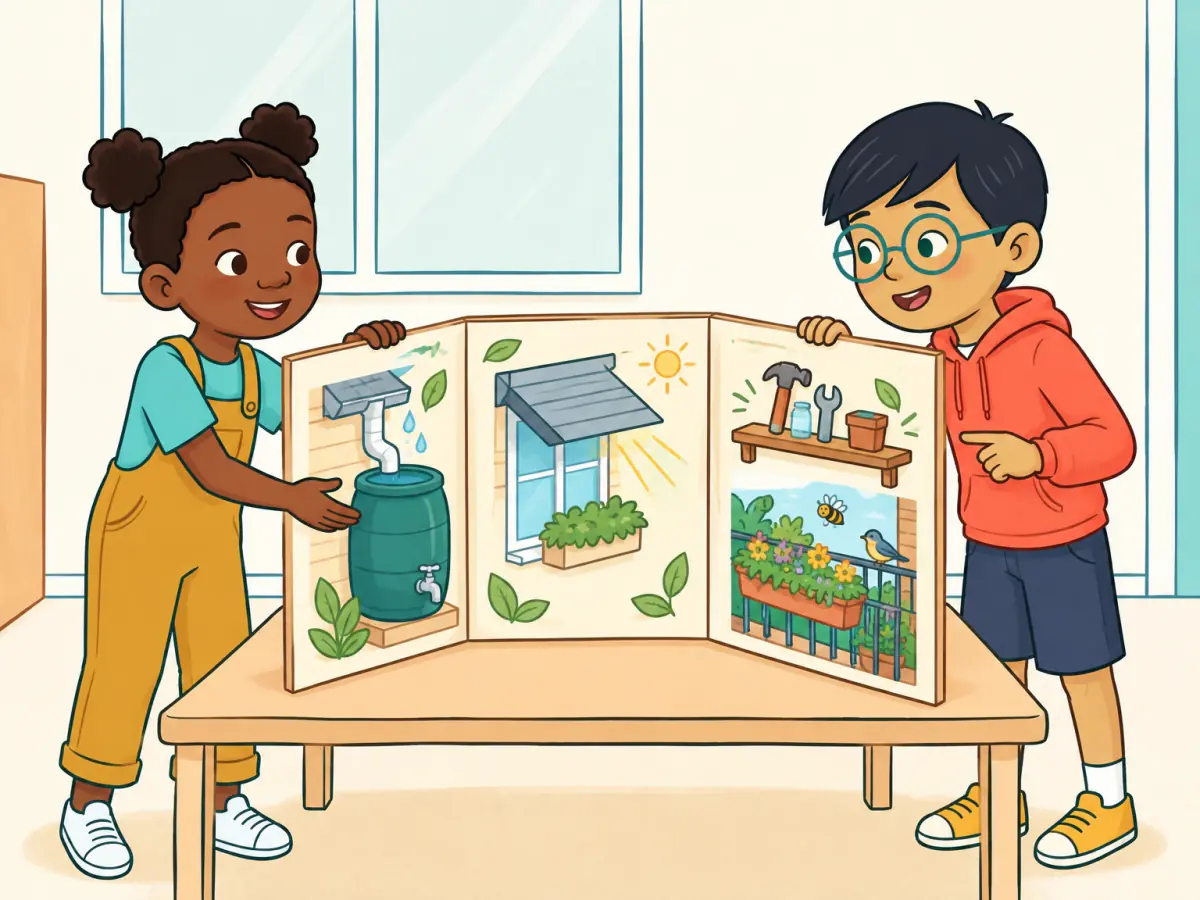
An eco-home information display shows a rain barrel, shaded window, repair shelf and wildlife-friendly balcony garden.

Ayuda a tu peque de 9 a 12 años a unir ideas en inglés con and, but, or, so y because (A2), a comparar hábitos de antes y de ahora con “used to … but now” y a escribir un texto informativo breve sobre una casa más ecológica.

Los conectores unen dos ideas y muestran cómo se relacionan: “and” añade un dato, “but” marca un contraste o un cambio, “or” da una opción, “so” indica un resultado y “because”, una causa: “We repair toys and lamps, so less rubbish leaves the building.” Este tema de nivel A2 es para niños de unos 9 a 12 años que ya escriben frases sencillas en pasado y en presente. Termina con un texto breve para los vecinos sobre una casa más ecológica.

¿Para quién es este artículo?

  • Familias con peques que ya escriben frases sencillas: tu peque puede contar qué hizo el fin de semana y qué hace cada día.
  • Peques a quienes les importan los animales, los parques o el reciclaje: una casa más ecológica da a los conectores un uso real.
  • Familias que quieren practicar en casa: bastan datos reales sobre vuestra casa, y las tarjetas de esta página tienen el audio de cada palabra y frase.
  • Demasiado pronto: si todavía no escribe dos frases claras en pasado sobre un mismo hecho, empieza por el tema anterior, too y enough en una historia de arreglos (enlace abajo).
  • Demasiado fácil: si ya une datos en un texto breve sin ayuda, pasa a dar sugerencias con razones en un folleto (enlace abajo).

Abrir las páginas de muestra

Abrir las páginas de muestra

Tarjetas de vocabulario

clean up

remove litter or mess from a place

damage

harm that makes a place or object worse

the environment

the natural world and the places where people and animals live

litterlitter
planetplanet
pollution

harmful waste that makes air, water or land dirty

rubbish dump

a place where large amounts of waste are taken

wildlife

animals and plants living in natural places

What were you doing when the rain started?

Study how this model connects form with meaning.

I was picking up litter with gloves when the rain started.

Study how this model connects form with meaning.

We used to waste water.

Study how this model connects form with meaning.

The team was planting while we were cleaning.

Study how this model connects form with meaning.

Conversación

Leo What does your group do for the environment?

Nia We clean up the stream bank every Saturday and pick up litter with gloves.

Nia Why does the litter matter?

Leo It can damage wildlife, and a lot of it ends up at the rubbish dump.

Leo What is the biggest problem here?

Nia Plastic pollution. We want to protect our planet, one small place at a time.

Estructura de la frase

What were you doing when the rain started?

I was picking up litter with gloves when the rain started.

  • We used to waste water.
  • The team was planting while we were cleaning.

Más práctica

Use the contrast

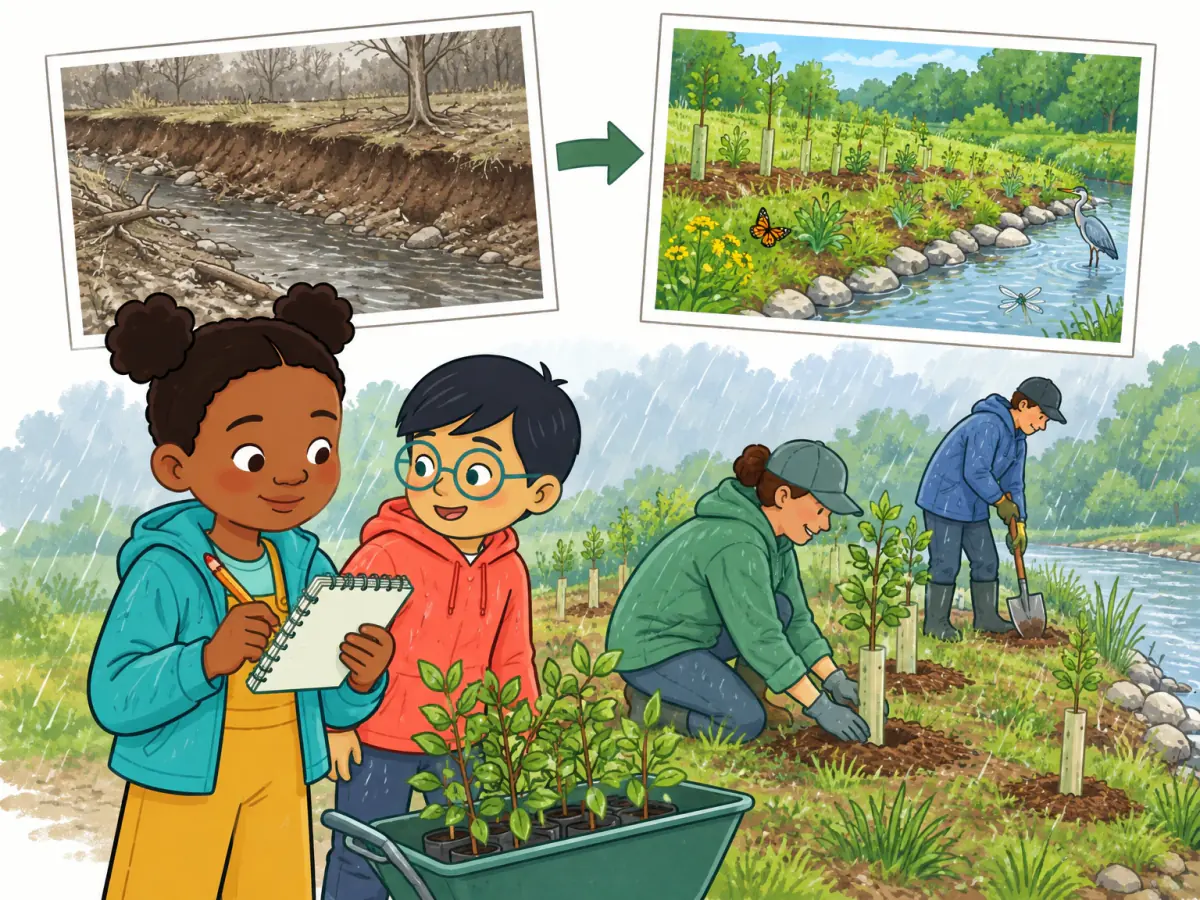
A before-and-now display contrasts a damaged stream bank in an old photograph with a planted bank and clear wildlife area today. Nia records what volunteers were doing when rain began.

Leo What were you doing when the rain started?

Nia I was picking up litter with gloves when the rain started.

Nia What was the team doing?

Leo They were planting while we were cleaning.

Leo Did this place use to have more litter?

Nia Yes, but people changed their habits.

What were you doing when the rain started?

I was picking up litter with gloves when the rain started.

  • We used to waste water.
  • The team was planting while we were cleaning.

Four quiet changes at home

An eco-home information display shows a rain barrel, shaded window, repair shelf and wildlife-friendly balcony garden.

FOUR QUIET CHANGES AT HOME

A greener home does not need dramatic machines. First, a covered rain barrel can store water for plants. Second, a shaded window stays cooler in summer. Third, a repair shelf gives broken objects another chance. Finally, balcony flowers can support insects. Our building used to throw away small items, but neighbours now meet once a month to repair them.

Plan aloud

An eco-home information display shows a rain barrel, shaded window, repair shelf and wildlife-friendly balcony garden.

Nia How will your eco-home text flow?

Leo It will start with what we used to do, and then it will say what we do now.

Leo Which linking words will you use?

Nia I will use but, so and because.

How will your eco-home text flow?

Our building used to waste water, but now we collect rain for the garden. We repair toys and lamps, so less rubbish leaves the building. Neighbours choose herbs or flowers because both support insects.

  • and / but
  • or / so / because
  • used to/now
  • information text

Draft and revise

An eco-home information display shows a rain barrel, shaded window, repair shelf and wildlife-friendly balcony garden.

Nia Who will read your text?

Leo Neighbours in our building will read my information text.

Leo What will you check?

Nia I will check my spelling and punctuation.

How will your eco-home text flow?

Our building used to waste water, but now we collect rain for the garden. We repair toys and lamps, so less rubbish leaves the building. Neighbours choose herbs or flowers because both support insects.

  • and / but
  • or / so / because
  • used to/now
  • information text
Aprende esta unidad
¿Cómo quieres aprender?

Palabras sobre el medio ambiente

Con estas palabras tu peque puede hablar de cuidar un lugar real, como un parque o un arroyo. “Litter” no tiene plural: aunque en español a veces decimos “las basuras”, en inglés es “a lot of litter”, no “litters”. “Rubbish” es inglés británico; en inglés americano se dice “trash”.

  • clean up – limpiar la basura o el desorden de un lugar
  • litter – basura tirada en el suelo
  • damage – daño que empeora algo
  • wildlife – animales y plantas que viven en la naturaleza, la fauna y la flora
  • pollution – residuos que ensucian el aire, el agua o la tierra, la contaminación
  • rubbish dump – lugar adonde se llevan grandes cantidades de residuos, el vertedero
  • the environment – el mundo natural que nos rodea, el medio ambiente
  • planet – un mundo grande y redondo en el espacio, como la Tierra, el planeta

Escucha las palabras en una entrevista corta

Dos niños hablan de un grupo que limpia la orilla de un arroyo. Después de escucharla una vez, pregunta “When does the group clean up?” (every Saturday) y “What can litter damage?” (wildlife), y vuelve a ponerla para comprobar.

Leo What does your group do for the environment?

Nia We clean up the stream bank every Saturday and pick up litter with gloves.

Nia Why does the litter matter?

Leo It can damage wildlife, and a lot of it ends up at the rubbish dump.

Cinco conectores, cinco funciones

En el colegio también los llaman “connectives” o “conjunctions”. Para elegir uno, pregúntate qué hace el segundo dato: añadir, contrastar, dar una opción, un resultado o una causa.

“So” y “because” unen los mismos dos datos desde lados opuestos, por eso los niños los confunden a menudo. “So” va antes del resultado, como “así que”; “because” va antes de la causa, como “porque”: “Less rubbish leaves the building because we repair toys.” Ojo: “because” es “porque”, pero la pregunta “¿por qué?” es “Why?”. Entre dos frases completas se pone coma antes de “so” y “but”, pero normalmente no antes de “because”.

  • and – añade: “A rain barrel stores water, and we use it for the plants.”
  • but – contraste o cambio: “Our flat is small, but it has a balcony.”
  • or – opción: “Neighbours can plant herbs or flowers.”
  • so – resultado: “The window has a shade, so the room stays cooler.”
  • because – causa: “We grow flowers because they support insects.”

Hábitos de antes y acciones en curso: used to y was doing

“Used to” + verbo describe un hábito del pasado que ya cambió: “We used to waste water.” (Antes malgastábamos agua.) Cuidado: en español “suelo reciclar” es presente, pero “used to” solo habla del pasado. En las preguntas se pierde la “d”: “Did you use to recycle?” Para mostrar el cambio, añade “but now” y el presente simple: “I used to throw old bottles away, but now I recycle them.”

Was o were + -ing describe una acción en curso en el pasado, como “estaba recogiendo”. Con “when”, una acción corta la interrumpe: “I was picking up litter with gloves when the rain started.” Con “while”, dos acciones ocurren a la vez: “The team was planting while we were cleaning.”

Aprende esta unidad a tu manera

Escribir un texto informativo para los vecinos

Un texto informativo explica datos a un lector real; aquí, a los vecinos. Tu peque planea cuatro datos sobre una casa más ecológica, como un barril para el agua de lluvia, una ventana con toldo, una estantería para reparar cosas y flores en el balcón, y luego los une. Un modelo para cambiar: “Our building used to waste water, but now we collect rain for the garden. We repair toys and lamps, so less rubbish leaves the building. Neighbours choose herbs or flowers because both support insects.”

Después revisad cada conector: “so” o “because” solo se usan cuando un dato causa de verdad el otro. “We collect rain, so the window stays cool.” suena bien unido, pero no es verdad.

Errores frecuentes y cómo corregirlos

Son normales en el nivel A2: repite la frase bien dicha y seguid.

  • “It was raining, because we went home.”: “It was raining, so we went home.”
  • Para un hábito actual, “I use to recycle.”: “I usually recycle.”
  • “Now we used to repair lamps.”: “Now we repair lamps.”
  • “We was cleaning.”: “We were cleaning.”
  • “a lot of litters”: “a lot of litter”

Un juego en casa: únelo

Haz cinco tarjetas: and, but, or, so, because. En tiras de papel, escribe parejas de datos reales sobre vuestra casa, como “We turn off the lights.” y “We use less electricity.” Tu peque elige la tarjeta correcta, lee la frase en voz alta y explica por qué. Después puede preguntar a su abuela o a su abuelo: “What did you use to do with old bottles?”

El siguiente paso

Lo siguiente es dar consejos con una razón, como en un folleto: “Why not repair your lamp? It saves money.” Luego tu peque aprenderá a organizar textos más largos en párrafos con una oración principal clara.

Preguntas frecuentes

¿Qué diferencia hay entre “so” y “because”?

“Because” introduce la causa y “so”, el resultado: “The room stays cool because the window has a shade.” “The window has a shade, so the room stays cool.”

¿Se puede empezar una frase con “Because”?

Sí, si tiene las dos partes: “Because it was raining, we went home.” Por escrito, “Because it was raining.” solo queda incompleto; como respuesta oral a “Why?”, es normal.

¿“Used to” es solo para el pasado?

Sí. Para los hábitos actuales se usa el presente simple: “We usually recycle.”

Aprende esta unidad
¿Cómo quieres aprender?

¿Qué viene después?

Clases individuales con un profesor en vivo

En las clases infantiles de Flalingo, tu hijo practica unidades como esta en clases individuales con un profesor en vivo, con juegos en la misma pantalla.

Reserva una clase de prueba gratis