Ir al contenido
Flalingo

Práctica de inglés

Dar indicaciones en inglés con niños (A2, 8–11 años): “Turn left at the roundabout” y una invitación con because

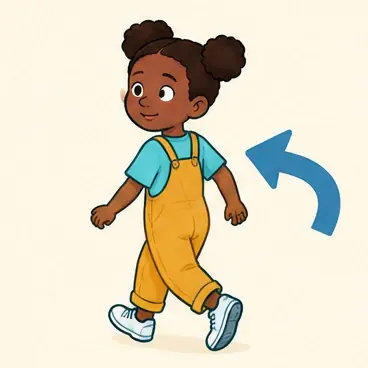
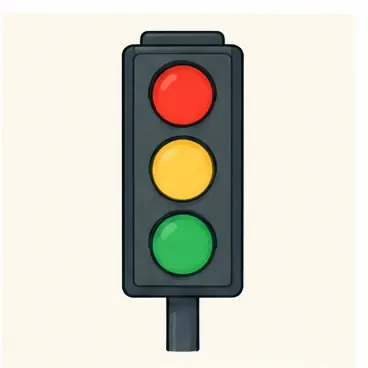
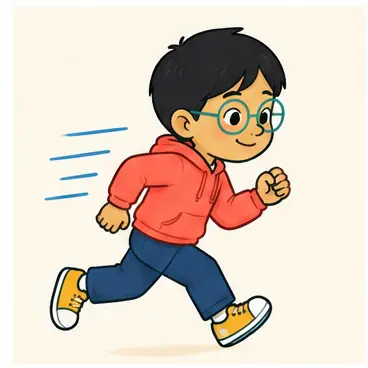
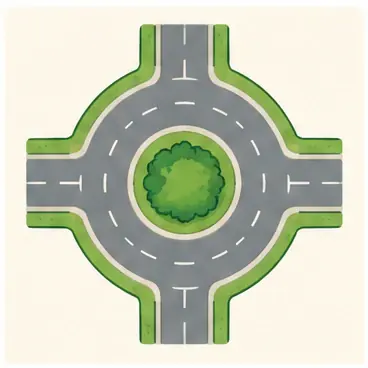
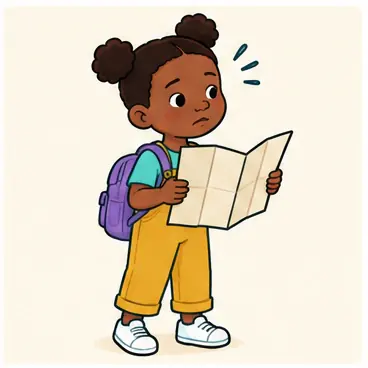
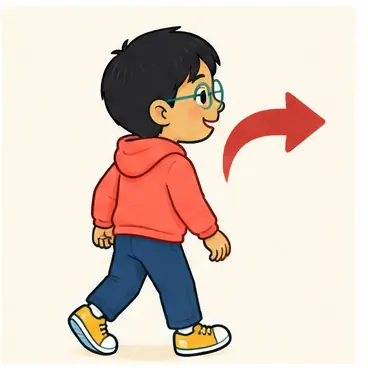
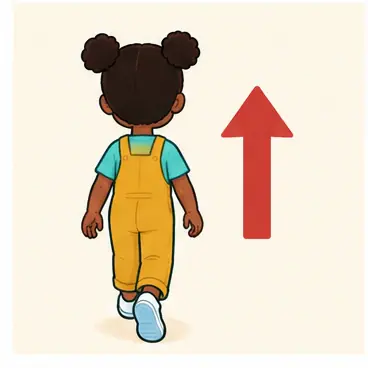
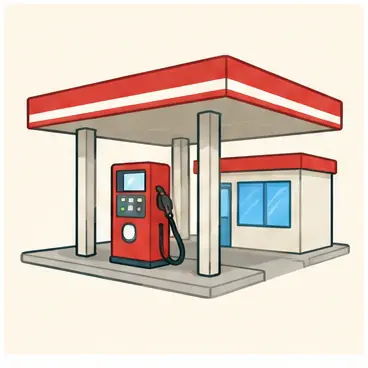
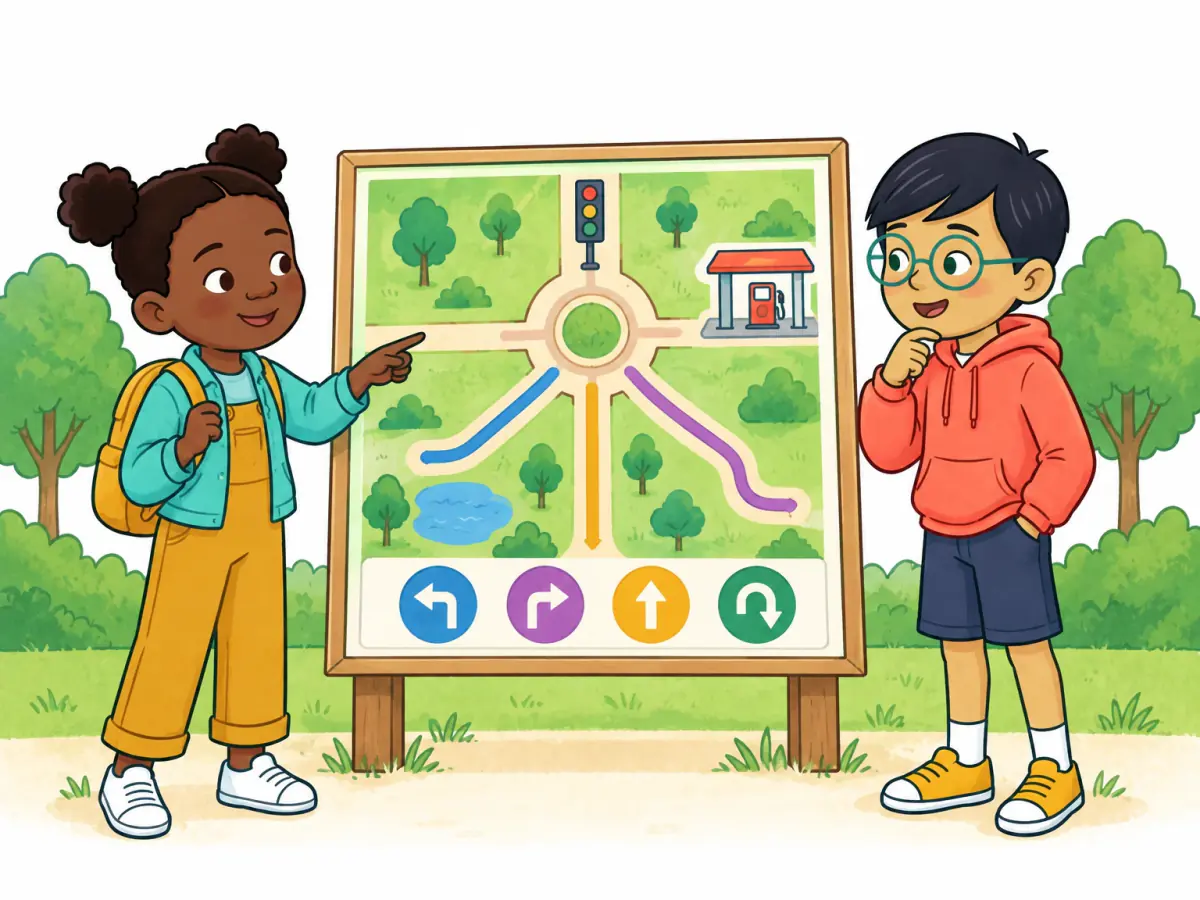
In a park route challenge, two children stand beside a blank path diagram with a roundabout, traffic light, petrol station and three safe walking paths. Direction arrows show turn left, turn right, go straight on and go back without words.

Ayuda a tu peque a dar indicaciones sencillas en inglés (A2, 8–11 años): turn left, go straight on y roundabout, Why…? con la respuesta Because…, have to y had to, y una invitación de cuatro frases con el día, el lugar de encuentro y el camino.

Para dar indicaciones en inglés, se empieza por el verbo: “Go straight on to the roundabout.” “Turn left at the traffic lights.” Para preguntar el motivo se usa Why did…?, y se responde con because: “Why did you go back?” “Because we had to find the right path.” Es un tema de nivel A2 para niños de unos 8 a 11 años que ya distinguen left y right y pueden responder preguntas sencillas sobre ayer. Termina con una invitación corta: el día, el lugar de encuentro, el camino y un motivo.

¿Para quién es este artículo?

  • Familias con peques que ya conocen left y right en inglés: tu peque señala, dice “left” o “right” y responde a “What did you do yesterday?”
  • Familias que van andando al colegio, al parque o a las tiendas: un camino que tu peque ya conoce le da indicaciones reales que explicar.
  • Familias que buscan una meta de escritura corta: al final, tu peque escribe una invitación de cuatro frases, y los diálogos de abajo tienen el audio de cada frase.
  • Demasiado pronto: si las preguntas en pasado como “Did you…?” y “What did you do?” todavía son nuevas, empieza por el artículo A2 sobre usually y yesterday, enlazado abajo.
  • Demasiado fácil: si ya escribe indicaciones con un motivo, pasa al artículo A2 sobre un folleto de reparaciones con sugerencias y motivos, enlazado abajo.

Abrir las páginas de muestra

Abrir las páginas de muestra

Tarjetas de vocabulario

read a mapread a map
turn leftturn left
go backgo back
traffic lighttraffic light
hurryhurry
roundaboutroundabout
get lostget lost
turn rightturn right
go straight ongo straight on
petrol stationpetrol station
Why did you go back?

Because we had to find the right path.

Turn left at the roundabout.
Go straight on.
We have to wait at the light.

Conversación

Nia Go straight on to the roundabout.

Leo Do I turn left there?

Nia Yes. Yesterday we took the wrong road and went back.

Leo Why did you go back?

Nia Because we had to find the right path.

Leo Now we won't get lost.

Estructura de la frase

Why did you go back?

Because we had to find the right path.

  • Turn left at the roundabout.
  • Go straight on.
  • We have to wait at the light.

Más práctica

Change the information

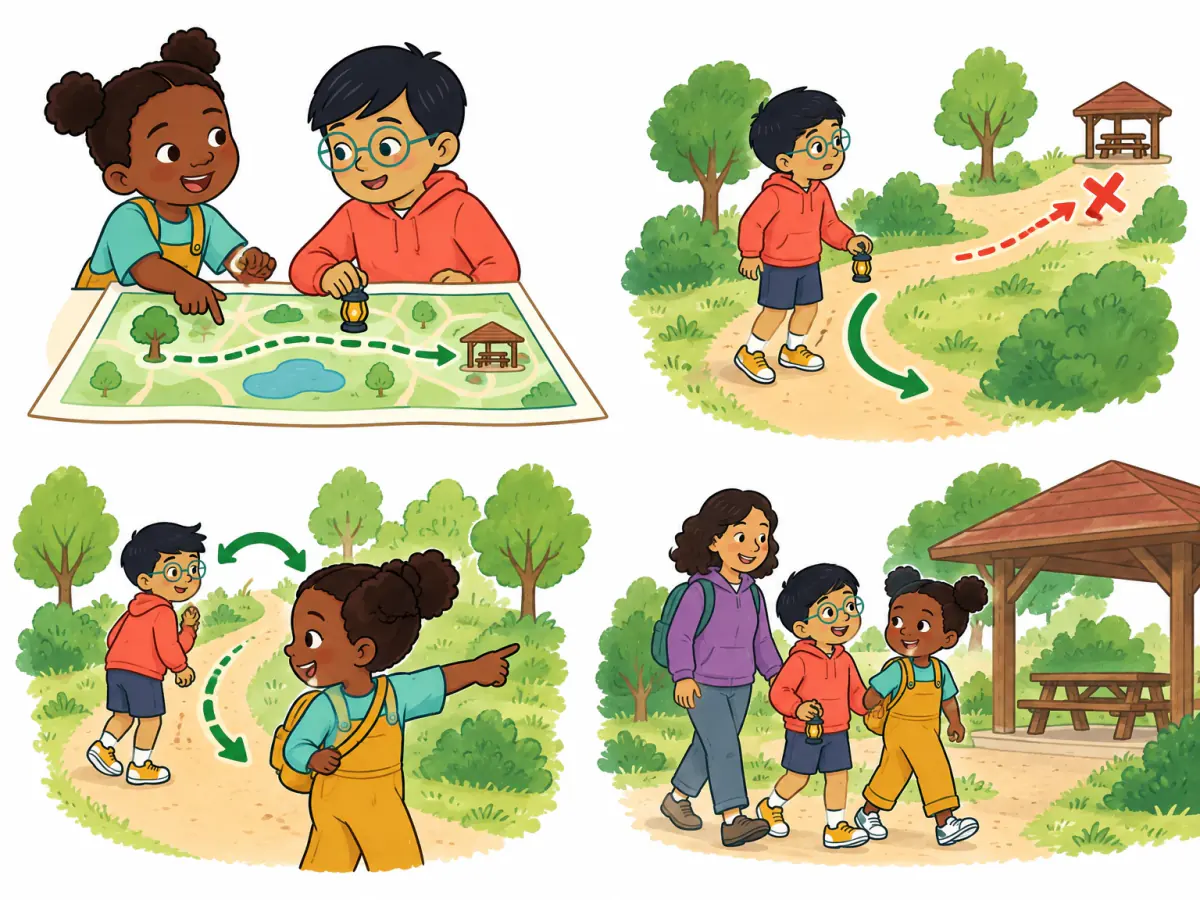
Nia gives directions while Leo moves a small lantern token from a start tree to a picnic shelter. A wrong turn and return arrow show getting lost, going back and hurrying safely with an adult.

Leo Which way do I go at the pond?

Nia Go straight on, then turn right.

Nia Why did you go back?

Leo Because I took the wrong path.

Leo Do we have to walk with an adult?

Nia Yes, we have to stay with an adult.

Why did you go back?

Because we had to find the right path.

  • Turn left at the roundabout.
  • Go straight on.
  • We have to wait at the light.

The Library Shadow Event

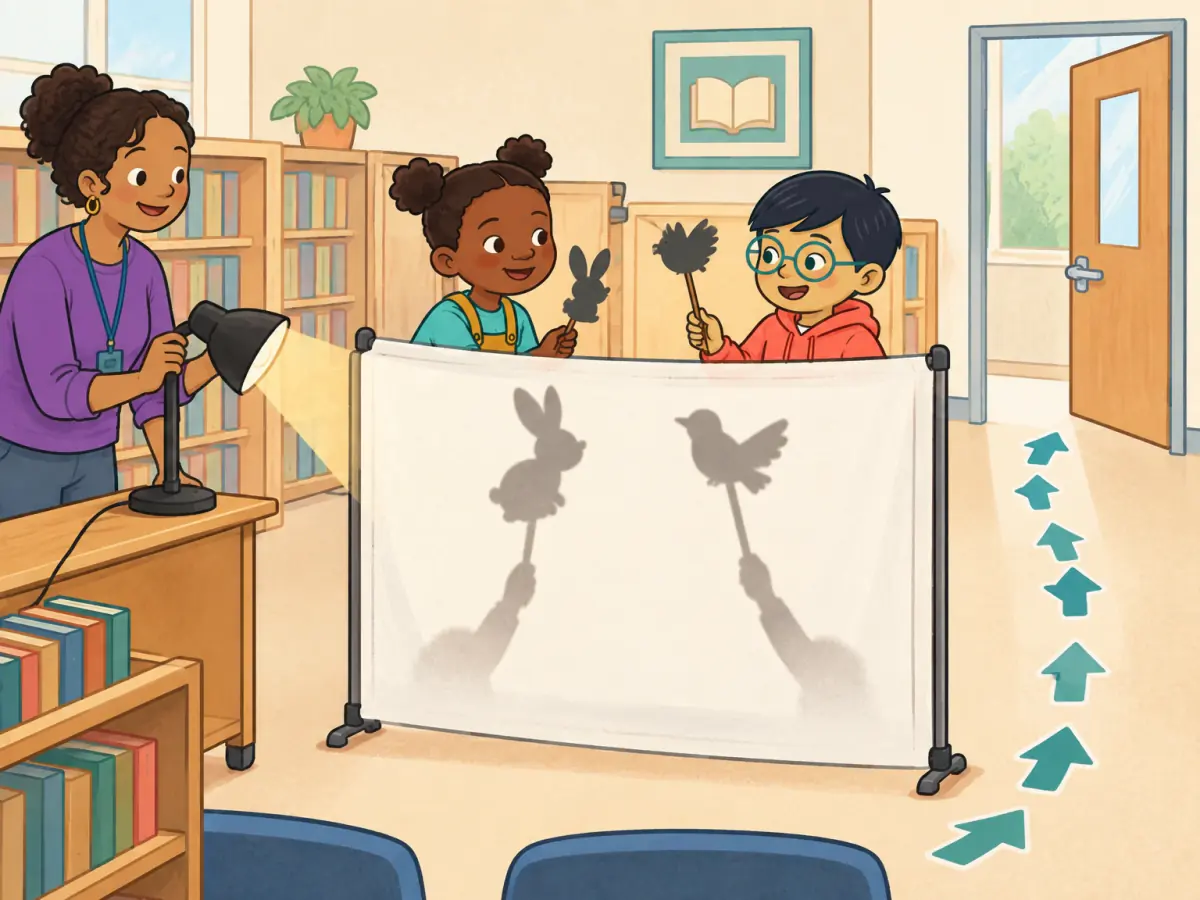
A supervised library shadow event uses paper puppets, sticks, a white screen and a marked indoor route.

THE LIBRARY SHADOW EVENT

Our popular puppet event is in the library hall. From the park gate, go straight on to the roundabout, then turn right because the library's side door is there. Inside, an adult places a bright light behind a white screen. Each child can lift up one paper puppet with a stick and add a funny voice. Follow the marked path so nobody gets lost in the dark hall.

Writer’s studio

Nia gives directions while Leo moves a small lantern token from a start tree to a picnic shelter. A wrong turn and return arrow show getting lost, going back and hurrying safely with an adult.

Nia What will you write about?

Leo I will write an invitation to our lantern walk.

Nia What does your friend need to know?

Leo The day, the place and the way to get there.

How can a friend join?

Come to our lantern walk on Friday! Meet at the library gate. Go straight on and turn right at the roundabout because the park entrance is there.

  • Turn left at the roundabout.
  • Go straight on.
  • We have to wait at the light.
Aprende esta unidad
¿Cómo quieres aprender?

Palabras de rutas: direcciones y lugares

Go straight on significa seguir recto en la misma dirección, y go back, volver por donde has venido. Roundabout es la rotonda, donde los coches dan la vuelta en círculo, y petrol station (en inglés americano, gas station) es la gasolinera. Hurry significa darse prisa, pero nunca es un motivo para cruzar la calle corriendo.

  • Direcciones: turn left (gira a la izquierda), turn right (gira a la derecha), go straight on, go back
  • Lugares: roundabout, traffic light (semáforo), petrol station
  • Por el camino: read a map (leer un mapa), get lost (perderse), hurry

Dar indicaciones: empieza por el verbo

Una indicación empieza por el verbo y no necesita “you”: “Turn left.” “Go straight on.” Después añade el lugar: at para el punto donde giras (“Turn left at the roundabout.”) y to para hasta dónde vas (“Go straight on to the roundabout.”). Une dos pasos con then: “Go straight on, then turn right.” Como en español decimos «gira a la izquierda», muchos niños dicen “turn to left”; en inglés basta con “Turn left.” Quien escucha puede comprobarlo con una pregunta de sí o no.

Nia Go straight on to the roundabout.

Leo Do I turn left there?

Why…? Because…: dar un motivo

Para preguntar el motivo de algo pasado se usa Why did + persona + verbo en forma base: “Why did you go back?”, no “Why you went back?” La respuesta empieza por because: “Because we had to find the right path.” En español «por qué» y «porque» casi suenan igual, pero en inglés son dos palabras distintas: why para preguntar y because para responder.

Al hablar, una respuesta con Because… sola es normal. Por escrito, une el motivo a la idea principal: “We went back because we took the wrong road.”

Nia Yes. Yesterday we took the wrong road and went back.

Leo Why did you go back?

Nia Because we had to find the right path.

Leo Now we won't get lost.

Have to y had to: lo que hay que hacer

Have to funciona como «tener que»: “We have to wait at the light.” Con he, she o un nombre es has to; en pasado se usa had to con todas las personas: “We had to find the right path.” Las preguntas llevan do o did: “Do we have to walk with an adult?” Dicho rápido, have to suena como “hafta”, pero se escribe have to.

Escribir una invitación con indicaciones

Una buena invitación le dice cuatro cosas a un amigo: el evento y el día, dónde quedar, el camino y un motivo. Elige un solo punto de partida y una sola ruta, para que nadie se pierda. Tu peque mantiene este plan y cambia todos los detalles.

  • “Come to our lantern walk on Friday!”
  • “Meet at the library gate.”
  • “Go straight on and turn right at the roundabout because the park entrance is there.”
  • “You have to bring a coat because it gets cold in the evening.”
Aprende esta unidad a tu manera

Truco de ortografía: ¿ck o c al final de la palabra?

El sonido k al final de una palabra tiene dos grafías frecuentes: ck tras una vocal corta en palabras de una sílaba, y c en palabras más largas terminadas en -ic. El español ayuda con estas últimas, porque se parecen a plástico, música, cómic y pícnic, que también llevan c. Dar palmadas con las sílabas ayuda a decidir.

  • ck: neck, duck, clock, rock
  • c (-ic): plastic, picnic, music, comic

Errores frecuentes y cómo corregirlos

Son normales en el nivel A2. Repite la frase bien dicha y seguid.

  • “Turn to left.”: sobra “to”: “Turn left.”
  • “Why you went back?”: añade did: “Why did you go back?”
  • “Yesterday we have to wait.”: el pasado es had to: “Yesterday we had to wait.”
  • “She have to wait.”: con he, she o un nombre: “She has to wait.”
  • Una invitación sin día ni lugar de encuentro: revisa las cuatro partes antes de compartirla.

Un juego de rutas en casa

Dibuja un mapa sencillo con la puerta de casa, una rotonda imaginaria, un semáforo y un parque, y esconde un juguete pequeño en algún punto. Tu peque da indicaciones mientras tú mueves una moneda: “Go straight on, then turn left at the traffic light.” Equivócate de camino a propósito; tu peque pregunta “Why did you go back?” y tú respondes con because. Luego cambiad los papeles.

Terminad con una invitación de verdad a un plan familiar, como un pícnic el domingo: cuatro frases y un because.

El siguiente paso

Después, tu peque puede decir dónde está un lugar: “The library is on your right.” Más adelante, junto a los motivos con because llegan los resultados con so: “It was dark, so we went back.”

Preguntas frecuentes

¿Se dice “go straight on” o “go straight ahead”?

Las dos son correctas. “Go straight on” es muy común en inglés británico; “go straight ahead” y “go straight” son frecuentes en todas partes.

¿Se puede empezar una frase con “because”?

Sí. Al responder a Why? hablando, es normal empezar con because: “Because we got lost.” Por escrito, únela a una idea principal: “We went back because we got lost.” o “Because we got lost, we went back.”

¿Qué diferencia hay entre “have to” y “had to”?

“Have to” es para algo necesario ahora o siempre: “We have to wait at the light.” “Had to” es su pasado: “We had to find the right path.”

Aprende esta unidad
¿Cómo quieres aprender?

¿Qué viene después?

Clases individuales con un profesor en vivo

En las clases infantiles de Flalingo, tu hijo practica unidades como esta en clases individuales con un profesor en vivo, con juegos en la misma pantalla.

Reserva una clase de prueba gratis