
Ir al contenido
Flalingo

Práctica de inglés

IELTS Academic Writing Task 1, diagrama de procesos: cómo escribir el overview y usar la pasiva

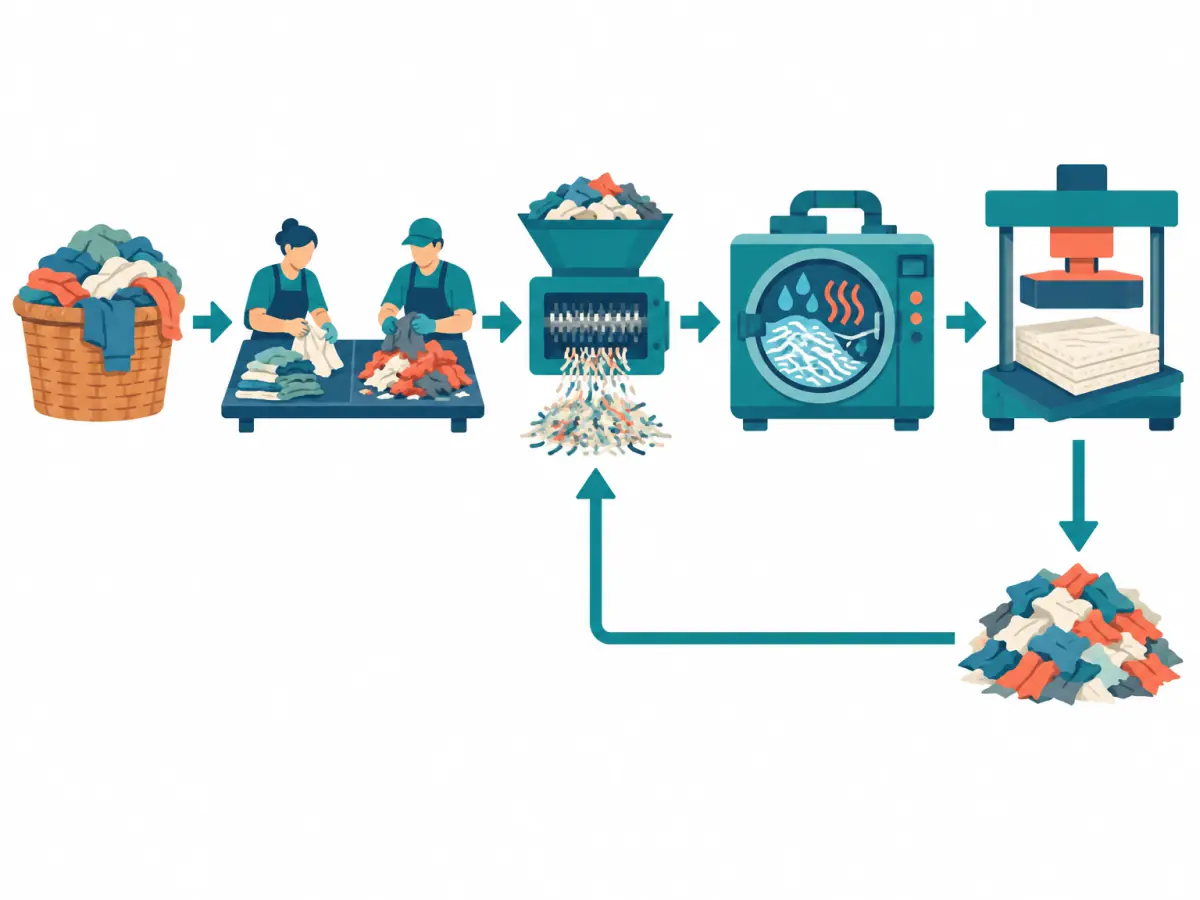
Material recovery cycle

Cómo describir un diagrama de procesos en IELTS Academic Writing Task 1: encuentra la entrada, el producto y el ciclo de retorno, escribe primero el overview, agrupa las etapas y elige la pasiva. Para candidatos de nivel B2 o superior.

En IELTS Academic Writing Task 1, un diagrama de procesos muestra etapas, no cifras. Empieza con un overview que diga qué entra, qué sale y si alguna parte vuelve atrás. Después describe todas las etapas en orden, agrupadas en dos párrafos y sobre todo en pasiva: importa más el material que quién lo manipula. No añadas causas ni opiniones que el diagrama no muestre. Esta guía es para candidatos de IELTS Academic con un inglés de nivel intermedio alto (B2) o superior.

¿Para quién es este artículo?

  • Candidatos que dominan gráficos y tablas, pero se bloquean cuando la Task 1 muestra etapas en lugar de cifras.
  • Quienes escriben informes de procesos que parecen una lista de etiquetas, con “then” delante de cada paso.
  • Quienes pasan de activa a pasiva sin motivo o conectan la flecha de retorno con la etapa equivocada.
  • Demasiado pronto: si nunca has escrito un overview de Task 1, empieza por la guía del gráfico de líneas (enlaces abajo), que entrena el mismo hábito con cifras.
  • Demasiado fácil: si tus informes de procesos ya son precisos, pasa a los párrafos argumentativos de Writing Task 2 (enlaces abajo).

Abrir las páginas de muestra

Abrir las páginas de muestra

Tarjetas de vocabulario

active versus passive focus

Choose active for the agent and passive for the receiver or stage.

Workers sort the glass. The glass is sorted by colour.

passive across tenses

Build the passive with the correct form of be plus a past participle.

The leaves are dried; the old shed was removed.

by-agent: include or omit

Name the agent only when it adds useful information.

The samples are sealed. They are checked by an independent technician.

passive infinitive and gerund

Use to be done or being done when the action receiver stays in focus.

The fibre needs to be washed before being pressed.

Ejemplo de conversación

What belongs in the overview?

Used cotton is prepared and transformed into insulation panels, while offcuts are returned to an earlier stage.

The overview states input, product and cyclic feature.

  • is prepared
  • is transformed
  • are returned

Estructura de la frase

Which focus fits the diagram?

The selected cloth is shredded, then the fibre is washed and dried before being pressed into panels.

The passive keeps the material and stages in focus.

  • is shredded
  • is washed and dried
  • being pressed

Más práctica

Follow the complete cycle

Material recovery cycle

What belongs in the overview?

Used cotton is prepared and transformed into insulation panels, while offcuts are returned to an earlier stage.

The overview states input, product and cyclic feature.

  • is prepared
  • is transformed
  • are returned

Cotton recovery stages

  1. Used cotton cloth is collected
  2. Cloth is sorted by fibre condition
  3. Suitable cloth is shredded
  4. Fibre is washed and dried
  5. Fibre is pressed into insulation panels
  6. Offcuts return to shredding

Structure controls

  • Start: collection
  • Main transformation: shredding → washing/drying → pressing
  • End product: insulation panels
  • Cycle: the return arrow takes offcuts back to the shredder (stage 3)

Check the evidence

Material recovery cycle

Cotton recovery stages: 1 Used cotton cloth is collected; 2 Cloth is sorted by fibre condition; 3 Suitable cloth is shredded; 4 Fibre is washed and dried; 5 Fibre is pressed into insulation panels; 6 Offcuts return to shredding

Structure controls: Start: collection; Main transformation: shredding → washing/drying → pressing; End product: insulation panels; Cycle: offcuts return to stage 3

Cotton recovery stages

  1. Used cotton cloth is collected
  2. Cloth is sorted by fibre condition
  3. Suitable cloth is shredded
  4. Fibre is washed and dried
  5. Fibre is pressed into insulation panels
  6. Offcuts return to shredding

Structure controls

  • Start: collection
  • Main transformation: shredding → washing/drying → pressing
  • End product: insulation panels
  • Cycle: offcuts return to stage 3
  1. What is the process input?

    Mostrar respuesta y explicación

    used cotton cloth

    Collection begins with used cotton cloth.

  2. Which stage directly precedes pressing?

    Mostrar respuesta y explicación

    washing and drying

    The visible sequence puts washing and drying before pressing.

  3. What makes the process partly cyclical?

    Mostrar respuesta y explicación

    Offcuts return to shredding.

    The return arrow connects offcuts to stage 3.

Describe Process Stages: transfer

Material recovery cycle

Cotton recovery stages

  1. Used cotton cloth is collected
  2. Cloth is sorted by fibre condition
  3. Suitable cloth is shredded
  4. Fibre is washed and dried
  5. Fibre is pressed into insulation panels
  6. Offcuts return to shredding

Structure controls

  • Start: collection
  • Main transformation: shredding → washing/drying → pressing
  • End product: insulation panels
  • Cycle: offcuts return to stage 3

Build connected process prose

Collection staff receive the cloth. Workers inspect it and remove unsuitable material. Machines shred the selected cloth. A closed system washes and dries the fibre. A press shapes it into panels. Staff return offcuts to the shredder.

Which focus fits the diagram?

The selected cloth is shredded, then the fibre is washed and dried before being pressed into panels.

The passive keeps the material and stages in focus.

  • is shredded
  • is washed and dried
  • being pressed

Cotton recovery stages

  1. Used cotton cloth is collected
  2. Cloth is sorted by fibre condition
  3. Suitable cloth is shredded
  4. Fibre is washed and dried
  5. Fibre is pressed into insulation panels
  6. Offcuts return to shredding

Structure controls

  • Start: collection
  • Main transformation: shredding → washing/drying → pressing
  • End product: insulation panels
  • Cycle: offcuts return to stage 3

Check the evidence

Collection staff receive the cloth. Workers inspect it and remove unsuitable material. Machines shred the selected cloth. A closed system washes and dries the fibre. A press shapes it into panels. Staff return offcuts to the shredder.

Cotton recovery stages

  1. Used cotton cloth is collected
  2. Cloth is sorted by fibre condition
  3. Suitable cloth is shredded
  4. Fibre is washed and dried
  5. Fibre is pressed into insulation panels
  6. Offcuts return to shredding

Structure controls

  • Start: collection
  • Main transformation: shredding → washing/drying → pressing
  • End product: insulation panels
  • Cycle: offcuts return to stage 3
  1. Which sentence keeps the material in focus?

    Mostrar respuesta y explicación

    The selected cloth is shredded.

    The passive subject is the material shown in the process.

  2. When is a by-agent useful?

    Mostrar respuesta y explicación

    when the agent adds relevant information

    A by-agent is omitted when it is unknown or unimportant.

  3. Which sequence is accurate?

    Mostrar respuesta y explicación

    Fibre is washed and dried before pressing.

    That order matches stages 4 and 5.

Control Passive Focus and Sequence: transfer

Material recovery cycle

Cotton recovery stages

  1. Used cotton cloth is collected
  2. Cloth is sorted by fibre condition
  3. Suitable cloth is shredded
  4. Fibre is washed and dried
  5. Fibre is pressed into insulation panels
  6. Offcuts return to shredding

Structure controls

  • Start: collection
  • Main transformation: shredding → washing/drying → pressing
  • End product: insulation panels
  • Cycle: offcuts return to stage 3
Aprende esta unidad
¿Cómo quieres aprender?
¿Ya tienes cuenta?

Una cuenta gratis abre una unidad para siempre.

Qué te pide un diagrama de procesos

Un diagrama de procesos muestra cómo se fabrica o cambia algo, etapa por etapa. Resúmelo en al menos 150 palabras, sin opiniones, en cuatro partes:

  • Introducción: qué muestra el diagrama, con tus propias palabras.
  • Overview: la entrada, el producto final y cualquier ciclo.
  • Párrafo de detalle 1: el primer grupo de etapas.
  • Párrafo de detalle 2: las etapas restantes y el ciclo de retorno.

Lee el diagrama: entrada, producto, punto de retorno

El diagrama de práctica de esta página muestra la recuperación de algodón. Antes de escribir, localiza la entrada (tela de algodón usada), el producto final (paneles aislantes) y dónde termina la flecha de retorno: en el triturado, la etapa 3, no en la recogida.

El diagrama no da motivos, tiempos ni cantidades, así que tu informe tampoco. Estas son sus etiquetas:

  • 1. “Used cotton cloth is collected”
  • 2. “Cloth is sorted by fibre condition”
  • 3. “Suitable cloth is shredded”
  • 4. “Fibre is washed and dried”
  • 5. “Fibre is pressed into insulation panels”
  • 6. “Offcuts return to shredding”

Escribe primero el overview

Los criterios de evaluación de la Task 1 hablan de un overview claro de las principales tendencias, diferencias o etapas. En un proceso, eso significa entrada, producto y ciclo, sin máquinas ni pasos menores.

El modelo grabado de esta página pregunta “What belongs in the overview?” y responde “Used cotton is prepared and transformed into insulation panels, while offcuts are returned to an earlier stage.”

¿Qué hace que este proceso sea en parte cíclico?

Agrupa las etapas en dos párrafos

Divide el proceso donde más cambia el material: la preparación antes del triturado y la transformación a partir de él.

  • Preparación: “First, used cotton cloth is collected and sorted according to the condition of its fibres.”
  • Transformación: “Suitable cloth is then shredded, after which the fibre is washed and dried before being pressed into insulation panels.”
  • El ciclo: “Any offcuts are returned to the shredding stage.”
  • Seis frases con un solo verbo suenan a lista; dos o tres verbos por frase suenan a informe.

Pasiva o activa: elige el foco

Un informe de procesos trata del material, así que el material suele ser el sujeto: “Workers sort the glass. The glass is sorted by colour.” La pasiva mantiene el foco en el vidrio (glass). Cada tarjeta de esta página tiene su grabación.

  • Forma: be + participio pasado, y es be quien marca el tiempo: “The leaves are dried; the old shed was removed.” Usa el present simple para un proceso que se repite. En español dirías “la tela se clasifica”; el inglés no tiene esa pasiva con “se”, así que escribe “The cloth is sorted”.
  • El agente: añade “by …” solo cuando aporta información. En “The samples are sealed. They are checked by an independent technician.” “by an independent technician” la aporta; “by workers” no la aportaría.
  • Después de verbos y preposiciones: “The fibre needs to be washed before being pressed.” contiene un infinitivo pasivo y un gerundio pasivo. “Needs washing” también es correcto.
  • Los procesos naturales suelen quedarse en activa: “the eggs hatch”. Un verbo usado sin objeto no tiene pasiva.
Aprende esta unidad a tu manera

Conectores que respetan el orden

Los conectores deben coincidir con las flechas. El segundo modelo grabado pregunta “Which focus fits the diagram?” y responde “The selected cloth is shredded, then the fibre is washed and dried before being pressed into panels.”

  • “First”, “next”, “after that”, “finally”: varíalos, pero no los acumules.
  • “Once” + present perfect pasivo: “Once the fibre has been dried, it is pressed into panels.”
  • “before” o “after” + “being” + participio pasado: “after being sorted”.
  • “Fibre is washed and dried before pressing” es correcto; “Panels are pressed before washing” no lo es.

Errores que cuestan puntos

Revisa cada informe de práctica en busca de estos errores:

  • Un overview sin entrada, producto ni ciclo.
  • Una flecha de retorno conectada con la etapa equivocada.
  • Forzar la pasiva con un verbo que no la tiene: “is consisted of”, “was happened”.
  • Un “be” que falta: “The cloth sorted by condition”.
  • Causas que el diagrama no da: “to protect the environment”.

Rutina de examen de 20 minutos

Tres veces por semana, un diagrama, con cronómetro:

  • 3 minutos: marca la entrada, el producto, cada flecha y el punto de retorno.
  • 2 minutos: elige dos grupos de etapas y escribe el overview.
  • 12 minutos: introducción, overview y dos párrafos de detalle.
  • 3 minutos: revisa el orden de las etapas, cada “be” y la ortografía de formas como “shredded” y “dried”.
  • Después, vuelve a contar el proceso en voz alta nombrando solo los agentes que importan.

Qué viene después

Los mapas son otro formato de la Task 1 sin datos que comentar: dos planos de un mismo lugar, descritos con pasivas en pasado como “was converted into” y “was replaced by”. Después, la Writing Task 2 pide argumentos que no afirmen más de lo que respalda la evidencia.

Preguntas frecuentes

¿Debo usar la pasiva en un diagrama de procesos de IELTS?

Sobre todo en procesos hechos por personas, donde importa más el material que quién lo manipula. Los ciclos naturales suelen describirse en activa.

¿Tengo que describir todas las etapas de un diagrama de procesos de IELTS?

Sí, en orden y agrupadas, en los párrafos de detalle. El overview solo nombra la entrada, el producto y el ciclo, si lo hay.

¿Qué extensión debe tener una respuesta de proceso en la Task 1 de IELTS?

Al menos 150 palabras, en unos 20 minutos. La Task 2 vale el doble, así que protege el tiempo del ensayo.

Flalingo no está afiliado a las organizaciones que administran IELTS ni cuenta con su respaldo.

Aprende esta unidad
¿Cómo quieres aprender?
¿Ya tienes cuenta?

Una cuenta gratis abre una unidad para siempre.

¿Qué viene después?

Sigue practicando con Flai

Flai es la aplicación de Flalingo para practicar conversación con IA mediante diálogos de voz, correcciones e informes de cada lección.

Aprende con un profesor en vivo

En las clases de Flalingo practicas unidades como esta en clases individuales con un profesor en vivo.