
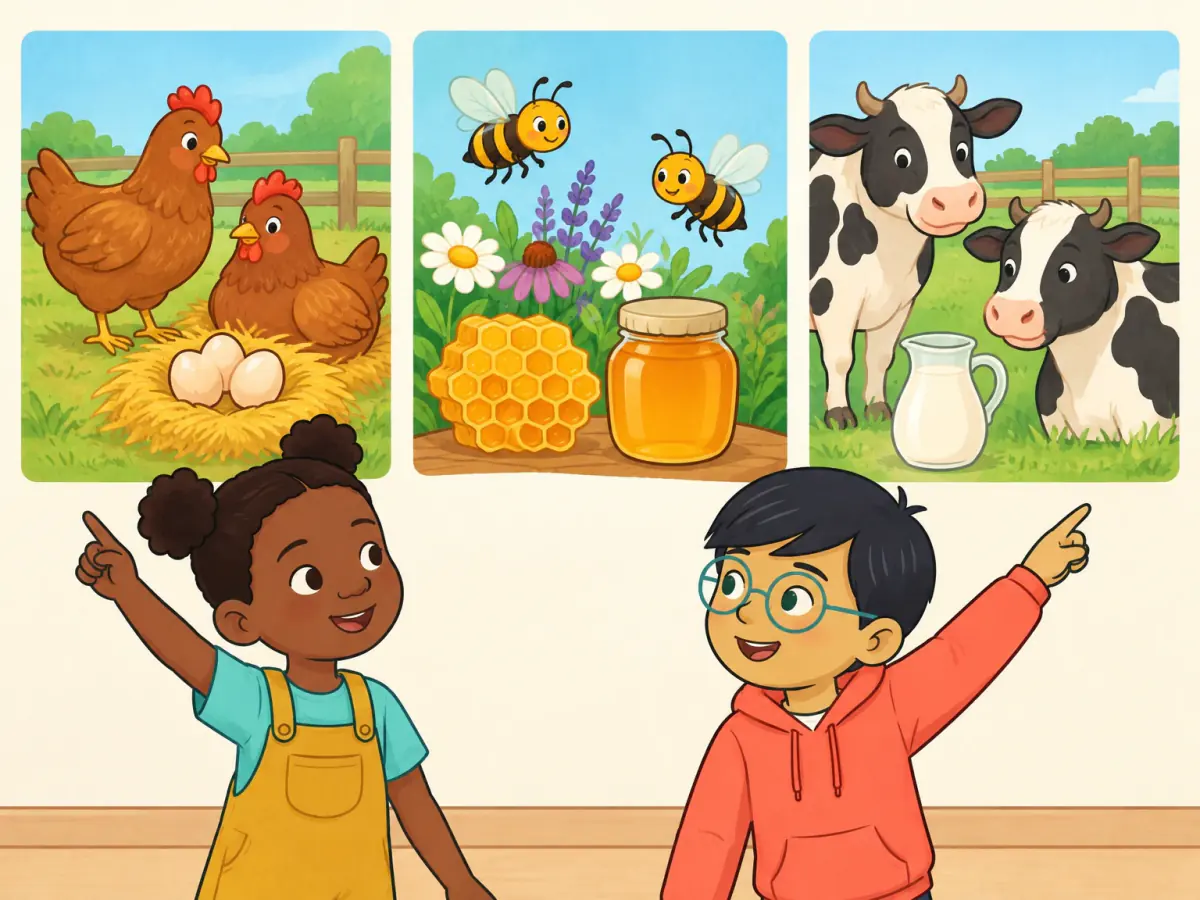
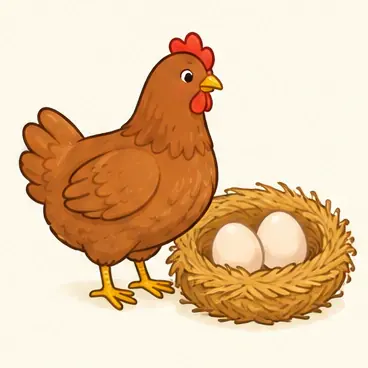
 eggs from chickens
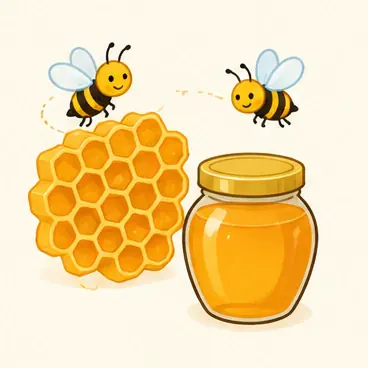 honey from bees
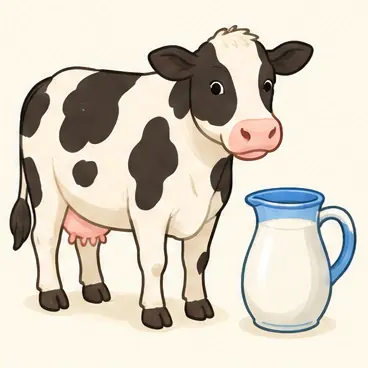 milk from cows
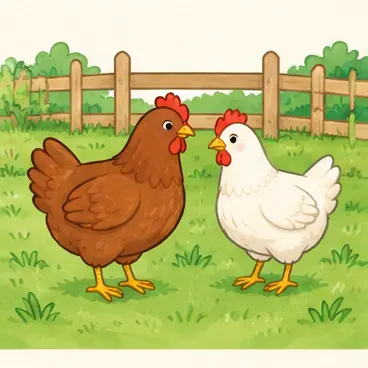 chickens
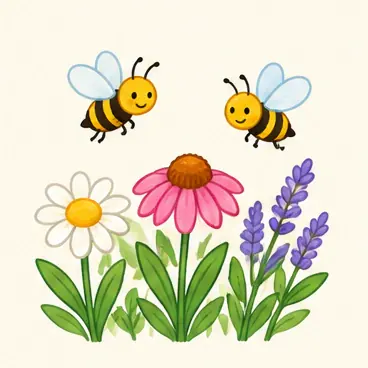 bees
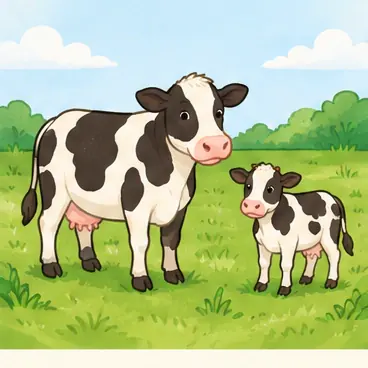 cows
Three foods and three animals
Use things from the kitchen: an egg box, a carton of milk and a jar of honey, plus toy or drawn chickens, cows and bees. Start with one pair, such as milk and cows. A sound and a gesture help each animal stick:
- chickens (eggs) – flap your elbows like wings: “Cluck, cluck!”
- cows (milk) – put two fingers up like horns: “Moo!”
- bees (honey) – fly one finger through the air: “Buzz!”
Word cards and phrase cards
The cards above come in two kinds. Three name just the animal: “chickens”, “cows”, “bees”. Three join a food to its animal: “eggs from chickens”, “milk from cows”, “honey from bees”. Play the animal card first, then the phrase card, so your child hears the word alone and then joined to its food.
One question: “Where does … come from?”
The whole topic fits one question. Milk and honey take “does”, and the answer verb takes an “-s”. Eggs are more than one, so the question uses “do” and the answer verb has no “-s”. Your child doesn’t need the rule; children pick up each sentence as a whole chunk. At first, one word such as “Cows!” is a great answer; say the full sentence back.
- “Where does milk come from?” – “Milk comes from cows.”
- “Where does honey come from?” – “Honey comes from bees.”
- “Where do eggs come from?” – “Eggs come from chickens.”
Listen: honey and milk
Two children take turns: one asks about honey, the other answers and then asks about milk. Listen together, then ask the same questions about your own pictures.
Nia Where does honey come from?
Leo Honey comes from bees.
Leo Where does milk come from?
Nia Milk comes from cows.
The matching game: take each food home
Children remember words better when they do something with them. Put the animals at one end of the table and the foods at the other:
- Model first: pick up the milk, ask “Where does milk come from?”, walk it to the cow and say “Milk comes from cows.”
- Hand over: your child picks a food and you ask. Pointing or “Bees!” is fine; say the full sentence back.
- Get it wrong on purpose: put the honey by the cow and say “Honey comes from cows!” Most children love to correct a grown-up.
- Swap: your child asks and you answer. Stop after three or four rounds, while it is still fun.
Sandwich time: “I like…” and “please”
Making a snack together brings more food words: bread, cheese, butter, jam, egg and salad. Keep “I like cheese.”, which says what your child enjoys, apart from “Milk comes from cows.”, which says where a food starts.
- “What would you like?” – “A sandwich, please.”
- “What do you like?” – “I like cheese.”
Common mistakes
These slips are normal at this age. Say the right version back instead of correcting:
- “Milk come from cows.”: after one thing, such as milk or honey, the verb takes an “-s”: “Milk comes from cows.”
- “Where does eggs come from?”: eggs are more than one, so the question uses “do”. Just say “Where do eggs come from?” back.
- “Milk comes from cow.”: many languages use the singular for animals in general, so the “s” is easy to drop. Answer with “Yes, from cows!”
A five-minute routine for the week
Keep the toys or pictures in one box:
- Day 1: milk and cows. Play the cards, say “Moo!” and match.
- Day 2: add eggs and chickens.
- Day 3: add honey and bees, then play the matching game.
- Day 4: sound guessing. You say “Buzz!”, and your child answers “Bees! Honey comes from bees.”
- Any day: at breakfast, hold up the milk and ask the question once.
What comes next
When your child matches all three pairs alone, turn the question round: “What do cows give us?” – “Milk!” and “What do bees make?” – “Honey!” Later, the island map and garden articles below add “There’s a…” and “There are…”.