
Przejdź do treści
Flalingo

Ćwiczenia z angielskiego

Strona bierna w czasie teraźniejszym na B1 Preliminary: jak opisać przygotowanie potrawy i napisać kartę z przepisem

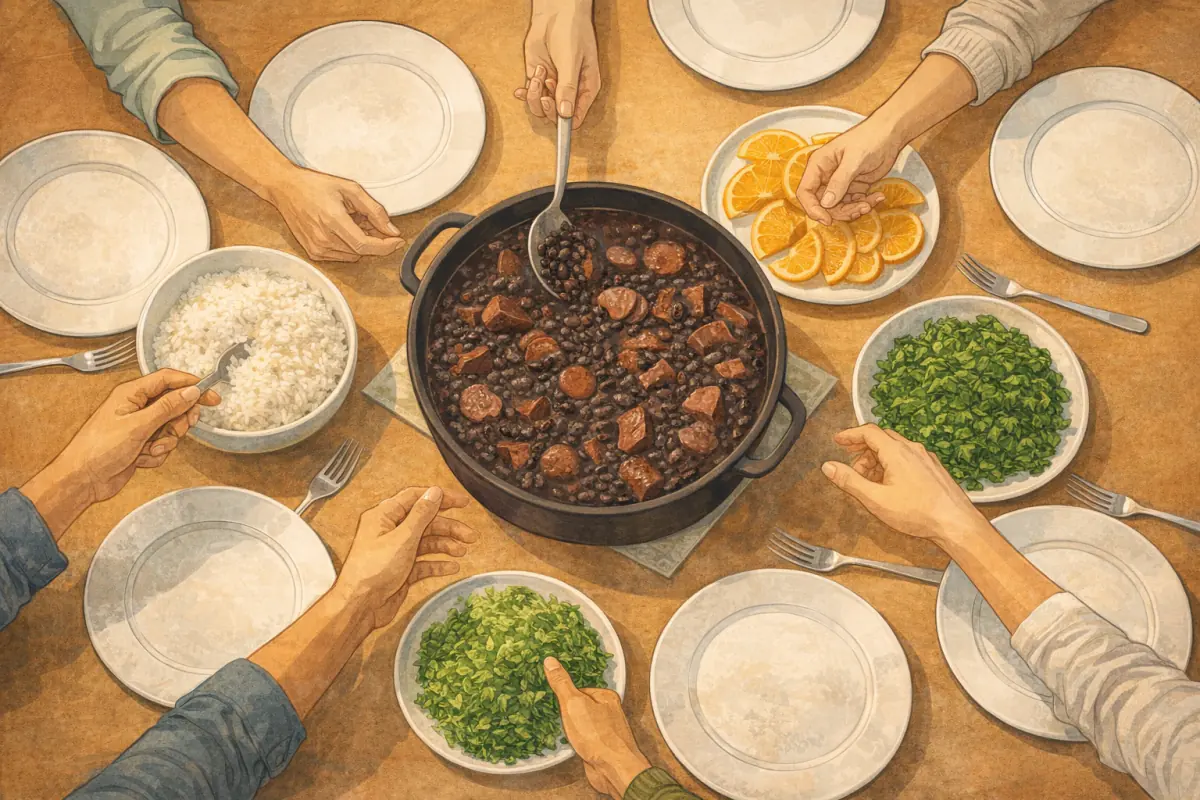
A Sunday lunch table seen from above: a pot of feijoada in the middle, with rice, orange slices, green vegetables and hands reaching for the food.

Jak nastolatki przygotowujące się do B1 Preliminary (B1) używają strony biernej w czasie teraźniejszym, a few, a little i plenty of, czasowników kuchennych i słów porządkujących, żeby opisać przygotowanie potrawy i napisać kartę z przepisem na 80 słów.

Żeby wyjaśnić, jak przygotowuje się potrawę, użyj strony biernej w czasie present simple: is albo are + imiesłów bierny (past participle), np. “The rice is boiled.” Jedzenie jest na początku zdania, bo ważniejsze jest to, co się z nim dzieje, niż to, kto to robi. Ilości podawaj za pomocą a few, a little i plenty of, a kroki układaj po kolei słowami First, Then, After that i Finally. Te same małe słowa wypełniają wiele luk w części 6 Reading w B1 Preliminary. Ten poradnik jest dla uczniów na poziomie średnio zaawansowanym (B1) w wieku około 12–16 lat.

Dla kogo jest ten artykuł?

  • Uczniowie w wieku około 12–16 lat, którzy przygotowują się do B1 Preliminary lub B1 Preliminary for Schools.
  • Umiesz powiedzieć, co gotuje twoja rodzina, ale kiedy wyjaśniasz, jak powstaje potrawa, każde zdanie zaczyna się od “you” albo “my mum”, albo mylisz a few i a little.
  • Dla rodziców: przy wspólnym gotowaniu wystarczy poprosić dziecko, żeby opisało kroki po angielsku (“The onions are cut, then …”). Cztery kroki z First, Then i Finally to już pół karty z przepisem.
  • Za wcześnie: jeśli krótki e-mail z A2 Key wciąż sprawia ci trudność, zacznij od artykułu A2 o e-mailu do przyjaciela, który przyjeżdża w odwiedziny (link poniżej).
  • Za łatwe: jeśli już opisujesz proces stroną bierną bez błędów, przejdź do zadania z dopasowywaniem w Reading B1 Preliminary i artykułu o korzystaniu z ekranów z części 2 Writing (linki poniżej).

Otwórz przykładowe strony

Otwórz przykładowe strony

Karty ze słowami

mix

to put different foods together and move them round

The cabbage is mixed with a spicy sauce.

add

to put one more thing in with the others

Salt is added to the cabbage first.

serve

to give food to people at a meal

Feijoada is served with rice.

taste

to put a little food in your mouth to see if it is good

Hana's grandfather always tastes the sauce first.

Rozmowa

Kai So, Hana, how is kimchi made?

Hana First, the cabbage is cut into big pieces and salt is added.

Kai And then?

Hana Then it is left overnight. In the morning, the salt is washed off.

Kai What about the red sauce?

Hana The sauce is made with garlic, hot pepper and a little sugar. Then the cabbage is mixed with the sauce by my grandfather. He always does that part.

Hana Finally, the kimchi is put in big jars and kept somewhere cold.

Konstrukcja zdania

Write a recipe card for a family dish (about 80 words).

Lemon chicken with rice (for four people) Ingredients: four pieces of chicken, two lemons, a little oil, plenty of garlic, a few fresh herbs, rice, salt. Method: First, a little salt is added to the chicken. Then the garlic and lemon juice are mixed and poured over the chicken. After that, it is roasted in the oven for an hour. Meanwhile, the rice is boiled. Finally, everything is served with the fresh herbs on top. It's my favourite Sunday dish!

The model has 80 words. It has a name, ingredients with amounts (a little, plenty of, a few) and a method with passive verbs (is added, are mixed, is roasted, is boiled, is served) and order words (First, Then, After that, Finally).

  • Name: … (for … people)
  • Ingredients: a few …, a little …, plenty of …
  • First, … is / are …
  • Then …
  • After that, …
  • Finally, … is served with …

Więcej ćwiczeń

How is kimchi made?

Kai So, Hana, how is kimchi made?

Hana First, the cabbage is cut into big pieces and salt is added.

Kai And then?

Hana Then it is left overnight. In the morning, the salt is washed off.

Kai What about the red sauce?

Hana The sauce is made with garlic, hot pepper and a little sugar. Then the cabbage is mixed with the sauce by my grandfather. He always does that part.

Hana Finally, the kimchi is put in big jars and kept somewhere cold.

How is kimchi made?

The cabbage is cut and salt is added. Then everything is mixed with a spicy sauce.

Present simple passive: am / is / are + past participle (cut, added, made, mixed, kept). Use it when the food and the action are more important than the person. Add by + person only when it matters: The kimchi is mixed by my grandfather.

  • is cut
  • is added
  • is made
  • are mixed
  • are kept
  • is mixed by …

Lucas's recipe post

A Sunday lunch table seen from above: a pot of feijoada in the middle, with rice, orange slices, green vegetables and hands reaching for the food.

Our Sunday feijoada, by Lucas

Every Sunday, my family gets together for a big lunch, and the star of the table is always feijoada. It's a traditional Brazilian dish of black beans and meat. People say that every family in Brazil has its own recipe, and this is ours.

Our feijoada starts the night before: the black beans are washed and left in cold water. On Sunday morning, they are boiled slowly with the meat for about three hours. A few onions and plenty of garlic are fried in a little oil and then added to the pot. We don't add many herbs, because we want the beans to have the strongest flavour.

Feijoada is served with white rice, green vegetables and slices of orange. The orange isn't just there for its colour: its fresh, sour taste is perfect with the heavy beans.

My favourite part isn't the eating, though. It's the three hours in the kitchen, when everyone talks and laughs while the pot cooks. And every five minutes, someone asks when lunch is ready!

Want to try it? You'll need a big pot, a lot of time and some hungry friends.

On camera

What dish are you showing us today?

Hi, everyone! Today I'm showing you my family's lemon chicken. It's made every Sunday in our house. First, the chicken is covered in garlic and lemon, and then it's roasted. It smells delicious, and it tastes like home!

  • Hi, everyone! Today I'm showing you …
  • It's made …
  • First, … Then, …
  • It smells / tastes …
Poznaj ten rozdział
Jak chcesz się uczyć?

Strona bierna: is / are + imiesłów bierny

Używaj strony biernej, gdy ważniejsze jest to, co dzieje się z rzeczą, niż to, kto to robi: czytelnik przepisu chce wiedzieć, co się dzieje z ryżem, a nie kto go miesza. Z jedną rzeczą albo rzeczownikiem niepoliczalnym używaj is, z liczbą mnogą are.

Polskie przepisy często mówią „Cebulę kroimy” albo „Pokrój cebulę”. Po angielsku w przepisie też możesz wydać polecenie (“Cut the cabbage.”), ale gdy wyjaśniasz, jak powstaje potrawa, naturalnie brzmi strona bierna: “The onion is cut.”

  • Twierdzenie: “The peppers are filled with rice.”
  • Przeczenie: “The fish isn’t fried. It’s grilled.”
  • Pytanie: “How is kimchi made?”
  • Nieregularne imiesłowy: cut → cut, put → put, make → made, keep → kept, leave → left

Posłuchaj: jak powstaje rodzinna potrawa

Dwoje uczniów rozmawia o kimchi, ostrej koreańskiej potrawie z kapusty. Znajdź siedem czasowników w stronie biernej. “By my grandfather” pojawia się, bo ta osoba jest ważna; w ostatniej linijce dwa czasowniki dzielą jedno is.

Uczeń 1 So, Hana, how is kimchi made?

Uczeń 2 First, the cabbage is cut into big pieces and salt is added.

Uczeń 2 The sauce is made with garlic, hot pepper and a little sugar. Then the cabbage is mixed with the sauce by my grandfather. He always does that part.

Uczeń 2 Finally, the kimchi is put in big jars and kept somewhere cold.

Ilości: a few, a little, plenty of, none

Słowo określające ilość musi pasować do rzeczownika: angielski oddziela to, co da się policzyć (eggs, onions), od tego, czego nie da się policzyć (salt, oil, milk). Polskie „trochę” pasuje do obu, a angielski je rozdziela: “a little salt”, ale “a few eggs”.

  • “a few” + rzeczownik w liczbie mnogiej: “a few onions”, “a few spoonfuls of sugar”
  • “a little” + rzeczownik niepoliczalny: “a little salt”
  • “plenty of” (więcej niż trzeba) + oba rodzaje: “plenty of garlic”, “plenty of eggs”
  • “none” stoi samo, a “no” przed rzeczownikiem: “How much sugar is left?” “None.”
  • Przedimki: najpierw “a bowl”, potem “the bowl”, a bez przedimka, gdy mówisz ogólnie: “Kimchi is made from cabbage.” W polskim nie ma przedimków, więc łatwo je pominąć.

Czasowniki kuchenne i trzy wymowy -ed

Przydatne czasowniki: boil (gotować w wodzie), fry (smażyć), roast i bake (piec w piekarniku), grill (grillować), stir (mieszać), slice (kroić w plasterki), mash (rozgniatać) i pour (nalewać). Końcówka -ed ma trzy wymowy:

  • /t/ po dźwiękach takich jak k, s, p, sh, ch i f: mixed, sliced, baked
  • /d/ po większości innych dźwięków: served, poured, boiled
  • /ɪd/, dodatkowa sylaba, tylko po t albo d: added, roasted

Napisz kartę z przepisem na 80 słów

Karta z przepisem nie jest zadaniem z B1 Preliminary, ale ćwiczy poprawną gramatykę i jasną kolejność. Podaj nazwę, składniki z ilościami i sposób przygotowania, a w nim cztery czasowniki w stronie biernej, trzy określenia ilości i cztery słowa porządkujące. Nasz wzór ma około 80 słów; ty napisz o potrawie ze swojego domu.

  • “Banana pancakes (for two people)” → nazwa
  • “Ingredients: two ripe bananas, two eggs, a few spoonfuls of flour, a little milk, a little butter, plenty of honey.” → składniki z ilościami
  • “Method: First, the bananas are mashed with a fork. Then the eggs, flour and milk are added, and everything is mixed well.” → słowa porządkujące, trzy formy bierne
  • “After that, a little butter is heated in a pan, and small spoonfuls of the mixture are cooked for two minutes on each side.” → dwie kolejne formy bierne
  • “Finally, the pancakes are served with plenty of honey on top.” → ostatni krok
Poznaj ten rozdział po swojemu

Gdzie to się przyda w B1 Preliminary

Słowa takie jak fresh, spicy i herbs przydadzą się też w części 2 Speaking, kiedy przez około minutę opisujesz zdjęcie.

Część 6 Reading to open cloze: krótki tekst z sześcioma lukami, w każdą wpisujesz jedno słowo. Wiele luk wymaga właśnie takich małych słów. Spróbuj:

  • “The peppers ___ filled with rice and lamb.” → are
  • “You only need a ___ salt.” → little
  • “Use plenty ___ fresh herbs.” → of

Typowe błędy i jak je poprawić

Poszukaj ich, kiedy sprawdzasz kartę (błąd po lewej, poprawka po prawej):

  • “The cabbage cut into pieces.” → “The cabbage is cut into pieces.” Bez is / are to nie jest zdanie w stronie biernej.
  • “Salt is add first.” → “Salt is added first.”
  • “The onions is fried.” → “The onions are fried.”
  • “The cabbage is cutted.” → “The cabbage is cut.”
  • “Add a few salt.” → “Add a little salt.”

15-minutowy plan ćwiczeń

Wystarczą trzy razy w tygodniu:

  • 3 minuty: wybierz rodzinną potrawę i zapisz składniki z ilościami.
  • 6 minut: napisz cztery, pięć kroków w stronie biernej ze słowami porządkującymi.
  • 3 minuty: sprawdź is / are, imiesłowy i a few / a little.
  • 3 minuty: opisz potrawę na głos w 30 sekund i nagraj się.

Twój następny krok

Potem spróbuj zadania z dopasowywaniem w Reading i artykułu z części 2 Writing (linki poniżej), a także strony biernej w czasie przeszłym: “This cake was first made by my grandmother.”

Najczęstsze pytania

Jak tworzy się stronę bierną w czasie teraźniejszym po angielsku?

Is albo are + imiesłów bierny: “Salt is added.” W pytaniach is albo are stoi przed podmiotem: “How is it made?”

Czym różni się a few od a little?

A few łączy się z rzeczownikami w liczbie mnogiej (a few eggs), a little z niepoliczalnymi (a little milk). Bez a słowa few i little znaczą „niewiele” i brzmią negatywnie.

Kiedy w stronie biernej potrzebne jest by?

Tylko wtedy, gdy osoba jest ważna: “The sauce is mixed by my grandfather.” Zwykle się je pomija: “The bread is baked daily.”

Flalingo nie jest powiązane z Cambridge English, organizatorem egzaminów A2 Key i B1 Preliminary, ani przez tę instytucję rekomendowane.

Poznaj ten rozdział
Jak chcesz się uczyć?

Co dalej?

Lekcje jeden na jeden z lektorem na żywo

We Flalingo nastolatki przerabiają takie rozdziały jeden na jeden z lektorem na żywo, we własnym tempie.

Umów bezpłatną lekcję próbną