
My, your, his, her, our, their
日本語では「母と来ました」のように「私の」を言わないことがよくありますが、英語では名詞の前に my や his などをきちんと入れます。上のカードで一つずつ聞けます。聞いたら、自分の持ち物について言ってみましょう。複数になっても形は変わりません。“my key”、“my keys”。
- I → my:“This is my phone.”(これは私の携帯電話です。)
- you → your:“Is this your bag?”(これはあなたのかばんですか?)
- he → his:“Tom is here with his wife.”(トムは奥さんと来ています。)
- she → her:“Anna is here with her husband.”(アンナはご主人と来ています。)
- we → our、they → their:“Our flat is small. Their flat is big.”
- it → its(アポストロフィなし):“The flat is old, but its kitchen is new.”
名前 + ’s:Maya’s sister、my sister’s bag
持ち主を名前や名詞で言うときは、持ち主に ’s を付けて、物をそのあとに置きます。日本語の「の」と同じ順番です。「マヤの姉」= “Maya’s sister”。“the bag of my sister” より “my sister’s bag” のほうが自然です。
- “Maya’s sister”:マヤの姉か妹。
- “Owen’s parents”:オーウェンの父と母。
- s で終わる複数の持ち主には、アポストロフィだけを付けます:“my parents’ house”(両親の家)。
- 続けて言う:“She’s Maya’s sister. Her name is Lara.” まず名前に ’s、次の文では her を使います。
だれのものか聞く
見当がついているときは Yes/No で答える質問を、まったくわからないときは “Whose…?” を使います。答えでは mine、yours、his、hers、ours、theirs が “my bag”、“your bag” などの代わりになります。
- “Is this your bag?” – “No, it isn’t. Mine is black.”(いいえ。私のは黒です。)
- “Whose bag is this?” – “It’s my sister’s.”(姉のです。)
- “Whose keys are these?” – “They’re hers.”(彼女のです。)
- 近くの物には this と these、離れた物には that と those を使います。
持ち主を探す:短い会話
パーティーで、ある客がかばんを見つけ、Maya という女性に聞きます。Maya のかばんではないので、Maya は持ち主がだれかを伝えます。聞いたあと、Maya のセリフを自分の家族の話に変えて言ってみましょう。
“my bag” をくり返さずに “Mine is black.” と言っている点、そして “the woman in blue” のように服の色で人を指している点に注目しましょう。
Owen Is this your bag?
Maya No, it's my sister's bag. Mine is black.
Owen Is your sister here?
Maya Yes. She's the woman in blue.
Owen Great. These are her keys too.
Maya Thank you. You're very kind.
家族の単語と人の指し方
家族の単語は my、his、her や ’s の付いた名前のあとに置きます。人を指し示すときは、服の色や立っている場所を言います。
- “mother”、“father” → “parents”/“grandmother”、“grandfather” → “grandparents”
- “sister”、“brother”、“son”、“daughter”、“husband”、“wife”、“boyfriend”、“girlfriend”
- 姉も妹も “sister”、兄も弟も “brother” です。必要なときだけ “older” か “younger” を付けます:“my older sister”(姉)。
- 日本語では「うちの母」「夫が」のように言いますが、英語では “my mother”、“my husband” と my を付けます。
- “She’s the woman in blue.” / “The man next to her is my father.”
物を描写する:色、大きさ、意見
形容詞は名詞の前か、be 動詞のあとに来ます。“a black bag”、“The bag is black.” 形容詞に -s は付きません:“two black bags”。形容詞が二つなら、ふつう大きさが色より先です:“a small blue bag”。
- 色:“black”、“white”、“grey”、“blue”、“green”、“red”、“brown”、“pink”、“orange”
- 大きさと新旧:“big”、“small”、“long”、“short”、“old”、“new”
- 反対語のペア:“clean/dirty”、“cheap/expensive”、“fast/slow”、“easy/difficult”
- 意見:“In my opinion, the blue one is very good.” / “I prefer the blue one.” / “I love it.”
よくあるミス
どれも簡単に直せます。
- “Maya is here with his brother.” 物ではなく持ち主で選びます。Maya は女性なので “her brother” です。
- “I came with mother.” 「母と来ました」をそのまま訳すと my が抜けます。“I came with my mother.” と言いましょう。
- “I have two bag.” 日本語は複数をあまり表しませんが、英語では二つ以上なら名詞に -s が付きます:“two bags”。
- “Who’s bag is this?” “Who’s” は “who is” の短縮形です。持ち主を聞くときは “Whose” と書きます。発音は同じです。
- “It’s my.” “It’s my bag.” か “It’s mine.” と言いましょう。
1日10分の練習法
すべて声に出して言いましょう。週に1回長く練習するより、毎日少しずつのほうが効果的です。
- 2分:上の会話を再生し、1文ごとに止めてまねします。
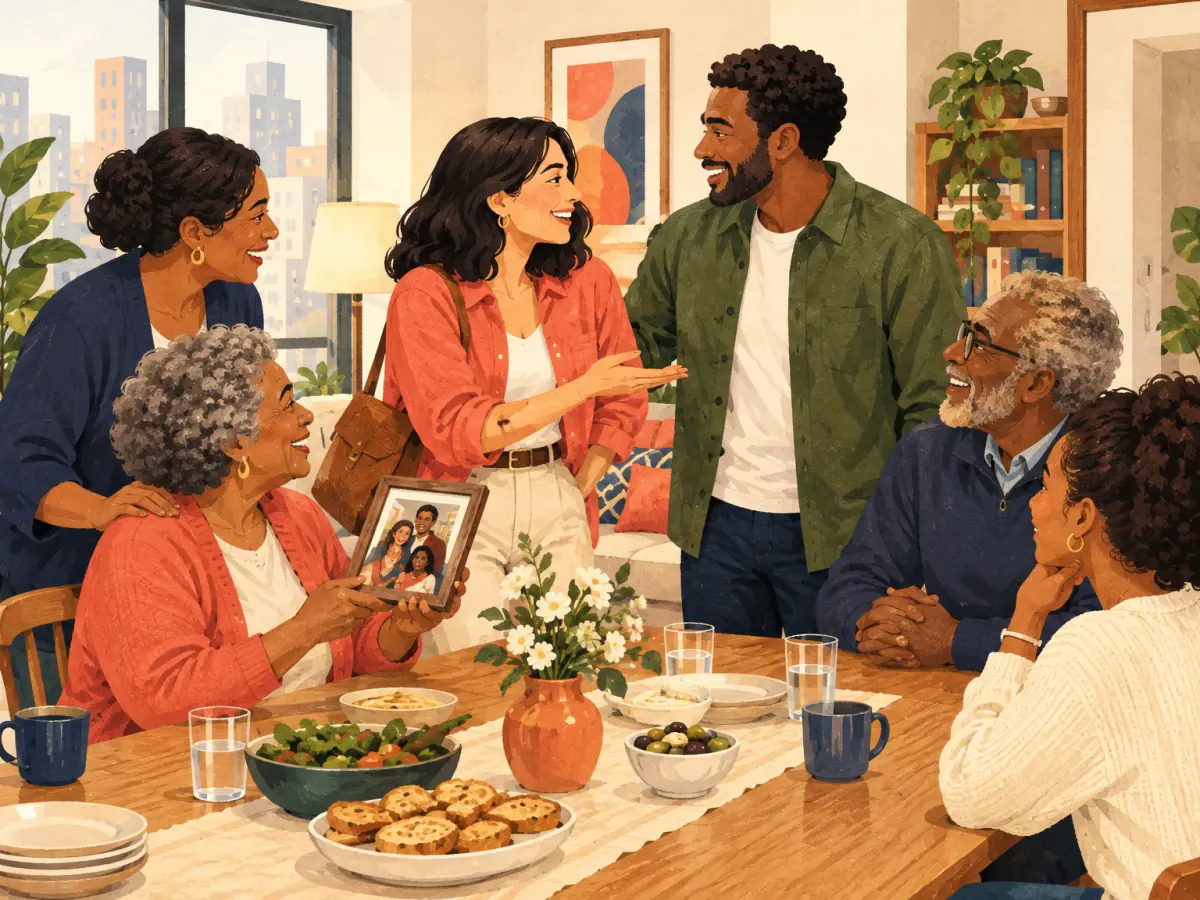
- 3分:家族の写真を開いて、だれがだれか言います:“This is my sister. Her husband is the man in red.”
- 3分:家にある物を五つ選び、だれのものか言います:“These are my son’s shoes. That’s our kettle.”
- 2分:友だち一人とその人の持ち物について書きます:“This is my friend, Karim. His car is small and blue. It’s very clean.”
次のステップ
次は、人が毎日していることを話してみましょう。“My sister works in a bank. Her husband doesn’t drink coffee.” do、does、don’t を使う現在形(present simple)です。