
Ir al contenido
Flalingo

Práctica de inglés

Cómo escribir una biografía corta de una persona viva en inglés (B1 preintermedio): hechos de una vida, for y since, y dos momentos decisivos

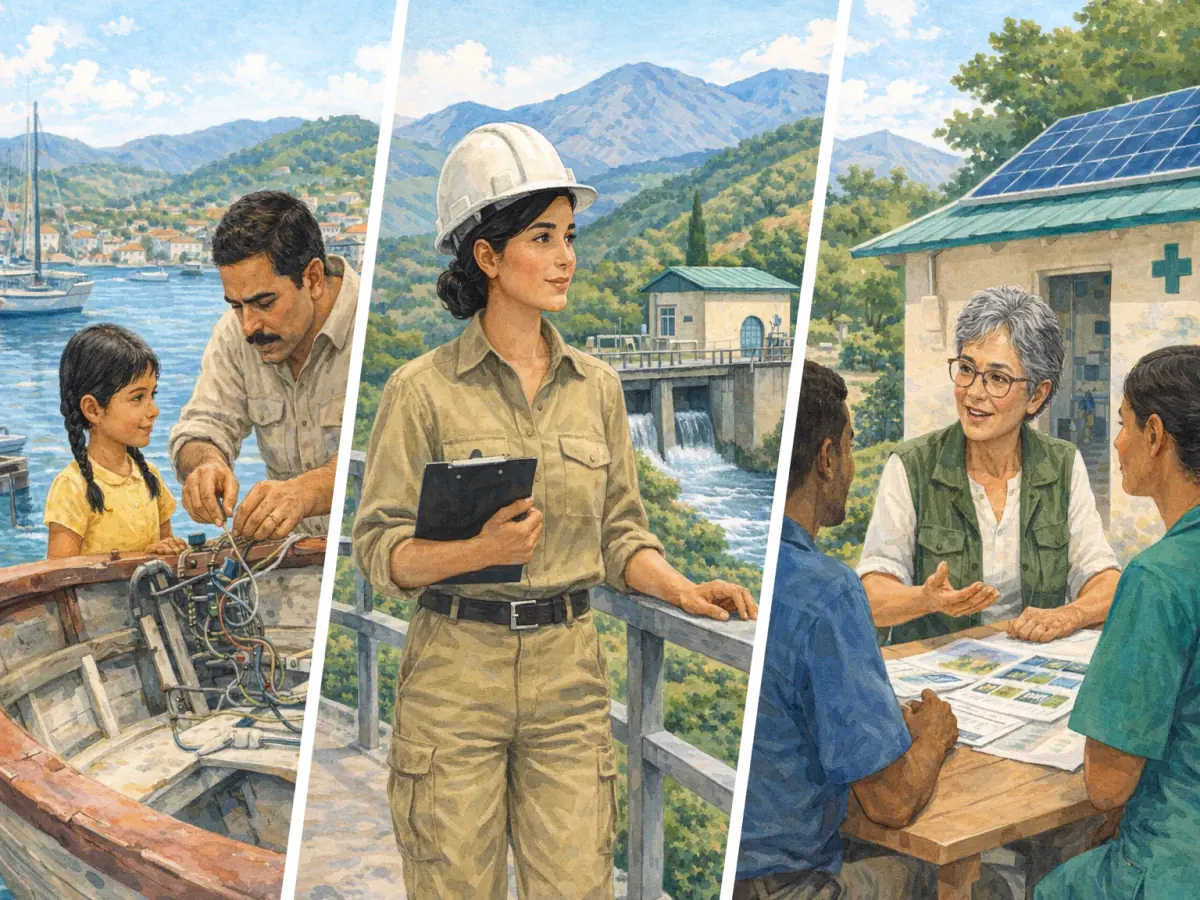
An engineer working with boat equipment, supervising a rural power project, and advising a solar clinic team.

Guía de nivel B1 preintermedio (A2–B1) para escribir en inglés una biografía de 140–170 palabras sobre alguien que vive hoy: expresiones para los hechos de una vida, el past simple para lo que tiene fecha, el present perfect con for y since, y dos momentos decisivos.

Una buena biografía corta no enumera todas las fechas. Dice quién es la persona hoy, añade algo de sus primeros años, cuenta dos momentos decisivos y termina con lo que continúa hoy. Lo que tiene fecha va en past simple: “She opened her first studio in 1998.” Lo que sigue siendo verdad va en present perfect con for o since: “She has lived in Porto since 2012.” Esta guía está pensada para adultos de nivel B1 (preintermedio, A2–B1); con 10 minutos al día es suficiente.

¿Para quién es este artículo?

  • Adultos de nivel preintermedio que saben contar algo en pasado pero dudan con “She has lived there since…”.
  • Quien quiere escribir sobre su madre, su abuelo, un mentor o un compañero: una historia familiar, una tarjeta de jubilación, un perfil para el boletín de un club.
  • Quien prepara una tarea escrita u oral sobre una persona a la que admira.
  • Demasiado pronto: si todavía mezclas “I did” y “I’ve done”, empieza por el artículo de nivel B1 sobre una experiencia reciente y su resultado hoy.
  • Demasiado fácil: si ya conectas sin notas los hechos con fecha con lo que alguien hace hoy, pasa a comparar tus años de escuela con tu vida adulta.

Abrir las páginas de muestra

Abrir las páginas de muestra

Tarjetas de vocabulario

be born · verb phrase

begin life; normally use the passive was/were born

My aunt was born in Ankara in 1958.

go to primary school · verb phrase

attend the first stage of formal schooling

She went to primary school near her family’s bakery.

go to secondary school · verb phrase

attend the school stage after primary education

At eleven, she went to secondary school across the city.

leave school · verb phrase

finish or stop attending school

She left school at eighteen and began paid training.

go to university · verb phrase

study for a higher-education qualification

She went to university in the evenings while working.

get a job · verb phrase

obtain paid employment

After her course, she got a job in a local laboratory.

Conversación

maya When was your aunt Salma born?

owen She was born in Izmir in 1957 and left school at seventeen.

maya What did she do next?

owen She got a job repairing radios, then opened her own workshop in 1989.

maya Is she retired now?

owen She retired from full-time work in 2022, but she has mentored apprentices for twelve years and still runs a free class every month.

maya Has she always lived in Izmir?

owen No. She moved to Berlin in 1996 and has lived there since then.

Estructura de la frase

What does Salma still do?

She mentors apprentices and runs a free class every month.

Finished dates use past simple; continuing work and accumulated experience use present perfect.

  • was born
  • opened in 1998
  • has trained
  • has lived since

Más práctica

Finished life or life until now?

An engineer working with boat equipment, supervising a rural power project, and advising a solar clinic team.
past simple + finished time

use past simple with a finished date, age, period, or life

Lina opened her first studio in 1998.

present perfect + life until now

use present perfect for experience in an unfinished life when no finished time is stated

She has designed more than forty public spaces.

for / since + continuing state

use present perfect when the state began before now and continues

She has lived in Porto since 2012.

When…? → past simple

ask for a finished time with did or was/were

When did she win her first award?

deceased person → past simple

treat the person’s life and achievements as a finished period

Her grandfather wrote six books and died in 2004.

present result

use present perfect when a past action matters to the person’s current life

She has trained hundreds of apprentices, and many now run their own studios.

The engineer who kept the lights on

An engineer working with boat equipment, supervising a rural power project, and advising a solar clinic team.

THE ENGINEER WHO KEPT THE LIGHTS ON

Noura Haddad was born in a coastal town in 1954. Her father repaired fishing boats, and as a child she often watched him solve electrical problems with very simple tools. She left secondary school at eighteen and got a job in the office of a small power company.

The technical team did not include women then, but Noura studied electrical engineering at evening college for six years. In 1981, she became the company’s first female site engineer. She later led a project that brought reliable electricity to five remote villages. The work was difficult: materials arrived by boat, winter storms stopped construction, and each village needed a different plan.

Noura married Karim in 1984, and they had one daughter. The family moved to the capital in 1992 when Noura began training new engineers. She retired from full-time work in 2017, but retirement did not end her public work.

For the last nine years, she has advised a charity that installs small solar systems in rural clinics. She has also spoken at schools since 2019. “Young people need to see that technical work belongs to them,” she says. Noura has received several professional awards, but she keeps one object above her desk: the first light switch her father taught her to repair. It connects her finished career with the work she still does today.

Write a biography of a living person

An engineer working with boat equipment, supervising a rural power project, and advising a solar clinic team.

MARTA SILVA: A LIFE IN COMMUNITY RADIO

Marta Silva was born in Porto in 1962. She loved music and conversation, but she left school at sixteen to help in her family’s shop. In 1981, she joined a local radio station as an office assistant. Two years later, she presented her first evening programme.

Marta married Rui in 1987, and they had two children. She continued working and became the station’s programme director in 2001. During her career, she trained many young presenters and started a weekly programme for new local musicians.

She retired from full-time radio in 2023, but she has not stopped broadcasting. She has produced a monthly interview podcast for three years and has volunteered at a media club since last autumn. Marta now lives near the sea. She says her proudest achievement is not an award: it is hearing confident presenters whom she helped at the beginning of their careers.

How does a short biography become more than a list of dates?

It selects turning points, shows why they mattered, uses dates only where useful, and ends by connecting past experience to the person’s life now.

The model has a clear professional thread and closes with the subject’s own measure of success.

  • was born
  • left school
  • in 2001
  • has…for
  • has…since
  • now
Aprende esta unidad
¿Cómo quieres aprender?
¿Ya tienes cuenta?

Una cuenta gratis abre una unidad para siempre.

Qué necesita una biografía corta

Una lista de fechas no es la historia de una vida. Elige quién es la persona hoy, algo de sus primeros años, dos momentos decisivos y lo que continúa hoy. Comprueba antes los datos con la persona o con su familia. Estas frases te sirven de base:

  • “[Name] is a … who …” – quién es hoy
  • “She was born in … in …” – dónde y cuándo nació
  • “In …, she …, so …” – momento decisivo y consecuencia
  • “Since then, she has …” – lo que sigue desde entonces
  • “Today, she still …” – lo que todavía hace

Los hechos de una vida, del nacimiento a la jubilación

Estas expresiones siguen el orden de una vida. Cuando hablas de estudiar, school y university van sin “the”: “go to university”, “leave school”.

  • be born (nacer), siempre con was/were: “My aunt was born in Ankara in 1958.”
  • leave school (terminar o dejar la escuela): “She left school at eighteen and began paid training.”
  • get a job (conseguir trabajo): “After her course, she got a job in a local laboratory.”
  • marry someone o get married to someone (casarse): “She married Deniz in 1984.” De “se casó con” sale “married with”, que no es correcto.
  • retire (jubilarse): “She retired from the laboratory at sixty-five.”

Past simple para hechos terminados y con fecha

Cualquier tiempo terminado (un año, una edad, “after that”) pide past simple, igual que las preguntas con When…?.

  • Un año: “She opened her first studio in 1998.”
  • Una pregunta: “When did she move to Berlin?”
  • Alguien que ya murió: past simple de principio a fin: “Her grandfather wrote six books and died in 2004.”

Present perfect con for y since: lo que continúa

Para una situación que empezó en el pasado y sigue siendo verdad, usa have/has + participio: for + una duración, since + un punto de partida. En español dices “vive en Berlín desde 1996” en presente; en inglés hace falta el present perfect. Y “desde hace doce años” es for, no since. Sin un tiempo terminado, el present perfect también expresa la experiencia hasta hoy.

  • since: “She has lived in Porto since 2012.”
  • for: “She has worked from home for about twenty years.”
  • Experiencia hasta hoy: “She has trained hundreds of apprentices, and many now run their own studios.”
  • Un hábito actual, con still: “She still teaches one evening a week.”

Escucha: la historia de una tía

Una mujer le pregunta a un compañero por su tía Salma, que antes reparaba radios. Fíjate en los hechos con fecha (was born, retired, moved) y en lo que continúa (has mentored, has lived).

Maya When was your aunt Salma born?

Owen She was born in Izmir in 1957 and left school at seventeen.

Maya Is she retired now?

Owen She retired from full-time work in 2022, but she has mentored apprentices for twelve years and still runs a free class every month.

Maya Has she always lived in Izmir?

Owen No. She moved to Berlin in 1996 and has lived there since then.

Aprende esta unidad a tu manera

Escribe una biografía de 140–170 palabras

Elige a una persona viva cuyos datos puedas comprobar:

  • Quién es hoy: “Teresa Lopes is a retired nurse who now teaches first aid.”
  • Primeros años: “She was born in Lisbon in 1955 and left school at sixteen.”
  • Momento decisivo 1 y por qué importó: “In 1975, she got a job in a hospital kitchen, where nurses encouraged her to train.”
  • Momento decisivo 2: “In 1990, she moved to Canada and had to retake her nursing exams in English.”
  • Lo que continúa: “She retired in 2020, but she has run a monthly first-aid class since then.”
  • Su propia mirada: “She says her best reward is meeting former students who now work in hospitals.”

Errores frecuentes

Todos tienen un arreglo fácil:

  • “She born in 1957.” Falta was: “She was born in 1957.”
  • “She has opened her workshop in 1989.” “In 1989” es un periodo ya terminado y pide past simple: “She opened her workshop in 1989.”
  • “She lives in Berlin since 1996.” Sigue siendo verdad, así que: “She has lived in Berlin since 1996.”
  • “since twelve years” Una duración va con for: “for twelve years”
  • “She married with Deniz.” Di “She married Deniz.”
  • Terminar con una fecha: añade una frase sobre el presente.

Rutina de práctica de 10 minutos al día

Elige a un familiar o a un amigo mayor que tú.

  • 2 minutos: repite cada frase de la conversación. “Born” lleva una /ɔː/ larga; “work” lleva /ɜː/.
  • 3 minutos: pregúntale “When were you born?” “When did you …?” “How long have you …?” “What do you still do?”
  • 3 minutos: escribe 140–170 palabras en el orden de arriba.
  • 2 minutos: revisa cada verbo y luego comenta: ¿un momento decisivo es un gran acontecimiento o una pequeña decisión?

Qué viene después

Después, describe un objeto con la voz pasiva y datos comprobados. Luego compara tus años de escuela con tu vida laboral de hoy.

Preguntas frecuentes

¿Cómo se escribe una biografía corta de alguien en inglés?

Empieza por quién es la persona hoy, añade algo de sus primeros años, cuenta dos momentos decisivos y termina con lo que continúa hoy.

¿Past simple o present perfect en una biografía?

Lo que tiene fecha va en past simple: “She moved to Berlin in 1996.” Lo que continúa va en present perfect: “She has lived there since then.” Si la persona ya murió, usa el past simple.

¿Qué diferencia hay entre for y since?

For indica una duración (for twelve years); since, el punto de partida (since 1996). For también sirve para un periodo terminado: “He worked there for five years, then left.”

Aprende esta unidad
¿Cómo quieres aprender?
¿Ya tienes cuenta?

Una cuenta gratis abre una unidad para siempre.

¿Qué viene después?

Sigue practicando con Flai

Flai es la aplicación de Flalingo para practicar conversación con IA mediante diálogos de voz, correcciones e informes de cada lección.

Aprende con un profesor en vivo

En las clases de Flalingo practicas unidades como esta en clases individuales con un profesor en vivo.