
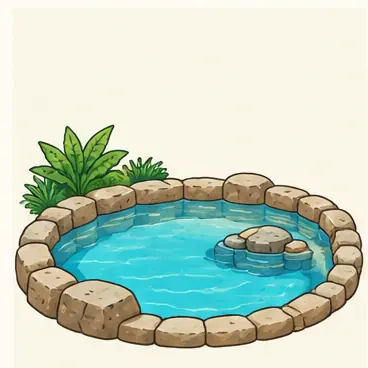
 pool
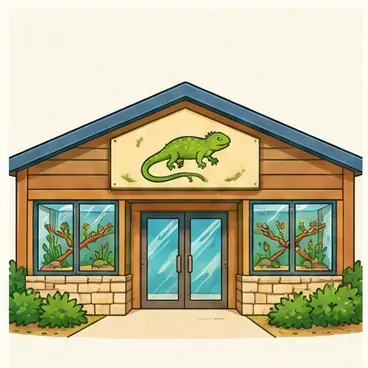 reptile house
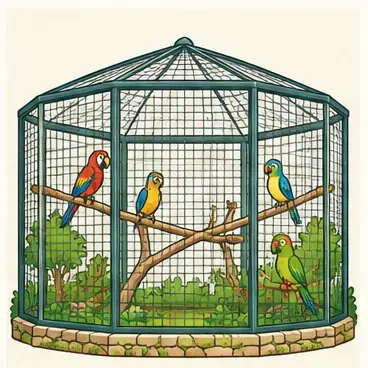 aviary
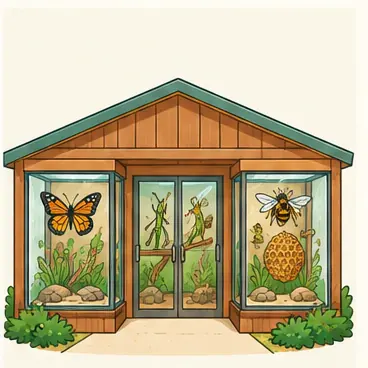 insect house
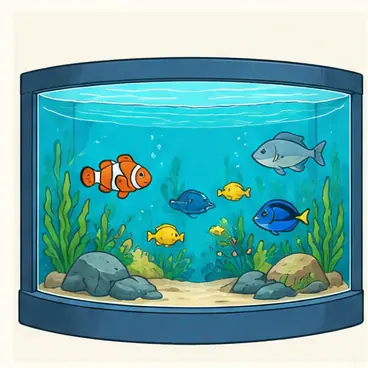 aquarium
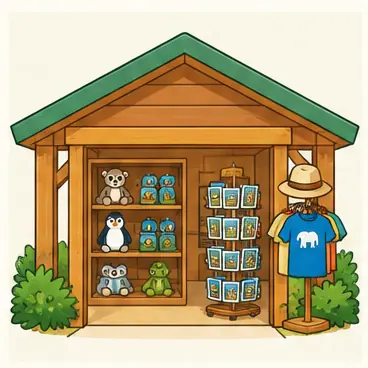 gift shop
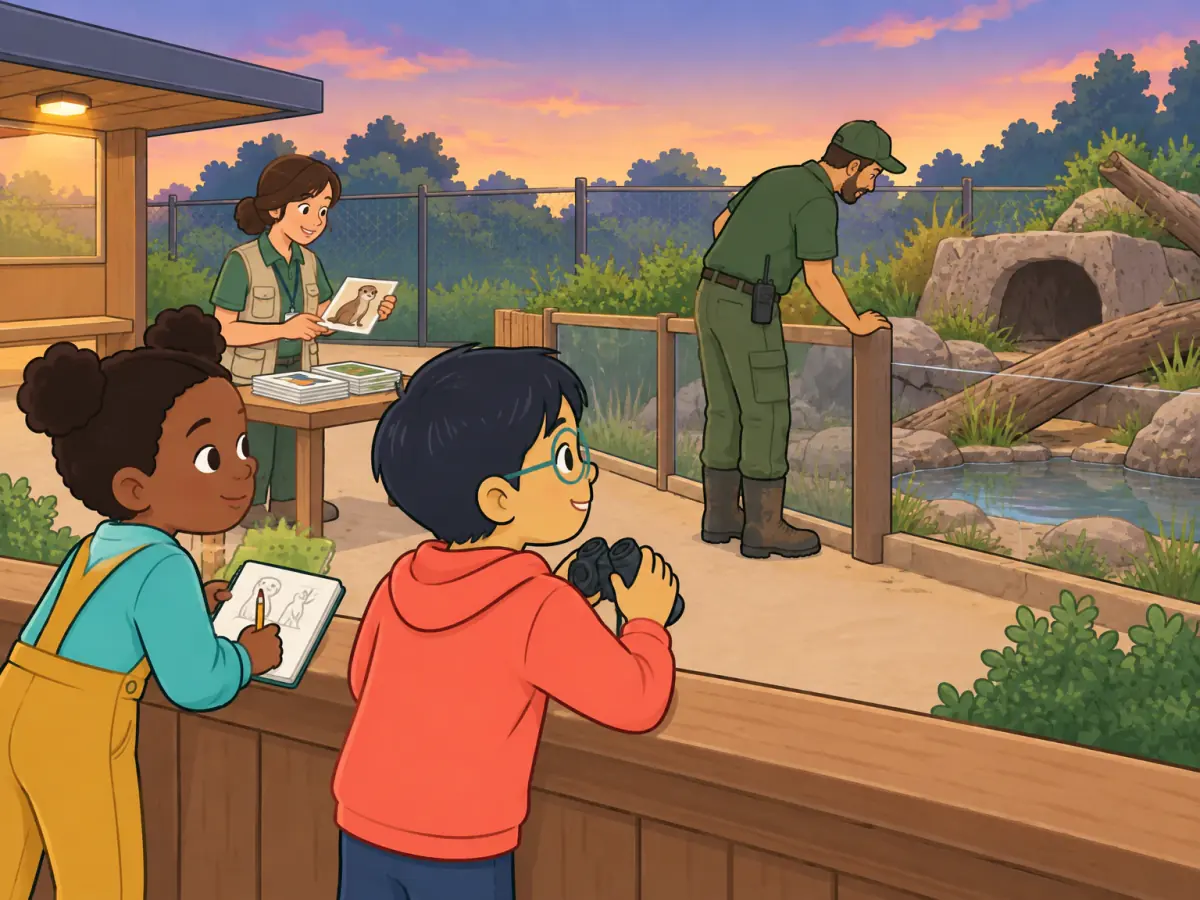
Wildlife park words for this topic
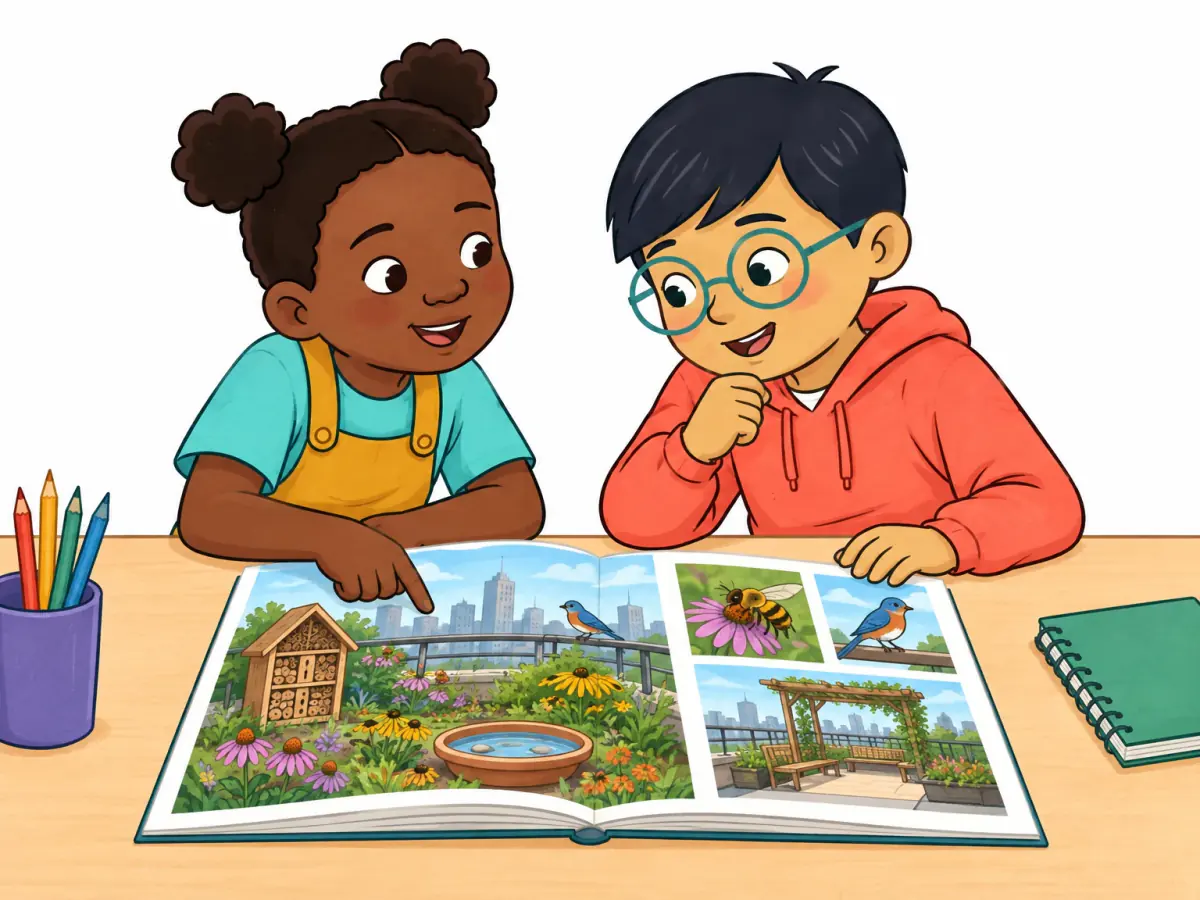
An enclosure is a protected area where an animal is kept. Many wildlife park names are two nouns together, and English usually stresses the first: REPtile house, GIFT shop, PICnic area.
- aviary – a large cage or building for birds
- aquarium – tanks for fish and other water animals
- reptile house, insect house – for snakes and lizards, or for insects
- pool – water for otters or penguins
- picnic area, gift shop – for eating and for souvenirs
Going to for plans: decided before you speak
Use am, is or are + going to + the base verb for something already decided: “The keeper is going to check the enclosure.” In speech the first part is usually short: “We’re going to…”, “She’s going to…”. Your child may also hear “gonna” in songs; that is fast, informal speech, so in writing use the full “going to”.
Going to for predictions: when you can see it coming
The same form predicts from evidence the speaker can see now, such as a darkening sky: “It is going to get dark soon.” Ask your child: “What can you see that tells you?” If there is an answer, use going to. “Will” predicts too, but usually a guess, often with “I think”: “I think it will be sunny tomorrow.” Below, one answer does both jobs.
Leo What are you going to observe?
Nia We are going to observe the aviary. Look at those dark clouds! It is going to rain.
Questions, negatives and short answers
For a question, move am, is or are to the front: “Are we going to feed the birds?” Short answers repeat only that verb: “Yes, we are.” “No, we aren’t.” The negative adds “not”: “I am not going to touch the animals.” Negative plans make good safety rules.
Nia What is the keeper going to do?
Leo She is going to check the enclosure.
Leo Are we going to feed the birds?
Nia No. We are going to watch from the path.
Person words with -er and -or
Many verbs become a person word with -er or -or: someone who keeps animals is a keeper. Both endings sound the same, so learn each spelling.
- keep → keeper, sing → singer
- present → presenter
- visit → visitor, act → actor
- invent → inventor
Topic sentences: the main idea first
A topic sentence opens a paragraph and says what it is about; the other sentences add details. A short article about a library roof opens: “One city library is going to turn a flat roof into a small wildlife stop.” The details follow: flowers for insects, a shallow pool, a shelter for birds.
A wildlife walk plan needs two paragraphs: why the walk helps, then what the group is going to do. “The walk will help visitors notice animals safely.” “Here is what we are going to do. First, we are going to observe insects near native flowers. Next, we are going to watch birds from the marked path. We are not going to touch or feed any animals.”
A plan states intentions, not results: “We are going to put up a bird box.”, not “We saved the birds.”
Common mistakes and quick fixes
These are normal at A2: repeat the sentence correctly and carry on.
- “We going to watch the birds.”: add are: “We are going to watch the birds.”
- “It is going to rained.”: use the base verb: “It is going to rain.”
- “The keeper are going to check it.”: one person takes is.
- “Visiter”, “inventer”: these end in -or.
- A paragraph opening with a detail (“There is a pool.”): open with the main idea.
A home game: weather detectives and trip planners
Before any outing, your child tells you three plans with going to and one safety rule with “not”. Then look out of the window and make one prediction from evidence: “Look at the sky. It is going to rain, so we are going to take our coats.” Afterwards, check: which plans happened, and was the prediction right?
What comes next
Next comes disagreeing politely while planning a park map, then reporting what people said in a short news report.