
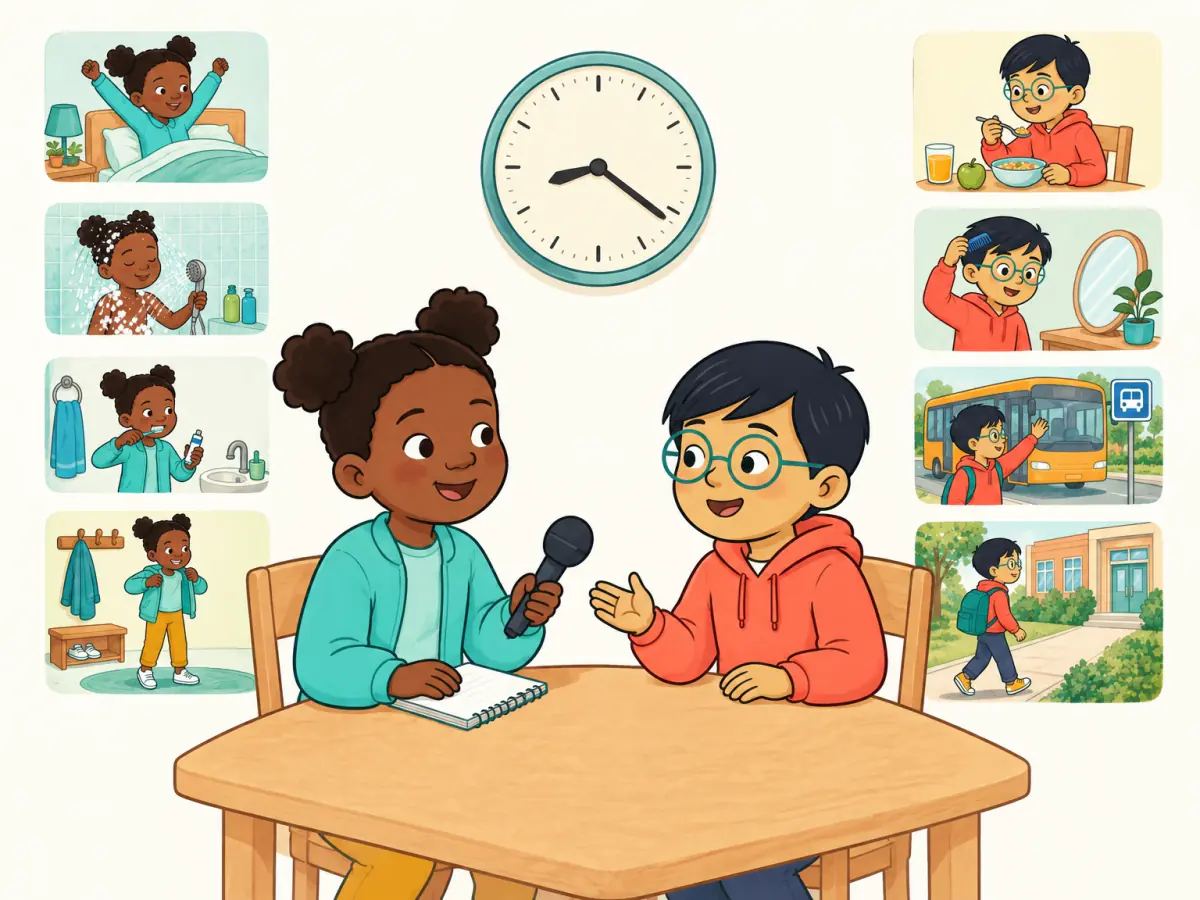
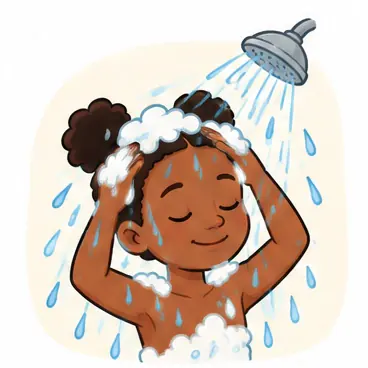
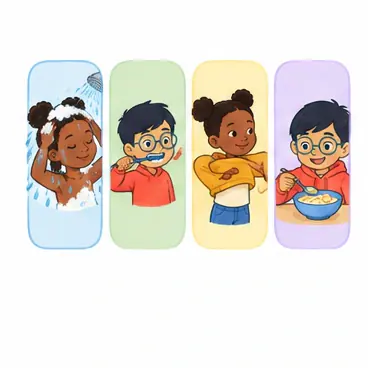
 have a shower
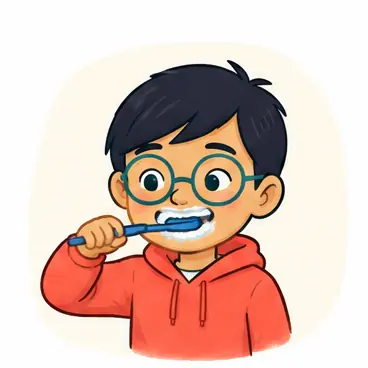 brush my teeth
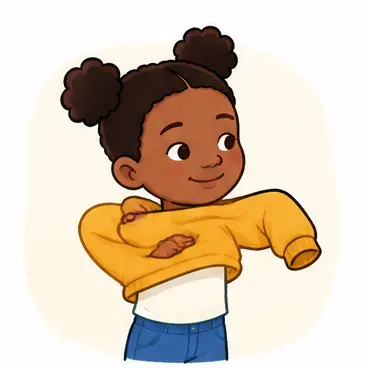 get dressed
 have breakfast
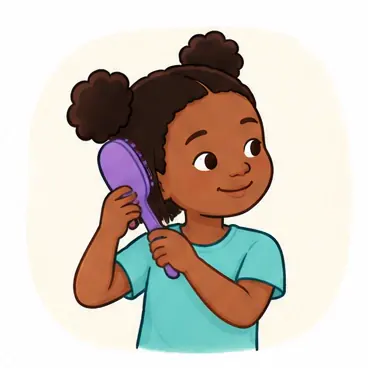 brush my hair
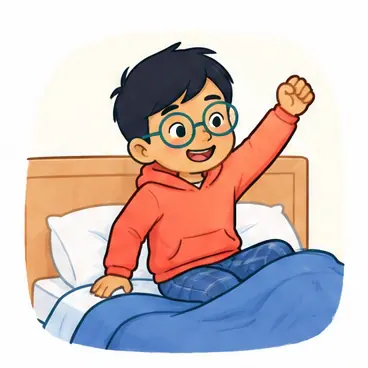 get up
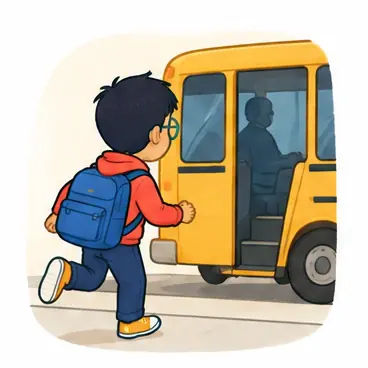 catch the bus
 walk to school
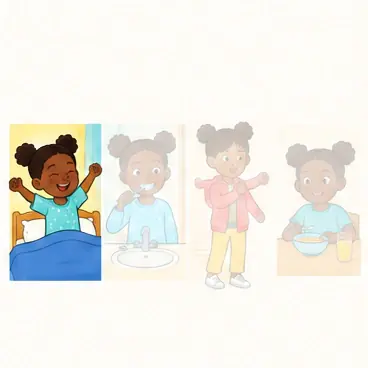 first
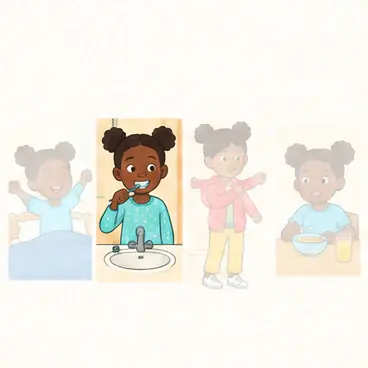 then
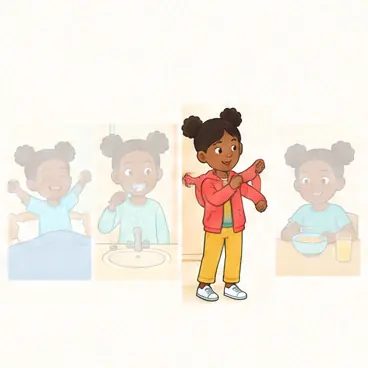 next
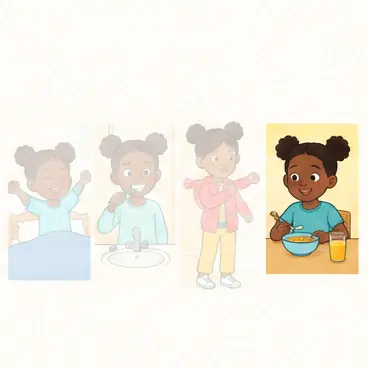 finally
 every day
 at the weekend
Eight morning phrases
A morning routine is built from short phrases. Teach each one as a block with an action: stretch for “get up”, mime a toothbrush for “brush my teeth”. Two details catch many children: “have breakfast” takes no “a” or “the”, and “my” changes with the person: “She brushes her teeth.”
- Waking up: get up, have a shower
- In the bathroom: brush my teeth, brush my hair
- Getting ready: get dressed, have breakfast
- Going to school: catch the bus, walk to school
Clock times: half past and quarter to
English puts “at” before a clock time. “Half past seven” is 7:30, “quarter past seven” is 7:15 and “quarter to eight” is 7:45. The question starts “What time…?”:
Nia What time do you get up?
Leo I get up at half past seven every day.
Nia What time do you have breakfast?
Leo I have breakfast at quarter to eight.
Every day: the present simple for routines
Things that happen again and again take the present simple. With I, you, we and they, the verb stays as it is. With he, she or one person’s name, it takes an -s, and some verbs change their spelling. For the negative, use don’t or doesn’t with the plain verb: “She doesn’t catch the bus.”
- I get up / he gets up
- I have breakfast / she has breakfast
- I brush my teeth / he brushes his teeth
- I catch the bus / she catches the bus
“Do you catch the bus?”: yes or no questions
A yes or no question starts with Do, or Does for he and she: “Does he walk to school?” The short answer repeats it: “Yes, I do.” “No, he doesn’t.” After a “No”, give the real routine, and maybe a weekend time:
Leo Do you catch the bus to school?
Nia No, I don’t. I walk to school. At the weekend, I get up at nine.
First, then, next, finally: putting the morning in order
Sequence words turn separate sentences into a short text: “first” starts, “then” and “next” continue, “finally” ends. Put a comma after First, Next and Finally; after Then it is usually left out. Keep “finally” for the last step; “at last” means after a long wait.
- First, I get up at half past seven.
- Then I brush my teeth and get dressed.
- Next, I have breakfast at quarter to eight.
- Finally, I walk to school.
Capital letters for names, towns and schools
Every sentence and every name starts with a capital letter: people, towns, schools and streets. “I” is always a capital, and so are the days of the week: “On Fridays, I get up early.” This model shows the target: a title, the writer’s name and town, and three ordered actions, two of them with a time.
- MY MORNING
- My name is Leo. I live in Green Town.
- First, I get up at half past seven.
- Then I have breakfast at quarter to eight.
- Finally, I catch the bus to Green Street School.
A home game: the morning picture strip
Draw four pictures of your child’s real morning and mix them up. Your child puts them in order and says a sentence for each, starting with First, Then, Next and Finally. Then play reporter: your child asks you “What time do you get up?” and tells the family, “Dad gets up at half past six.”
On a writing day, your child writes four sentences under “My Morning” and circles every name to check its capital.
Common mistakes and quick fixes
These are normal at this stage: repeat the sentence back correctly and carry on.
- “He get up at seven.”: add -s: “He gets up at seven.”
- “She haves breakfast.”: “She has breakfast.”
- “She doesn’t catches the bus.”: plain verb after doesn’t: “She doesn’t catch the bus.”
- “I get up in half past seven.”: “at half past seven”.
- “i live in green town.”: “I live in Green Town.”
What comes next
Next comes telling a habit from an action happening now: “What does he do every morning?” against “What is he doing now?” Clock times return when children invite a friend and agree on a day and a time.