
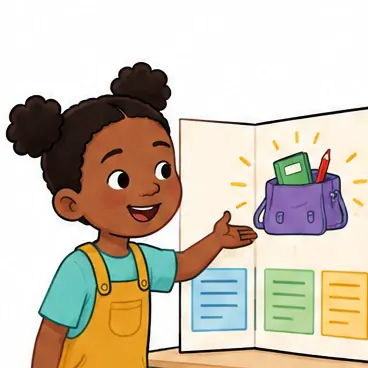
 purpose
 first action
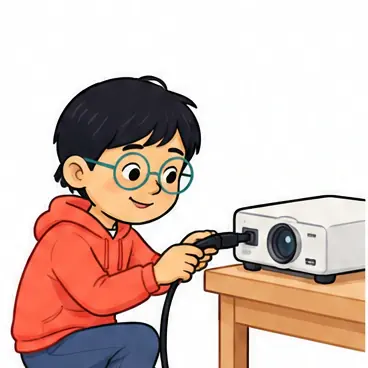 support
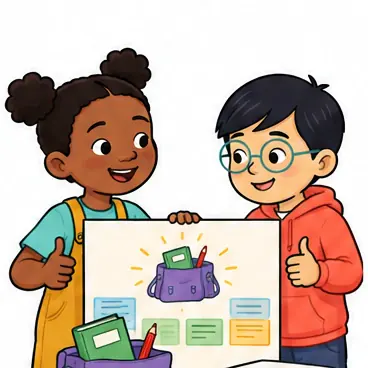 final check
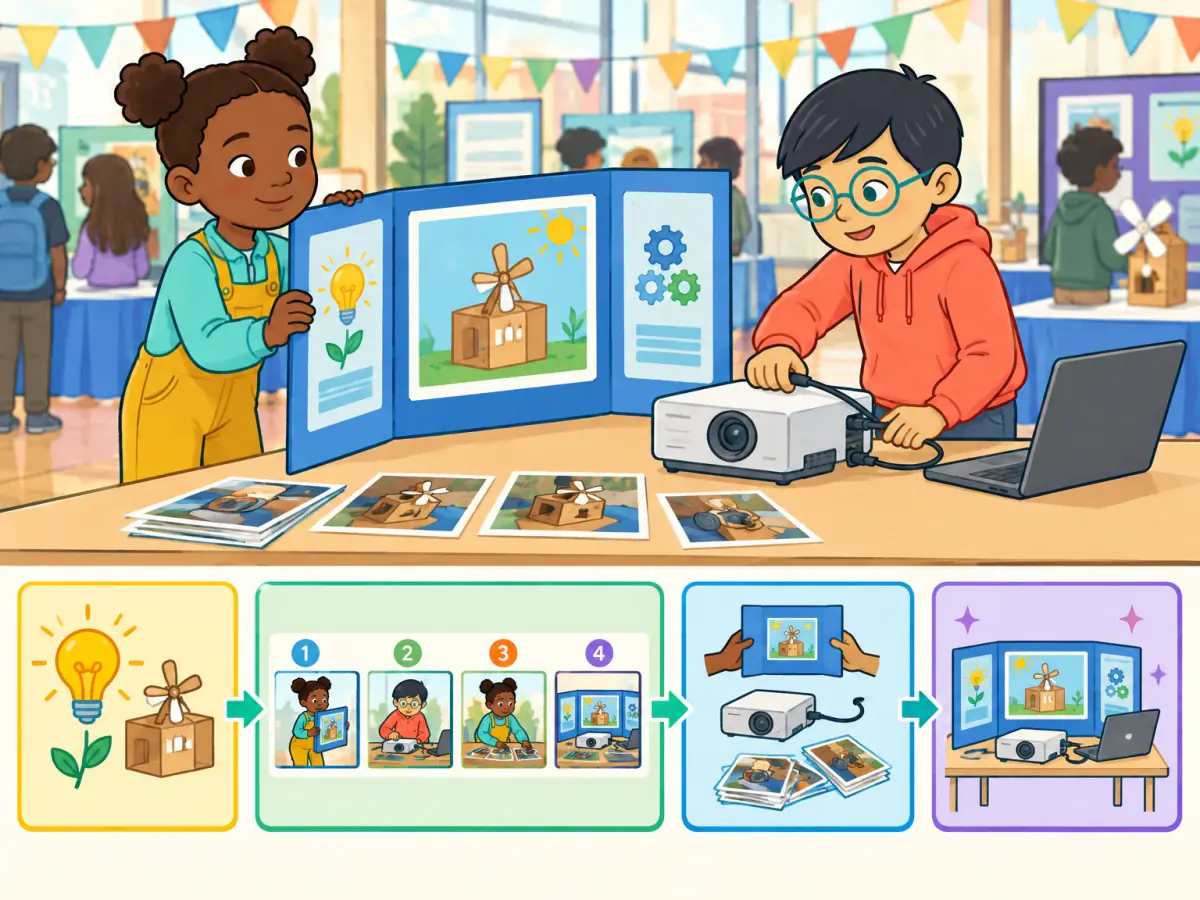
Two polite ways to ask for help
“Can you help me?” is fine with friends and family. With teachers, coaches or adults your child doesn’t know, “Could you…?” sounds more polite; here “could” is not past, it just softens the request. After “could”, use the plain verb. “Would you mind…?” is also polite, suits a bigger favour and takes an -ing verb.
- Friendly: “Can you hold this for a second?”
- Polite: “Could you pass the tape, please?”
- Bigger favour: “Would you mind carrying these boxes?”
- Polite instruction in a group: “Please help us arrange the photos.”
Saying yes, then asking the useful question
A helpful reply has two parts: it agrees (“Of course.”, “Sure.”), then asks for the detail needed to do the job. In the recording, the helper asks where the display should go; without that answer, the job is only half clear.
To ask for instructions, put “should” before “I”: “Where should I put it?”, “What should I do first?”
Nia Could you help me move this display?
Leo Of course. Where should I put it?
Answering “Would you mind…?” with a safe next step
“Would you mind…?” asks whether the job would bother someone, so the polite yes uses a “no” word: “No problem.” or “Not at all.” To refuse, give a reason: “Sorry, I can’t right now. I’m helping Sam.”
Cables, plugs, batteries and heavy furniture need an adult in charge, so the helper agrees and names a safe next step: “I will ask the supervisor first.” “I will…” (in speech, “I’ll…”) is a decision made while speaking. This answer is responsible, not rude.
Nia Would you mind checking the cable?
Leo No problem. I will ask the supervisor first.
Planning a poster in four steps
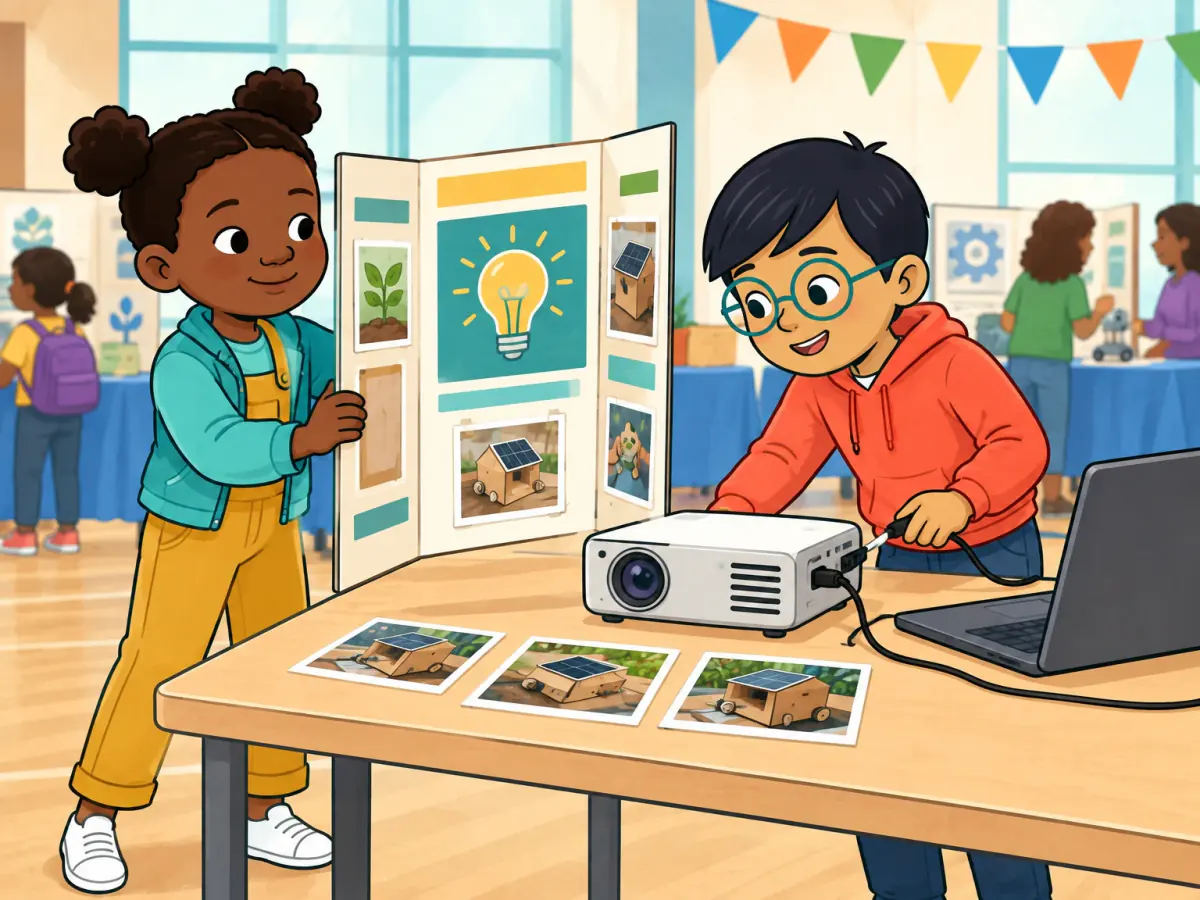
Requests work in writing too. At a school invention fair, a team poster says what the invention does and who does each job. Start with the reader: “Who will read your text?” “Visitors at the invention fair will read it.” Then plan aloud: “I will state the purpose first.”
- Purpose: why you are writing and what the invention does
- First action: what happens first
- Support: who or what will help
- Final check: safety, spelling and order at the end
A model poster, line by line
Read this short poster together and say what each line does.
“OUR PLANT HELPER. Purpose: remind gardeners when a plant needs water. Please help us arrange the photos. Could you check the safe battery case? We will demonstrate the prototype together.”
- Title in capitals: the name of the invention.
- Purpose: a note that starts with a verb. “Remind” takes a person, then “when” or “to”.
- Two jobs as polite requests, each with one clear verb.
- “We will…”: the team’s promise. A prototype is a first working model; to demonstrate it is to show how it works.
Common mistakes and quick fixes
These are normal at A2. Repeat the sentence correctly and carry on.
- “Would you mind to check…?”: after “mind”, use -ing: “Would you mind checking…?”
- “Could you to help me?”: no “to” after “could”.
- “Help me moving this”: use the plain verb: “help me move” (“help me to move” is also correct).
- “Where I should put it?”: “should” goes before “I”: “Where should I put it?”
- “Give me the tape.” to a teacher: correct, but bossy. Better: “Could you pass me the tape, please?”
A home game: the favour jar
Write eight small jobs on slips: set the table, water the plants, hold the door. Take turns drawing a slip and asking with “Could you…?” or “Would you mind…?”. The helper answers in two parts: agree, then a question or a next step. Jobs with plugs, the oven or anything sharp get “No problem. I’ll ask Mum first.”
Then your child invents a home device, such as a backpack that reminds you to pack your PE kit, and writes a five-line poster: title, purpose, two polite requests and a “We will…” line.
What comes next
Next, explain a process in order with first, next and finally. After that, try a short biography of an inventor, from the first idea to the prototype.