Skip to content
Flalingo

English practice

Comparing things in English for children (A2, ages 8–11): “the most comfortable”, better, worse and a fable with mice

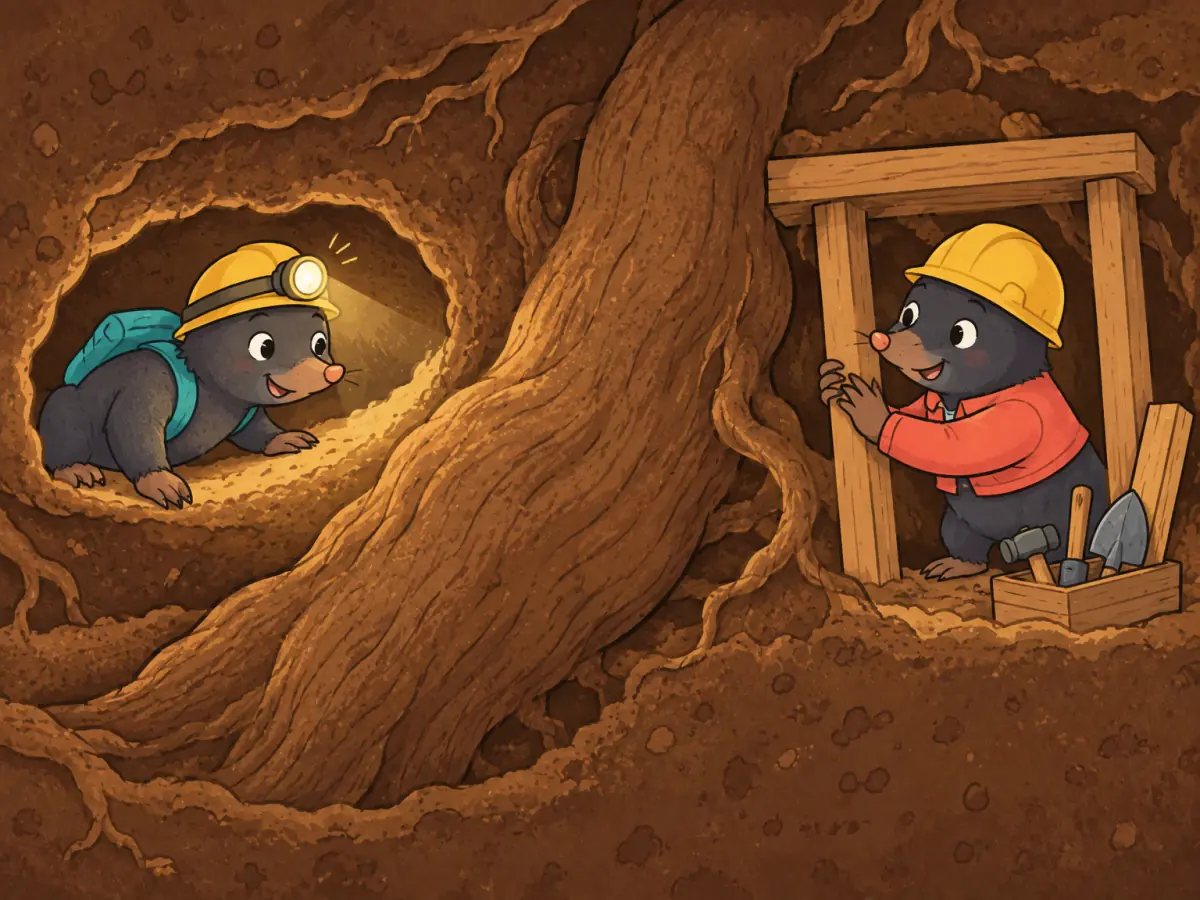
Two moles work safely around an enormous root, using a wooden support and shared tools.

Help your child compare things in English (A2, ages 8–11): cheaper and more expensive, the best and the worst, telling a story in order, and a four-sentence fable with mouse, mice and children spelled correctly.

To compare two things in English, children add -er to short words and put more before long ones: “This chair is cheaper.” “This chair is more expensive.” To pick one from a group, they use the with -est or most: “The soft fabric is the most comfortable.” Good and bad are irregular: better, the best; worse, the worst. This A2 topic suits children of about 8–11 who can say “bigger than” and tell a short story in the past. It ends with a four-sentence fable using mouse and mice.

Who this is for

  • Parents of children who can compare two things: your child says “The dog is bigger than the cat.” and can tell a short story in the past.
  • Families who talk about real choices: picking a chair, a school bag or a birthday present gives your child real things to compare.
  • Parents who want a short writing goal: by the end, your child writes a four-sentence fable, and the recording below plays every line of a short story retelling.
  • Too early: if “bigger than” is still new, practise A1 comparisons with toys and animals first: “The elephant is bigger than the mouse.”
  • Too easy: if your child already writes short stories with the best and the worst and spells mice and children correctly, go on to the A2 article on predictions with will, linked below.

Open the sample pages

Open the sample pages

Word cards

breakbreak
repairrepair
comfortablecomfortable
hardhard
softsoft
expensiveexpensive
cheapcheap
woodenwooden
metalmetal
modernmodern
Which material is the most comfortable?

The soft fabric is the most comfortable.

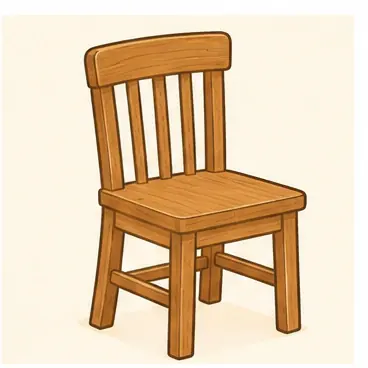
This chair is more expensive.
The wooden seat is the cheapest.
This design is better.
That design is worse.
The green model is the best.
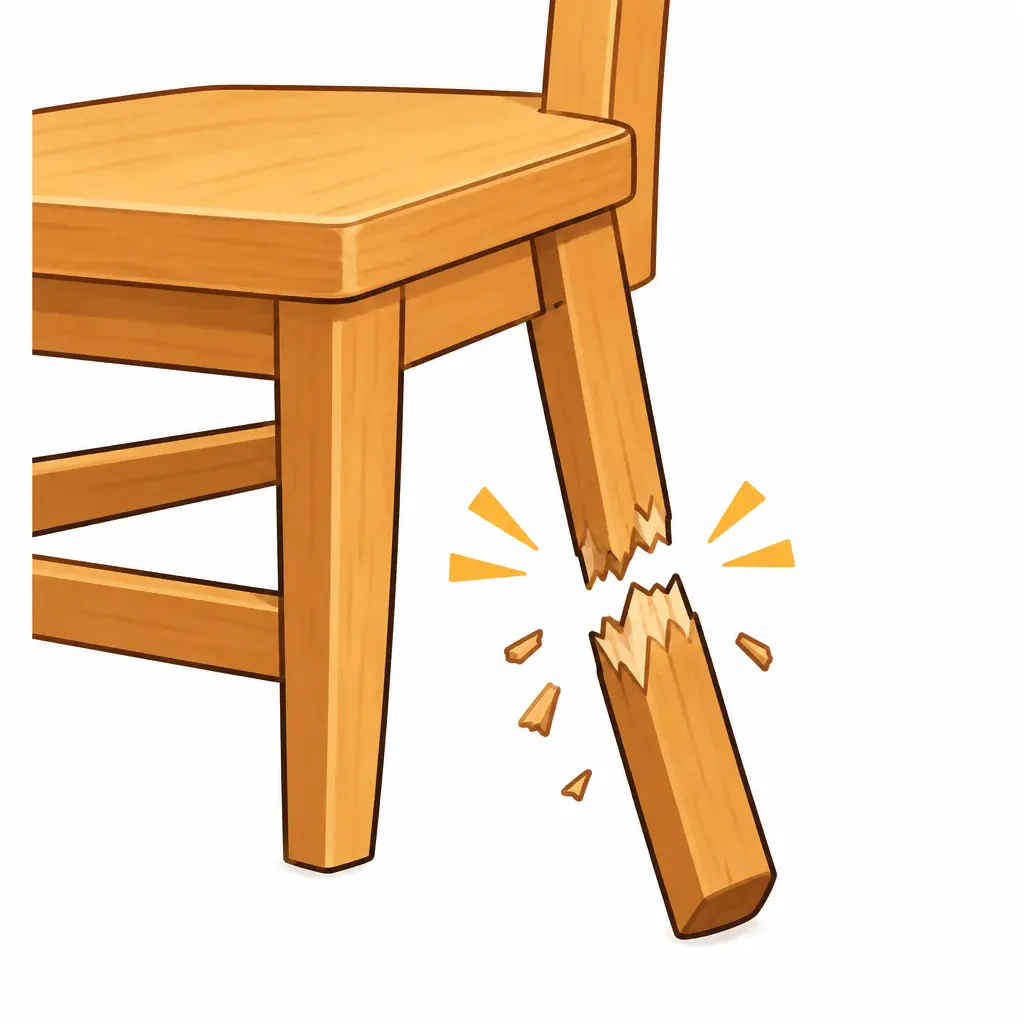
The broken chair is the worst.
enormous

very, very big

prepare

get ready before something happens

worry

feel troubled about a problem

thick

wide from one side to the other

dig

make a hole in the ground

share

let another person use or have some

generous

happy to give or share

lazy

not willing to work or make an effort

Conversation

Nia What happened first?

Leo Two moles began to dig a reading room before winter.

Leo What blocked their tunnel?

Nia A big, hard root blocked it.

Nia What did Pip and Sol do next?

Leo Sol made a wooden support, and Pip tested a safer route. Together, they finished a comfortable room.

Language pattern

Which material is the most comfortable?

The soft fabric is the most comfortable.

  • This chair is more expensive.
  • The wooden seat is the cheapest.
  • This design is better.
  • That design is worse.
  • The green model is the best.
  • The broken chair is the worst.

More practice

Change the information

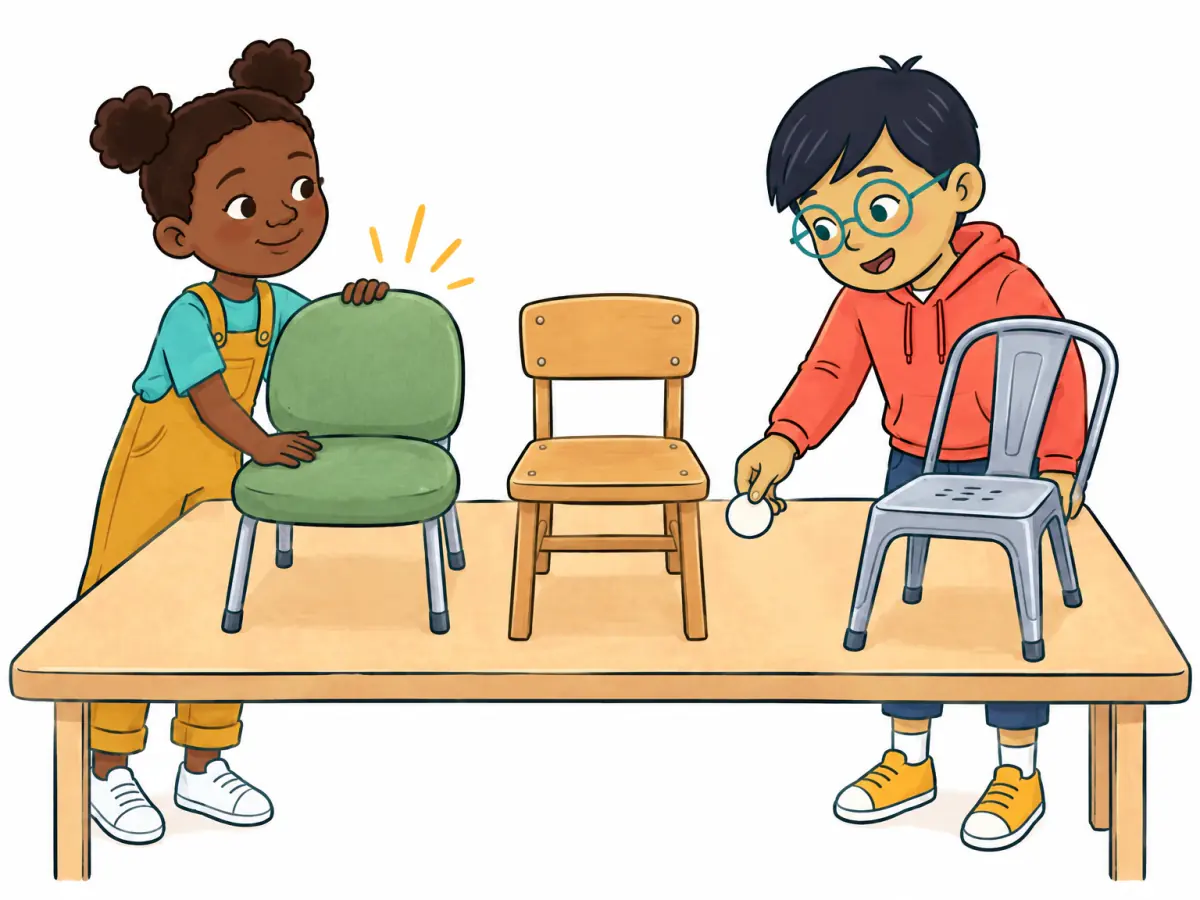
At a design table, three safe seat models are clearly different: a soft green fabric seat, a simple wooden seat and a modern metal chair. Nia chooses the soft green model as the most comfortable while Leo marks the wooden seat as the cheapest with a blank token.

Leo Which material is the most comfortable?

Nia The soft fabric is the most comfortable.

Nia Which choice is the cheapest?

Leo The wooden seat is the cheapest.

Leo Which design is better?

Nia The safe green model is better.

Which material is the most comfortable?

The soft fabric is the most comfortable.

  • This chair is more expensive.
  • The wooden seat is the cheapest.
  • This design is better.
  • That design is worse.
  • The green model is the best.
  • The broken chair is the worst.

The moles and the thick root

Two moles work safely around an enormous root, using a wooden support and shared tools.

THE MOLES AND THE THICK ROOT

Two moles had to dig a reading room before winter. An enormous, thick root blocked their tunnel. Pip began to worry, but Sol prepared a wooden support. Sol was generous and shared every tool. Pip was not lazy; he tested a safer route around the root. Together they finished a comfortable room and learned that the fastest plan is not always the best.

Writer’s studio

At a design table, three safe seat models are clearly different: a soft green fabric seat, a simple wooden seat and a modern metal chair. Nia chooses the soft green model as the most comfortable while Leo marks the wooden seat as the cheapest with a blank token.

Nia What will you write about?

Leo I will write a fable about three mice.

Nia Which plurals will you use?

Leo Mice, feet and children.

How does your fable end?

Three mice carried boxes to the bench. One mouse chose strong wood. The others added soft cushions. “Our safest idea is the best,” they said.

  • This chair is more expensive.
  • The wooden seat is the cheapest.
  • This design is better.
  • That design is worse.
  • The green model is the best.
  • The broken chair is the worst.
Learn this unit
How would you like to learn?

Describing words: materials and prices

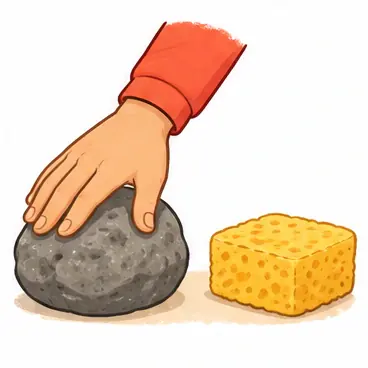
Before comparing, children need describing words, many in opposite pairs. Wooden means made of wood, and metal also describes things: “a metal chair”. Comfortable is usually said in three syllables: COMF-ta-ble.

Break and repair are useful story verbs: something breaks, then someone repairs (fixes) it.

  • Opposites: hard – soft, cheap – expensive, modern – old
  • Materials: wooden, metal, plastic, fabric

Comparing two things: -er, more, better, worse

Short describing words add -er: cheaper, harder, softer. Some change their spelling: big, bigger; safe, safer. Longer words use more: more expensive, more comfortable, more modern. Add than for the other thing: “The metal chair is harder than the sofa.”

Good and bad are irregular: “This design is better.” “That design is worse.” Never say “more better”.

Choosing one from a group: the cheapest, the most comfortable, the best

With three or more things, English picks one with the and -est, or the and most: the cheapest, the most expensive. Good and bad change completely: the best, the worst.

Practise with a real question: “Which material is the most comfortable?” “The soft fabric is the most comfortable.” Then ask for a reason: “The green model is the best because it is safe.”

  • cheap – cheaper – the cheapest
  • comfortable – more comfortable – the most comfortable
  • good – better – the best
  • bad – worse – the worst

Telling a story in order

Many fables compare a quick plan with a careful one. In this recording, two children retell a fable about two moles, Pip and Sol, digging a room under the ground. The questions keep the story in order: What happened first? What did Pip and Sol do next? Listen for the past verbs: blocked and tested add -ed, while began and made are irregular.

Nia What happened first?

Leo Two moles began to dig a reading room before winter.

Leo What blocked their tunnel?

Nia A big, hard root blocked it.

Nia What did Pip and Sol do next?

Leo Sol made a wooden support, and Pip tested a safer route. Together, they finished a comfortable room.

Writing a short fable with mouse and mice

A fable is a very short animal story that ends with a lesson, called a moral. Four sentences are enough: the characters, the problem, what they do and the moral. Characters are often generous (happy to share) or lazy (not willing to work).

Animal stories need irregular plurals without -s: one mouse, three mice; one foot, two feet; one child, two children. An example to borrow and change:

  • “Three mice needed a warm home before winter.”
  • “The youngest mouse chose a paper bag because it was the cheapest.”
  • “The bag broke in the rain, so they built a wooden house.”
  • “The moral: the cheapest choice is not always the best.”
Learn this unit your way

Spelling tip: soft c and soft g

When c comes before e, i or y, it almost always sounds like s. Before the same letters, g often sounds like j. Before a, o and u, both letters are hard: cat, game. G has common exceptions, such as get, give and girl.

  • Soft c: city, ice, dance, rice
  • Soft g: cage, page, giraffe, stage

Common mistakes and quick fixes

Normal at A2: repeat the sentence correctly and carry on.

  • “This chair is more cheaper.”: use -er or more, never both: “This chair is cheaper.”
  • “The most good model.”: good is irregular: “the best model”.
  • “This design is worst.”: for two things, worse; for a whole group, the worst.
  • “Three mouses ran home.”: “Three mice ran home.” Also children, not “childrens”, and feet, not “foots”.
  • “Harder then the sofa.”: the comparing word is than.

A home game: the best seat in the house

Choose three seats at home: a kitchen chair, a stool and the sofa. Your child tests each one and compares: “The stool is harder than the sofa.” “The sofa is the most comfortable.” Add pretend price tags, ask “Which seat is the cheapest?”, then make a wrong claim for your child to correct.

Finish with a four-sentence fable about the seats: “Two children and three mice wanted the softest seat.”

What comes next

When comparing feels easy, your child can answer Which…? and Why…? questions with a reason. Later come predictions with will (“I think it will rain.”) and turning notes into a paragraph.

Frequently asked questions

Is it “more cheap” or “cheaper”?

“Cheaper”. One-syllable words add -er: cheap, cheaper, the cheapest. Long words use more: more expensive. Two-syllable words vary: easy, easier, but modern, more modern.

What is the difference between worse and worst?

“Worse” compares two things: “This chair is worse than that one.” “The worst” picks one from a group and needs the: “The broken chair is the worst.”

What is the plural of mouse?

The plural is mice: one mouse, three mice. Other common irregular plurals are feet, teeth, children, men and women.

Learn this unit
How would you like to learn?

What comes next?

One-to-one lessons with a live teacher

In Flalingo kids lessons, your child practises units like this one-to-one with a live teacher, through games on the same screen.

Book a free trial lesson