Skip to content
Flalingo

English practice

How children ask “Can I go on the slide, please?” in English (Pre-A1, ages 5–8): park words, polite answers and a paper park game

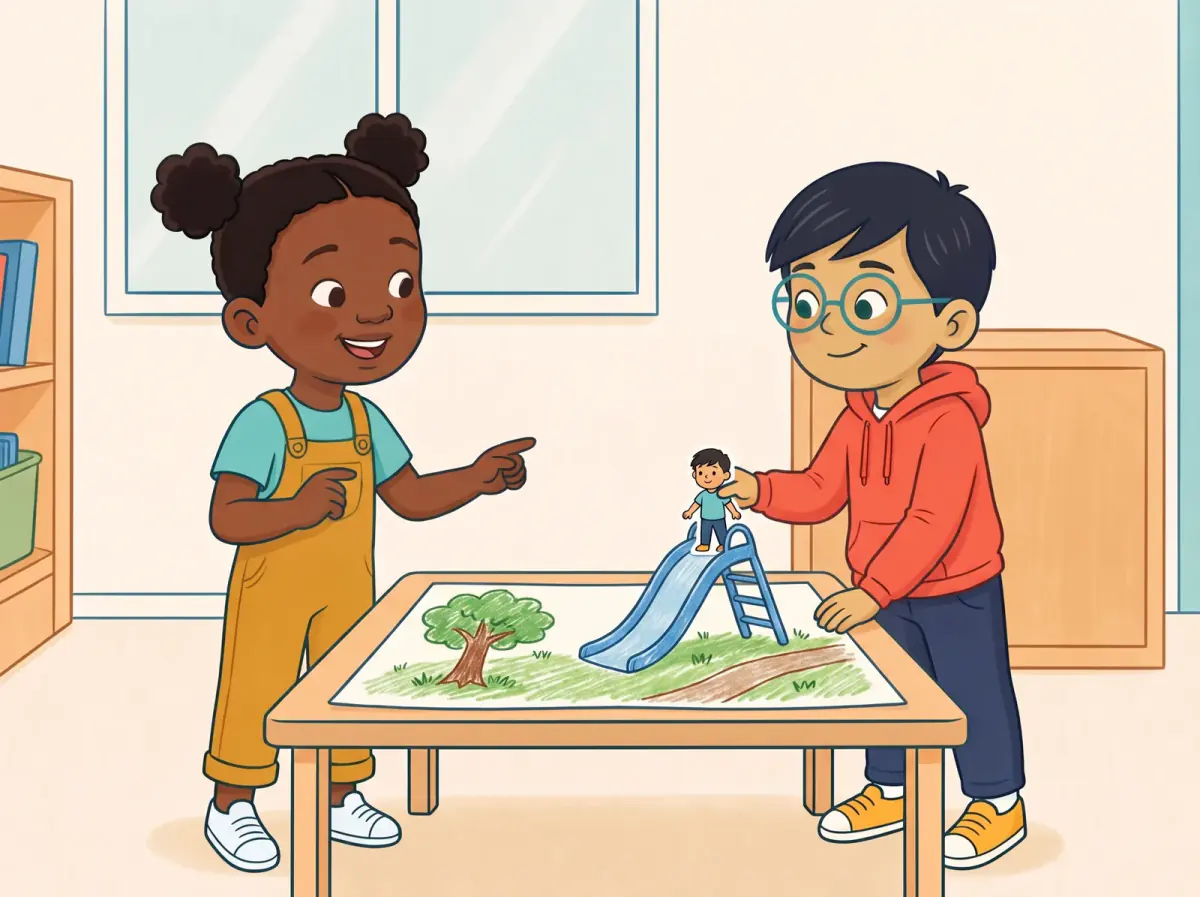
A child puts a little paper boy on the slide in another child's park drawing. The other child smiles and points.

Help your child (Pre-A1, ages 5–8) ask “Can I go on the slide, please?”, wait for “Yes, OK. Be careful.” and say where a paper figure is now, with four playground words and short games for home.

Children learn to ask permission in English fastest when a yes gets them something they want, like a turn on the slide. Teach one pattern, “Can I go on the …, please?”, and two answers: “Yes, OK. Be careful.” and “Come down now, please.” Then your child moves a paper figure in a drawn park and says where it is now: “Now he is under the tree.” This review suits children of about 5–8 at a very first level (Pre-A1) who know a few park words. The four playground words and the short scene have recordings, so you don’t need to speak English.

Who this is for

  • Parents of children who know a few park words: your child can name a slide or a swing, knows “on” and “under”, and is ready to use them in a polite request.
  • Parents who aren’t confident in English: the four playground words and the short conversation have audio, and every sentence you need is written out here.
  • Children who hear “Can I …?” at school: for a short pretend-play routine at home that turns a classroom phrase into something they say themselves.
  • Too early: if “on”, “under” and the park words are still new, start with the in, on and under article linked at the end.
  • Too easy: if your child already asks “Can I have a drink, please?” and answers “Yes, you can.” without help, go on to his and her, or to finding puppets around a house, both linked at the end.

Open the sample pages

Open the sample pages

Word cards

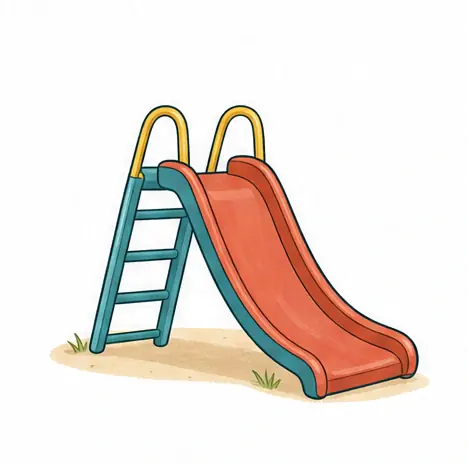
slideslide
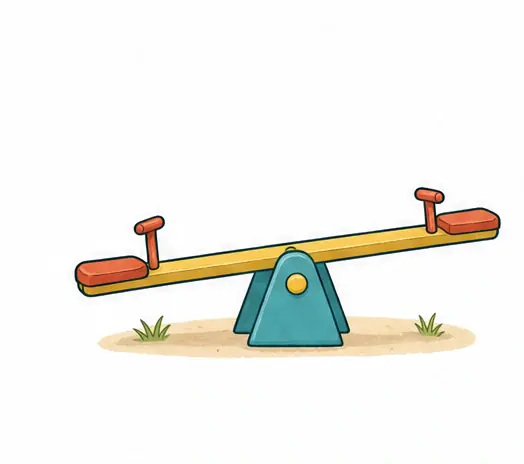
seesawseesaw
swingswing
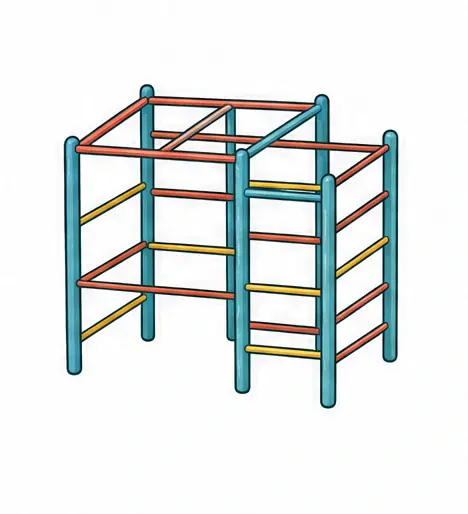
climbing frameclimbing frame

Conversation

Nia This is my park picture.

Leo Can I go on the slide, please?

Nia Yes, OK. Be careful.

Leo My little paper boy is on the slide.

Nia Come down now, please.

Leo OK! Now he is under the tree.

Language pattern

Can I go on the seesaw, please?

Yes, OK. Be careful.

More practice

Our little notebook

Leo puts a little paper boy on the slide in Nia's park drawing. Nia smiles and points.
slideslide
seesawseesaw
swingswing
climbing frameclimbing frame

Leo Can I go on the seesaw, please?

Nia Yes, OK. Be careful.

Nia Can I go on the swing, please?

Leo I'm on the climbing frame.

Nia Come down now, please.

Can I go on the seesaw, please?

Yes, OK. Be careful.

My little page

Leo puts a little paper boy on the slide in Nia's park drawing. Nia smiles and points.

Nia Can I go on the slide, please? Yes, OK.

My writing model

Can I go on the slide, please? Yes, OK.

Learn this unit
How would you like to learn?

Four playground words

Start with the four cards on this page. Let your child listen and point first; saying the words can come later.

In English you “go on” playground things: “go on the swing”. “Go to the swing” only means walking over to it. “Climbing frame” is the British word; Americans usually say “jungle gym”.

  • slide: climb up, slide down
  • seesaw: one child goes up, the other goes down
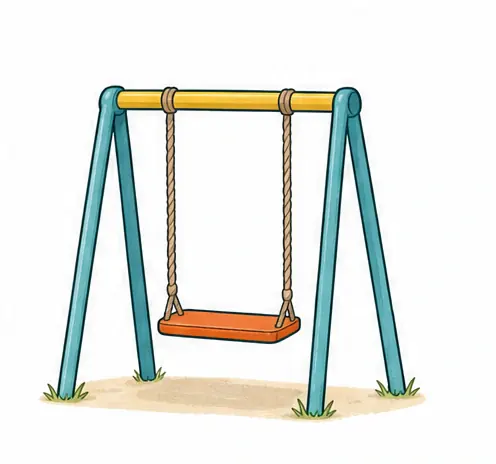
  • swing: sit and go back and forth
  • climbing frame: bars to climb on

Asking: “Can I go on the slide, please?”

The request has three parts: “Can I”, the action, and “please”. For a question, “can” goes before “I”: “I can go.” becomes “Can I go?” Only the playground word changes.

“Please” can also come first, as in the British “Please can I go on the swing?” Both are polite.

  • Can I go on the slide, please?
  • Can I go on the seesaw, please?
  • Can I go on the swing, please?
  • Can I go on the climbing frame, please?

Answering: “Yes, OK. Be careful.”

Asking is half the skill; the other half is waiting for the answer. “Be careful.” and “Come down now, please.” start with the action word and have no “you”: that is how English gives instructions.

Sometimes say “not now” first, so the waiting matters.

  • Yes, OK. Be careful.
  • Yes, you can.
  • Not now. Wait a minute, please.
  • Come down now, please.

Listen: a paper boy in a park picture

In this short scene, a child asks to put a little paper boy on the slide in a park drawing, waits for a yes, and later moves him under the tree. Listen while your child moves a paper figure on any drawing; then pause after each question so your child answers first.

On the second listen, swap roles.

Nia This is my park picture.

Leo Can I go on the slide, please?

Nia Yes, OK. Be careful.

Leo My little paper boy is on the slide.

Nia Come down now, please.

Leo OK! Now he is under the tree.

Learn this unit your way

Saying where it is now: on the slide, under the tree

After each move, your child says where the figure is: “My little paper boy is on the slide.” The word “now” shows a change: “Now he is under the tree.”

Use “he” for a boy, “she” for a girl, and “it” for a toy car or a ball.

  • He is on the slide.
  • Now she is on the swing.
  • Now it is under the seesaw.

Three paper park games at home

One game a day is plenty; stop while your child still wants more.

  • Paper park: draw a park with a slide, a swing and a tree, and cut out a paper person. Before each move your child asks “Can I go on the swing, please?” and waits for “Yes, OK. Be careful.” Then: “She is on the swing.”
  • Come down!: swap roles. Your child owns the park and gives the answers, ending with “Come down now, please.” Sometimes put the figure in the wrong place for your child to correct: “No! He is under the tree.”
  • Park helpers: draw a grown-up with a job and a bag: “This is my aunt. She’s a doctor.” “Where’s the bag?” “It’s on the bench.”

Common mistakes and quick fixes

These slips are normal. Keep playing and say the right version back.

  • “I can go on the slide?”: many languages make a question by raising the voice; English moves “can” to the front: “Can I go on the slide?”
  • No “please”: smile, say the full request and wait for your child to copy it.
  • “Can I go in the slide?”: playground things take “on”.
  • “He is under tree.”: add “the”: “under the tree”.
  • “Yes, I can.” in reply to your request: the person answering says “Yes, you can.”

What comes next

When the park requests feel easy, use the pattern at home: “Can I have a drink, please?” Ask your child the same way: “Can I see your picture, please?” Next come “his” and “her” for people’s things (“It’s her hat.”) and asking where people are in a house.

Frequently asked questions

Should children say “Can I” or “May I”?

Both are correct. “May I” is more formal; at home most people say “Can I …, please?”. Start with “Can I”.

How do you answer “Can I …?” in English?

“Yes, you can.” or “Yes, OK.” For a no: “No, you can’t.” or, more gently, “Not now.” The person asking says “I”; the person answering says “you”.

How can I teach my child to ask permission politely in English?

Practise “Can I …, please?” in short games where a yes gets your child something, like a turn on a paper slide. Ask your child the same way, so they hear it from both sides.

Learn this unit
How would you like to learn?

What comes next?

One-to-one lessons with a live teacher

In Flalingo kids lessons, your child practises units like this one-to-one with a live teacher, through games on the same screen.

Book a free trial lesson