
How Many Words Do You Need to Know to Speak English Fluently?
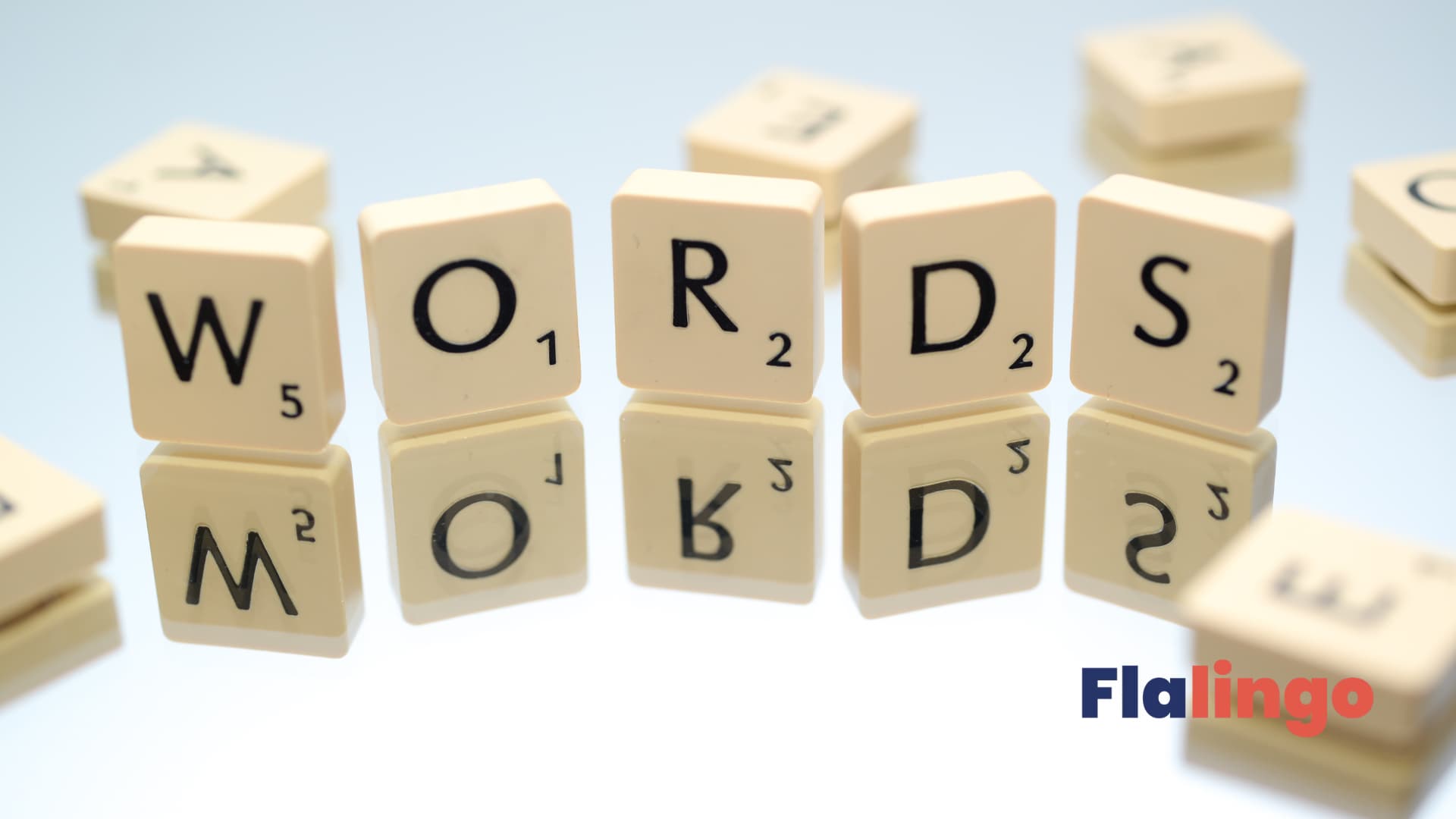
- How Many Words Are Enough? To understand spoken language (everyday conversation, films, and dialogues) smoothly without using a dictionary, you need 6,000–7,000 word families. However, the 2,000–3,000 most frequently used word families cover approximately 85%–90% of everyday conversation.
- Fluency and the Comprehension Threshold (The 98% Rule): To understand what you hear or read smoothly, without getting stuck, you need to already know at least 98% of the words in a text.
- Spoken vs. Written Language: While 6,000–7,000 words are enough to comfortably follow spoken language (listening and speaking), understanding written texts (novels, newspapers, academic publications) without a dictionary requires 8,000–9,000 word families.
- Coverage: The 1,000 most basic word families alone account for approximately 78%–81% of English texts and conversations; however, knowing the remaining, less common words is also crucial for smooth comprehension.
The 2,000–3,000 most frequently used word families are enough for basic everyday communication, covering approximately 85%–90% of daily dialogue. However, to comfortably follow TV series, films, and general conversations without needing a dictionary, you need approximately 6,000–7,000 words. If your goal is full fluency and comprehension in professional topics, academic texts, or literary works, this number rises to 8,000–9,000 words. The table below provides a detailed overview of how many words you need for your target speaking level and what those numbers mean in everyday language:
| CEFR Level | English Proficiency Level | Number of Words Required (Average) | Everyday Language Coverage and Communication Skills |
| A1 | Beginner (Introductory) | 500–1,000 words | Basic greetings, introducing yourself, and the most common everyday words. |
| A2 | Elementary (Basic) | 1,000–2,000 words | Handling simple everyday shopping, giving directions, and expressing personal needs. |
| B1 | Intermediate (Mid-Level) | 2,000–3,000 words | Speaking fluently in everyday conversations and while traveling; understanding 80% of topics. |
| B2 | Upper-Intermediate (Higher Intermediate) | 3,000–5,000 words | Understanding complex texts and speaking smoothly at work and in interviews. |
| C1 | Advanced (High-Level) | 8,000 words | Expressing yourself fluently and in detail on academic and professional topics without difficulty. |
| C2 | Proficient (Native-Level) | 16,000+ words | Communicating fully with native-like ease, including nuances, idioms, and technical terms. |
Contents
Many language learners confuse speaking fluently with "speaking without mistakes." In linguistics, however, Fluency and Accuracy are entirely different concepts:
- Fluency: The ability to convey your thoughts continuously, at a natural rhythm, without long pauses. If communication keeps flowing even when you make grammatical mistakes, you are speaking fluently.
- Accuracy: The ability to construct sentences that fully follow grammatical rules and contain no errors.
Focusing solely on grammar may make your speech error-free, but it will not make you fluent. To achieve fluency, you need to understand these key principles:
1. Turn Passive Vocabulary into Active Vocabulary
Many people say, "I know 5,000 English words, but I can't speak." This is because those words exist only in your passive memory (words you understand when you read them). To speak fluently, you need to move these words into your active memory (words you say without thinking) through speaking practice.
According to linguistic research (Paul Nation, 2006), the 1,000 most frequently used words in English cover approximately 80% of spoken language, while the first 3,000 cover 90% of dialogue. So, rather than memorizing thousands of rare words, the key to fluent speech is to make using these common words automatic through practice.
2. Learn Words in Chunks, Not Individually (Chunking)
Fluent speakers do not mentally piece words together one by one when forming sentences. Through Chunking (learning phrases as units), they use ready-made phrases as complete units. For example, memorizing "What do you do for a living?" as a single phrase rather than translating it word by word can dramatically increase your speaking speed.
3. Manage Pauses with Fillers
Native English speakers also pause to think while speaking. However, instead of remaining silent, they use filler words. Using phrases such as "Well...", "Let me think...", "That's a good question..." while speaking gives your mind time to form the next sentence and maintains a sense of fluency.
4. Practice the Shadowing Technique
Listening to a recording of a native English speaker and repeating what they say with a 1–2-second delay, imitating their exact tone, stress, and rhythm, is called Shadowing. This technique minimizes stumbling over words by training your mouth and tongue muscles to become accustomed to the sound patterns and rhythm of English.
How Long Does It Take to Speak English Fluently?
Speaking English fluently is based not on arbitrary goals, but on international CEFR (Common European Framework of Reference for Languages) standards and the guided learning hours they require. Achieving the fluency expected at each CEFR level is directly proportional to the instructional hours and regular practice required for that level:
- A1 - A2 (Basic Level): Requires approximately 350 - 490 hours of guided study. At this stage, you gain the basic fluency needed to handle simple everyday needs.
- B1 (Independent User): Can be reached with an average of 530 - 750 hours of study. You gain the fluency to carry on everyday conversations and travel-related exchanges without getting stuck.
- B2 (Work and Education Standard): Requires approximately 730 - 1050 hours of study. It enables you to communicate fluently and naturally with native English speakers without difficulty.
- C1 - C2 (Advanced / Proficient Level): 1000 - 1030+ hours of intensive practice are required. This gives you the ability to discuss complex topics in academic and professional settings without hesitation, down to the finest nuances.
Although this can take months with traditional methods, Flalingo aims to minimize the practice time required through its one-on-one speaking-focused lessons, smart personalized materials, and AI-powered FLAI analysis reports, helping you achieve fluency at your target level much faster.
What Can You Do to Expand Your English Vocabulary?
To speak English fluently, you need to feel confident in your vocabulary. Supporting tools can make learning these words easier. For example, mobile games that help you memorize words easily and reading books tailored to English proficiency levels can expand your vocabulary. Online English speaking courses are also among the easiest ways to practice using these words.

Practice Speaking with Flalingo’s Online English Course!
Flalingo offers one-on-one online lessons with expert teachers, helping you put your vocabulary into practice in real conversations. In a comfortable learning environment, you quickly overcome first-day nerves and build speaking confidence as you use words in the right contexts. You can track your progress with concrete insights from AI-powered FLAI reports and manage your learning journey with comprehensive support from your dedicated 24/7 educational advisors.
How Can You Reach C1 English Proficiency?
Speaking fluently at C1 level means more than just maintaining everyday conversations; it means being able to convey abstract concepts and nuances without hesitation on complex topics such as business, academia, or politics. Passive viewing and listening (TV series/podcasts) are not enough at this level; active, structured methods must be incorporated into the process:
- Advanced Vocabulary and Idiom Study (Collocations & Idioms): C1 proficiency requires using word combinations (collocations) and expressions naturally rather than individual words. You should practice the expressions you learn in one-on-one lessons through spontaneous scenarios with your teacher.
- The Shadowing Technique: By simultaneously imitating native English speakers’ stress, intonation, and accent rhythm, you can bring your speech muscle memory and speaking speed up to C1 level.
- Debate and Argument-Building Sessions: Instead of having random conversations, choose a specific topic such as economics, technology, or ethics and practice defending or critiquing an idea. You can arrange these academic/professional discussion sessions with Flalingo’s native English-speaking teachers.
- Smart Personalized C1 Materials and Text Analysis: Listening alone is not enough; you should activate your vocabulary by reading C1-level texts and practicing summarizing them in your own words (paraphrasing).
- Flexible and Intensive Session Scheduling: The key to reaching C1 without going abroad is continuous exposure to the language. By increasing your weekly lesson frequency on Flalingo, you can find opportunities to practice specific skills at any time of day.
❓ Frequently Asked Questions
1. How many words are enough to speak fluently?
On average, 3,000 words are enough to speak English fluently in everyday life. According to Oxford Corpus data, the 1,000 most frequently used words account for 85% of everyday conversations. However, if you are aiming for advanced fluency (C1-C2) in academic or professional settings, 8,000 or more words are needed.
2. I know the words, but I cannot speak. Why?
The main reason is that these words are stored only in your passive memory . Words you understand when reading or listening are passive vocabulary. To use them directly in conversation without having to search your mind for them, you need to practice speaking regularly and transfer them to your active memory .
3. How many words should I learn a day?
Learning 5 to 10 new words a day is a sustainable and ideal goal. Rather than memorizing thousands of words individually, learning these 5-10 daily words in groups (chunking) and sentence patterns, then using them in speaking practice, will improve your fluency much faster.
4. Is speaking fluently the same as speaking without mistakes (with grammatical accuracy)?
No. In linguistics, Fluency and Accuracy are different concepts. Speaking fluently means expressing your thoughts without hesitation and with a natural rhythm, even if you make minor grammatical mistakes. Focusing too much on grammar rules can undermine your confidence in speaking, so developing fluency should be your priority.
5. How long does it take to go from a complete beginner to speaking fluently at B2 level?
According to CEFR standards, reaching B2 level requires a total of approximately 530–750 hours of guided study and speaking practice. With Flalingo's conversation-focused, one-on-one lessons with native English-speaking teachers and personalized practice opportunities, you can complete these hours much sooner and more efficiently.
References
- Council of Europe: Common European Framework of Reference for Languages (CEFR) — Standards for language levels (A1-C2) and level descriptors. [Council of Europe CEFR Descriptions]
- Cambridge University Press & Assessment: Fluency: Can it be taught? — An academic analysis of fluency and the development of speaking skills in language teaching. [Cambridge World of ELT]
- Oxford Learner's Dictionaries: The Oxford 3000 — A list of the 3,000 most important core words for learners of English, along with a level guide. [Oxford 3000 Wordlist PDF]
- Paul Nation (2006): How Large a Vocabulary Is Needed For Reading and Listening? — Academic research on the vocabulary size and coverage rates needed for fluent comprehension in speaking and reading. [Paul Nation Vocabulary Research]


As an ESL educator of 5+ years, I am a guide for students and parents. I simplify complex English topics and online course selection for you. My goal is to help you turn learning from a stressful task into an enjoyable adventure.
English with Flalingo

Learning English with Flalingo means progressing with an intelligent system that works in an integrated manner.