
Why English Teachers Are Leaving Other Platforms for Flalingo: A Tutor's Honest Review

A year ago, a colleague sent me a screenshot from her tutor dashboard on one of the big-name online English platforms. It was 11:47 p.m. on a Tuesday, her seventh class of the day, and a student had just left a one-star review blaming her for "not matching his learning style." She had been teaching that student for exactly 25 minutes. The algorithm had assigned him to her because a slot was open, not because anything about their profiles aligned. She asked me one question: "Is this what online teaching is supposed to feel like?"
If you have taught on Cambly, Preply, iTalki, Lingoda, or any of their competitors for more than a few months, you probably know the feeling. Irregular bookings. Students who disappear mid-course. Generic materials you rewrite on your own time. A support inbox that responds with templated apologies.
This review exists because I get asked about it roughly twice a week. Colleagues want to know whether the difference is real, or whether Flalingo is just the next platform that will look shiny for six months before the cracks show. So here is the honest version, written for working teachers, based on what tutors report publicly on Trustpilot and what the platform openly publishes about how its systems work.
Flalingo offers English teachers around the world consistent bookings, Oxford-quality materials, AI-powered tools, and a support team that genuinely shows up. It is a teacher-first platform built for everyone, from 15-year veterans to tutors running their very first online lesson.
What Is "Platform Fatigue," and Why Are So Many Teachers Feeling It?
Platform fatigue is the burnout that online English teachers experience when a platform's design, policies, or technology repeatedly undermines their ability to teach well. It shows up as empty calendars one week and double-booked nightmares the next, a generic curriculum that ignores student level, random student assignments that force you to rebuild rapport every session, and support responses that take three days to solve a three-minute problem.
Teachers rarely leave a single platform because of one bad day. They leave because the accumulated friction makes the job feel smaller than it actually is. A teacher who spent years earning a CELTA or a master's in applied linguistics shouldn't be spending their Sunday afternoon writing grammar drills from scratch because the platform's library is out of date.
Five Symptoms of Platform Fatigue in Online ESL
Every item on that list is what Flalingo's current teachers say the platform has actively engineered against. That engineering is the subject of the rest of this review.
Apply to teach on Flalingo
Join a global community of English educators
What Makes Flalingo Different From Other Platforms?
Flalingo differs from marketplace-style platforms in four concrete ways: a selective teacher pipeline, an AI matching system that pairs students with tutors based on compatibility rather than calendar gaps, a curated Oxford-supported materials library, and a post-lesson analysis engine (FLAI) that gives teachers and students structured feedback after every session. Marketplaces like Preply and iTalki generally leave teachers to market themselves, source materials, and interpret student progress on their own. Cambly historically operates on a conversation-first model with limited structure. Flalingo sits in a different category: a teacher-first platform that builds the scaffolding for you.
A Selective Teacher Pipeline
Flalingo publishes the fact that only one in 73 applicants is accepted as a teacher. That ratio is not a marketing flourish; it is a design choice. The platform's argument is that teacher quality is the single biggest variable in student retention, and that keeping student retention high is the only way to generate the consistent bookings teachers actually want. If the platform pressures itself to keep standards high at intake, the flywheel works. If it opens the floodgates, retention collapses and bookings fragment. Most competitors chose the second path.
Smart Match, Not Random Assignment
Flalingo's Smart Match algorithm pairs teachers and students across 18 data points, including level, learning goal, available hours, accent preference, and even personality fit. If you've worked in platforms that throw you whoever happens to click "Book" first, Smart Match is structurally different. It also learns from your history: the profiles you teach well with get prioritised over time. For a deeper technical look at how Smart Match works, the engineering rationale is that compatibility at intake is cheaper than compensation after the fact, and the pattern shows up in teacher reviews.
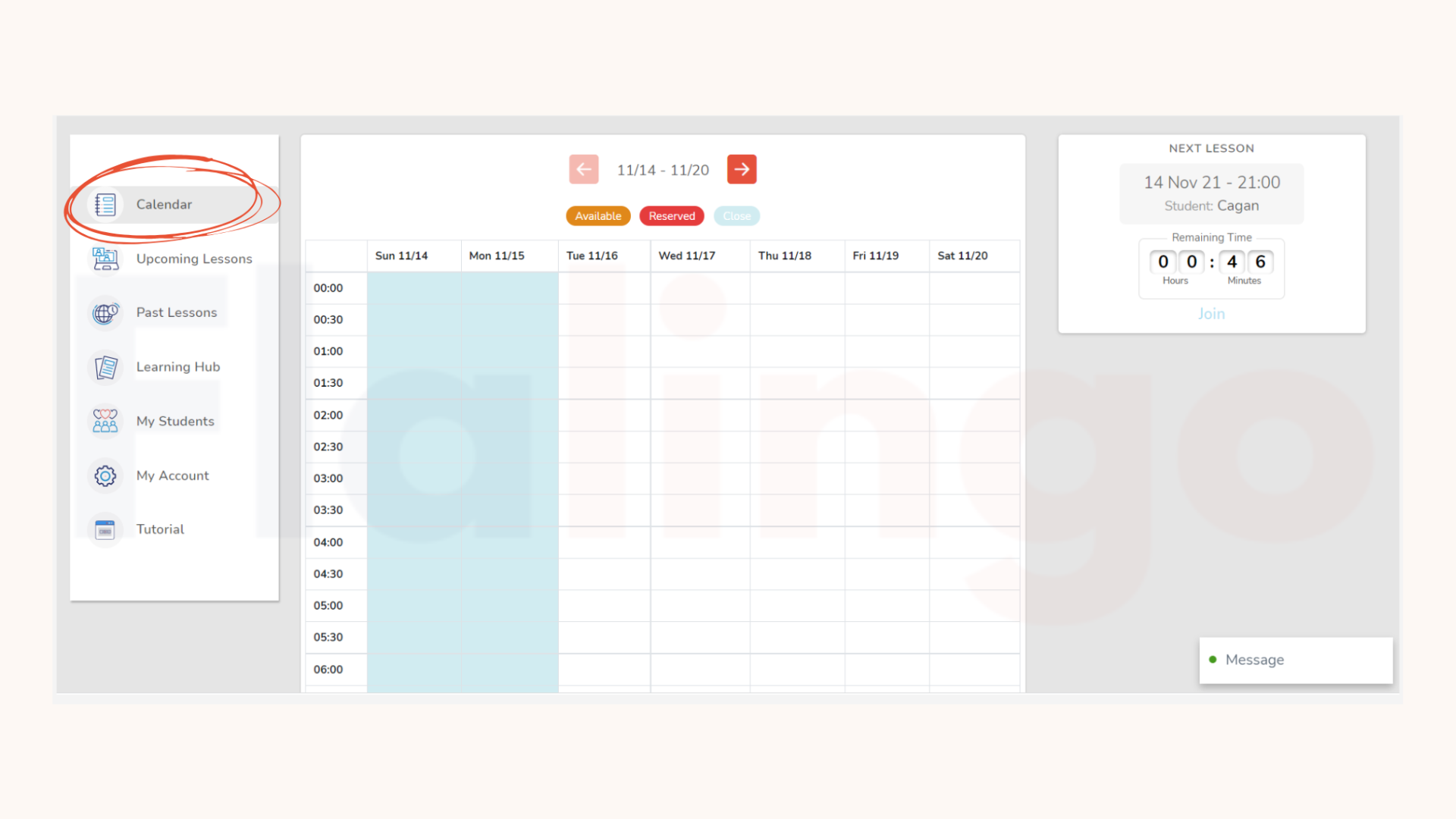
Oxford-Supported Materials From Day One
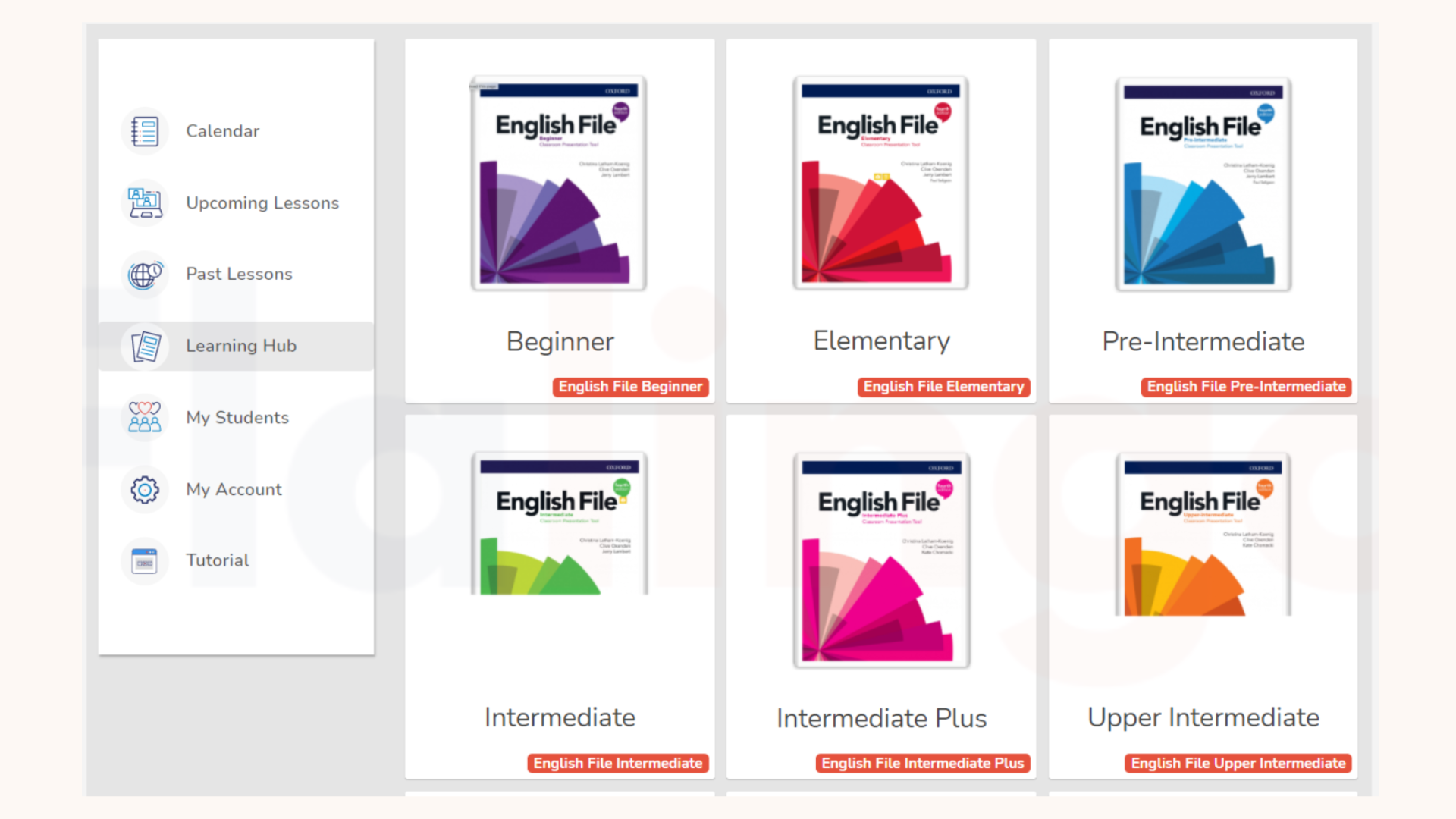
Every lesson has access to a curated library built around Oxford materials, plus speciality collections for kids, adults, business English, and exam prep (IELTS, TOEFL, YDS). Teachers are also free to bring their own resources. That flexibility matters because experienced teachers almost always have a personal toolkit they want to keep using.
FLAI: Post-Lesson Analysis for Teachers and Students
FLAI is Flalingo's AI coach. After each lesson, it produces a report analysing student accuracy (grammar, tense, prepositions), fluency (words per minute, pause patterns, filler words), and lexical range (CEFR-level vocabulary distribution). The teacher's version of that report highlights patterns the student systematically struggles with and proposes targeted strategies for the next session. If you have ever wished for a teaching assistant who sat in on every class and handed you notes at the end, that is essentially what FLAI does.
Proactive Support, Not Reactive Apologies
One of the most repeated phrases in Flalingo tutor reviews is some variation of "the support team is proactive." What "proactive" actually looks like in practice is worth spelling out, because the word gets thrown around loosely in this industry:
- Issues are flagged before teachers notice them. If a student's connection drops repeatedly or a payment doesn't clear, support reaches out first instead of waiting for a ticket.
- Responses are human and specific. Teachers report getting a real person with context on their situation, not a boilerplate reply with a reference number.
- Last-minute changes are solved, not escalated. Reschedules, technical issues, and student concerns get closed on the same day, often within the same hour.
- Feedback travels up. Tutor observations about platform behaviour visibly influence updates. The support team functions as a two-way channel, not a complaint inbox.
On many competitor platforms, support is structured around damage control after something breaks. On Flalingo, teachers report it is structured around preventing the break in the first place. For a tutor running five or six lessons a day, that difference compounds quickly.
How Does Flalingo Compare to Other Platforms From a Teacher's Perspective?
Here is a side-by-side comparison built from publicly available platform documentation and what teachers report in reviews. This isn't about ranking winners and losers. It is about matching your priorities to the right environment.
The point of this table isn't that Flalingo is objectively better for every teacher. If you want the lowest barrier to entry and you're happy competing for visibility in an open marketplace, iTalki or Preply might be more natural. If you prefer a pre-structured environment with vetted peers, curated materials, and data-driven feedback, Flalingo was built for you.
Flalingo lets tutors set their own availability, and the Smart Match algorithm fills those slots with students whose goals and levels align with the teacher's profile. For tutors coming from platforms with unpredictable booking rhythms, the shift in income and scheduling tends to be what surprises them first.
Unlike marketplaces where you compete for visibility every time you log in, Flalingo treats teacher-student continuity as a core metric. If a student books you once and the chemistry works, the system actively tries to keep that pairing going. The published statistic is that a student has over a 90% probability of being able to rebook the same teacher. From a tutor's point of view, that transforms the week: you are not starting over on Monday.
How Does Smart Match Actually Send You the Right Students?
Smart Match builds a profile vector for each teacher and each student, then calculates the compatibility between them using a hybrid of similarity scoring and hierarchical weighting (goal alignment counts more than accent preference, for example). When a student searches for a tutor, the system surfaces the 22 to 30 highest-compatibility profiles instead of an unranked list.
The practical effect on tutors is two things.
- First, your speciality labels matter. If you flag yourself as an IELTS specialist with experience in young learners, you will see students who match that combination, not random bookings from whoever is available at 9 p.m.
- Second, the algorithm learns. When pairings produce consistent attendance and positive feedback, those profile types get prioritised in your future visibility.
Why Do Oxford-Supported Materials Change the Way You Teach?
Oxford University Press is one of the most widely adopted publishers in global ESL/EFL instruction, with materials calibrated to the CEFR framework used by institutions and exams across 180+ countries. According to the EBSCO research starter on teaching English as a second language, communication-focused ESL instruction relies on carefully sequenced content across reading, writing, speaking, listening, and grammar. Ad-hoc materials can disrupt that sequencing. A structured library keeps the curriculum coherent.
Flalingo's Oxford materials library is integrated into the platform and mapped to CEFR levels from A1 through C2. That means a teacher joining the platform doesn't have to hunt for level-appropriate content between classes. It is the difference between spending your evenings prepping and spending them resting.
Tutor Yulia Golovina, who has over 20 years of teaching experience (including 8 years online before joining Flalingo), shared a detailed Trustpilot review after nearly three years on the platform. Her central observation is worth quoting in her own words:
That phrase, "genuine dedication to language teaching," is the one that keeps recurring across long-term reviews. It is also the phrase that explains why a 20-year veteran chose to stay for almost three years on a platform she initially expected to be just another online school.
Are You Actually Teaching Alone on Flalingo?
No. Flalingo's teacher community spans tutors from dozens of countries, and the support team operates as an active part of the teaching experience rather than a help desk you only hear from when something breaks. For tutors coming from platforms where you never meet another teacher and where support tickets close without a real reply, this is often the most unexpected part of the transition.
The underlying principle in reviews like this one is consistent: when a platform handles the operational details well, the teacher can spend their mental energy on actual teaching. That is not a small thing for anyone who has ever spent a lesson troubleshooting a broken booking screen.
Is Flalingo a Good Fit if You Just Finished Your TESOL or CELTA?
Yes, with a realistic caveat about the onboarding standard. TESOL, CELTA, and equivalent credentials are recognised globally as the baseline for qualified English language instruction. Flalingo's application process treats those credentials as the floor, not the ceiling, and the acceptance rate reflects that.
If you are confident in your classroom method but new to online teaching specifically, the structured environment is a real advantage. The CIEE beginner's guide to teaching English as a foreign language emphasises that the transition from certification to classroom is where most of the actual learning happens, and that new teachers need environments where giving instructions, reading body language, and pacing delivery can all be practised without everything else going wrong at once. A platform with curated materials and algorithmic matching is close to the opposite of the sink-or-swim marketplace model that new teachers often land in.
What Are the Honest Limits of Flalingo as a Teaching Platform?
This review is not a sales pitch, and Flalingo is not an unconditional fit for every ESL teacher. A few honest limits are worth naming. The acceptance rate is high, which means not every qualified applicant gets in on the first attempt. The structured environment, with its materials library and matching algorithm, assumes you want that structure; if you are a tutor who prefers building your identity from scratch in a marketplace, that is a feature somewhere else, not here. And because the platform emphasises continuity and specialist tracks, the tutors who get the most from it are the ones willing to build a focused profile and update it over time.
The pattern in long-term reviews is clear enough to state plainly: teachers who value structure, data, curated materials, and proactive support tend to stay. Teachers who want to run a purely freelance brand usually do that somewhere else.
How Do You Apply to Teach on Flalingo?
The application path is straightforward on paper and rigorous in practice. To apply to Flalingo, you submit your credentials (TESOL, CELTA, TEFL, or equivalent plus relevant teaching experience), complete a multi-stage interview, deliver a sample lesson, and pass a pedagogical assessment that evaluates how you actually teach rather than how you describe your teaching. Because only roughly one in 73 applicants is accepted, preparing your sample lesson with the same seriousness you would give a formal job interview is the single best piece of advice experienced tutors give to new applicants.
Application Steps at a Glance
Apply to teach on Flalingo
Join a global community of English educators
FAQ
Is Flalingo a good platform for English teachers?
Yes. Based on publicly available Trustpilot reviews from tutors with 3 to 20+ years of experience, Flalingo is consistently rated as one of the best online English teaching platforms. Teachers point to proactive support, Smart Match's compatibility-based pairing, Oxford-supported materials, and FLAI's post-lesson analytics as the specific reasons they stay. The platform's approximately 1-in-73 acceptance rate and its emphasis on teacher-student continuity are also frequently cited.
What do teachers actually say about Flalingo on Trustpilot?
Long-term tutors describe the platform as the online equivalent of the well-run language school they had stopped expecting to find. Recurring phrases across reviews include "genuine dedication to language teaching," "proactive support," "amazing students," and "consistent bookings." Reviews from teachers with a decade or more of experience tend to be the most detailed and the most enthusiastic.
How is Flalingo different from Cambly, Preply, and iTalki?
Flalingo is a curated teacher-first platform, while Cambly, Preply, and iTalki operate closer to marketplace or conversation-first models. Flalingo selects teachers through a rigorous multi-stage process, matches students using an AI compatibility algorithm across 18 data points, provides Oxford-supported materials by default, and generates post-lesson FLAI reports for every class. On the other platforms, most of that infrastructure has to be built by the teacher or doesn't exist in the same integrated form.
Does Flalingo provide teaching materials, or do teachers source their own?
Both. Flalingo provides an Oxford-supported curriculum library mapped to CEFR levels A1–C2, with speciality tracks for kids, adults, business English, and exam preparation (IELTS, TOEFL, YDS). Teachers are also explicitly encouraged to use their own materials in addition to the library.
What qualifications do I need to apply to Flalingo?
At minimum: a recognised TEFL, TESOL, CELTA, or equivalent certification, demonstrated English teaching experience, and the ability to pass a multi-stage assessment that includes a sample lesson and pedagogical evaluation. Specialisation (kids, exam prep, business English, academic English) strengthens an application because Smart Match routes students based on speciality tags.
Can I set my own schedule as a Flalingo tutor?
Yes. Tutors set their own availability, and Smart Match fills those slots with compatible students. Because the platform prioritises teacher-student continuity, a tutor's regular students tend to book into the same recurring windows, which produces the "consistent bookings" effect that teachers describe in reviews.
Does FLAI replace teachers or support them?
FLAI is designed as a teaching assistant, not a replacement. It produces post-lesson reports analysing student accuracy, fluency, and lexical range, and it offers teachers pattern-level insights into what each student is systematically getting wrong. The decisions about how to teach stay with the teacher. FLAI is the layer that makes those decisions better informed.
İlgini çekebilecek diğer içeriklerimiz


Flalingo Reviews and Facts: My Own Experiences with Flalingo
Devamını oku
Flexible Scheduling, Consistent Bookings, and Real Income: Teaching English on Flalingo
Devamını oku
I'm Bright. I am a British-Nigerian English teacher with seven years of experience. I create engaging and tailored lessons that build confidence and fluency to support students to achieve their goals. My aim is to unlock the potential of students from different cultures, making the learning process both efficient and enjoyable.
Flalingo ile İngilizce

Flalingo ile İngilizce öğrenmek, birbiriyle entegre çalışan akıllı bir sistemle ilerlemektir.