
Teaching with World-Class Materials: How Oxford Resources Elevate Every Flalingo Lesson
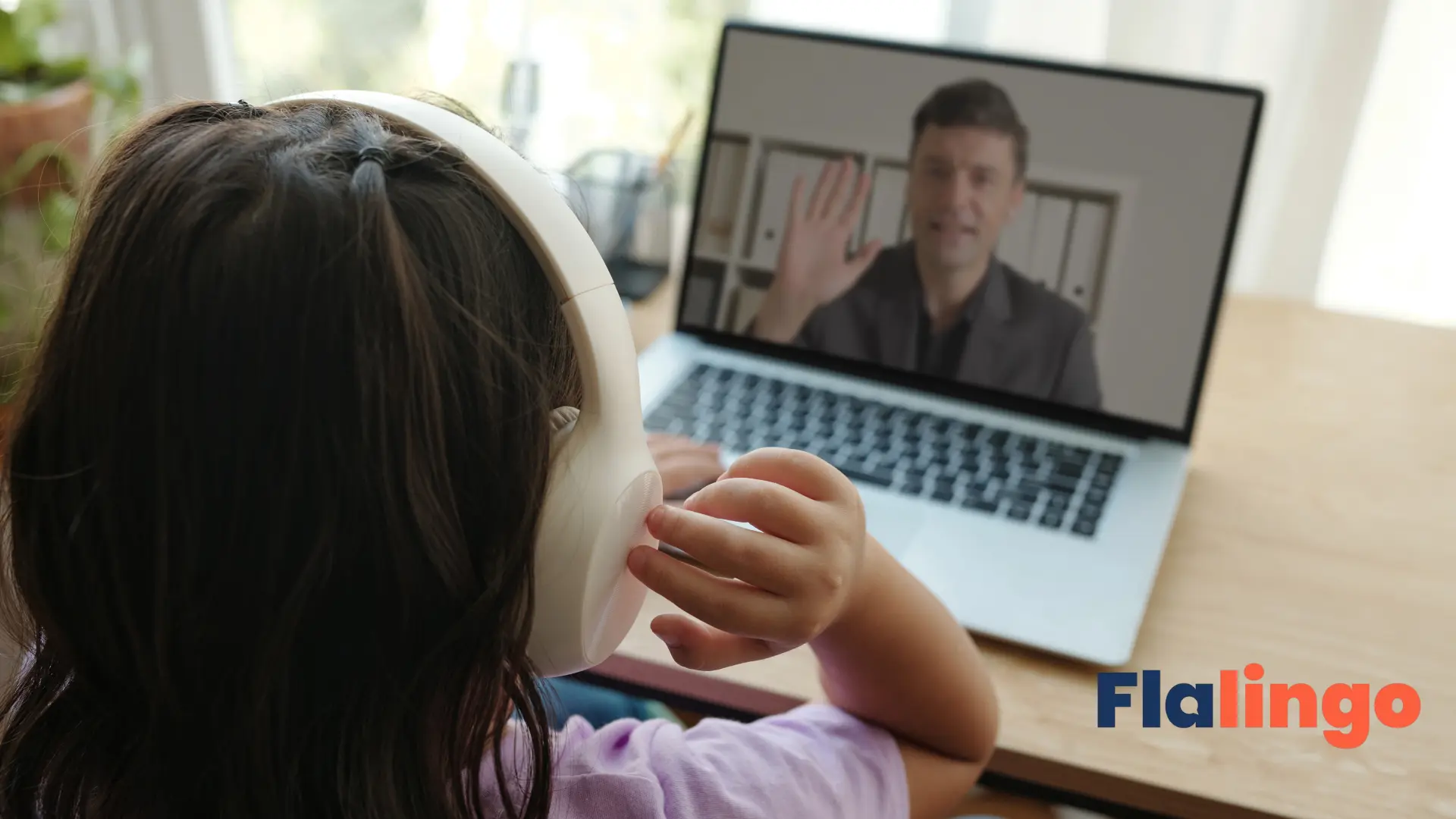
Think about the last time you sat down to prepare an online English lesson from scratch. You opened a browser, searched for a reading passage at the right level, adjusted the vocabulary list, built a few comprehension questions, and realised 90 minutes had passed before you even reviewed the grammar focus. Now multiply that by five lessons a day, five days a week.
For many ESL teachers on freelance platforms, this cycle is the norm. Material sourcing eats into hours that could go toward actual instruction. The question is not whether teachers can build their own content. The question is whether they should have to do so every single time, when a better alternative exists.
Flalingo answered that question by integrating a full Oxford University Press teaching library directly into its platform. Teachers log in, and structured, levelled courseware is already there. No midnight PDF hunts. No guessing whether a worksheet matches the student's CEFR band. The contrast is between spending two hours assembling materials before a lesson, or spending 30 minutes planning your approach and giving the rest of your energy to the student on screen.
This is one of the primary reasons why teachers prefer Flalingo. The platform treats teaching materials not as an afterthought, but as core infrastructure.
Why Are Oxford Materials Different from Generic ESL Content?
Oxford University Press materials differ from generic ESL worksheets and open-source lesson plans in three fundamental ways: content quality, CEFR alignment, and global acceptance.
Content quality: Oxford University Press is a department of the University of Oxford, which recently secured joint second place in the 2025 World Reputation Rankings. OUP's ELT materials are written by applied linguists, field-tested across multiple continents, and revised based on measurable student outcomes. Through the Oxford Impact program, OUP evaluates the real-world effectiveness of its products using structured research methodologies, often with third-party partners. Each unit and exercise has gone through editorial review, pedagogical validation, and classroom testing.
CEFR alignment: Every Oxford course in Flalingo's library maps directly to the Common European Framework of Reference for Languages. A B1 unit is genuinely B1: the grammar complexity, vocabulary density, and expected output all sit within that proficiency band. Teachers who have worked with unleveled materials know the frustration of discovering mid-lesson that a text is two levels above the student. With Oxford materials, that mismatch disappears. The CEFR structure also supports progression tracking, so teachers and students can see exactly where they are and what comes next.
Global acceptance: OUP operates in over 50 countries. Its ELT materials serve millions of learners worldwide, from primary school classrooms in Southeast Asia to corporate training centres in Latin America. When a Flalingo teacher uses Oxford materials, the student receives content that meets the same standard used in formal education systems around the world. This credibility matters for students preparing for international exams, applying to English-medium universities, or working in multinational environments.
Access a world-class teaching library from day one
Apply to become a Flalingo tutor.
What Materials Does Flalingo Use?
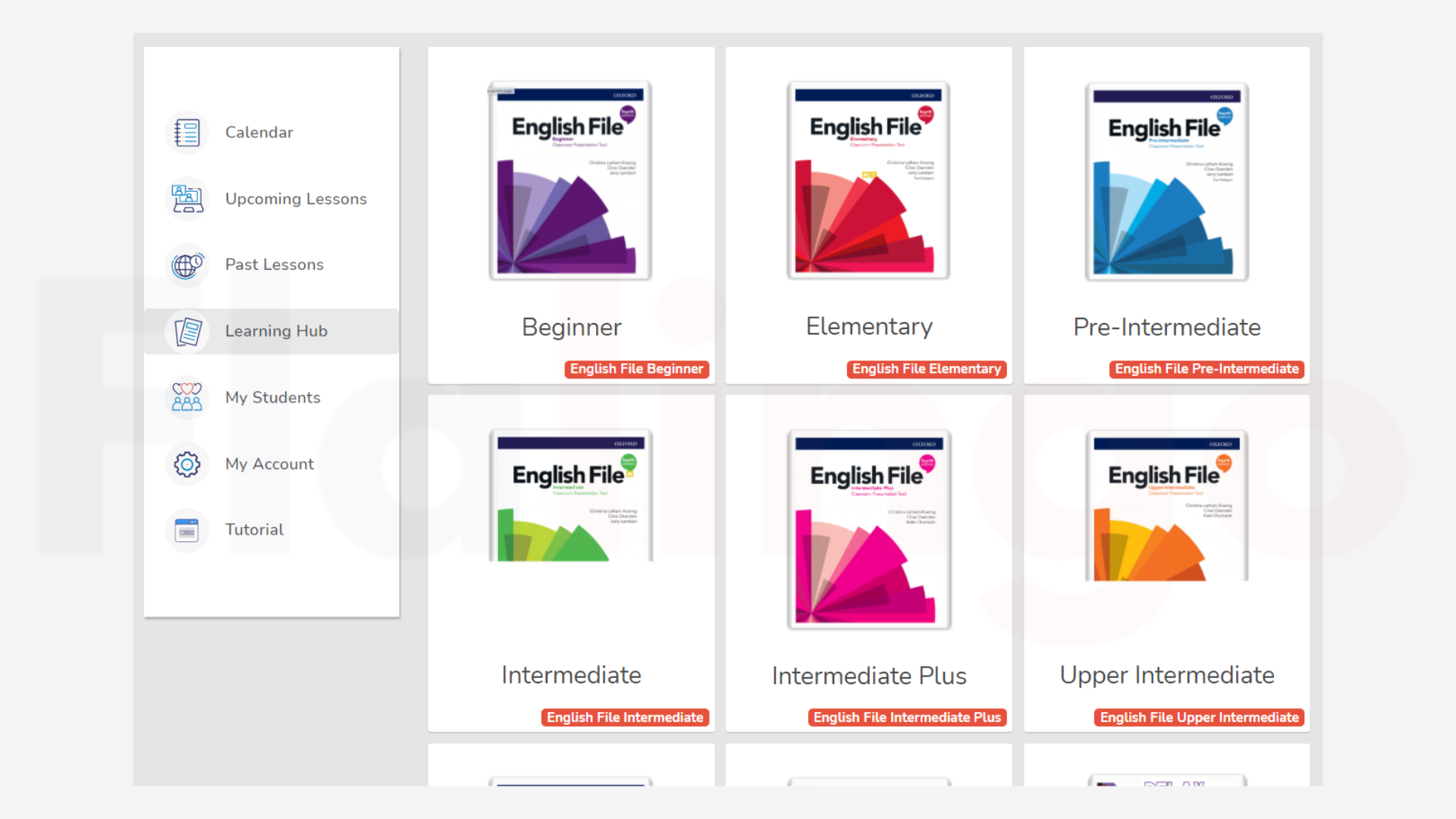
Flalingo uses Oxford University Press materials as its primary teaching resource library. The library covers all CEFR levels from A1 (Beginner) through C2 (Proficiency) and spans multiple learner segments:
Adults: General English courses such as English File, covering everyday communication, travel, workplace scenarios, and social interactions. Lessons follow a clear grammar-vocabulary-skills progression.
Kids (ages 3–18): Age-appropriate Oxford Kids materials that use visual learning, gamification, and shorter activity cycles. Younger learners work with picture prompts and sticker-based rewards; teenagers tackle more complex reading and structured discussion.
Business English: Oxford Business Result and related modules focusing on meetings, presentations, email correspondence, negotiation, and professional vocabulary.
Exam Preparation: Structured IELTS and TOEFL preparation tracks with timed practice tasks, band-targeted speaking exercises, and mock test components.
This segmentation allows teachers to specialise and browse freely. The library is not a locked curriculum. If a student working through general English suddenly needs business vocabulary for an upcoming interview, the teacher can pull a relevant Oxford Business Result unit. If a Kids teacher notices a student is ready for a higher level, they can explore the next tier. The system tracks book progress automatically, so switching between resources does not create continuity gaps.
How Are Oxford Materials Organised by Level?
Flalingo's Oxford library is organised according to the Common European Framework of Reference for Languages (CEFR). Each level maps to specific Oxford course materials tailored to the learner's segment and goals.
This is also how students are matched to the material level. When a student joins the platform, their proficiency is assessed and placed at the corresponding CEFR band. Smart Match algorithm then connects them with a teacher whose expertise aligns with that level, ensuring the right materials are used from the very first session.
The CEFR alignment means teachers do not need to guess which book or unit fits a student. The system handles that mapping, and the teacher can focus on adapting the material to individual learning styles during the session.
How Do Ready-Made Materials Reduce Teacher Workload?
Ready-made Oxford materials cut lesson preparation time significantly. Instead of building content from scratch, Flalingo teachers open a structured lesson plan that is already sequenced, levelled, and loaded with supporting exercises. The result is a shift from content creation to teaching performance.
According to the OECD's TALIS 2024 survey, full-time teachers across OECD countries report that lesson planning and marking and correcting student work are the next most time-consuming tasks, accounting for an average of 14% and 9% of their working time, respectively.
Flalingo's integrated Oxford library addresses this problem at the structural level. Here is what changes when materials are built into the platform:
- No content sourcing required: Oxford courseware is already inside the classroom interface. Teachers do not need to search the internet for worksheets, reading passages, or grammar exercises before each session.
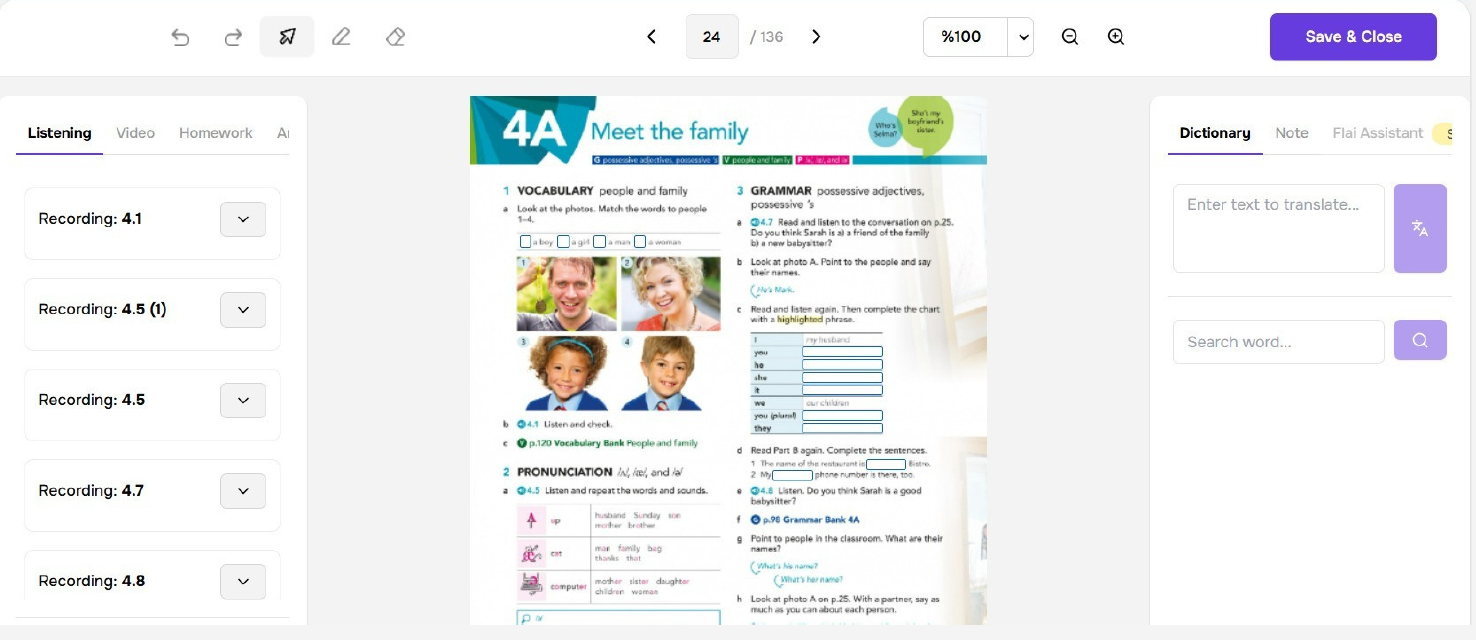
- Automatic progress tracking: After each session, the system saves the book progress automatically. Teachers pick up exactly where they left off without maintaining external records or spreadsheets.
- Consistent lesson structure: Each Oxford unit follows a tested pedagogical sequence: warm-up, target language presentation, guided practice, and production. Teachers can adapt within this structure rather than building it from scratch.
- Level-appropriate content guaranteed: Because materials are pre-mapped to CEFR levels, teachers never discover mid-lesson that a text is two levels above or below the student.
- More energy for the student: When preparation time drops, the teacher can invest that recovered time in reviewing FLAI reports, personalising feedback, and planning student-specific interventions.
For online teachers juggling multiple sessions per day, this adds up. Teaching 20 sessions a week with even 15 minutes of material sourcing per session means over five hours consumed by logistics alone. Flalingo's library reduces that friction to near zero.
How Do Materials and Teacher Expertise Create Consistent Student Progress?
Consistent student progress depends on two things working together: structured, high-quality content and an experienced teacher who knows how to use it. Flalingo's model combines both.
When a teacher uses Oxford courseware on Flalingo, the material provides the pedagogical roadmap. What to teach, in what order, with what exercises. The teacher provides the human layer. Reading the student's confusion, adjusting pace, adding real-world examples, and building rapport. Neither element replaces the other.
This pairing also benefits students who switch between teachers. Because all teachers work from the same Oxford library, a student's learning trajectory does not reset. The next teacher can see where the student left off and continue the progression. Consistency is built into the system.
Can Flalingo Teachers Use Their Own Materials?
Yes. Flalingo encourages teachers to use the Oxford library, but it does not restrict them to it. Teachers are free to bring their own materials, supplementary resources, and personal activities into their lessons.
Some teachers prefer to use Oxford materials as the backbone of a course and layer in their own discussion prompts or specialised exercises. Others rely almost entirely on the library, particularly for exam preparation tracks where structured sequencing matters. For relax mode and free conversation lessons, teachers often bring personal topics, news articles, or discussion cards.
How Do Oxford Materials Work Alongside Flalingo's AI Tools?
Oxford materials and Flalingo's FLAI technology work in parallel to create a feedback loop between structured content and real-time performance data. This combination of AI and materials together is one of the platform's strongest features from a pedagogical standpoint.
Here is how it works in practice. During a lesson, the teacher uses Oxford courseware to guide the session. FLAI, Flalingo's AI coach, analyses the dialogue in real time, tracking accuracy, fluency, and vocabulary usage against CEFR benchmarks. After the lesson, FLAI generates reports for both the teacher and the student, highlighting areas of difficulty, recurring grammar patterns, and recommended focus areas. The Oxford materials provide the structure; FLAI provides the diagnostic data. The teacher sits at the centre, using both to make informed decisions about pacing and topic selection.
Oxford University Press materials, trusted across 180 countries, reduce teachers' lesson preparation workload while accelerating student progress through internationally benchmarked standards. At Flalingo, the materials are ready from day one, so teachers' energy goes to teaching.
Access a world-class teaching library from day one
Apply to become a Flalingo tutor.
FAQ
What materials does Flalingo use?
Flalingo provides Oxford University Press materials covering all CEFR levels (A1 through C2), including courses for adults, children, business English, and exam preparation. Materials are integrated into the platform, and book progress is tracked automatically.
Can Flalingo teachers use their own materials?
Yes. Flalingo encourages teachers to use the Oxford library but also welcomes personal materials and custom activities. Many teachers combine both, using Oxford courseware as a foundation while adding their own content.
Is Flalingo good for teachers?
Flalingo provides Oxford materials, AI-powered FLAI reports, proactive support staff, and a global teacher community. Teachers set their own schedules and maintain full autonomy over their classrooms.
What do teachers say about Flalingo?
Teachers highlight the quality of materials, a supportive team, and a respectful working environment. Jeve Alkhateeb noted Oxford books are easy to use. Merry Johnson emphasised the flexibility to use both the library and personal materials.
How does Flalingo match students with the right material level?
Students are assessed upon enrollment and placed at the appropriate CEFR level. Smart Match then pairs them with teachers whose expertise matches that level, ensuring alignment from the first lesson.
Does Flalingo provide materials for exam preparation?
Yes. The Oxford library includes structured IELTS and TOEFL preparation tracks with timed practice tasks, speaking exercises, and band-targeted feedback modules.
How does AI support teaching alongside Oxford materials at Flalingo?
FLAI analyses each lesson in real time, tracking accuracy, fluency, and vocabulary. After each session, it generates reports for both teacher and student, helping teachers adjust pacing and plan upcoming lessons.
İlgini çekebilecek diğer içeriklerimiz

The Most Interactive Form of English: Flalingo Group Lessons
Devamını oku

Why Oxford University Press? Random Chat vs. Structured Education
Devamını oku
I'm Bright. I am a British-Nigerian English teacher with seven years of experience. I create engaging and tailored lessons that build confidence and fluency to support students to achieve their goals. My aim is to unlock the potential of students from different cultures, making the learning process both efficient and enjoyable.
Flalingo ile İngilizce

Flalingo ile İngilizce öğrenmek, birbiriyle entegre çalışan akıllı bir sistemle ilerlemektir.