
본문으로 바로가기
Flalingo

영어 연습

아이와 영어 보고서와 이야기 비교하기 (A2, 10–12세): 장점, 약점, 그리고 신뢰

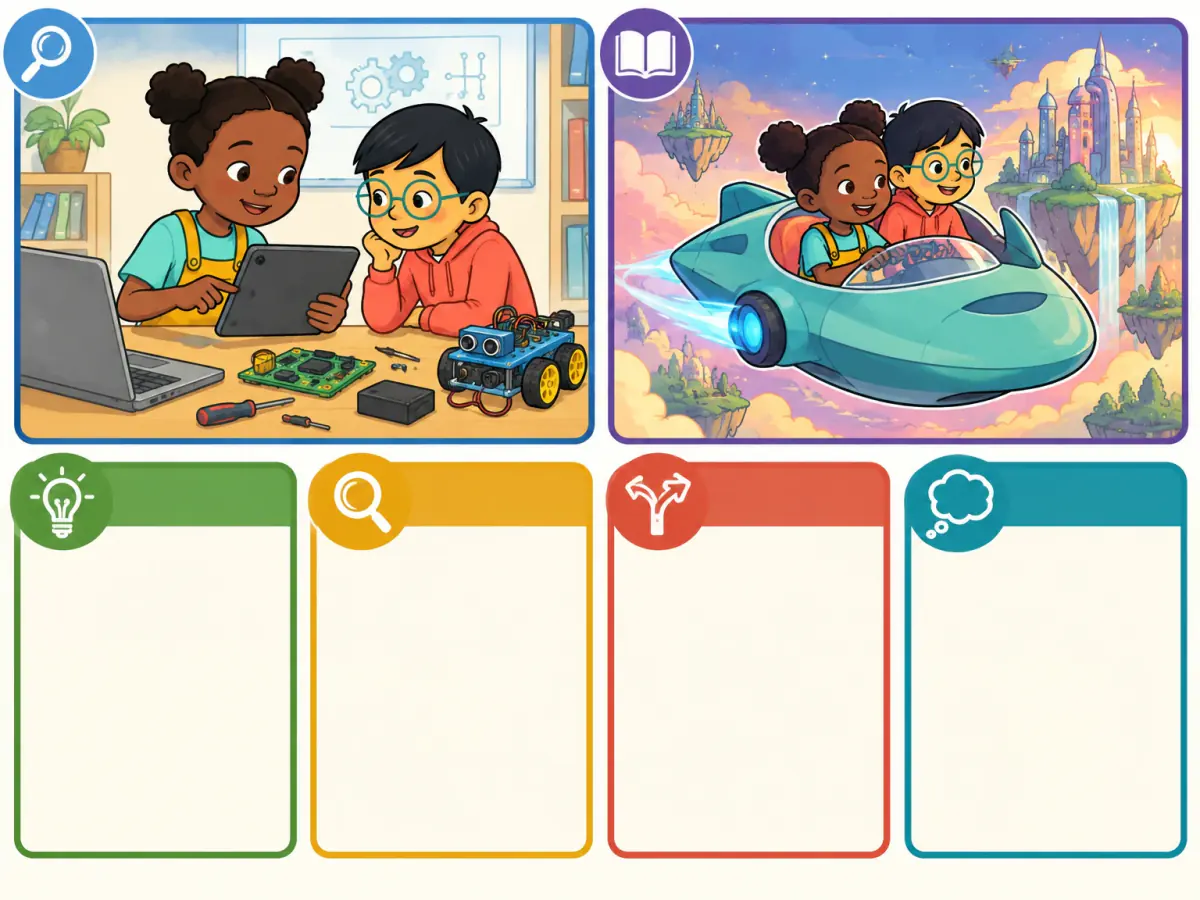
An original paired-reading display about technology: one factual investigation panel and one fictional narrative panel, visually distinct and without text.

아이가 짧은 영어 보고서와 이야기를 비교하도록 도와주세요. 장점과 약점을 하나씩 말하고 “too high for”를 쓴 뒤, 비교 글과 직접 만든 새 장면을 씁니다 (A2, 10–12세).

영어로 보고서와 이야기를 비교할 때 아이는 두 글에 같은 질문을 던집니다: “Why should I believe this?” (왜 이 글을 믿어야 할까?) 보고서는 보여 줄 수 있는 세부 사항과, 잘되지 않은 점을 인정하는 태도로 신뢰를 얻습니다: “One board was too high for children and wheelchair users.” 이야기는 등장인물의 선택으로 신뢰를 얻습니다. 그다음 아이는 짧은 비교 글을 쓰고 자기만의 새 장면을 덧붙입니다. 이 주제는 A2 단계로, 짧은 영어 글을 읽을 수 있는 약 10–12세 아이에게 알맞습니다.

이 글이 맞는 분

  • 짧은 영어 글을 읽는 아이의 부모님: 아이가 한 쪽짜리 보고서나 이야기를 따라가고 몇 문장으로 다시 말할 수 있습니다.
  • 기계와 기술을 좋아하는 아이: 역의 안내 화면, 신호, 움직이는 모형 덕분에 꼼꼼한 읽기가 실감 나게 느껴집니다.
  • 집에서 연습하고 싶은 부모님: 버스 정류장이나 가게의 안내판 하나면 충분하고, 아래 카드와 글에는 녹음이 있습니다.
  • 아직 이른 경우: first, next, finally로 일을 순서대로 설명하는 것이 아직 어렵다면, 아래에 연결된 단계 설명하기 A2 글부터 시작하세요.
  • 너무 쉬운 경우: 두 글을 각각의 세부 사항으로 비교하고 이야기에 맞는 다음 장면을 쓸 수 있다면, 아래에 연결된 설문 보고서 쓰기 A2 글로 넘어가세요.

예시 학습 페이지 열기

예시 학습 페이지 열기

단어 카드

claim

An idea someone says is true.

observable detail

Something you can see, hear or measure.

changed assumption

An early belief that changes after new evidence.

uncertainty

Something the evidence does not yet prove.

대화

Nia Who will read your text?

Leo My teacher will read it, and we will talk about it.

문장 형태

How do the texts build trust?

Priya’s report builds trust with facts from one week: the lift message and the delay warning helped passengers. It also admits a weakness, because one board was too high. The story builds trust through Eren’s choice to slow the foal down and add signals. I would continue the story with the foal leading the parade safely.

  • claim
  • evidence
  • turning point
  • comparison

추가 연습

A true-to-life case study

CITY SIGNALS

For one week, Priya recorded how people used digital noticeboards at three busy stations. The boards showed platform changes with colour, sound and large symbols. On Monday, a broken lift message helped passengers choose an accessible route. On Thursday, a delay warning reduced crowding near one platform. Priya also found a weakness: one board was too high for children and wheelchair users. Her report recommended a lower duplicate screen and staff announcements during emergencies.

Turning Point

THE CLOCKWORK FOAL

Eren built a small mechanical foal for a theatre parade. At first, he programmed it to move as fast as possible. During rehearsal, the model ignored a stage assistant’s stop signal and knocked over an empty basket. Eren slowed it down and added three clear hand signals. In the final rehearsal, the foal paused, turned and followed its guide safely. The audience admired its speed, but Eren valued the moment it responded correctly.

Writer's studio

An original paired-reading display about technology: one factual investigation panel and one fictional narrative panel, visually distinct and without text. Four blank response panels show claim, evidence, turning point and reflection.

Nia Who will read your text?

Leo My teacher will read it, and we will talk about it.

How do the texts build trust?

Priya’s report builds trust with facts from one week: the lift message and the delay warning helped passengers. It also admits a weakness, because one board was too high. The story builds trust through Eren’s choice to slow the foal down and add signals. I would continue the story with the foal leading the parade safely.

  • claim
  • evidence
  • turning point
  • comparison
이 단원 배우기
어떻게 배우고 싶나요?

글을 판단하는 네 단어

아래 카드에서 글이 무엇을 어떻게 증명하는지 묻는 네 단어를 들을 수 있습니다. 여기서는 역 안내 화면에 관한 예와 함께 소개합니다. 과학 시간에 비슷한 개념을 우리말로 배웠다면 새로운 것은 영어 단어뿐입니다: claim(주장), observable detail(관찰할 수 있는 세부 사항), changed assumption(바뀐 생각), uncertainty(불확실성).

  • claim: “The station screens help passengers.”
  • observable detail: “A delay warning reduced crowding near one platform.”
  • changed assumption: “Everyone can see the screens.”라는 생각이 “One screen is too high for some people.”로 바뀝니다.
  • uncertainty: 세 역에서 일주일 동안 본 것만으로는 화면이 어디서나 효과가 있다고 증명할 수 없습니다.

보고서가 신뢰를 얻는 방법: 좋은 소식과 문제점

한 짧은 보고서에서 프리야(Priya)라는 학생이 일주일 동안 붐비는 역 세 곳의 디지털 안내판을 관찰합니다. 고장 난 엘리베이터 안내는 승객이 휠체어로도 갈 수 있는 길을 고르도록 돕고, 지연 안내는 혼잡을 줄입니다. 하지만 안내판 하나는 어린이와 휠체어 이용자에게 너무 높습니다. 그래서 프리야는 더 낮은 곳에 화면을 하나 더 두고, 비상시에는 직원이 안내 방송을 하자고 제안합니다.

스스로 문제점을 인정하는 글이 더 믿음이 가는 경우가 많습니다. 다만 제안은 아이디어일 뿐입니다. 보고서는 낮은 화면이 실제로 설치되었다고 말하지 않습니다.

  • “One weakness is that the board is too high.”
  • “The report recommended a lower screen.”

문법 포인트: too + 형용사 + for

“Too”는 필요한 것보다 지나치다는 뜻이라 보통 문제가 있을 때 씁니다. 우리말 “너무”는 요즘 “아주”의 뜻으로도 많이 쓰여서 “It’s too delicious.”처럼 말하는 실수가 흔합니다. 칭찬하거나 강조만 할 때는 “very”를 쓰세요. “The board is very high.”는 안내판을 묘사할 뿐이고, “The board is too high for children.”은 아이들이 곤란하다는 뜻입니다. 무엇을 할 수 없는지 말하려면 “to”와 동사를 붙이세요: “The board was too high for children to read.”

  • too high for children: 문제가 있음
  • very high: 묘사일 뿐
  • “The screen was too small to read.”

이야기가 신뢰를 얻는 방법: 전환점

한 짧은 이야기에서 에렌(Eren)이라는 소년은 극장 퍼레이드를 위해 기계 망아지(어린 말)를 만들고, 최대한 빨리 움직이게 합니다. 리허설에서 망아지는 멈춤 신호를 무시하고 바구니를 넘어뜨립니다. 에렌은 속도를 늦추고 손 신호 세 가지를 더합니다. 마지막 리허설에서 망아지는 안내하는 사람을 안전하게 따라갑니다.

바구니 사건이 전환점입니다. 에렌의 생각이 “빠른 것이 최고”에서 “신호를 잘 따르는 것이 최고”로 바뀝니다. 이 이야기는 사실이 아니라 선택으로 신뢰를 얻습니다. 아이에게 과거 시제(past simple)로 다시 말해 보게 하세요:

  • “At first, the foal moved too fast.”
  • “Then it knocked over a basket.”
  • “Eren slowed it down and added signals.”
  • “In the end, it followed its guide.”

실제 독자를 위한 비교 글 쓰기

먼저 아이는 이 대화처럼 누가 읽을지 정합니다. 선생님이 읽는다면 세 가지를 계획합니다: 보고서의 세부 사항 하나, 이야기의 세부 사항 하나, 자기 의견 하나.

좋은 비교 글은 두 쪽을 모두 보여 줍니다: “The report builds trust with facts from one week, while the story builds trust through Eren’s choice to slow the foal down.” 여기서 “while”은 우리말의 “-는 반면”처럼 두 가지를 대조합니다. “while”에는 “~하는 동안”이라는 뜻도 있으니 문장 속에서 구분해 주세요. 쓰기 전에 이야기해 보세요: “Is a careful machine more useful than a fast one?”

  • “Both texts show that…”
  • “In the report…, but in the story…”
  • “I trust … more because…”

Nia Who will read your text?

Leo My teacher will read it, and we will talk about it.

나에게 맞는 방법으로 이 단원 배우기

확실히 새로운 다음 장면

이야기를 이어 쓸 때 아이는 이야기가 끝난 지점에서 시작하고, 이야기가 보여 준 것(망아지는 이제 신호를 따릅니다)을 지키며, 과거 시제로 새로운 사건 하나를 더합니다:

“On parade day, the music was too loud for anyone to hear a shout. When a dog ran in front of the foal, its guide raised one hand, and the foal stopped at once.” 아무 이유 없이 망아지가 다시 질주하는 장면은 이야기가 쌓은 신뢰를 깨뜨립니다.

집에서 하는 놀이: 안내판 조사관

버스 정류장이나 가게에서 안내판이나 화면을 하나 함께 고르세요. 아이가 영어로 짧게 구두 보고를 합니다: 장점 하나, 약점 하나, 제안 하나. 5분이면 충분합니다.

  • “One strength is that it uses big symbols.”
  • “One weakness is that it’s too small for older people to read.”
  • “I recommend a bigger screen near the door.”

흔한 실수와 쉬운 해결법

바른 문장으로 다시 말해 주고 계속 진행하세요.

  • “too much high”: “too high”만 쓰면 됩니다.
  • “He slowed down it.”: it이나 them은 가운데에 넣습니다: “He slowed it down.”
  • “It recommended to put a lower screen.”: 명사를 쓰세요: “It recommended a lower screen.”
  • “Both texts builds trust.”: “Both texts build trust.”
  • 이야기를 다시 말하기만 하는 다음 장면: 결말 뒤에 일어나는 사건을 하나 더하세요.

다음 단계

다음으로 아이는 작은 학급 설문에서 얻은 숫자와 이유로 자기만의 보고서를 써 볼 수 있습니다.

자주 묻는 질문

아이가 영어 글 두 편을 비교하도록 어떻게 도울 수 있나요?

두 글에 같은 질문을 하세요. 예를 들면 “Why should I believe this?” 아이가 글마다 한 문장씩 쓰고 “while”이나 “but”으로 이어 붙이게 하세요.

약점을 인정하는 보고서는 왜 더 믿을 만한가요?

글쓴이가 꼼꼼히 확인했고 아무것도 숨기지 않았다는 것을 보여 주기 때문입니다. 그래서 좋은 결과도 더 믿음이 갑니다.

아이가 이야기를 베끼지 않고 이어 쓰려면 어떻게 하나요?

이야기를 한 번 읽고 덮어 둔 다음, 마지막 사건 뒤에 무슨 일이 일어나는지 쓰게 하세요.

이 단원 배우기
어떻게 배우고 싶나요?

다음에는 무엇을 할까요?

라이브 선생님과 함께 배워요

Flalingo 어린이 수업에서는 아이가 이런 단원을 라이브 선생님과 1:1로, 같은 화면의 게임으로 연습합니다.

무료 체험 수업 예약하기