
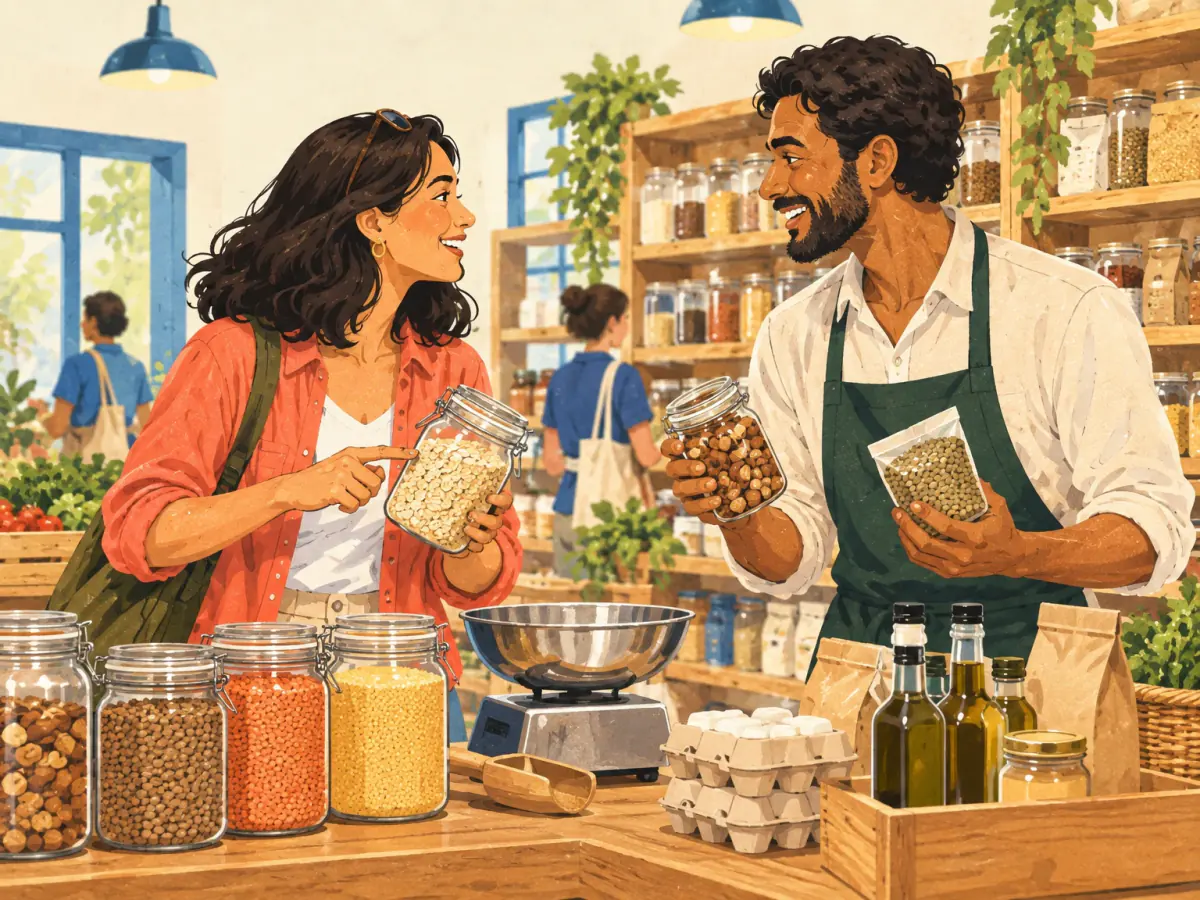
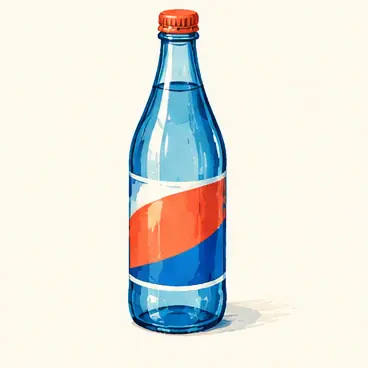
 a bottle
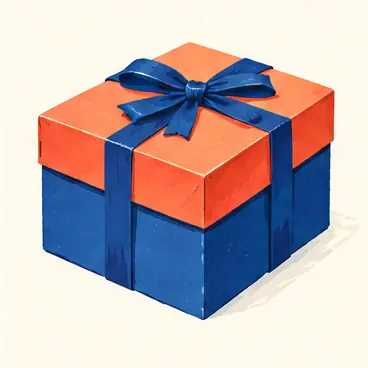 a box
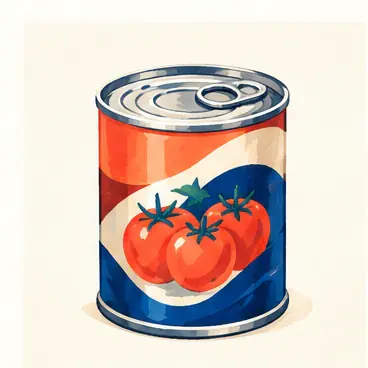 a can
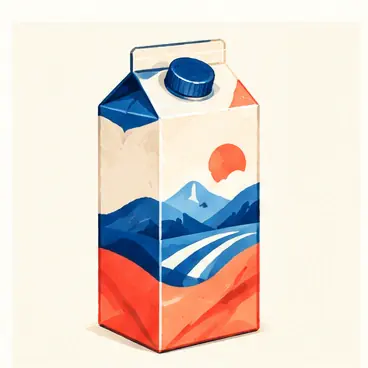 a carton
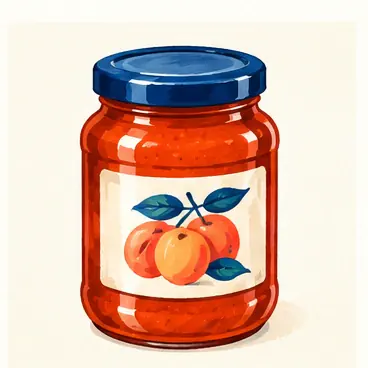 a jar
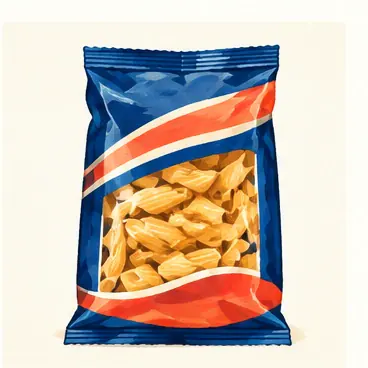 a packet
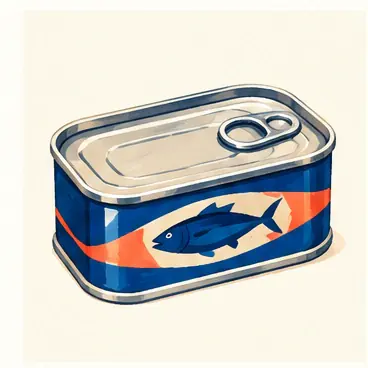 a tin
끼니별 음식 단어
음식 단어는 끼니별로 묶어서 익히세요. 매일 쓰게 될 단어들이에요.
- 아침: “toast”, “cereal”, “eggs”, “jam”, “tea”, “orange juice”
- 점심과 저녁: “chicken”, “salmon”, “pasta”, “rice”, “salad”, “potatoes”, “mushrooms”
- 과일, 디저트, 간식: “apples”, “strawberries”, “cake”, “nuts”, “biscuits”, “crisps”
- 영국과 미국: 영국의 “crisps”(감자칩)는 미국에서 “chips”, 영국의 “chips”(감자튀김)는 미국에서 “French fries”, 영국의 “biscuits”는 미국에서 “cookies”라고 해요.
셀 수 있을까, 없을까: a, an, some, any
셀 수 있는 명사는 복수형이 있어요: “an apple”, “two apples”. 한국어는 “사과 두 개”처럼 숫자가 있어도 명사 모양이 그대로지만, 영어는 둘 이상이면 꼭 “-s”를 붙여요. 셀 수 없는 음식은 복수형도 “a”도 없어요: “rice”, “bread”, “milk”, “cheese”, “water”.
- “We have an apple and some rice.” – 셀 수 있는 것 하나에는 “a”나 “an”, 양에는 “some”
- “There isn’t any milk.” “Are there any eggs?” – 부정문과 의문문에는 “any”
- “I had some chicken.” – 음식으로서의 “chicken”, “fish”, “fruit”는 보통 셀 수 없어요
How much일까, how many일까? A few, a little, a lot of, enough
복수 명사에는 “how many”, 셀 수 없는 명사에는 “how much”로 물어요. 대답도 같은 기준을 따라요. 한국어의 “많이”, “조금”은 둘 다에 쓰지만, 영어는 명사에 따라 골라야 해요.
- “How many eggs?” – “A few.” “How much rice?” – “A little.” – 적지만 쓸모 있는 양
- “a lot of coffee”, “a lot of vegetables” – 둘 다에 쓸 수 있고, 긍정문에서는 “much”보다 자연스러워요
- “too much sugar”, “too many biscuits” – 원하는 것보다 많다는 뜻으로, 불만을 나타내요
- “How many cartons do we need?” – “Only a few. We have enough milk.” – “enough”는 명사 앞에 와요: 필요한 만큼
용기 표현: a carton of milk, a jar of jam
용기를 붙이면 셀 수 없는 음식도 셀 수 있어요: 용기 + “of” + 음식. “우유 한 팩”, “물 두 병”처럼 한국어의 단위 명사와 비슷한 원리예요. 복수형 “-s”는 음식이 아니라 용기에 붙어요: “two bottles of water”, “three cartons of milk”.
- “a bottle of water”, “a carton of milk”, “a box of cereal” – 병, 팩, 상자
- “a jar of jam”, “a packet of biscuits”, “a tin of tuna” – 유리병, 봉지, 통조림
- “a slice of bread”, “a piece of chicken”, “a cup of tea” – 먹거나 마시는 양: 한 장, 한 조각, 한 잔
- 영국과 미국: 영국 영어는 통조림 음식에 흔히 “tin”을 쓰고, 미국에서는 “can”이라고 해요.
짧은 대화: 여섯 명의 저녁 식사
두 친구가 저녁 식사를 계획해요. “enough”, “any”, 용기 표현, “too many”를 찾아 들어 보고, 내 손님을 위한 식사도 같은 방식으로 계획해 보세요.
Maya How many people are coming?
Owen Six. We have enough pasta, but there isn't any cheese.
Maya I can buy a packet of cheese and two bottles of water.
Owen Good. We have too many sweets, so don't buy dessert.
Maya All right. Fruit is healthier anyway.
어제의 음식 일기 쓰기
끼니별로 과거형을 써요: “had”(have), “ate”(eat), “drank”(drink). 끼니 이름 앞에는 보통 “a”를 붙이지 않아요: “I had breakfast at seven.” 실제 양 정보를 두 가지 이상 넣으세요.
- “For breakfast I had toast and some fruit.” – 아침
- “I had a sandwich for lunch.” – 점심
- “At dinner I ate a little rice, a lot of vegetables and two pieces of chicken.” – 저녁, 양 정보 세 가지
- “Dinner was bigger than lunch.” “Fruit is healthier than sweets.” – 원하면 비교 한 문장: 짧은 형용사는 “-er”, 긴 형용사는 “more”(“more expensive”)
- “We need two cartons of milk.” / “Yesterday I drank a glass of milk.” – 계획은 현재형, 일기는 과거형
자주 하는 실수
모두 쉽게 고칠 수 있어요.
- “a bread”, “two breads” → “some bread”, “two slices of bread” – “bread”는 셀 수 없어요
- “How much apples?” → “How many apples?” – “apples”는 셀 수 있어요
- “a few rice” → “a little rice” – “rice”는 셀 수 없어요
- “I eated” → “I ate” – “eat”은 불규칙 동사예요. “drink”와 “have”도 마찬가지예요: “drank”, “had”
- “two hundreds grams” → “two hundred grams” – 숫자 뒤의 “hundred”, “thousand”, “million”에는 “-s”를 붙이지 않아요
- 발음: “bread”는 “red”와, “tea”는 “see”와, “steak”는 “make”와 운이 맞아요.
하루 10분 연습법
모든 문장을 소리 내어 말하세요. 매일 조금씩이 좋아요.
- 2분: 대화를 재생하고 한 문장씩 따라 말하세요.
- 3분: 냉장고를 열고 안에 무엇이 있는지 말해 보세요. “There’s some milk, a few eggs and a jar of jam. There isn’t any cheese.”
- 3분: 어제 먹은 것을 양 정보 두 가지를 넣어 세 문장으로 써 보세요.
- 2분: 용기 표현으로 장보기 목록을 쓰고 소리 내어 읽어 보세요. “two bottles of water, a carton of milk, a bag of rice”
다음 단계
다음은 날짜와 질문 하나를 넣은 호텔 방 요청, 그다음은 “quietly”, “usually” 같은 부사를 쓴 방문객용 짧은 메모예요.