
140〜190語の写真描写を4つのパートで組み立てる
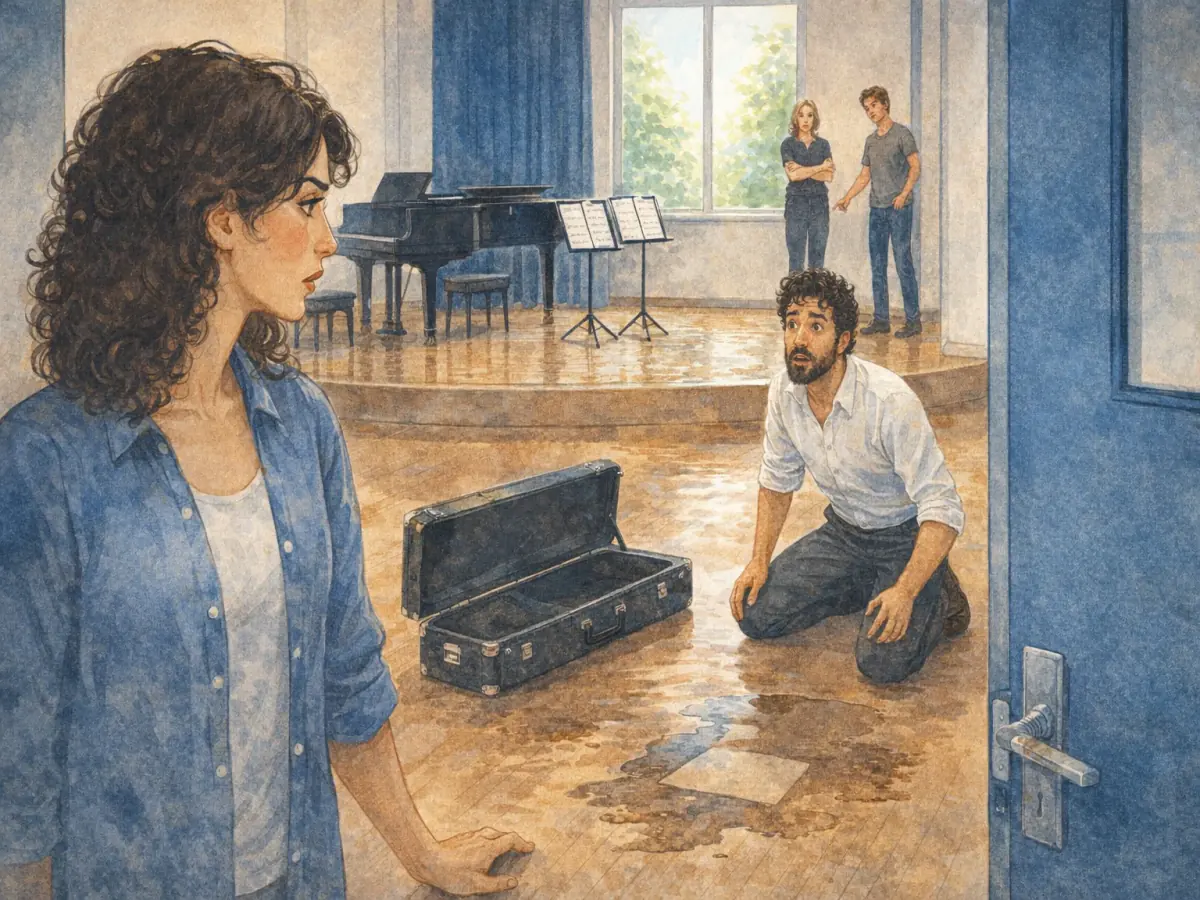
リハーサル室を思い浮かべてください。戸口に立つ女性と、壊れたケースのそばにひざまずく男性がいます。場所の表現を4つ、身ぶりの語彙を6つ使いましょう。
- 全体の説明:“The photo shows a rehearsal room with four people and a damaged case.”
- 空間の描写:“In the centre, a man is kneeling next to the case.”
- 根拠と結びつけた慎重な推測:“The case may have been moved: a dry rectangle marks where it stood.”
- 自分の感想:“The photo reminds me of the moment before a practical decision.”
視線を導く場所の表現
一つの方向に進みましょう。手前から奥へ、または左から右へ。日本語では「手前に」「左に」とどちらも「に」を使いますが、英語では“in the foreground”と“on the left”のように前置詞が変わります。
- 奥行きと左右:“in the foreground”“in the centre”“in the background”“on the left”“on the right”。“In the foreground, a woman is standing in the doorway.”
- ほかの物との関係:“in front of”(見る人により近い)、“behind”、“next to”、“opposite”(向かい側で向き合う位置。“of”は付けません)。“The man is opposite the window, behind the case.”
身ぶり:正確に名づけ、慎重に読む
動作には現在進行形、姿勢には分詞を使います。“She is pointing at the window.” “Her arms are folded.”
身ぶりは証拠であって、辞書の見出しではありません。腕組みは防御的な態度かもしれませんし、寒さや楽な姿勢のせいかもしれません。書く前に話し合ってみましょう。“Should interviewers judge candidates by their body language?” “Why do we feel so sure about other people’s feelings when the evidence is weak?”
- 姿勢と手:“folded arms”(腕組み)、“a raised shoulder”、“a clenched fist”(握りしめたこぶし)、“a hand on the hip”。
- 顔:“raised eyebrows”(上がった眉)、“a frown”、“a furrowed brow”(しわを寄せた眉間)、“pressed lips”。
- 動作:“kneeling”“pointing”“shrugging”“staring”“leaning against a wall”。
“look”“seem”“look like”“look as if”の使い分け
感覚動詞は確信ではなく印象を伝え、副詞ではなく形容詞をとります。日本語は「〜そうだ」「〜ようだ」「〜らしい」のように根拠の種類を文末で表しますが、英語では動詞と構文で表します。見た目なら“look”、音なら“sound”、いくつもの手がかりからなら“seem”です。下の会話では、あとから見えた細部が、せりふのない舞台場面の最初の読み方を変えます。
- “look”“feel”“sound”+形容詞:“Her shoulders look tense.”
- “look”“feel”+“like”+名詞:“The prop feels like real stone.”
- “look”“sound”+“as if”/“as though”+節:“It looks as if rain has come in overnight.”
- どんな根拠から得た印象にも使える“seem”:“He seems worried after reading the schedule.”
Maya Her folded arms look defensive at first.
Owen Yes, but the raised shoulder later looks as if it is protecting her.
Owen And the door feels like stone, but it is a painted prop.
どのくらい確かですか?推量の助動詞
根拠の強さに合わせて助動詞を選びます。現在のことは助動詞+“be”、写真が撮られる前に起きたことは助動詞+“have”+過去分詞です。
- ほぼ確実なら“must”:“They must have arrived a while ago: their coats are hanging up.”
- 可能性があるなら“may”“might”“could”:“She may be waiting for someone.”
- ほぼ確実に違うなら“can’t”“couldn’t”:“The door can’t be real stone: one actor is carrying it with one hand.”
- “must have”は推量、“should have”は批判です:“She must have called; she should have called me too.”
すべての推測を点検する
カメラが記録したことを超える文にすべて下線を引き、その根拠を書き出します。根拠がなければ削除し、弱ければ表現を和らげ、強ければ残します。
- “She is angry.”ではなく“She is frowning with her arms folded; she may be annoyed, or simply cold.”
- “Rain came in overnight.”ではなく“It looks as if rain came in: there is a wet patch below the window.”
- “The performers damaged the case.”ではなく“Nothing in the photo shows who damaged the case.”
よくある間違い
描写文で次の点を確認しましょう。
- “on the foreground”や“in the left”。“in the foreground”“on the left”と言います。
- “She looks like tired.” “She looks tired.”と言います。“like”は名詞の前に置きます。
- “He must went.”や“He must of gone.” “He must have gone.”と言います。話すときは“must’ve”と弱く発音します。
- “It remembers me of my first job.” “It reminds me of my first job.”と言います。「思い出させる」は“remind”です。
1日10分の練習法
どんな写真でもかまいません。週に1回は、描写文を最後まで書いて点検しましょう。
- 2分:上の3つのせりふを聞き、それぞれの型を言います。
- 3分:場所の表現を4つ使って、写真を声に出して描写します。
- 3分:“must have”“might have”“can’t have”で推測を3つ言い、それぞれ“because”で根拠を加えます。
- 2分:全体の説明を1文と、“reminds me of”を使った感想を1文書きます。
次のステップ
B2では次に、訂正を隠さない意見記事を書き、続いて平均値が地域の問題を見えなくする都市レポートに進みましょう。C1では、美術レビューですべての意見を根拠で支えます。