
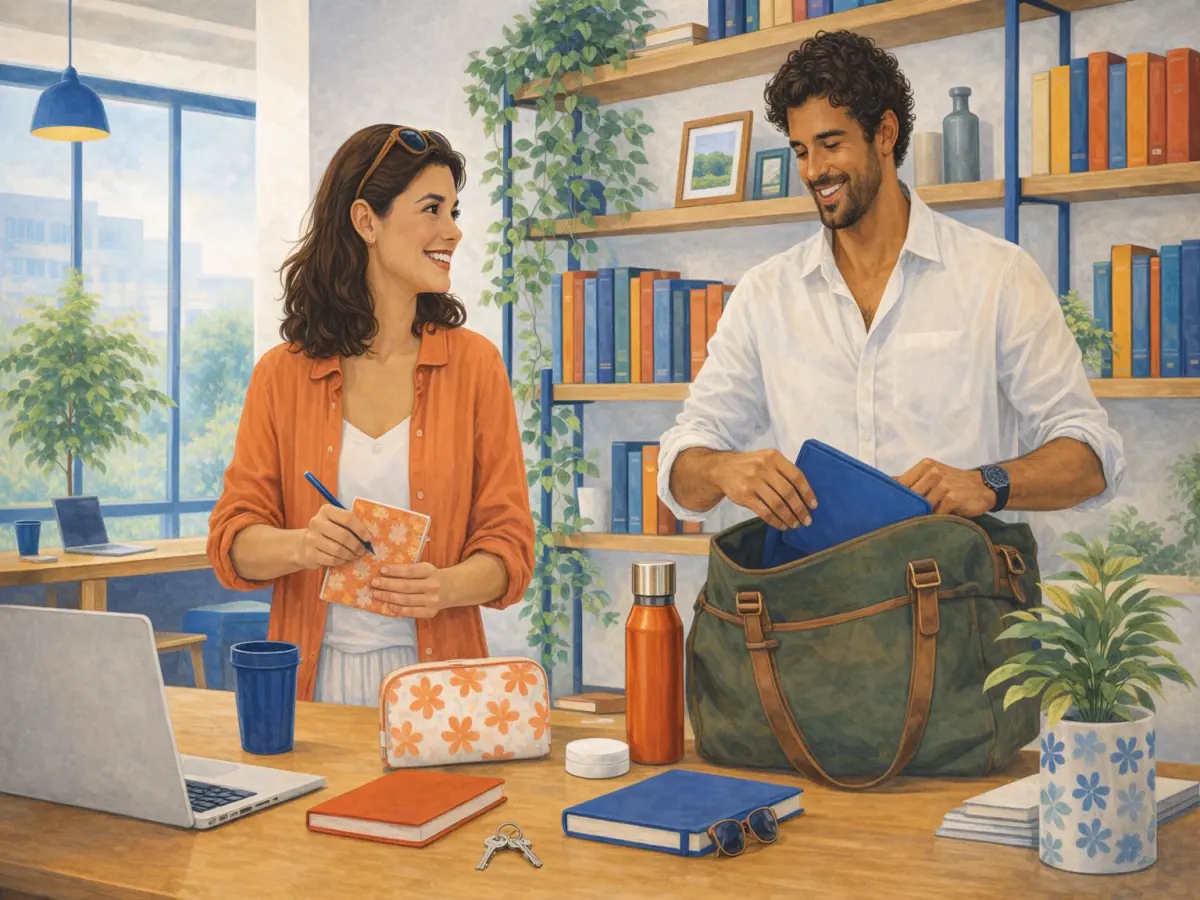

in、on、under:場所を表す3つの単語
日本語では「かばんの中に」のように場所を表す言葉が後に来ますが、英語では前に来ます。“in the bag”。また、日本語の「上に」は触れているときにも離れているときにも使えますが、英語の “on” は表面に触れているときだけです。物が中にあるのか、上に触れているのか、下にあるのかを考えましょう。
- “in” – 何かの中:“The keys are in the bag.” 引き出し、箱、部屋にも “in” を使います。
- “on” – 表面に触れて上に:“The laptop is on the desk.” 棚、床、壁にも “on” を使います。
- “under” – 何かの下:“The charger is under the bag.”
- “Where’s the charger?” – “It’s in the bag.”
- “Where are the keys?” – “They’re in the bag.”
1つか、2つ以上か:a、an と複数形の -s
1つなら “a” か “an”、2つ以上なら -s か -es を付けます。日本語では「鍵が2つ」と言っても名詞の形は変わりませんが、英語では数のあとでも必ず付けます。“two keys”。
- 子音の音の前は “a”、母音の音の前は “an”:“a key”、“an umbrella”、“an orange bag”。
- ほとんどの名詞は -s(keys、bags、tickets)、-s、-ch、-sh、-x で終わる語は -es(glasses、watches、boxes)。
- 語尾をはっきり言いましょう。“keys” は z の音、“books” は s の音で終わり、“watches” は1音節増えます。
- 日本語では1つでも英語では常に複数:glasses(眼鏡)、sunglasses(サングラス)、scissors(はさみ)、headphones(ヘッドホン)。“My glasses are in the case.”
- “There’s a wallet on the desk.” “There are two notebooks on the table.”
誰の物? this、these、mine、yours
近くにある1つの物は “this”、2つ以上は “these” です。“mine”(私の物)と “yours”(あなたの物)は単独で使い、後ろに名詞を付けません。
- “Is this your key?” – “No, it isn’t. My keys are in the bag.”
- “Are these your sunglasses?” – “Yes, they are.”
- “This notebook is mine.” “mine notebook” とは言いません。
短い会話:共有のテーブルを片付ける
Maya と Owen が共有しているテーブルを片付けています。“key” が “keys” に変わるところ、複数形の “two notebooks”、どの眼鏡かをはっきり示す “under it” に注目して聞きましょう。そのあと、答えを自分の物に置き換えて言ってみましょう。
Maya Is this your key?
Owen No, my keys are in the bag.
Maya There are two notebooks on the table.
Owen The blue notebook is mine. The glasses under it are yours.
物を説明する:small、blue、really useful
形容詞は名詞の前(“a small notebook”)か、“is” や “are” のあと(“The notebook is small.”)に置きます。複数でも形容詞に -s は付けません。
- “two blue notebooks”:“blues notebooks” や “notebooks blue” にはなりません。
- 大きさのあとに色:“a small black wallet”。
- 2つの形容詞は “and” でつなぎます:“It’s small and blue.”
- 強めたり弱めたり:“very cold”、“really beautiful”、“quite cheap”(“quite” はふつう “very” より弱い)。
- よく使う反対語:big / small、new / old、clean / dirty、full / empty。
メモを書く:まず見た目、次に場所
相手があなたに聞かなくても物を見つけられるように、2文で書きます。1文目は見た目、2文目は場所です。日本語では「テーブルの下の黒いかばんの中」のように大きな場所から言いますが、このメモでは英語の住所と同じように、いちばん近い場所から言います。
見本:“My notebook is small and blue. It’s in the black bag, under the table.” 読む人はテーブルの下を見て、黒いかばんを見つけて開けます。
- 複数の物なら、動詞を2つとも変えます:“My keys are silver. They’re in a small brown bag, on the shelf.”
- 必要ならお願いを1文加えます:“Please put it in my bag.”
よくある間違い
どれも簡単に直せます。
- “two key” → “two keys”:数があっても複数形の -s は必要です。
- “in the table” → “on the table”:テーブル、棚、床は表面です。
- “a umbrella” → “an umbrella”。
- “My glasses is …” → “My glasses are …”
- “The keys in the bag.” → “The keys are in the bag.” “is” や “are” を落とさないようにしましょう。
1日10分の練習法
すべて声に出して言いましょう。週に1回長く練習するより、毎日短く続けるほうが効果的です。
- 2分:会話を再生し、1文ごとに止めて繰り返します。
- 3分:身の回りの物3つの場所を言います。“My phone is on the desk.”
- 2分:複数形の名詞を5つ言い、語尾の音を聞きます。keys、books、watches、bags、glasses。
- 3分:家族や職場の人に向けて、物1つについて2文のメモを書きます。そのメモだけで見つけられるでしょうか。
次のステップ
同じ形を簡単なお願いにも使いましょう(“Please put it in the drawer.”)。書く練習では、仕事と毎日の過ごし方を紹介する短いプロフィール、その次に時間と頻度を入れて1日の流れを書く練習が次のステップです。