
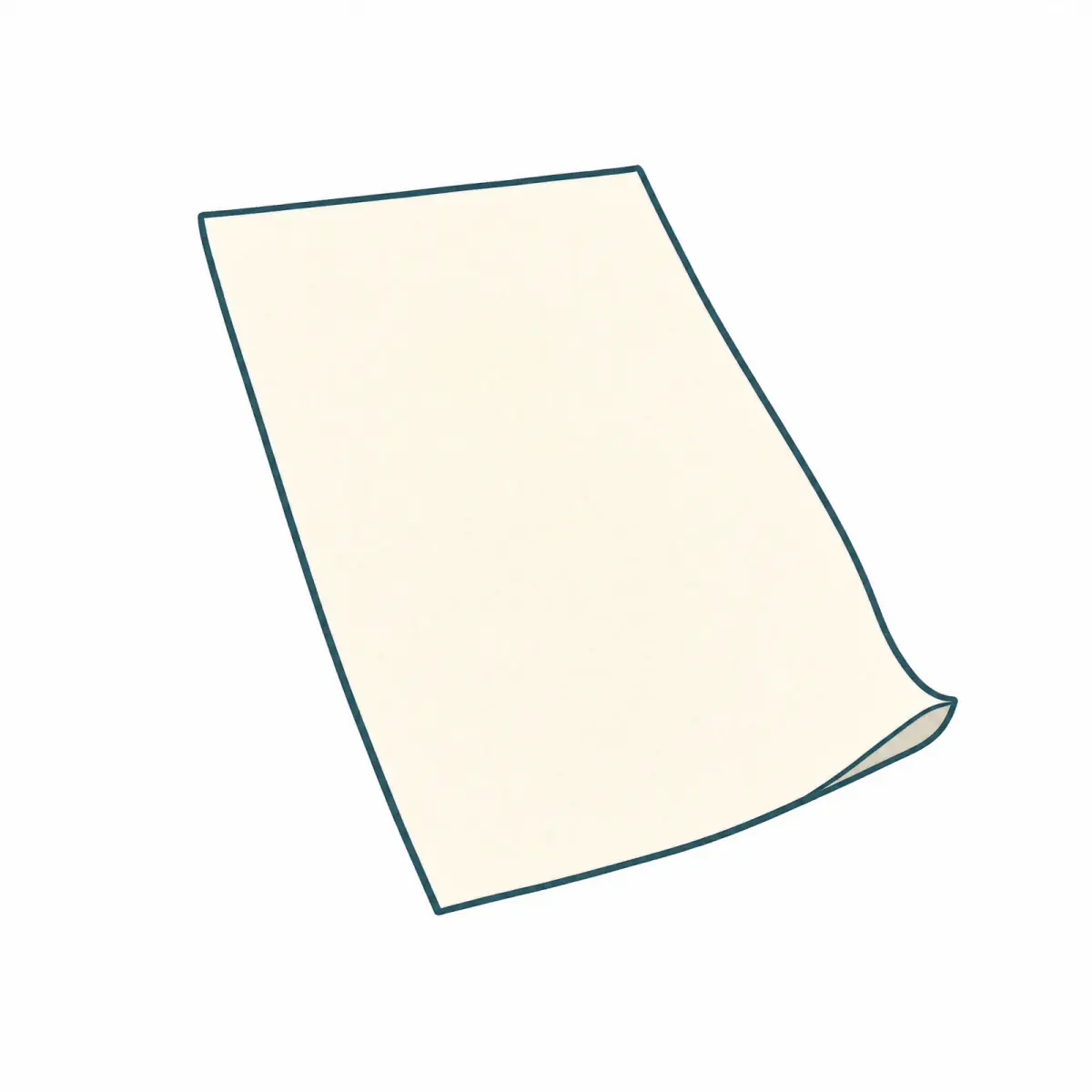
 paper
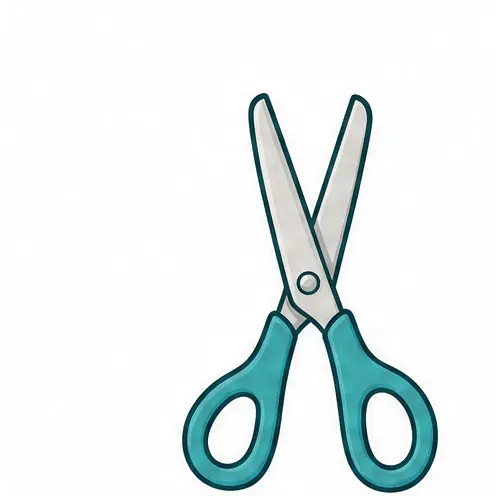 scissors
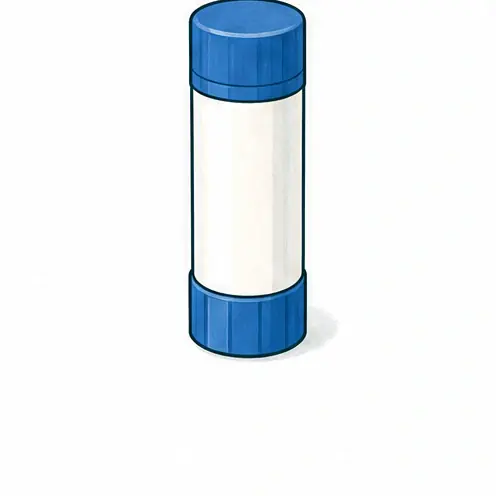 glue
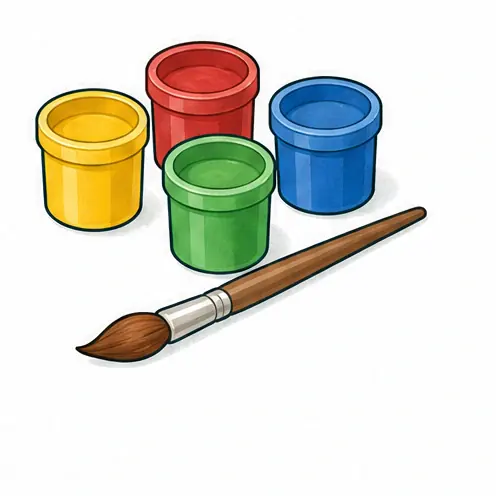 paint
Four craft words to start with
Play the four cards above and let your child point to the real thing at home: the paper drawer, a glue stick, a box of paints. Pointing first and speaking later is normal at this age.
Say the words without “a”. Glue, paper and paint are materials, like water or sand, and “scissors” always ends in s, even for one tool. To count them, English adds another word, “a glue stick”, “a pair of scissors”, but your child doesn’t need that yet.
- paper: to draw on, cut and glue
- scissors: child-safe, with rounded tips and an adult nearby
- glue: a glue stick is easiest for small hands
- paint: with a brush or a finger
Plan first: “What do we need?”
Before you start, decide together what you will use. “What do we need?” and “We need paper.” have recordings above. “We” means both of you: the sentence is about the shared picture, not about who is holding what. Let your child point to each thing while you answer; if they only say “Paper!”, repeat the whole sentence back: “Yes, we need paper.”
- “We need scissors.” for cutting shapes
- “We need glue.” for sticking them on
- “We need paint.” for colour
Then ask: “Glue, please?”
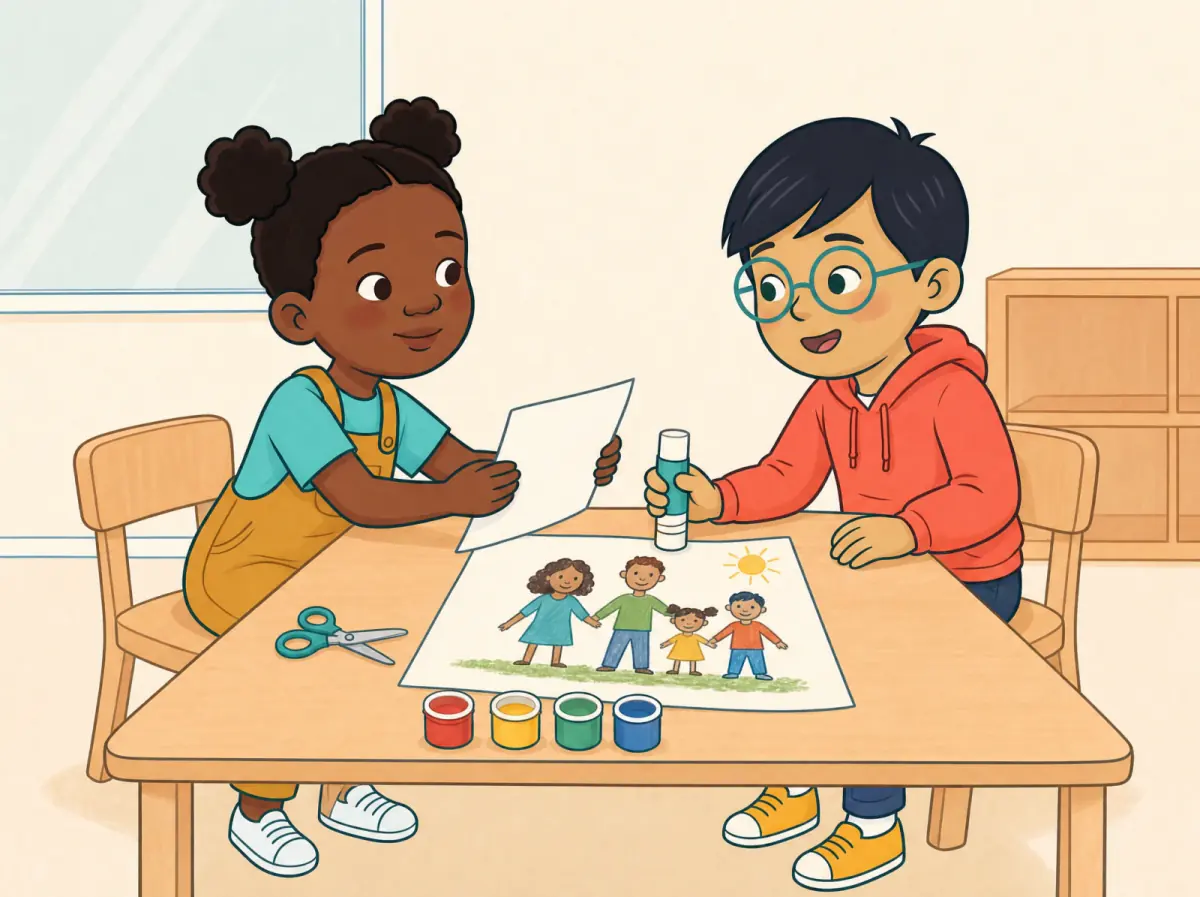
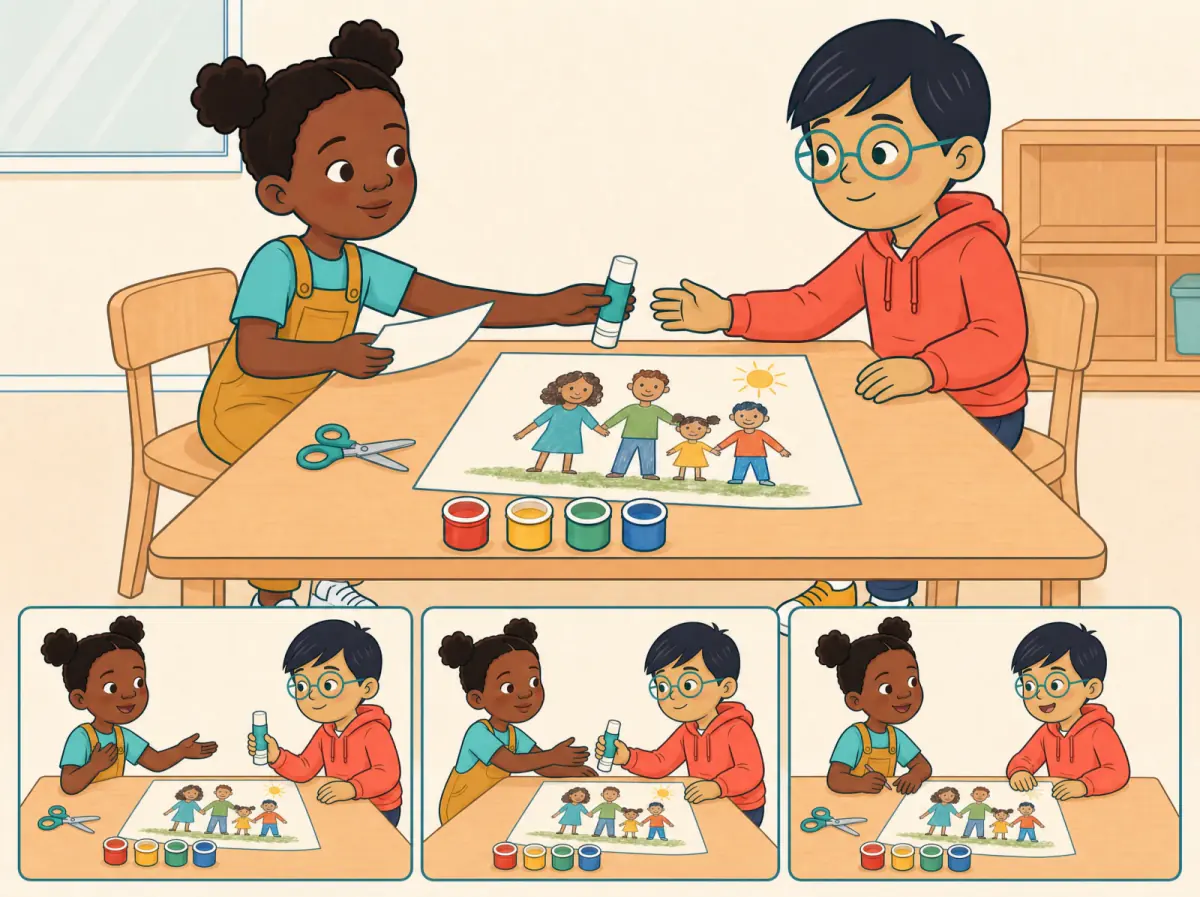
“We need glue.” plans; “Glue, please?” asks one person to hand something over. For a young child, the word plus “please”, said with a rising voice, is polite and natural. In the exchange below, one child asks for the glue, the other passes it, and the thanks get an answer.
“Here you are.” goes with the moment you hand something over. “You’re welcome.” answers “Thank you!”, and children often forget it, so say it yourself every time your child thanks you.
Leo Glue, please?
Nia Here you are.
Leo Thank you!
Nia You're welcome.
Make one picture together
A picture that belongs to both of you gives every request a reason. Choose something simple, like a family portrait or your house. Keep the materials on your side of the table, so your child has to ask, and take turns adding one thing each.
When it is finished, hold it up and name it together, as the two children do below. “Our” means it belongs to both of you; “my” is for a picture your child made alone.
- Your child: “Paper, please?” You: “Here you are.”
- Your child adds a shape, then you ask: “Glue, please?”
- Paint last, so the paper isn’t too wet to glue.
Nia Our family portrait!
Leo Together!
A two-minute passing game
On days without a craft, put the four cards or the real things in front of you. Your child asks for one and you pass it; then swap, so your child gives too.
- Wrong on purpose: pass the paint when your child asked for glue, so they can say “No, glue, please!”
- Offer: hold out the paper and ask “Paper?” Your child answers “Yes, please.” or “No, thank you.”
- Stop after four or five turns, while it is still fun.
Common mistakes and how to help
If your child says “a glue” or “a scissors”, don’t explain the rule; say it back, “Glue! Here you are.”, and carry on.
If your child grabs instead of asking, hold the thing for a second, whisper “Glue…?” and hand it over as soon as they try. Don’t wait for a perfect sentence.
Some mix-ups come from the home language. In Polish and German one word (“proszę”, “bitte”) is used to ask, to give and to answer thanks, so a child may say “Please!” when you thank them. Show the three moments with your hands.
What comes next
Once your child asks, thanks and answers without help, use the exchange at meals (“Water, please?”) and when getting dressed (“Socks, please?”). Family words fit well if your portrait shows real people, and a pretend shop adds numbers and prices to polite asking. The links below show how to start.