
What Are English Numbers? How Are They Written and Read?
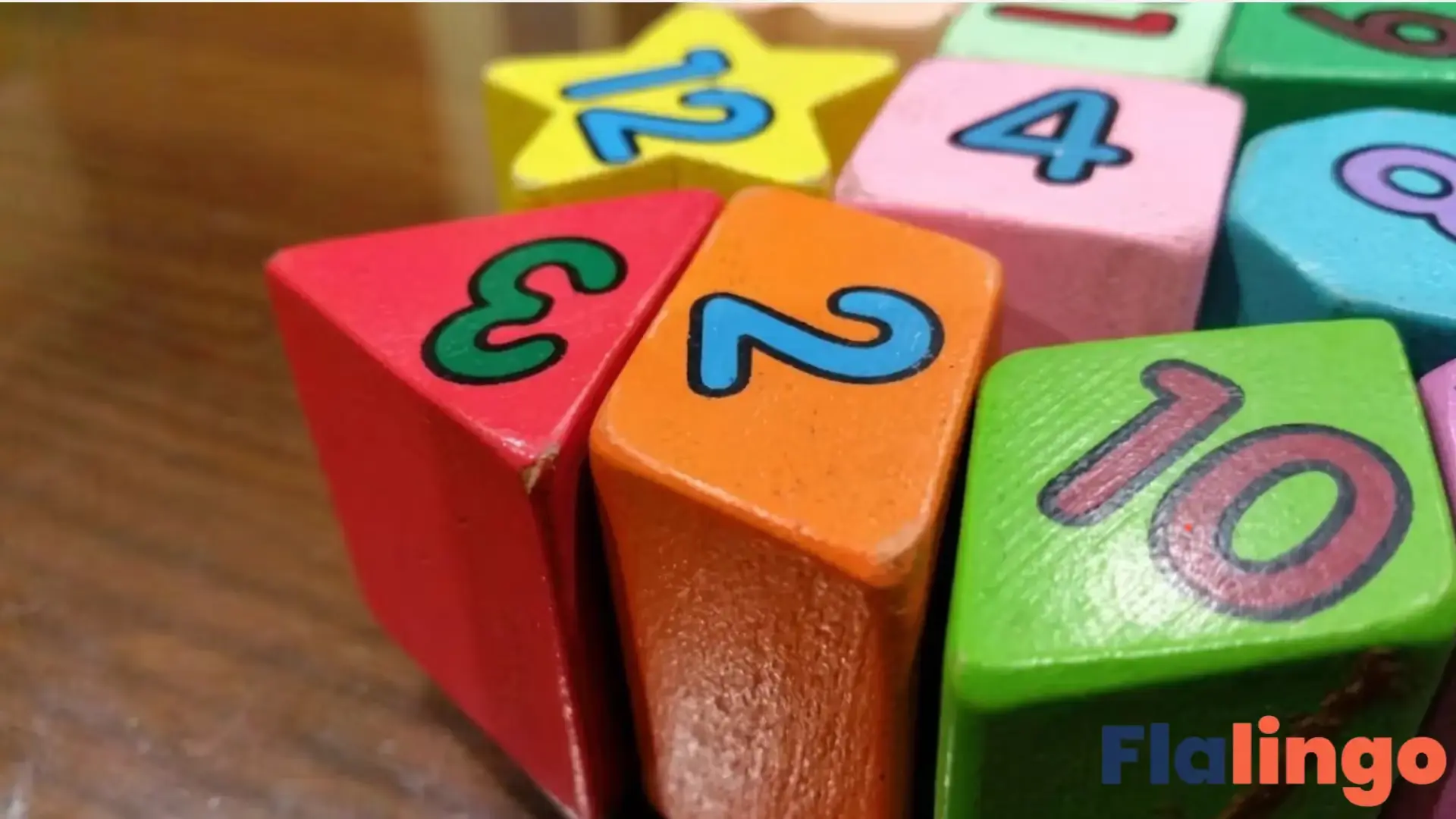
Numbers are one of the most fundamental topics in learning English, appearing in every aspect of daily life—from shopping and making appointments to sharing addresses and phone numbers. English numbers are divided into cardinal numbers (one, two, three) and ordinal numbers (first, second, third). While numbers 1–12 are learned as unique individual words, numbers from 13–19 take the "-teen" suffix, tens from 20–90 end with "-ty", and compound numbers above 20 are connected with a hyphen (e.g., twenty-one). In this guide, you will find the rules for writing, pronouncing, and using English numbers in full detail.
Table of Contents
- What Are English Numbers?
- English Numbers from 1 to 100
- How English Numbers Are Written and Pronounced
- Pronunciation and Stress in English Numbers
- Ordinal Numbers and the "-th" Suffix Rule
- How to Read Years in English
- How to Read Phone Numbers in English
- Decimals, Fractions, Percentages, and Currencies
- Different Ways to Use the Digit Zero ("0")
- Hyphen (-) Usage Rule in Writing
- Distinguishing Between "-teen" and "-ty" Numbers (The Most Common Mistake)
- Frequently Asked Questions
- References
⚠️ Last updated: September 2026
The English number rules, writing and pronunciation standards, and Flalingo educational content in this guide have been reviewed in line with up-to-date linguistic approaches.
What Are English Numbers?
English numbers are the linguistic equivalents of mathematical expressions encountered in everyday life. Essential to both written and spoken communication, numbers form one of the foundational building blocks of the language. Mastering them allows learners to make smoother progress in English. Especially for absolute beginners, learning numbers serves as one of the first stepping stones in language acquisition.
In English, numbers are divided into cardinal numbers (one, two, three) and ordinal numbers (first, second, third). These two types are used in different contexts: cardinal numbers are used for counting quantities, while ordinal numbers are used for ordering or ranking.
If you are taking your first steps in this exciting journey and wondering where to start, you can check out our article titled Flalingo for Absolute Beginners to map out the best roadmap for yourself.
English Numbers from 1 to 100
For most people, the first step in learning English numbers is mastering the range from 1 to 100. Numbers 1 through 20 form the foundational structure, making it much easier to learn the remaining numbers once they are mastered.

English Numbers from 1 to 20:
- 1: One
- 2: Two
- 3: Three
- 4: Four
- 5: Five
- 6: Six
- 7: Seven
- 8: Eight
- 9: Nine
- 10: Ten
- 11: Eleven
- 12: Twelve
- 13: Thirteen
- 14: Fourteen
- 15: Fifteen
- 16: Sixteen
- 17: Seventeen
- 18: Eighteen
- 19: Nineteen
- 20: Twenty
English numbers from 1 to 12 must be learned individually because each has a unique spelling and pronunciation.
Writing and pronouncing numbers after 20 in English is extremely simple. You don't need to memorize 80 different words; the system relies on a single pattern:
Tens + Hyphen (-) + Ones
Example: 20 (twenty) + 1 (one) = 21 (twenty-one)
Example: 50 (fifty) + 8 (eight) = 58 (fifty-eight)
Example: 90 (ninety) + 9 (nine) = 99 (ninety-nine)
Guide to Multiples of Ten
| Number | Word | IPA Equivalent |
| 10 | ten | /ten/ |
| 20 | twenty | /'twen.ti/ |
| 28 | twenty-eight | /ˌtwen.ti'eɪt/ |
| 30 | thirty | /'θɜːr.ti/ |
| 36 | thirty-six | /ˌθɜːr.ti'sɪks/ |
| 40 | forty | /'fɔːr.ti/ |
| 50 | fifty | /'fɪf.ti/ |
| 60 | sixty | /'sɪk.sti/ |
| 70 | seventy | /'sev.ən.ti/ |
| 80 | eighty | /'eɪ.ti/ |
| 90 | ninety | /'naɪn.ti/ |
| 100 | one hundred | /wʌn 'hʌn.drəd/ |
| 1000 | one thousand | /wʌn 'θaʊ.zənd/ |
You can also check out our article titled "What Are the Easiest Ways to Learn English?".
The spelling of these numbers is very regular. For numbers above twenty, the compound numbers are formed by combining the tens and ones. For example, the number 23 is written and pronounced as “twenty-three,” and 35 as “thirty-five.” This same logic continues up to the hundreds place. Ultimately, English numbers from 1 to 100 become much easier as you practice speaking them.

How English Numbers Are Written and Pronounced
There can be subtle differences between how English numbers are written and pronounced. Stress and pronunciation mistakes are especially common when speaking, making correct pronunciation practice essential. One of the most classic examples for learners is the contrast between "thirTEEN" (13) and "THIRty" (30), where placing the stress on the wrong syllable completely changes the number. Mastering this distinction in stress is crucial for clear communication in both listening and speaking.
Spelling and pronunciation rules:
- Numbers from 1 to 12 must be learned individually because they have unique structures compared to the rest.
- Numbers from 13 to 19 take the "-teen" suffix, such as "sixteen" (16) or "eighteen" (18). The emphasis falls on this suffix when pronounced.
- Starting from 20, the multiples of ten (twenty, thirty, forty...) are unique words. To form intermediate numbers between 21 and 99, simply add the ones digit (one, two, three...) directly after the tens word. For example: 30 (thirty) + 4 (four) = 34 (thirty-four).
Pronunciation and Stress in English Numbers
In the schematic below, CAPITAL LETTERS represent the syllable that receives the primary stress.
- How to Pronounce the Unvoiced "TH" (/θ/) SoundThe unvoiced "th" sound, which does not exist in Turkish, is crucial when pronouncing numbers like 3 (three), 13 (thirteen), and 30 (thirty). Pronouncing this sound as a plain "t" or "s" changes the word's meaning—for example, saying tree instead of three.
- Technique: Place the tip of your tongue lightly between your upper and lower front teeth.
- Practice: With your tongue between your teeth, push air outward to create a soft, friction-based sound between an "s" and a "t".
- Pronunciation Breakdown:
- 3 (Three): /θriː/ (breathe out softly with tongue between teeth)
- 13 (Thirteen): /ˌθɜːrˈtiːn/ thir-TEEN
- 30 (Thirty): /ˈθɜːr.ti/ THIR-ty
If you would like to master foundational topics like numbers at your own pace with professional tutors and reach your goals with confidence, you can explore the unique benefits our platform offers in detail through our article, Why Flalingo: Features That Set Flalingo Apart.
Ordinal Numbers and the "-th" Suffix Rule
Ordinal numbers in English are used to express sequence, rank, and dates. The general rule for creating an ordinal number is adding the "-th" suffix to the word. However, the first three numbers are irregular and take their own unique endings:
- 1st: First (-st is added)
- 2nd: Second (-nd is added)
- 3rd: Third (-rd is added)
- 4th: Fourth (the standard "-th" rule begins)
- 5th: Fifth
- 11th, 12th, 13th: Eleventh, Twelfth, Thirteenth (Exception: Even though they end in 1, 2, and 3, teen numbers follow the standard "-th" rule.)
Key Point: For compound numbers, the ordinal suffix is applied only to the final digit—for example, 21st (twenty-first), 42nd (forty-second), or 93rd (ninety-third).
How to Read Years in English
Reading dates and years is one of the most common everyday needs in English. In English, years are usually read by splitting them into two-digit groups:
- 1985: Nineteen eighty-five (19 - 85)
- 1945: Nineteen forty-five (19 - 45)
- 2026: Twenty twenty-six (20 - 26) or Two thousand twenty-six
- 2008: Two thousand and eight (Years between 2000 and 2009 are generally read using the "Two thousand..." pattern.)
How to Read Phone Numbers in English
When giving phone numbers in English, numbers are not grouped into hundreds or tens like in Turkish (e.g., "three hundred sixty-five..."). Each digit is read individually.
- The Number Zero: The digit "0" is usually pronounced as the letter "oh" rather than "zero."
- Repeating Digits: When the same digit appears back-to-back, you can use "double" or "triple."
Example: 505 402 77 11"Five oh five, four oh two, double seven, double one"
Decimals, Fractions, Percentages, and Currencies
Decimals: In English, a period (.) is used instead of the comma used in Turkish, and it is read as "point." Digits after the decimal point are read individually.
- 3.5: Three point five
- 0.75: Zero point seven five (or point seven five)
Fractions: The numerator uses a cardinal number, while the denominator uses an ordinal number.
- 1/2: A half / One half
- 1/4: A quarter / One fourth
- 3/4: Three quarters / Three fourths
Percentages: The word "percent" is added directly after the number.
- 50%: Fifty percent
Currencies: State the main currency first, followed by the sub-unit (often joined by "and" or spoken directly).
- $5.99: Five dollars and ninety-nine cents (or simply "Five ninety-nine" in everyday speech)
Different Ways to Use the Digit Zero ("0")
The digit zero is read in different ways depending on the context:
- Zero: Used in mathematical calculations, temperatures (e.g., 0°C), and general counting.
- Oh: Pronounced like the letter "O" in phone numbers, room/bus numbers, and times (e.g., 04:05 -> four oh five).
- Nil: Represents "zero" in soccer and team sport scores (e.g., 2-0 -> Two-nil).
- Love: Used to express a score of zero in tennis (e.g., 15-0 -> Fifteen-love).
- Nought: A traditional term for zero in British English (UK), especially used before decimals.
Hyphen (-) Usage Rule in Writing
In English, all compound numbers from 21 to 99 must be written with a hyphen (-) between the tens and ones digits. Whole tens (twenty, thirty) or single digits do not take a hyphen.
- Correct Usage: Twenty-one (21), Forty-five (45), Seventy-eight (78), Ninety-nine (99)
- Incorrect Usage: Twenty one, Forty five
Note: In numbers in the hundreds or thousands, the hyphen rule still only applies to the final compound numbers between 21 and 99 (e.g., Two hundred and twenty-five).
Distinguishing Between "-teen" and "-ty" Numbers (The Most Common Mistake)
One of the most common pitfalls for English learners is distinguishing between the numbers 13–19 (-teen) and the multiples of ten from 30–90 (-ty). While words like thirteen (13) and thirty (30) sound very similar, they differ in two main ways:Syllable Stress
- Numbers 13–19 (-teen): The stress is always on the final syllable. You need to raise your pitch and stretch the ending sound.Examples: thir-TEEN, four-TEEN, fif-TEEN
- Examples: thir-TEEN, four-TEEN, fif-TEEN
- Numbers 30–90 (-ty): The stress is always on the first syllable. The ending is read quickly and softly.Examples: THIR-ty, FOR-ty, FIF-ty
- Examples: THIR-ty, FOR-ty, FIF-ty
Ending Sound
- The "-teen" suffix ends with a distinct, elongated "n" sound (-een).
- The "-ty" suffix ends with a short, crisp "i" sound (-tee).
To express yourself more comfortably with foundational patterns as you advance your language skills, feel free to check out our guide on introducing yourself in English for more detailed examples.
Frequently Asked Questions
How do you tell the difference between 13 (thirteen) and 30 (thirty)?
The main difference lies in stress and the ending sound. When saying 13 (thirteen), the stress is on the final syllable (thir-TEEN) and ends with a clear "n" sound. For 30 (thirty), the stress is on the first syllable (THIR-ty) and ends with a short "i" sound.
How are years read in English?
Years are generally read by breaking them into two-digit pairs. For example, 1985 is read as "nineteen eighty-five," and 2026 is read as "twenty twenty-six." For years between 2000 and 2009, the "two thousand..." pattern is usually preferred (e.g., 2008 = two thousand and eight).
How do you say a phone number in English?
Unlike Turkish, phone numbers are not grouped into hundreds or tens; each digit is read individually. When two identical numbers appear side by side, the word "double" can be used (e.g., 77 = double seven).
Why is zero read as "oh" in English?
In phone numbers, times, and room numbers, the digit zero ("0") is pronounced as "oh" in daily speech because it resembles the letter "O" and is faster to say than "zero."
References
- • Cambridge University Press. (n.d.). Numbers in English. Cambridge Dictionary.
Other content that may interest you




As an ESL educator of 5+ years, I am a guide for students and parents. I simplify complex English topics and online course selection for you. My goal is to help you turn learning from a stressful task into an enjoyable adventure.
English with Flalingo

Learning English with Flalingo means progressing with an intelligent system that works in an integrated manner.