
Can English Be Learned Through Play? The Fun-Filled World of Flalingo Kids
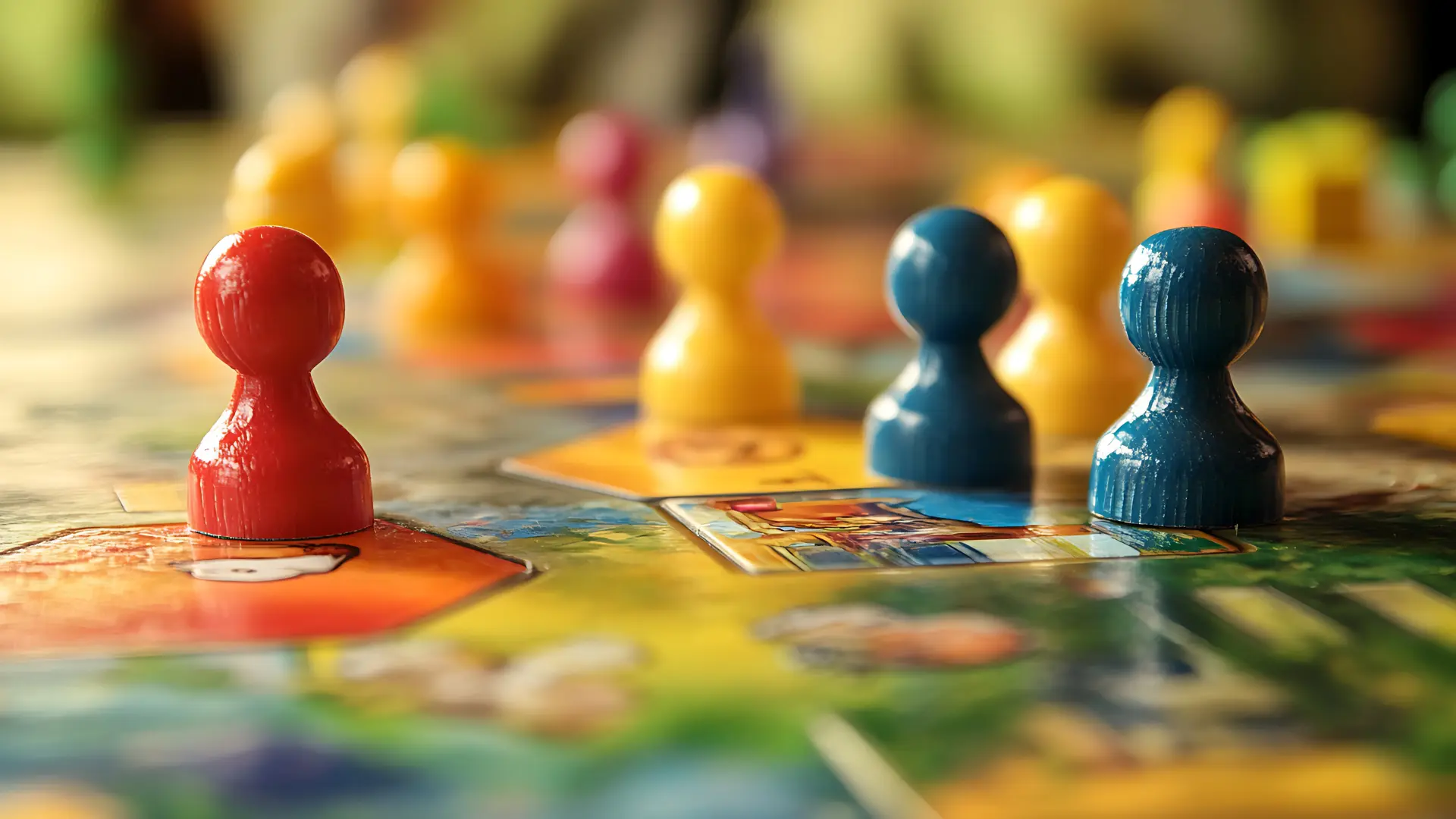
Why Does the Phrase "Time to Study" Scare Children?
As a parent, you have likely noticed how your child's expression changes the moment you say, "Right, it is time to study!" These words often signify an obligation, a tedious task, and the end of playtime.
Framing the learning process as a "chore" in this manner builds an invisible wall in front of children. Traditional, rigid, and one-way teaching methods stifle a child's natural sense of curiosity and their desire to explore. This situation remains the greatest psychological barrier, particularly in fields like language learning that require active participation.
The core philosophy of Flalingo Kids is specifically designed to dismantle this barrier. We transform learning from a duty into a joyful activity where the child takes centre stage. Our goal is to shift the focus from passively listening to a teacher to a process where the child actively speaks, participates, and produces. So, is making learning fun merely a wish? No. Behind this approach lie proven scientific and pedagogical principles that maximise your child's potential.
What is Gamification in Education?
To understand the success of Flalingo Kids and why children love their lessons so much, we must first understand one of the most powerful concepts in modern education: "Gamification". This concept forms our platform's pedagogical foundation and reshapes the learning process from start to finish.
What exactly is Gamification in Education? In its simplest form, gamification is the art of integrating game dynamics that children love—such as collecting points, levelling up, completing challenges, and earning rewards—into a serious educational curriculum like Oxford University Press. This does not mean turning lessons entirely into a computer game. On the contrary, it is about using game mechanics as a powerful tool within a structured curriculum to increase a child's motivation and engagement.
What is its purpose? The primary goal of gamification is to make the learning process itself enjoyable and rewarding. A child joins the lesson not because they "have to study," but out of an intrinsic curiosity and a desire to achieve—whether that is moving to the next level, discovering the next story, or receiving praise from their teacher. This natural motivation increases attention spans, ensures information is more easily absorbed, and most importantly, guarantees that what is learned remains permanent.
This proven theory comes to life at Flalingo Kids through three fundamental elements: Oxford materials that are as academic as they are fun, a dedicated tutor model that fosters trust and personalises progress, and FLAI AI reports that transform every step into a tangible success.
Flalingo Kids: Tools for Fun and Success
Flalingo Kids creates an effective and enjoyable learning ecosystem by combining pedagogical expertise with modern technology. Our platform comprises several core components that ensure your child does not just learn English, but truly enjoys the process. In this section, we will examine the professional tools and methods that sustain this system in detail.
Oxford University Press Materials: The Power Behind the Fun
At the heart of every lesson and activity at Flalingo lies a pedagogically proven curriculum prepared by Oxford University Press (OUP), a global leader in education. This means that "fun" on our platform is never without a purpose. Unlike competitors such as Cambly or Open English, who often use "general conversation-oriented practice materials" instead of globally recognised curricula, Flalingo’s structured OUP curriculum represents our most significant advantage.
- Structured Progression: Every game, song, or interactive activity serves a specific educational goal. Thanks to OUP materials, your child embarks on a systematic journey from A1 level all the way to C2.
- Interactive and Vibrant Content: These materials are not static PDFs or boring textbook pages. With interactive and animated content where characters come to life and stories unfold, lessons become a visual feast. This keeps your child’s attention sharp throughout the session.
The Teacher Factor: A Secure Journey with Certified and Consistent Tutors
Regardless of technological advancements, nothing can replace a good teacher in a child’s learning journey. Flalingo Kids is fully aware of this reality.
- Professional Educators: All teachers on our platform are professionals holding internationally recognised certifications such as TESOL and CELTA. This ensures they do not just speak English but are specifically trained in how to teach the language effectively to children.
- Continuity and Trust: One of our most vital features is that your child can continue with the same tutor throughout their entire educational process. As various sources indicate, it is nearly impossible to maintain continuity with the same tutors on platforms like Cambly and Open English. Instead of facing a different face in every lesson, your child gets to know their teacher over time, builds trust, and feels comfortable. This strong bond allows the tutor to deeply understand your child’s strengths, weaknesses, interests, and learning style, making the lessons entirely bespoke.
FLAI (AI Coach): Visualising Progress Through Concrete Data
The most innovative tool at Flalingo is FLAI, our AI coach that bridges the gap between human expertise and technology. Following every lesson, FLAI analyses the session recording to generate a detailed progress report accessible to both the child and the parent.
In the interest of full transparency, we would like to note that FLAI is still in its developmental phase and is currently operating in its beta version. Occasionally, the English level identified in the report may differ slightly from the tutor's assessment. We view this not as a flaw, but as an integral part of a transparent development process.
This honest approach allows us to establish a strong bond of trust with parents. These reports transform the learning process from an abstract concept into tangible data:
- Speech Analysis: Who spoke more during the lesson? Is the student's speaking time increasing?
- Vocabulary Usage: How many unique words did your child use, and what was their proficiency level?
- Error Detection: It identifies specific grammatical or pronunciation errors and provides the correct forms.
- Homework and Recommendations: It offers personalised exercises and advice targeting areas that require further development.
Thanks to FLAI, while your child experiences a tangible sense of achievement, you, as a parent, can track the return on your investment through clear, data-driven reports.
Comparison: Passive Screen Time (YouTube) vs. Active Screen Time (Flalingo Kids)
Screen time is undoubtedly one of the greatest concerns for modern parents. However, not all screen time is created equal. What matters most is what the child is actually doing in front of the screen. As many of us have experienced, trying to learn English through unstructured methods leads to such fragmented learning that we end up with a rather confused foundation in the language.
Passive screen consumption feeds exactly into this disjointed learning model. Flalingo Kids, on the other hand, transforms passive screen time into a productive and active learning experience that eliminates this lack of structure. In passive screen experiences, such as watching cartoons on YouTube, the child is merely a spectator. They receive information one way and do not engage in any interaction.
In the active screen experience provided by Flalingo Kids, the child is the protagonist of the story. The one-to-one lesson format requires the child to speak continuously, answer questions, and interact directly with both the tutor and the materials. This shifts the brain from passive mode into active learning mode.
The following table clearly summarises the fundamental differences between these İki approaches:
This active participation ensures that your child does not simply memorise words, but instead develops the ability to use the language with genuine confidence.
The Flalingo Kids Experience: A Parent’s Perspective
Beyond theoretical information, the most valuable feedback undoubtedly comes from the parents who experience our platform firsthand. Here is just one example:
"My son used to cry at the mention of an English lesson, but now, when the Flalingo session ends, he asks, 'Can I play with my teacher a bit longer?' He doesn't think he's studying; he thinks he's just playing a game!"
— Berna K. — Mother of a 5 year old
To read about the experiences and success stories of other families, you can visit our Flalingo Reviews page.
Your Child Will Look Forward to Every Lesson
As you can see, when the right methods are applied, learning is no longer a chore; it can become the most enjoyable moment of the day. Flalingo Kids eliminates the sharp line between "studying" and "playing".
Our aim is not to eliminate screen time entirely, but to transform it into one of the most valuable investments in your child’s future. Thanks to our gamification methodology, supported by the guidance of professional tutors, the structured Oxford University Press curriculum, and data-driven feedback from FLAI, your child will internalise English with enjoyment, without even realising they are learning.
Experience for yourself how learning can become the favourite part of your child’s day.
Frequently Asked Questions (FAQ)
What educational materials are used at Flalingo Kids?
Flalingo Kids utilises interactive and engaging educational materials developed by the world-renowned Oxford University Press in all lessons. This ensures that the content is both captivating and pedagogically sound.
Will my child work with a different teacher in every lesson?
No. One of the most significant advantages of Flalingo Kids is that your child can continue with the same tutor throughout their educational journey. This helps to build a strong bond of trust between the teacher and student, thereby increasing learning efficiency.
Does gamification reduce the academic seriousness of the lesson?
Absolutely not. Gamification is a method used to make serious and structured educational content more engaging and memorable. Fun is simply a tool used to achieve specific learning objectives.
Sources

As an ESL educator of 5+ years, I am a guide for students and parents. I simplify complex English topics and online course selection for you. My goal is to help you turn learning from a stressful task into an enjoyable adventure.
English with Flalingo

Learning English with Flalingo means progressing with an intelligent system that works in an integrated manner.