
Best 8 Online English Courses for Kids Ages 7–9

Ask any primary school teacher what happens to a child’s relationship with language between ages seven and nine, and you will hear the same thing. They stop repeating and start reasoning. They want to know the rules. They test them, break them, and remember the ones that made sense. Vygotsky called this the Zone of Proximal Development: the range where a child can accomplish more with guided help than they ever could sitting alone with a textbook. For English, this is the age band where real acceleration happens, if the conditions are right.
Get those conditions wrong at seven, eight, or nine, and you do not just waste time. You risk something harder to fix. A child who spends a year in poorly matched online English classes does not stay neutral. They form an opinion about whether English is something they can do. And once that opinion hardens, reversing it takes far more effort than building it right in the first place.
We analysed eight online English platforms against the specific needs of primary school learners in the 7–9 age range. Here is what we measured:
- Same-teacher consistency: Does the child work with one familiar adult, or rotate through strangers?
- Syllabus progression: Is there a mapped route from A1 to A2 on the CEFR scale, or are lessons improvised week to week?
- Instructor qualifications: Are the teachers trained to work with primary-age learners specifically, or hired on accent alone?
- Post-lesson reporting: Can a parent see, in concrete terms, what their child practised and how they performed?
- Active speaking time: Does the lesson push the child to produce language, or just absorb it?
- Practical considerations: Trial availability, refund policies, billing clarity, and scheduling around school hours.
We deliberately chose platforms with different models. Budget-friendly high-frequency options sit next to premium native-speaker programmes. Marketplace-style platforms sit next to tightly curated ecosystems. The goal is not to declare one platform the answer for every family. It is to make the trade-offs visible so each parent can pick the combination that matches the child sitting across the breakfast table.
Table of Contents
- Quick Comparison Table
- #1 Flalingo Kids: Best overall for ages 7-9
- #2 51Talk: Best for high-frequency English exposure
- #3 Novakid: Best for CEFR-driven European families
- #4 Cambly Kids: Best for flexible native exposure
- #5 Preply Kids: Best for parents who want full tutor control
- #6 VIPKid: Best for parents who want North-American teachers
- #7 LingoAce: Best for multi-subject families in Asia-Pacific
- #8 GoStudent: Best for European families wanting subscription tutoring
- Oxford Primary curriculum aligned to CEFR A1–A2 with structured grammar and vocabulary progression
- 25-minute one-to-one lessons matched to the attention span of a 7–9 year old
- Rigorous teacher selection: only 1 in 73 applicants is accepted onto the platform
- Fixed teacher model with a 90%+ same-teacher booking rate
- Smart Match algorithm pairs each child with a teacher based on interests, learning pace, and personality fit
- FLAI AI Coach with real-time lesson analysis
- FLAI Parent Report showing measurable weekly progress
- FLAI child-safety monitoring, with quality team alerts for any inappropriate content
- Flomework personalised post-lesson exercises that target each child’s actual mistakes
- Pedagogical English games at games.flalingo.com built for age-7–9 vocabulary and grammar
- Free child-specific level assessment at start.flalingo.com before parents commit
- 30-day unconditional refund policy
- No automatic subscription renewal and no billing surprises
- High-frequency model with 3–5 lessons per week is financially achievable for most families
- Animated gamified classroom built for primary-age learners
- Lesson recordings available for parent review
- Large teacher pool with flexible scheduling across time zones
- Structured proprietary curriculum
- Teacher-written progress notes provided periodically
- CEFR-aligned syllabus calibrated for Pre-A1 through A2 young learners
- Gamified virtual classroom designed for primary-age children
- Two-tier teacher choice: native or near-native
- Structured progress tracking with visible milestone markers
- Lesson recordings available for parent review
- Established presence across European markets
- Native-speaker tutors from English-speaking countries
- A large and diverse tutor network featuring a variety of accents, teaching styles, and personalities
- Flexible, on-demand scheduling without the need for fixed weekly time slots
- Lesson recordings available for parents to review after sessions
- Marketplace model with thousands of tutors at every price point
- Full control over teacher selection, booking, and lesson content
- Verified reviews and ratings from other parents
- Trial lesson available before committing
- Consistent weekly booking once a preferred tutor is found
- Native English teachers based in the United States and Canada
- 25-minute one-to-one lessons with built-in feedback time
- Proprietary research-based curriculum developed over a decade
- Pre-class preview videos and post-class review materials
- Fixed teacher option available with consistent booking
- Multi-subject capability covering English, Mandarin, and Mathematics
- Native-speaker teachers trained in Asia-Pacific pedagogy
- Fixed teacher assignment with consistent continuity
- Polished classroom interface with strong production quality
- Structured progression with clear content milestones
- Subscription-based pairing with a fixed weekly tutor
- CEFR-trained tutors across multiple European languages
- Multi-subject portfolio beyond English
- Established presence across European markets
- Lesson insight reports
Quick Comparison Table
#1 Flalingo Kids: Best overall for ages 7-9
Most online English platforms treat the 7–9 age band as a lighter version of their adult product. Shorter sessions, brighter colours, the same basic approach. Flalingo Kids took a different route. The entire experience is engineered around how a primary-age brain actually processes and retains a second language, and that difference is visible from the first session.
Each lesson runs 25 or 50 minutes, one teacher to one child, and that teacher stays the same week after week. For a seven or eight-year-old, the adult on the other end of the screen is either someone they trust or someone they perform for. Trust leads to risk-taking, which leads to speaking. Performance leads to silence. Flalingo Kids reports a 90%+ rate of children continuing with the same teacher across their entire enrolment, and the impact on spoken output is measurable.
The academic backbone is Oxford Primary, calibrated to CEFR A1 through A2. Children work through grammar milestones (present simple, present continuous, irregular past tenses), build vocabulary through stories and visual activities, and practise reading and writing in age-appropriate formats. The lesson has a defined objective every session, but it never feels like homework. Songs, short stories, and gamified elements carry the weight so the child stays engaged rather than compliant.
The real differentiator at this age is what happens after the lesson ends. The FLAI AI Coach processes the entire session and sends parents a detailed breakdown. Not a generic “great job today” note. Specific, measurable information: your child used three new verb tenses correctly this week; fluency improved by 12% compared to last month; hesitations dropped by a third. That kind of data changes how a parent talks about English at home, and it gives the teacher a precise map for the next session.
Key features
Price
Packages run approximately $40–$130 per month, depending on lesson frequency and package length. A trial lesson is available. There is no auto-renewal, so the plan does not roll over unless you actively choose to continue.
Prices last checked: May 2026. Always verify current packages on the platform’s website before purchasing.
Best for
Flalingo Kids fits parents who want their 7–9-year-olds to make visible, measurable progress with an Oxford-backed curriculum and a teacher who stays the same week after week. It works particularly well for children who already know some English from school and need a structured way to move from passive understanding to active speaking. The FLAI report gives parents the kind of weekly data most platforms do not offer at this age, which makes the choice easier to justify when comparing the cost of premium native teaching against cheaper alternatives. It is also the right choice for families who care about safeguarding. The AI safety monitoring is on every session is rare in this category.
#2 51Talk: Best for high-frequency English exposure
51Talk’s argument is simple and, at this age, partially correct. A child who hears English five times a week will absorb more than a child who hears it twice, even if the lessons are slightly less polished. Between ages seven and nine, repetition genuinely is one of the mechanisms by which language sticks. For families on a tight budget who want their child to spend real time in English every day, 51Talk is a serious option.
The trade-off is teacher background. 51Talk’s instructors are predominantly Filipino ESL professionals. They are well-trained, communicative, and reliable, but they are not native speakers. At earlier ages this matters more. By age seven to nine, with phonemic foundations mostly in place, the impact is reduced but not eliminated. Children who learn primarily from non-native models often need correction later for specific pronunciation patterns. If you are pairing 51Talk with a more curriculum-driven platform, this is less of a concern. If 51Talk is the only source, go in knowing the trade.
The classroom interface is genuinely good for primary children. Animated, gamified, with reward points and badges that map well onto a seven-year-old’s motivation system. Scheduling is flexible across multiple time zones, and recordings are available so parents can review what happened in any given lesson.
Key features
Price
Approximately $40–$100 per month, depending on lesson frequency and package length. This is the most affordable live-teacher option on the list for families who want multiple lessons per week.
Prices last checked: May 2026. Always verify current packages on the platform’s website before purchasing.
Best for
Families who prioritise daily exposure above premium teacher quality, or those pairing 51Talk with a more structured platform and using it for affordable reinforcement. Also a good fit for parents who are comfortable with non-native teaching at this age and primarily want their child to build speaking confidence and rhythm before worrying about phonemic precision.
What People Are Saying
User reviews can offer helpful insights when evaluating online language learning platforms, but they should also be considered with caution.
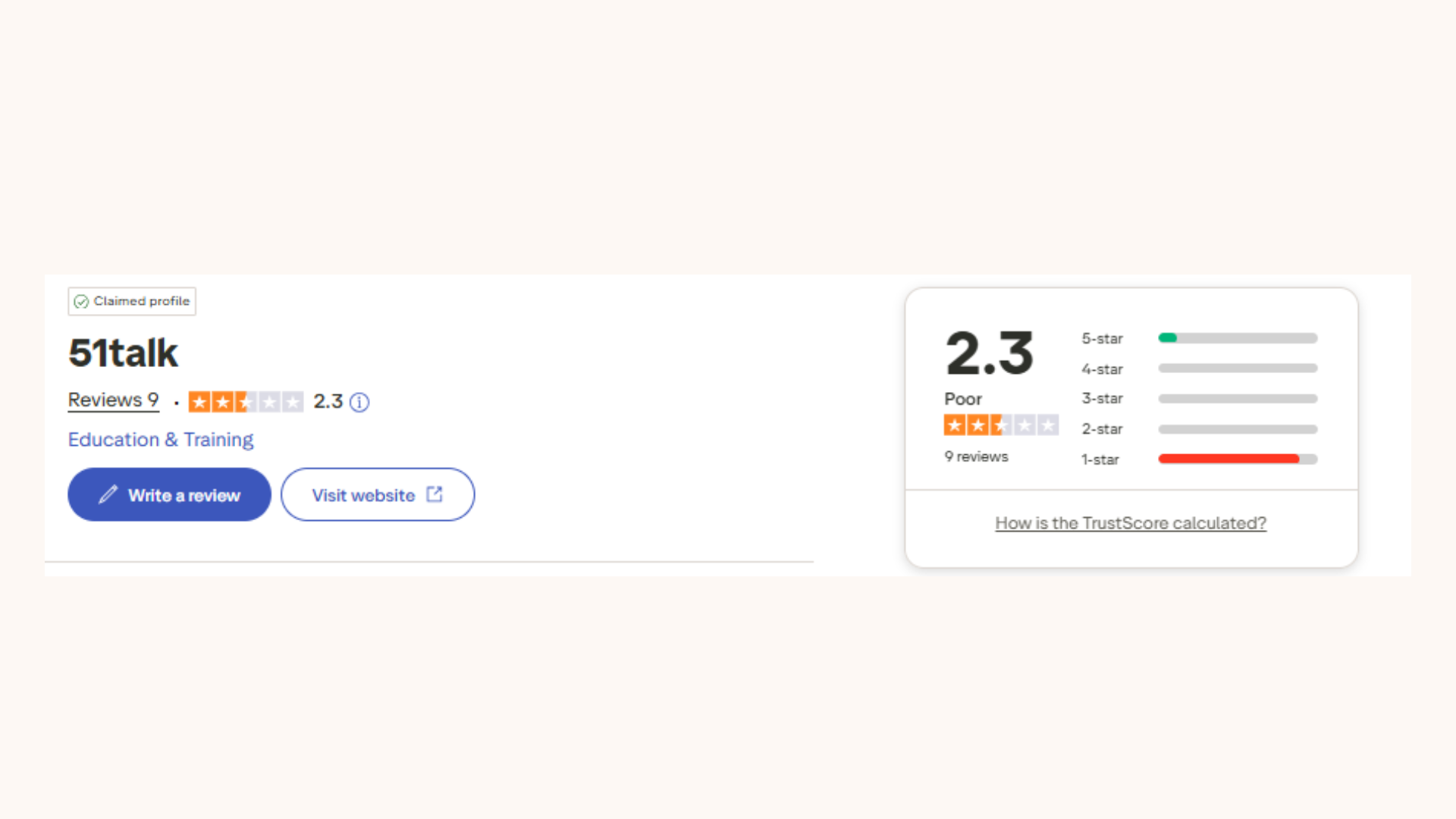
Currently, 51Talk has a 2.3 rating on Trustpilot based on only 9 reviews. Since the number of reviews is still very small, it may be too early to draw a fully reliable conclusion from the rating alone. If you would like to explore the feedback yourself, you can read the reviews here: 51Talk Trustpilot
#3 Novakid: Best for CEFR-driven European families
Novakid built its brand around a gamified virtual classroom designed specifically for children, and that design genuinely helps in the 7–9 age band. Vocabulary arrives as quests. Grammar presents challenges to complete. A child who finds straightforward video-call formats a bit flat tends to engage more readily with Novakid’s space-adventure interface.
The teacher model is tiered. Native English-speaking teachers cost more. Near-native teachers, often qualified educators from Eastern Europe, are more affordable. The choice is genuine, but matters more at this age than at the teenage stage. Children between seven and nine are still actively absorbing pronunciation models, so the difference between a native and near-native teacher shows up in subtle ways later. Parents who choose the cheaper tier for cost reasons should be aware of the trade.
Key features
Price
Approximately $80–$175 per month, varying by teacher tier and package length. Native-speaker packages sit at the higher end of the range.
Prices last checked: May 2026. Always verify current packages on the platform’s website before purchasing.
Best for
European families who want CEFR-anchored progress they can point to in parent-teacher conversations, and primary school children who respond well to game-style reward systems. Less ideal for families who want consistent native input throughout the experience or detailed post-lesson visibility into what was practised.
#4 Cambly Kids: Best for flexible native exposure
Cambly Kids connects children with native English-speaking tutors based largely in the United States, Canada, the United Kingdom, and Australia. For exposure to real native pronunciation and a wide range of accents, the platform delivers. On-demand booking means a parent can schedule a session in minutes when the child is in the mood, which is sometimes the difference between a productive lesson and a reluctant one at this age.
The structural weakness is the absence of an enforced curriculum. Cambly Kids does not require its tutors to follow a standardised pedagogical framework, which means lesson quality and progression vary considerably between tutors.
Parents need to find a tutor who suits their child, book the same person consistently, and work around their availability. For families with the time and patience to do this well, Cambly Kids works. For families wanting a curated experience out of the box, it is harder.
Key features
Price
Approximately $99–$199 per month depending on lesson frequency and package tier. This puts Cambly Kids at the higher end of the range while offering less structural consistency than the top-ranked platforms.
Prices last checked: May 2026. Always verify current packages on the platform’s website before purchasing.
Best for
Families looking for supplemental native-speaker conversation practice on a flexible schedule, used alongside a curriculum-based platform for structural learning.
#5 Preply Kids: Best for parents who want full tutor control
Preply Kids is a marketplace, and parents search across thousands of tutors, filter by background, price, availability, and reviews, and book directly. The advantage is range. From certified primary teachers with twenty years of classroom experience to graduate students offering affordable conversation practice, the pool covers every imaginable combination. For families who enjoy the search and want full control over who teaches their child, no other platform offers the same depth of choice.
Each tutor decides their own curriculum. That gives families the option to find someone running a structured Oxford-aligned programme, but it also means quality control falls entirely on the parent. Families who do this well get a tailored experience at a competitive cost.
Key features
Price
$40–$250 or more per month depending entirely on the tutors selected and booking frequency. Community tutors sit at the lower end. Certified primary teachers with strong track records cost more.
Prices last checked: May 2026. Always verify current packages on the platform’s website before purchasing.
Best for
Parents who want maximum flexibility and are willing to invest time vetting tutors with specific primary-education experience. Strong for families who already know what they want from a lesson and just need a way to find and book it.
#6 VIPKid: Best for parents who want North-American teachers
VIPKid is one of the most established online English platforms for primary school children, with a teacher base concentrated in the United States and Canada. For families who specifically want their child to learn from North-American native speakers with elementary teaching credentials, VIPKid was built for exactly that. The curriculum is proprietary and structured, with research-backed lesson planning developed over close to a decade.
Lessons are 25 minutes, with five minutes of active feedback built in, and the format is generally well-suited to seven to nine-year-olds. Pre-class videos prepare the child for what they will learn, lessons are interactive with songs and games, and post-class review materials reinforce the content. The model has matured significantly since its early years.
Key features
Price
Approximately $70–$200 per month depending on package size. VIPKid sits at the higher end for families outside Asia.
Prices last checked: May 2026. Always verify current packages on the platform’s website before purchasing.
Best for
Families who specifically want North-American native teachers with elementary school credentials and are happy to work around time-zone cones.
What People Are Saying
User reviews can be useful when assessing online language learning platforms, but they should always be interpreted with caution.
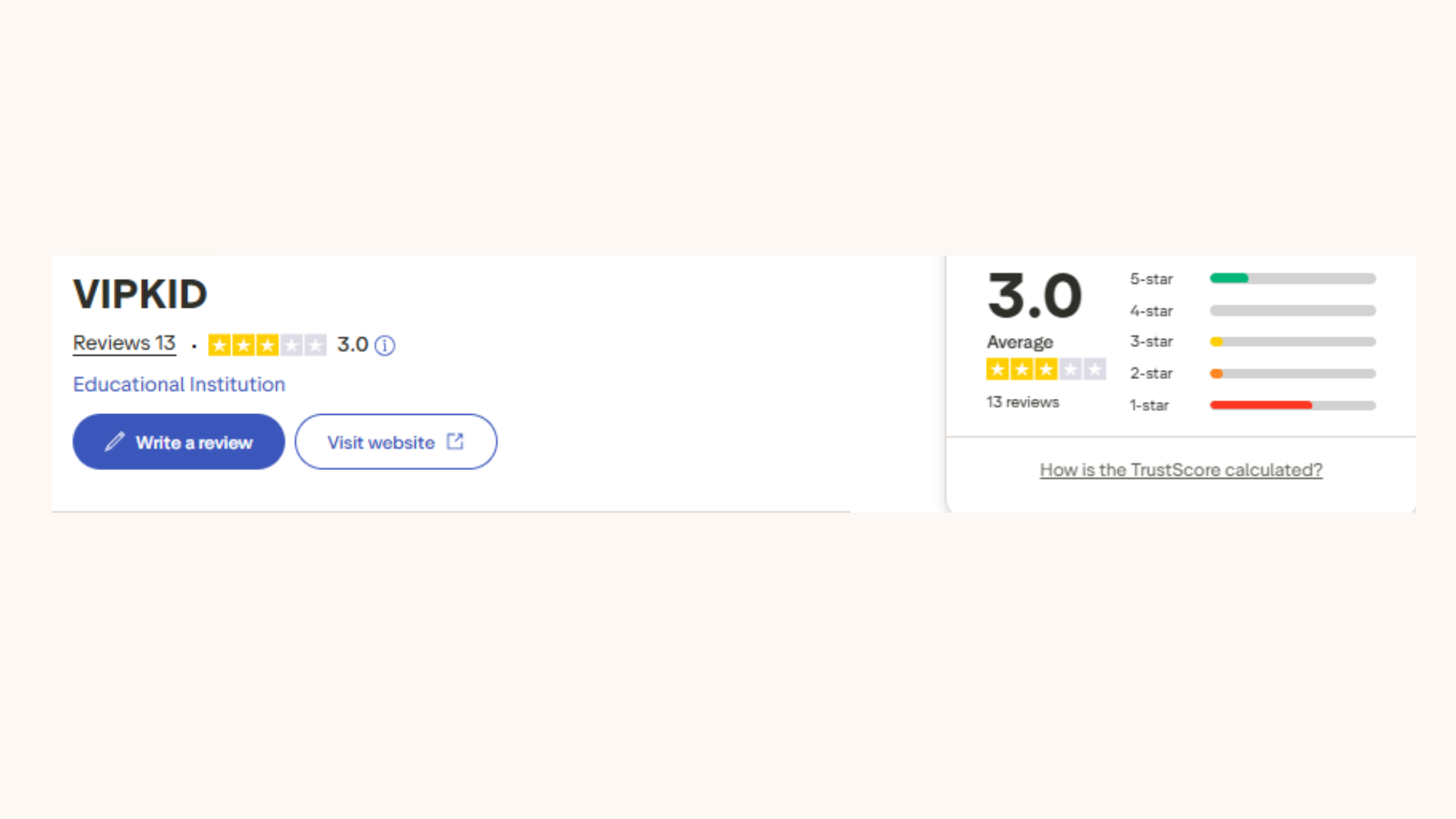
VIPKid currently has a 3 out of 5 rating on Trustpilot based on only 13 reviews. Since the number of reviews is still quite small, it is difficult to draw a fully reliable conclusion from this rating alone; a broader set of feedback would be needed for a clearer picture.
If you want to explore the feedback in more detail, you can read the reviews here: VIPKID Trustpilot
#7 LingoAce: Best for multi-subject families in Asia-Pacific
LingoAce is a Singapore-based multidisciplinary platform that teaches English alongside Mandarin and Mathematics. For families who want academic enrichment for their primary-age child across more than one subject, the integrated approach can simplify scheduling and billing. For English specifically, LingoAce delivers a structured curriculum with certified teachers and incorporates storytelling and project-based elements that work well for the 7–9 age band.
The platform’s strongest market is Asia-Pacific, particularly Singapore and Hong Kong. Teachers are trained in pedagogical traditions that lean academic rather than play-based, which suits some families and not others. Western parents accustomed to play-based primary pedagogy sometimes find the curriculum dense for a seven-year-old. Asian families used to a more structured approach often find it fits well.
Key features
Price
Approximately $80–$250 per month depending on package and frequency. This sits in the mid-to-high range and reflects the structured, content-rich curriculum.
Prices last checked: May 2026. Always verify current packages on the platform’s website before purchasing.
Best for
Families in Asia-Pacific who want English to function as one part of broader academic enrichment, particularly those already engaged with content topics in Mandarin or Mathematics. Strong for primary children who can handle a denser curriculum and respond well to structured academic English.
#8 GoStudent: Best for European families wanting subscription tutoring
GoStudent is a Vienna-based subscription tutoring platform that grew rapidly across Europe. For English specifically, it offers one-to-one online lessons with CEFR-trained tutors as part of a broader subject portfolio that includes mathematics, sciences, and other languages. The model is built around monthly subscriptions tied to a specific tutor, which is a useful feature for the 7–9 age band where continuity matters.
The advantage at primary school age is structural. A child is paired with one tutor, sees that tutor every week at the same time, and follows a progression their tutor maps out.
Key features
Price
Approximately €80–€430 per month, typically tied to longer subscription terms. Exact pricing varies significantly by country and package size.
Prices last checked: May 2026. Always verify current packages on the platform’s website before purchasing.
Best for
European families who want tutoring across several subjects under one subscription, with a fixed tutor for their 7–9 year old’s English lessons. A reasonable choice for families already covering Mathematics or German with GoStudent who want to add English.
The platforms above deliver the five essentials in very different combinations. Flalingo Kids is the only one in this comparison that delivers all five at once, which is why it sits at the top of the ranking. But the right question for any parent is not which platform scored highest. It is which combination of features fits the child you have right now. A high-frequency budget option may be the better choice for a child who needs daily exposure more than premium pedagogy. A flexible native-speaker platform may be the better fit for a child whose schedule does not allow consistent weekly slots. The CEFR framework gives you a way to compare apples to apples across all of them.
For age-specific recommendations, you can also explore our expert-tested rankings for kids ages 3-6 and also ages 10–12.
Frequently asked questions
How many English lessons per week should a 7–9 year old have?
Two to three live lessons per week is the sweet spot for most primary school children. Frequent enough to build vocabulary retention and a real routine, infrequent enough that English stays a positive experience rather than another homework load. Some children thrive on higher-frequency models if the teacher relationship is strong and the lessons are short.
Does my child need a native English-speaking teacher at this age?
Native or near-native phonemic input still matters at this age, though less than between three and six. By age seven to nine, foundational sounds are mostly in place, but children continue to absorb pronunciation patterns. Where the budget allows, native teaching at this stage tends to produce cleaner long-term outcomes.
What CEFR level should a 7–9 year old be working toward?
Most 7–9 year olds are working somewhere between Pre-A1 and A2 on the Common European Framework. By the end of this age band, a strong learner with consistent practice can be at A1 or moving toward A2, which corresponds roughly to Cambridge Movers and Flyers levels. Progress varies significantly based on hours of exposure, teacher quality, and the child’s individual readiness.
How long should an online English lesson be for a primary school child?
25 minutes is the sweet spot for 7–9 year olds. Long enough to introduce, practise, and consolidate one or two language objectives. Short enough to stay inside the attention window after a full school day. Lessons longer than 30 minutes at this age tend to lose effectiveness in the final third, not because the child gets bored but because cognitive load exceeds capacity.
Should I sit in on my child’s online English lessons?
Most experienced primary teachers will tell you no. A watching parent often becomes the performance audience, which redirects the child’s attention away from the teacher and reduces the willingness to take linguistic risks. A better approach is to choose a platform with structured post-lesson reporting so you have visibility into what was practised without pulling focus from the lesson itself.
What is the best online English course for primary school kids who already learn English at school?
For children already exposed to English at school, the most useful supplement is a programme that prioritises one-to-one speaking practice with a fixed teacher and a structured progression. School English tends to be group-based and grammar-heavy. A 25-minute one-to-one lesson lets the child actually produce language, which is the missing piece.
How do I know if an online English platform is genuinely working for my child?
The single best indicator is whether your child speaks more freely in English than they did three months ago, not how many words they recognise. Recognition and production are different skills. If your child is happy to attend lessons, attempts unfamiliar words without freezing, and speaks unprompted at home occasionally, the platform is working. If after three months your child still resists lessons or refuses to speak, the format or the teacher is the wrong fit, not the language.
Other content that may interest you


Hi, I'm Glory. Teaching English is one of the most rewarding experiences of my life as I get to meet people from different cultures and help them express themselves with confidence. At Flalingo, I take care to create pleasant and relaxed teaching environments where students can speak without fear of making mistakes. My greatest happiness is witnessing the moments when my students realise that they are really making progress.
English with Flalingo

Learning English with Flalingo means progressing with an intelligent system that works in an integrated manner.