

Przejdź do treści
Flalingo

Ćwiczenia z angielskiego

Some, any, much czy many? Krótka propozycja po angielsku w sprawie szkolnego jedzenia (A2 Key, Part 6)

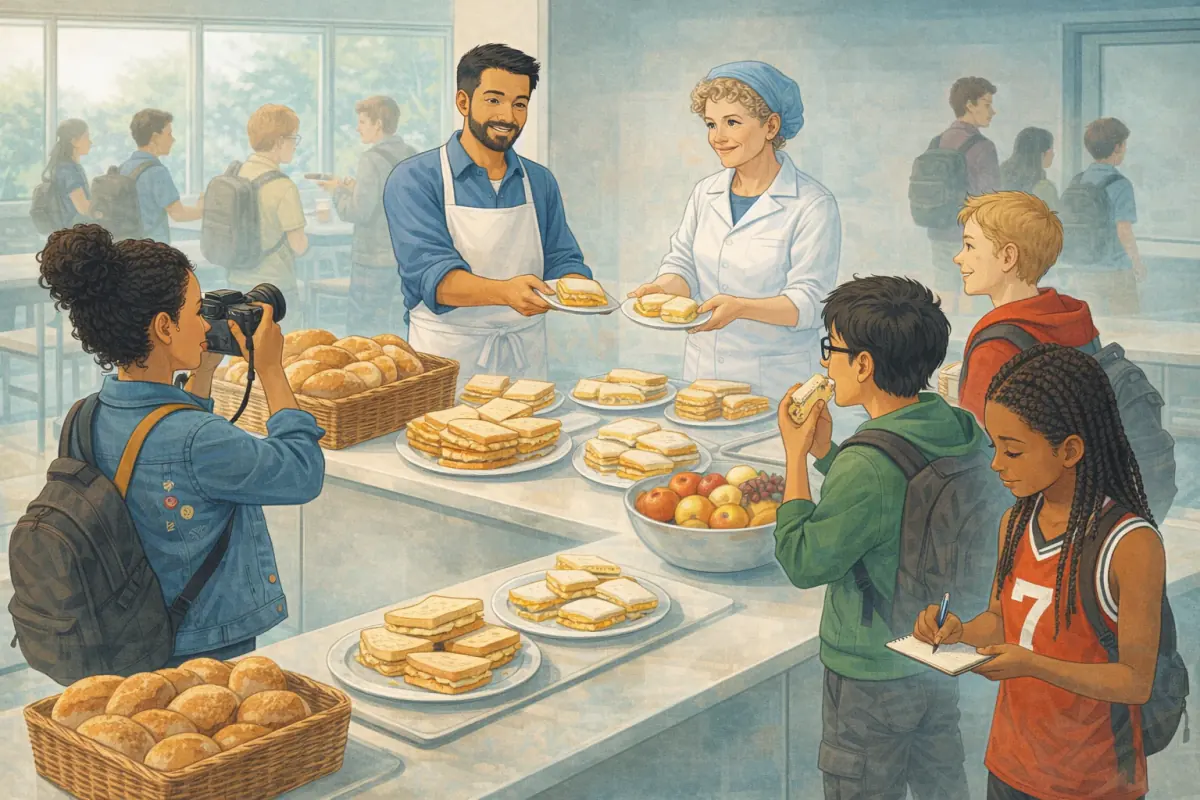
Bakery Friday: fresh bread, sandwiches and fruit in the canteen, with happy students.

Jak napisać propozycję dla szkolnej stołówki na 25–40 słów z “I think we should … because …” i poprawnie używać some, any, much, many oraz słów o jedzeniu. A2 Key i A2 Key for Schools, 11–15 lat.

Krótka propozycja w sprawie szkolnego jedzenia potrzebuje czterech elementów: powitania (“Dear Mr Ross,”), jednego jasnego pomysłu (“I think we should have a fruit day.”), powodu z “because” i twojego imienia. Typowe błędy pojawiają się w słowach o jedzeniu: “some bread”, a nie “a bread”; “any” w przeczeniach i pytaniach; “much” z mlekiem, “many” z jajkami. To dobre ćwiczenie przed częścią Reading and Writing, Part 6 egzaminów A2 Key i A2 Key for Schools, gdzie piszesz 25 słów lub więcej. Ten poradnik jest dla uczniów na poziomie A2 w wieku około 11–15 lat.

Dla kogo jest ten artykuł?

  • Uczniowie w wieku około 11–15 lat, którzy przygotowują się do A2 Key lub A2 Key for Schools.
  • Osoby, które znają słowa o jedzeniu, ale przy pisaniu mylą “some” i “any” albo “much” i “many”.
  • Dla rodziców: możesz pomóc bez dobrej znajomości angielskiego; otwórzcie razem lodówkę i poproś dziecko o trzy zdania z “some”, “any” i “a lot of”.
  • Za wcześnie: jeśli krótki e-mail jest dla ciebie czymś nowym, zacznij od poradnika o opisywaniu domu w e-mailu do kolegi (A2 Key, Part 6).
  • Za łatwo: jeśli umiesz już wyrazić opinię w artykule na 100 słów, przejdź do poradnika B1 o wyważonym artykule na temat korzystania z ekranów.

Otwórz przykładowe strony

Otwórz przykładowe strony

Karty ze słowami

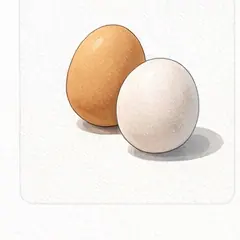
eggegg

a round food from a chicken; it has a hard outside

Mr Haddad needs a lot of eggs for his cakes.

milkmilk

a white drink from cows

Amara's brothers drink a lot of milk.

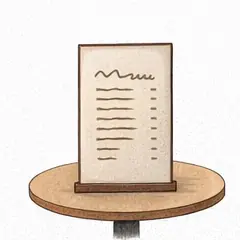
menumenu

a list of the food and drinks you can buy in a cafe or restaurant, with the prices

Look at the menu. How much is an egg sandwich?

Rozmowa

Examiner You will hear Amara talking to Mrs Dunn, the canteen manager, about food at school.

Amara Thank you for this interview, Mrs Dunn. Why isn't there any fresh bread in the canteen now?

Woman Some people think students don't like bread, but that isn't true. They love it! And the bakery near the school is still open. The problem is money. Fresh bread is too expensive for us now.

Amara How much money does the canteen have for each student's lunch?

Woman Two pounds. Last year it was three pounds. And a cheese sandwich with fresh bread costs us one pound fifty to make.

Amara So what do students buy now?

Woman We sell a lot of biscuits, but most students buy crisps. There's some fruit too, but not many students choose it.

Amara What would you like to sell?

Woman Not soup. Students don't eat much soup. And we've got salad already. I'd really like to sell cheese sandwiches with fresh bread again.

Amara Can The Loop help? We could ask the students what they want.

Woman Everyone wants bread, Amara! You don't need to ask them. Talk to a bakery first. Then talk to the head teacher.

Amara Good idea. First, I'll ask Zara's dad. He has a bakery!

Konstrukcja zdania

Write to the head teacher about a healthy food idea.

Dear Mr Bramley, Thanks for Bakery Friday! I think we should have a fruit day on Wednesdays. There isn't much fruit on the menu, and a lot of students want more, because it's healthy. Best wishes, Amara

Amara's message has 37 words. It says thank you, gives one idea, gives a reason and ends with her name.

  • Dear Mr Bramley,
  • I think we should …
  • because …
  • Best wishes,

Więcej ćwiczeń

The bakery list

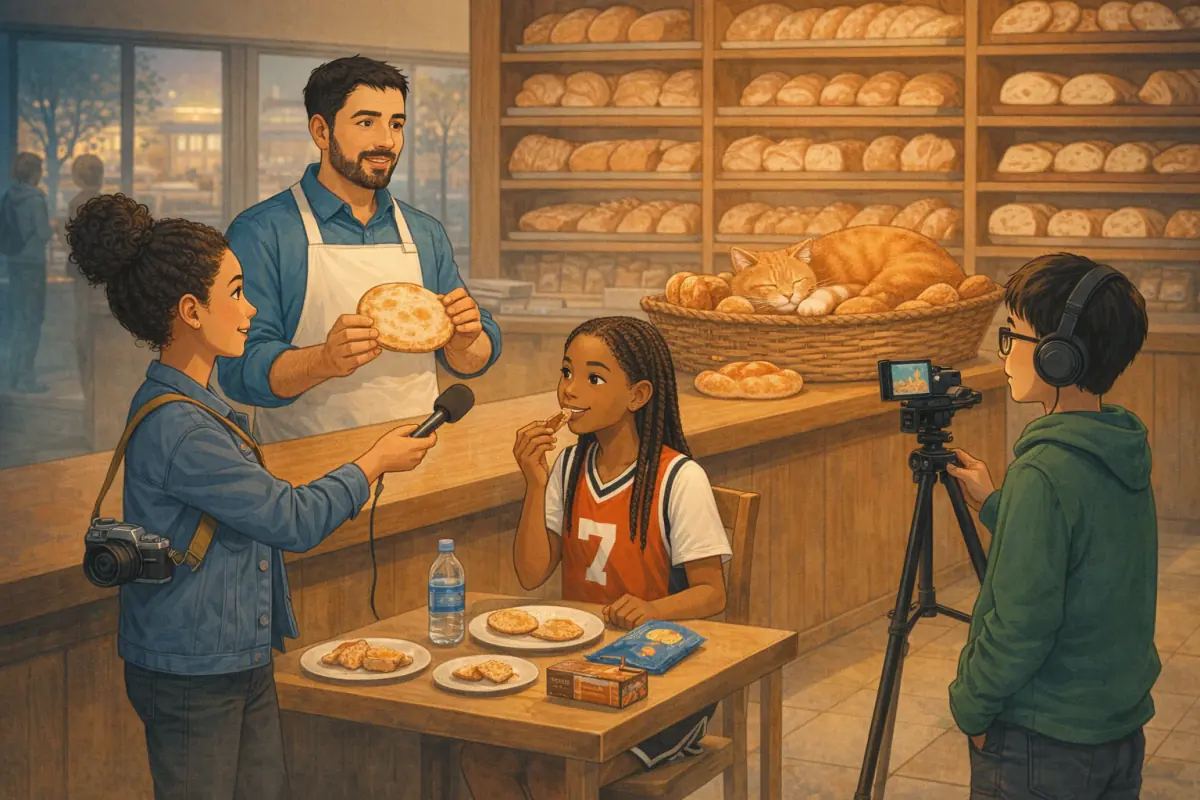
Zara interviews her dad at Haddad's Bakery while Kai films Amara's taste test. A cat is sleeping in the bread basket.

Zara Dad, how much bread do you make every day?

Mr Haddad A lot of bread! We start at four o'clock in the morning.

Zara How many eggs do you need?

Mr Haddad Not many for bread. But we need a lot of eggs for the cakes.

Zara Is there any sugar in our bread?

Mr Haddad Only a little. There's some salt and some butter, but there isn't much sugar.

Zara Are there any sandwiches for the taste test?

Mr Haddad Not yet. We haven't got any cheese! Can you buy some?

Is there any cheese?

No, there isn't any cheese, but there's some butter.

Use some in + sentences. Use any in – sentences and questions. We also use some when we ask for things: Can I have some milk?

Countable: a / an, many

  • an egg → some eggs
  • a sandwich → two sandwiches
  • How many eggs? Not many.

Uncountable: much, no a / an, no -s

  • some bread, some butter, some sugar
  • How much sugar? Not much.
  • NOT: a bread, two breads

some and any

  • + There's some salt. There are some eggs.
  • – There isn't any cheese. There aren't any sandwiches.
  • ? Is there any sugar? Are there any biscuits?

a lot of: countable and uncountable

  • a lot of eggs
  • a lot of bread

Say your idea

Bakery Friday: fresh bread, sandwiches and fruit in the canteen, with happy students.

Zara What's your idea for the canteen?

Amara I think we should have a fruit day, because fruit is healthy.

What's your idea for the canteen?

I think we should have a fruit day, because fruit is healthy.

Say your idea with I think we should … and give a reason with because.

Start and finish

  • Dear Mr Bramley,
  • Best wishes, + your name

Your idea

  • I think we should …
  • Could the canteen sell …?

Your reason

  • … because it's healthy / fresh / delicious.
  • There isn't any … now, and a lot of students want some.

Check your message

There isn't some fresh fruit on the menu.

There isn't any fresh fruit on the menu.

Use any in – sentences.

Check

  • some in + sentences: We want some fruit.
  • any in – sentences and questions: There isn't any salad.
  • no a / an or -s with bread, butter, fruit, milk
  • much + uncountable, many + countable
Poznaj ten rozdział
Jak chcesz się uczyć?

Co robi dobra propozycja

Dobra propozycja jest krótka i uprzejma: jeden pomysł, jeden jasny powód. W A2 Key, w części Reading and Writing, Part 6, piszesz e-mail albo notatkę na 25 słów lub więcej, która obejmuje trzy punkty. Oto nasze własne zadanie w tym stylu:

  • “Your school wants ideas for the canteen. Write a message to your head teacher, Mr Ross.”
  • “Suggest one new food or drink.”
  • “Say why it is a good idea.”
  • “Say which day it could be on the menu.”
  • “Write 25 words or more.”

Zwroty na pomysł i powód

Po “should”, “could” i “can” czasownik nie ma “to” ani “-s”. Te same zwroty przydają się w A2 Key Speaking, Part 2, gdzie mówisz partnerowi, co lubisz i dlaczego.

  • Pomysł: “I think we should have a fruit day.”, “I think the canteen should sell soup.”
  • Uprzejme pytanie: “Could the canteen sell fresh bread?”
  • Powód: “because it’s healthy”, “because students love it”

Przykładowa wiadomość, linijka po linijce

Razem z powitaniem i zakończeniem ta odpowiedź ma 38 słów.

  • “Dear Mr Ross,” → powitanie: “Dear”, tytuł i nazwisko.
  • “I think the canteen should sell fruit salad.” → punkt 1: jeden pomysł.
  • “There isn’t any fruit on the menu now, and a lot of students want some because it’s healthy.” → punkt 2: powód, z “any”, “a lot of” i “some”.
  • “Could we have it on Mondays?” → punkt 3: dzień, w formie uprzejmego pytania.
  • “Best wishes, Deniz” → zakończenie i twoje imię.

Policzalne czy niepoliczalne? Słowa o jedzeniu, na które trzeba uważać

Rzeczowniki policzalne mają liczbę mnogą: an egg, two eggs. Niepoliczalne nie mają “a/an” ani “-s”: “some bread”, a nie “a bread” czy “breads”. Po polsku mówisz „dwa chleby”, więc ten błąd jest bardzo częsty; bochenek chleba to “a loaf of bread”, a kromka to “a slice of bread”. Żeby policzyć, dodaj przed słowem ilość albo opakowanie.

  • Policzalne: egg, sandwich, biscuit, apple, vegetable, snack
  • Niepoliczalne: bread, butter, cheese, milk, sugar, salt, water, juice, rice, pasta, fruit
  • Ilości i opakowania: a piece of bread, a glass of milk, a bottle of water, a packet of crisps, a box of biscuits
  • “Fruit” zwykle jest niepoliczalne: “some fruit”, “a piece of fruit”. Jedno jabłko to “an apple”.
Poznaj ten rozdział po swojemu

Some, any, much, many i a lot of

Po polsku „ile” i „dużo” pasują do wszystkiego; po angielsku wybierasz według rzeczownika: “How much sugar?” (ile cukru), ale “How many eggs?” (ile jajek). Uważaj też na podwójne przeczenie: „Nie ma żadnego chleba” to “There isn’t any bread.”, a nie “There isn’t no bread.” W nagraniu poniżej kierowniczka szkolnej stołówki odpowiada na pytania uczennicy: zwróć uwagę na “not many students” (liczba mnoga) i “much soup” (niepoliczalne).

  • “some” w zdaniach twierdzących, propozycjach i prośbach: “There are some eggs.” “Can I have some milk?”
  • “any” w przeczeniach i pytaniach: “There isn’t any bread.” “Are there any biscuits?”
  • “much” z rzeczownikami niepoliczalnymi, głównie w przeczeniach i pytaniach: “How much sugar?”
  • “many” z liczbą mnogą: “How many eggs?” “Not many students eat soup.”
  • “a lot of” z jednymi i drugimi, zwłaszcza w zdaniach twierdzących: “We eat a lot of bread.”, a nie “We eat much bread.”

Student So what do students buy now?

Canteen manager We sell a lot of biscuits, but most students buy crisps. There's some fruit too, but not many students choose it.

Student What would you like to sell?

Canteen manager Not soup. Students don't eat much soup. And we've got salad already. I'd really like to sell cheese sandwiches with fresh bread again.

Typowe błędy i jak je poprawić

Poszukaj ich na koniec (błąd przed strzałką, poprawka po niej). Polski nie ma przedimków, więc łatwo napisać “I want sandwich” zamiast “I want a sandwich”. Nie zostawiaj też powodu samego, jak “Because it’s cheap.”: połącz go z pomysłem.

  • “Can I have a bread?” → “Can I have some bread?”
  • “There isn’t some fruit on the menu.” → “There isn’t any fruit on the menu.”
  • “How many sugar do you want?” → “How much sugar do you want?”
  • “I think we should to sell soup.” → “I think we should sell soup.”
  • “because of it’s healthy” → “because it’s healthy”

Twoja 10-minutowa rutyna

Napisz to zadanie w 10 minut: 2 minuty na plan, 6 na pisanie i 2 na sprawdzenie.

  • “Your class is planning a healthy snack table. Write a note to your teacher, Ms Patel. Suggest one snack, say why and say one food the table shouldn’t have. Write 25 words or more.”
  • Sprawdź 1: czy jest jeden pomysł, jeden powód z “because” i trzeci punkt?
  • Sprawdź 2: czy w przeczeniach i pytaniach jest “any”?
  • Sprawdź 3: czy bread, milk i fruit są bez “a” i bez “-s”?

Co dalej

Dalej przechodzisz od jedzenia do sportu: opisujesz mecz w trakcie gry, w pięciu zdaniach. Do tego czasu przy każdym posiłku powiedz jedno zdanie o tym, co masz na talerzu, z “some”, “any” albo “a lot of”.

Najczęstsze pytania

Czym różni się “some” od “any”?

“Some” stosujesz w zdaniach twierdzących, propozycjach i prośbach (“Can I have some milk?”); “any” w przeczeniach i w większości pytań (“There isn’t any bread.”).

Czy “bread” jest policzalne?

Nie, jest niepoliczalne: mów “some bread”, nigdy “a bread” ani “breads”. Żeby policzyć, powiedz “a piece of bread” albo “a slice of bread”.

Kiedy używać “much”, a kiedy “many”?

“Much” łączy się z rzeczownikami niepoliczalnymi (“How much milk?”), a “many” z liczbą mnogą (“How many eggs?”). W zdaniach twierdzących z jednymi i drugimi bardziej naturalnie brzmi “a lot of”.

Flalingo nie jest powiązane z Cambridge English, organizatorem egzaminów A2 Key i B1 Preliminary, ani przez tę instytucję rekomendowane.

Poznaj ten rozdział
Jak chcesz się uczyć?

Co dalej?

Lekcje jeden na jeden z lektorem na żywo

We Flalingo nastolatki przerabiają takie rozdziały jeden na jeden z lektorem na żywo, we własnym tempie.

Umów bezpłatną lekcję próbną