
本文へ移動
Flalingo

英語の練習

B1 Preliminaryライティング Part 2:決められた書き出しから物語を書くコツ

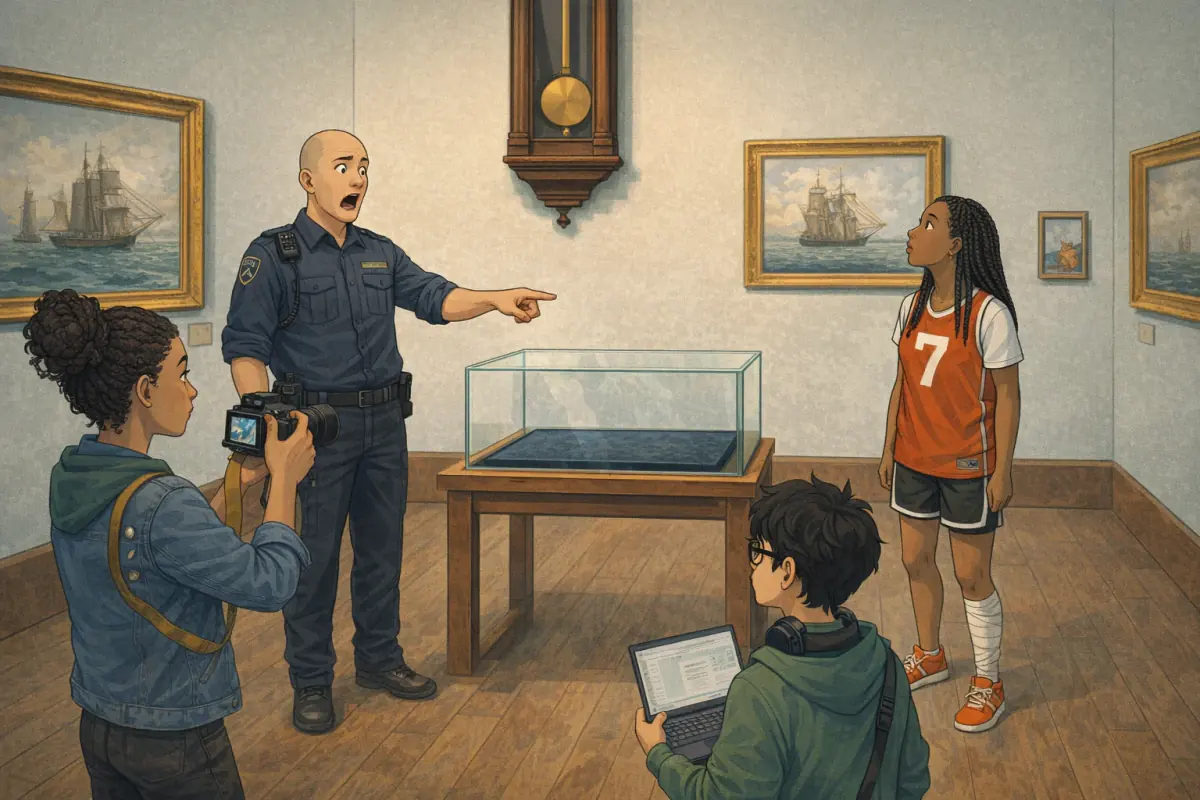
In the museum's Sea Gallery the guard points at an empty display case while one teenager films and another looks up at the clock.

B1 PreliminaryとB1 Preliminary for Schoolsの物語問題:指定された文で始める、3段落の構成、過去進行形と過去形の使い分け、時を表す言葉で出来事をつなぐ、意外な結末で終える。

B1 PreliminaryのライティングPart 2では、約100語の物語を選べる。物語は、指定された文そのままで始めなければならないよ。3つの段落を計画しよう。場面を作り、問題をふくらませ、前に置いておいた手がかりで説明できる意外な結末で終える。背景には過去進行形(“I was walking home”)、中心の出来事には過去形(“I heard a noise”)を使い、while、until、as soon asでつなごう。この記事は12~16歳くらいの中級(B1)の人向け。

この記事が向いている人

  • B1 PreliminaryやB1 Preliminary for Schoolsの準備をしていて、ライティングPart 2で物語を選ぼうと考えている12~16歳くらいの人。
  • アイデアはあるのに、物語が “and then … and then …” と続く出来事の羅列になったり、結末が唐突になったりする人。
  • 保護者の方へ:書く前に、お子さんに物語を1分で話してもらってください。何が起きたかを追えて、結末で驚けたなら、その構成はうまくいっています。
  • まだ早い:短いA2の文章でも過去の時制が混ざるなら、まずA2 Keyレベルの道順を書く待ち合わせメールから始めよう(下のリンク)。
  • 簡単すぎる:どんでん返しのある100語の物語がもう書けるなら、Part 2のもうひとつの選択肢である記事に挑戦するか、次のライティング課題、架空の人物のCVに進もう(下のリンク)。

サンプルページを開く

サンプルページを開く

単語カード

while

during the time that a longer action was happening

While the children were singing, a young man went upstairs.

until

up to the moment when something happens, and then it stops

Mr Pike stayed downstairs until the singing stopped.

as soon as

immediately after something happens

As soon as Kai opened the video, he saw the young man.

before

earlier than something

Professor Parsons went downstairs before Josh opened the case.

after

later than something

After Josh cleaned the compass, he put it back.

会話

Narrator At four o'clock the next day, The Loop walked into Kingsbay Museum. The museum wanted a video about its new exhibition, but the first day was not going well.

Narrator 'It's gone!' shouted Mr Pike, the security guard. 'The antique compass has disappeared from its display case!'

Zara OK, everyone, stay calm. I'll keep filming. We'll talk to everyone who was here this afternoon.

Narrator 'I was drawing the compass at three o'clock,' said Professor Parsons. 'It was definitely there. Then I went downstairs to watch the school group.'

Narrator 'I was selling tickets at the entrance,' said Mrs Quinn, a volunteer. 'While the children were singing, a young man went upstairs.'

Narrator 'I was only away for a minute!' said Mr Pike. 'When I went down, the clock said half past three. When I came back, it still said half past three!'

Theo Everyone remembers the afternoon differently. This is a real mystery.

Kai The museum has security cameras. Maybe I can check the video on my laptop.

Amara Wait. There's something strange about that clock…

文の形

Your story must begin with: 'As soon as I opened the door, I knew something was wrong.'

As soon as I opened the door, I knew something was wrong. The kitchen was silent, and there was flour all over the floor. While I was looking around, I suddenly noticed some small white marks on the floor. They went across the room and stopped behind the curtain. I didn't move until I heard a quiet noise. Was it a thief? I pulled back the curtain and laughed. My little brother was hiding there with a bowl. 'I wanted to make you a birthday cake,' he said. Shortly afterwards, Mum came home, and we cleaned the kitchen before we made the cake together.

The model has 105 words. Plan first (2 minutes): Where are you? What's wrong? What happens next? How does it end? Then write three paragraphs. Don't copy the model's ideas.

  • While I was …, …
  • … when, suddenly, …
  • I didn't … until …
  • Meanwhile, …
  • Shortly afterwards, …
  • In the end, …

追加の練習

Which action was longer?

While everyone was watching the children, Josh took the compass.

LONGER ACTION in the background: was / were + -ing (past continuous). SHORT ACTION in the middle of it: past simple.

Professor Parsons was drawing the compass when Mr Pike walked past.

when + past simple: a short action in the middle of the longer past continuous action.

Amara looked at the clock, checked her phone and called Kai.

MAIN EVENTS one after another: past simple for each step of the story.

When Mr Pike came back, the compass had disappeared.

JUST NOTICE: had + past participle (the past perfect) shows something that happened even earlier. You don't have to use it yet.

What were the children doing when Josh took the compass?

They were singing. While everyone was watching them, Josh took the compass.

Use the past continuous for a longer action in the background. Use the past simple for the main events, one after another, and for a short action in the middle of a longer one.

  • was / were + -ing = a longer action in the background
  • past simple = a short action or the main events
  • when + past simple
  • while + was / were + -ing

Tell it with suspense

I opened the door… and the room was empty.

Stop for a moment before the most important words. Then say them clearly.

The case was there. The cushion was there. But the compass… was gone.

Say the first two parts slowly, with the voice going up. Then stop, and say 'was gone' strongly.

Suddenly, the lights went out.

Say 'Suddenly' strongly, then stop for a moment.

Amara looked at the clock. It still said… half past three.

Stop before the surprising fact, then say it slowly.

Nobody moved. Nobody spoke.

Short sentences, a quiet voice and slow speed make people listen.

Check your story

Is my story ready?

Yes. I used the first sentence exactly. I've got three paragraphs, two time words, the past continuous and the past simple, and the adverb suddenly. It's about 100 words.

Tick each point. If a point is missing, add it now.

  • first sentence exactly as given
  • past simple + past continuous
  • two or more time words (while, until …)
  • suddenly / meanwhile / shortly afterwards
  • a clear ending
  • about 100 words
この単元を学ぶ
どの方法で学びますか?

物語の問題はどんな形?

Part 2では記事か物語のどちらかひとつを書く。物語の問題では、最初の文と長さが指定される。私たちが作ったこの練習問題のような形だよ。

  • “Your story must begin with this sentence: The lights went out in the middle of my school concert.”
  • “Write your story in about 100 words.”

2分で3段落を計画しよう

指定された文の時制と語り手はそのまま守ろう。ここでは過去と “I” だね。それから4つの質問に短く答えると、その答えが3つの段落になる。

  • どこにいて、何が起きていた?(背景)
  • 何がおかしくなった?(問題)
  • 次に何が起きた?(出来事と手がかりひとつ)
  • どう終わった?(手がかりで説明できる意外な結末)

模範の物語を段落ごとに

矢印のあとに各段落の役割を書いておいたよ。冷たい手と笑っている友だち、この2つの手がかりがあるから、結末がご都合主義ではなく納得のいくものになる。

  • “The lights went out in the middle of my school concert. I was standing on the stage with my guitar, and the hall was silent.” → 始まり:指定された文と場面
  • “While our teacher was looking for a torch, I heard footsteps behind me. I didn’t move until the footsteps stopped. Suddenly, a cold hand touched my shoulder. Meanwhile, my friends were laughing quietly at the back.” → 中盤:出来事、緊張、手がかり2つ
  • “As soon as the lights came back on, I turned around. It was our head teacher with a huge birthday cake for me. Her hand was cold because the cake had come straight from the fridge! Shortly afterwards, everyone was singing ‘Happy Birthday’.” → 終わり:手がかりで説明される意外な結末

背景?出来事?過去進行形と過去形

過去進行形(was / were + -ing)は、すでに進んでいた動作、つまり背景を描く。過去形は中心の出来事を順番に語り、途中で割り込む短い動作も表すよ:“I was standing on the stage when the lights went out.”

日本語では「知っていた」と言うけど、knowやwantのような状態を表す動詞は英語では過去形のまま。“I was knowing” ではなく “I knew”。模範の物語の “had come” は過去完了(had + 過去分詞)で、それよりさらに前の出来事を表す。B1ではプラスアルファになる表現だよ。

この目撃者の証言から、背景と出来事を見つけよう。

ナレーター 'I was selling tickets at the entrance,' said Mrs Quinn, a volunteer. 'While the children were singing, a young man went upstairs.'

出来事をつなぐ時を表す言葉

それぞれ例文をひとつずつ。日本語の表現と結びつけると覚えやすいよ。

  • while(〜している間に)+長い動作:“While I was waiting for the bus, my phone rang.”
  • until(〜まで):“I stayed under the bed until the noise stopped.” 「〜までに」はuntilではなくbyだよ。
  • as soon as(〜するとすぐ):“As soon as I saw the clock, I knew something was wrong.”
  • before / after:“I locked the door before I went to bed.”
  • “Suddenly,” は驚きを、“Meanwhile,” は同じ時刻の別の場所を、“Shortly afterwards,” は次の場面を運んでくる。ふつうは文の頭に、コンマをつけて置くよ。
自分に合った方法でこの単元を学ぶ

ハラハラさせてから驚かせよう

サスペンスとは、次に何が起きるか知りたくなる気持ちのこと。中盤のスピードを落とそう。質問(“Was it a thief?”)、とても短い文(“Nobody moved. Nobody spoke.”)、大事な事実の直前の間(ま)が効くよ。

そして結末はフェアに。結末で説明される手がかりを先に置いておこう。“Then I woke up. It was a dream.” のような終わり方はずるく感じられる。このミステリーの音声では、手がかりは時計だよ。

ナレーター 'I was only away for a minute!' said Mr Pike. 'When I went down, the clock said half past three. When I came back, it still said half past three!'

生徒 Wait. There's something strange about that clock…

よくある間違いと直し方

書き終わったらこれを探そう。

  • 指定された文を変える → 一語も変えずにそのまま写そう。
  • “While I walked home, I was hearing a noise.” → “While I was walking home, I heard a noise.”
  • “I was knowing it was a trick.” → “I knew it was a trick.” 「知っていた」を直訳すると起きやすい間違い。
  • “Suddenly the door opens.” → “Suddenly, the door opened.”

20分の練習ルーティン

週2回、この書き出しで書いてみよう:“As soon as I opened the door, I knew something was wrong.”

  • 2分:文をそのまま写し、4つの質問に答える。
  • 12分:約100語で3段落を書く。
  • 4分:最初の文、時制、時を表す言葉2つ、手がかりを確認する。
  • 2分:結末の前で間を取りながら声に出して読み、1文をよりよく直す。

次のステップ

物語が簡単になったら、Part 2のもうひとつの選択肢である記事を書くか、次のライティング課題、架空の人物のCVに進もう(下のリンク)。

よくある質問

B1 Preliminaryの物語は何語で書けばいい?

約100語。1語ずつ数えるより、始まり・中盤・終わりがはっきりしているかを確認しよう。

指定された最初の文はそのまま使わないといけない?

うん。単語も時制も変えずに書いて、そのあと過去形で続けよう。

Part 2では物語と記事のどちらを選べばいい?

書くのはひとつだけ。出来事を考えるのが好きなら物語、意見を言うのが好きなら記事を選ぼう。

Flalingoは、A2 KeyおよびB1 Preliminaryを提供するCambridge Englishと提携しておらず、同機関の承認を受けていません。

この単元を学ぶ
どの方法で学びますか?

次は何をしましょうか?

ライブの先生とマンツーマン

Flalingoでは、ティーンがこのような単元をライブの先生とマンツーマンで、自分のペースで学びます。

無料体験レッスンを予約