Skip to content
Flalingo

English practice

How to give directions in English: an A2 Key email telling a friend where to meet (ages 11–15)

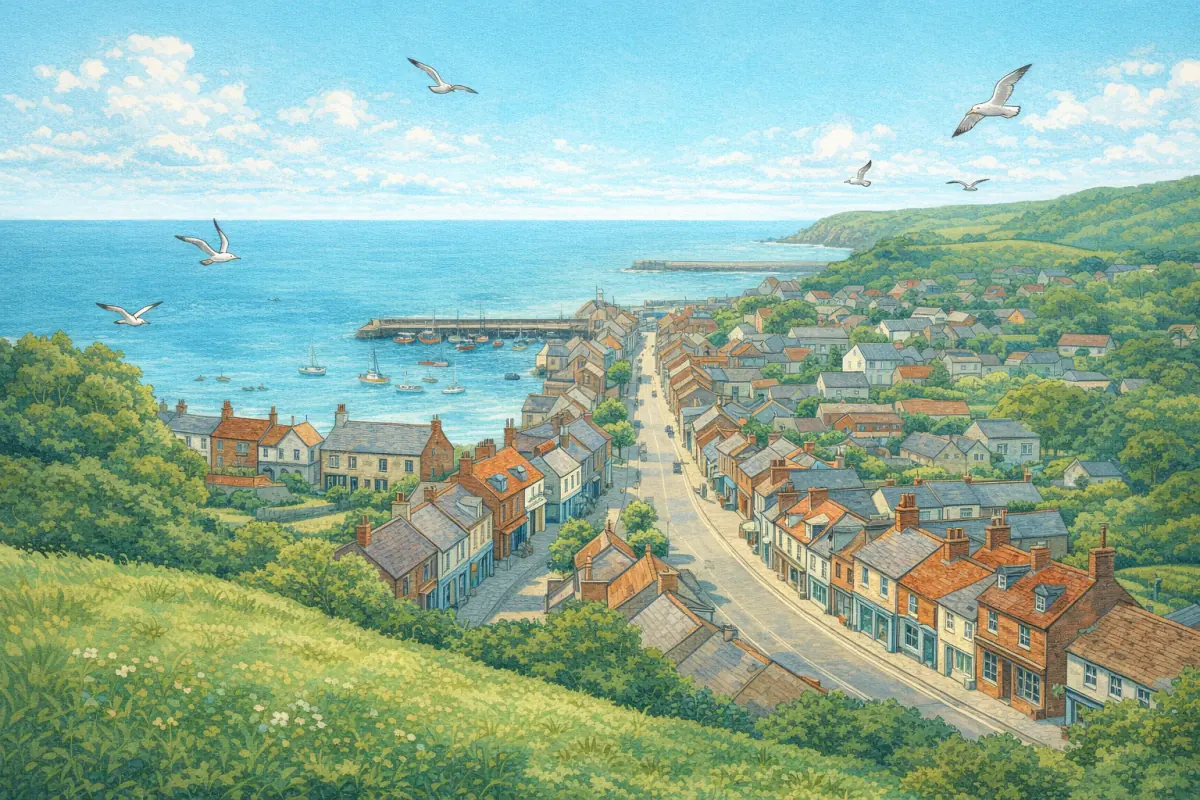
Kingsbay from the hill: the main street goes down to the harbour and the sea.

Write a short email that says where to meet, how to get there and what time: directions with “go”, “turn” and “walk”, “next to” and “opposite”, a model email and typical mistakes. For A2 Key and A2 Key for Schools, ages 11–15.

To tell a friend where to meet in English, give three things in order: the place (“Let’s meet outside the cinema”), the way there (“Take the bus to the station, then turn left”) and the time (“See you at 2.30!”). Start each direction with a verb and end with a phrase that fixes the place, such as “opposite the café”. A2 Key and A2 Key for Schools test this in Reading and Writing Part 6: a short email of 25 words or more. This guide is for A2 students aged about 11–15.

Who this is for

  • Students aged about 11–15 preparing for A2 Key or A2 Key for Schools.
  • Students who know words like “bank” and “station” but freeze when someone asks the way.
  • For parents: you can help without strong English; ask your child to direct you from your front door to a shop nearby, then check the route together on a map.
  • Too early: if a short message of 30–40 words is still new, start with the guide to a “for sale” advert (A2).
  • Too easy: if routes and short emails already feel easy, move on to B1, for example a story with a given opening.

Open the sample pages

Open the sample pages

Word cards

turn

to start to go left or right

Turn right at the traffic lights for the police station.

left

the opposite of right

Turn left into Harbour Road.

right

the opposite of left

The bank is on your right.

straight on

don't turn; keep going the same way

Go straight on to the traffic lights.

past

go by a place without stopping

Walk past the police station.

along

from one end of a street or road to the other end

Walk along King Street.

across

from one side to the other side

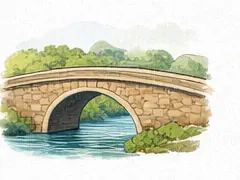
Go across the bridge.

near

not far

The museum is near the café.

Conversation

Narrator Why was the microphone box empty? The shop sent the microphone in a second parcel, and that parcel went to the wrong address.

Kai It was my mistake. I typed Harbour Road, not Harbour Park!

Amara So where is it now? Harbour Road is really long.

Zara The app says the driver delivered it last Saturday. That was a week ago!

Narrator "Ask the driver," said the woman at the post office. "He always has lunch at the bus station on Saturdays."

Theo The bus station? Easy. Turn right and walk straight on to the top of King Street.

Zara Kai, film everything on the way. This can be our Young Person's Guide to Kingsbay!

Kai Film the town? Sure. But I'm staying behind the camera.

Language pattern

Example email

Hi Jonah, Let's meet at the harbour café on Saturday. Take the bus to the bus station, then walk along King Street and turn left at the traffic lights. The café is on the corner. See you at 11.00! Zara

The example has 40 words and says all three things: where (the harbour café), how (bus, walk, turn left) and what time (11.00).

  • Hi Jonah,
  • Let's meet at ...
  • Take the bus to ...
  • turn left at ...
  • See you at ...!

More practice

The town plan

Kingsbay from the hill: the main street goes down to the harbour and the sea.

Walk down King Street from the bus station to the harbour.

On your left, you pass the post office, then Market Square, then the hotel.

On your right, you pass the bank, then the library, then the car park.

The bank is opposite the post office. The library is opposite Market Square. The car park is opposite the hotel. There is a bus stop outside the library.

At the end of King Street there are traffic lights. Here King Street meets Harbour Road.

Turn left into Harbour Road: the harbour café is on the corner, and the museum is next to the café.

Turn right into Harbour Road: the police station is on the corner. Walk past it and go across the bridge. After the bridge, the train station is on your left and the hospital is on your right.

street

a road in a town, with houses or shops

King Street goes down to the harbour.

road

a way for cars and buses between places

Harbour Road goes along the harbour.

squaresquare

an open place in a town, with buildings round it

Market Square is on the left of King Street.

corner

the place where two streets meet

The café is on the corner of Harbour Road.

bridgebridge

you walk or drive over it to cross a river

Theo filmed the boats from the bridge.

traffic lighttraffic light

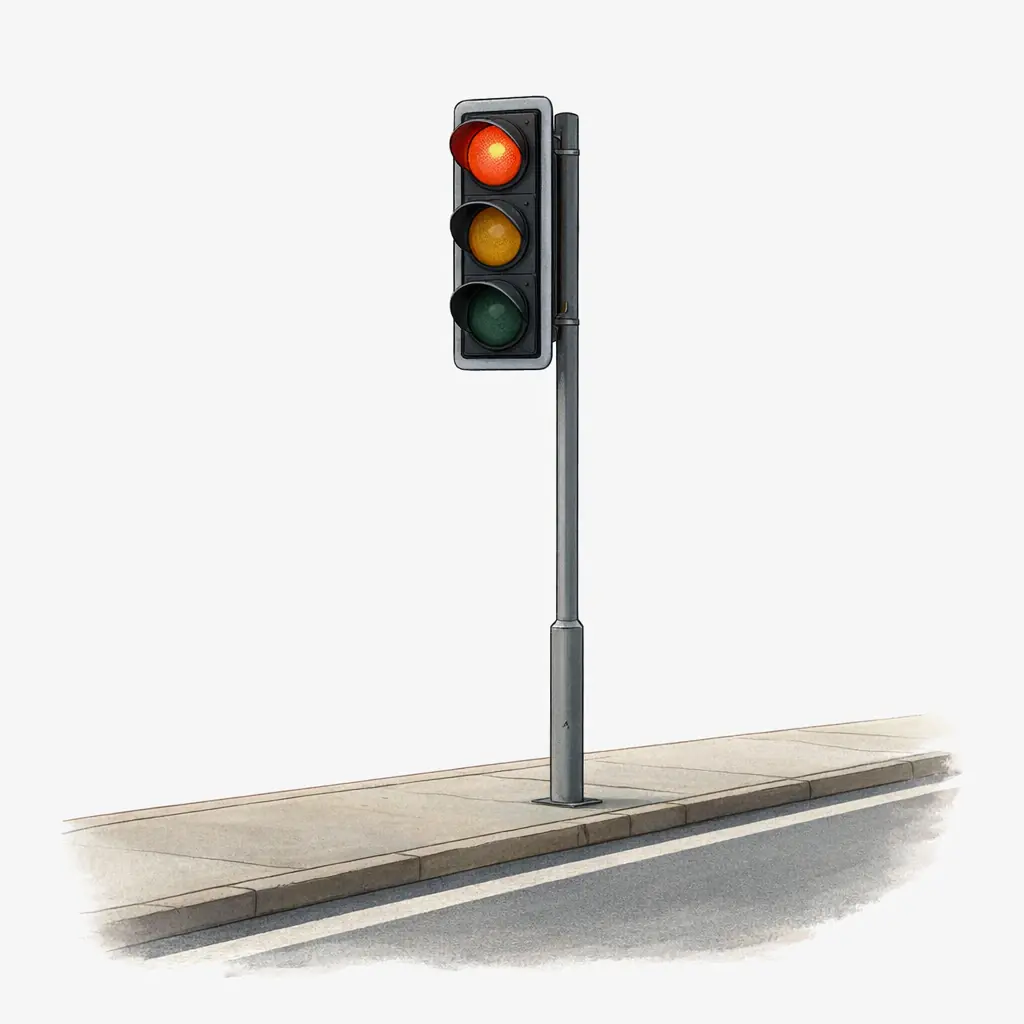
red, yellow and green lights that tell cars when to stop and go

Turn left at the traffic lights.

bus stopbus stop

a place in the street where the bus stops for people

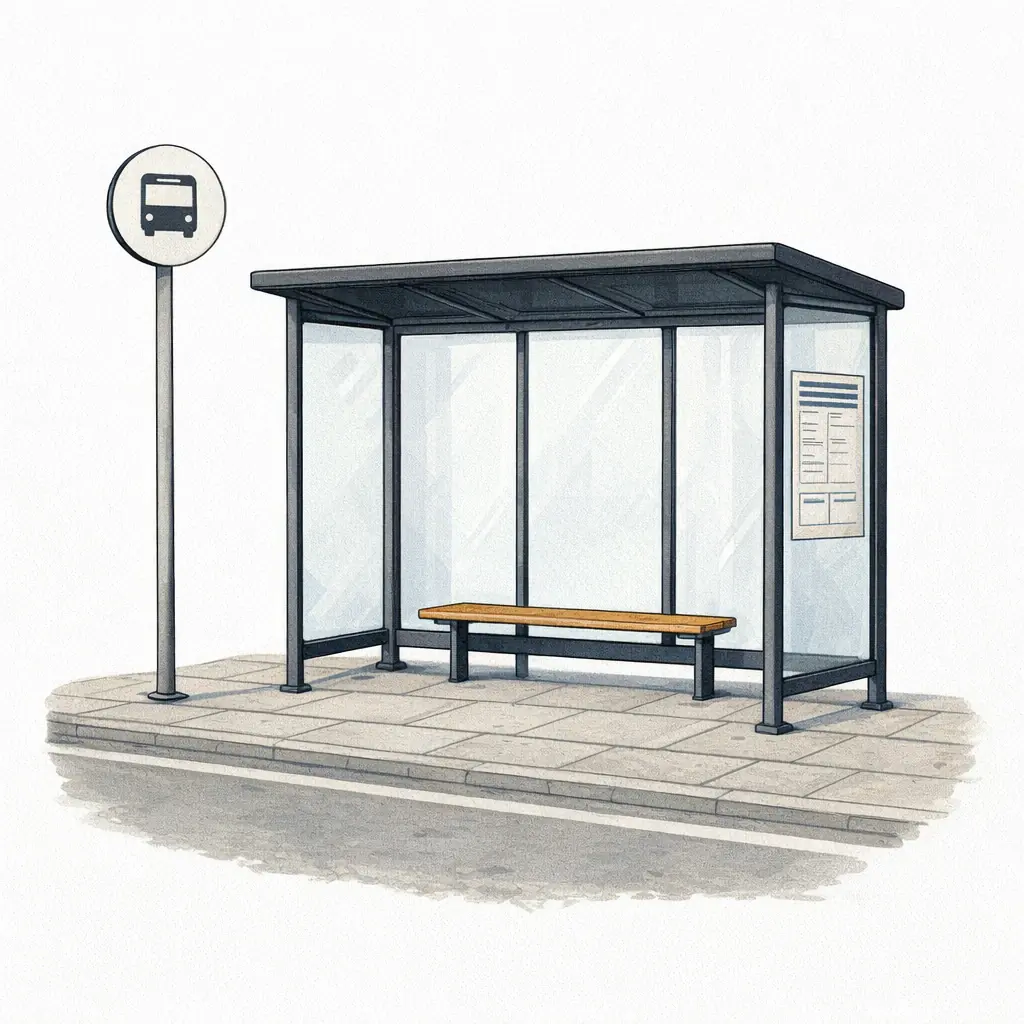
There is a bus stop outside the library.

stationstation

a building where trains stop; people also say train station

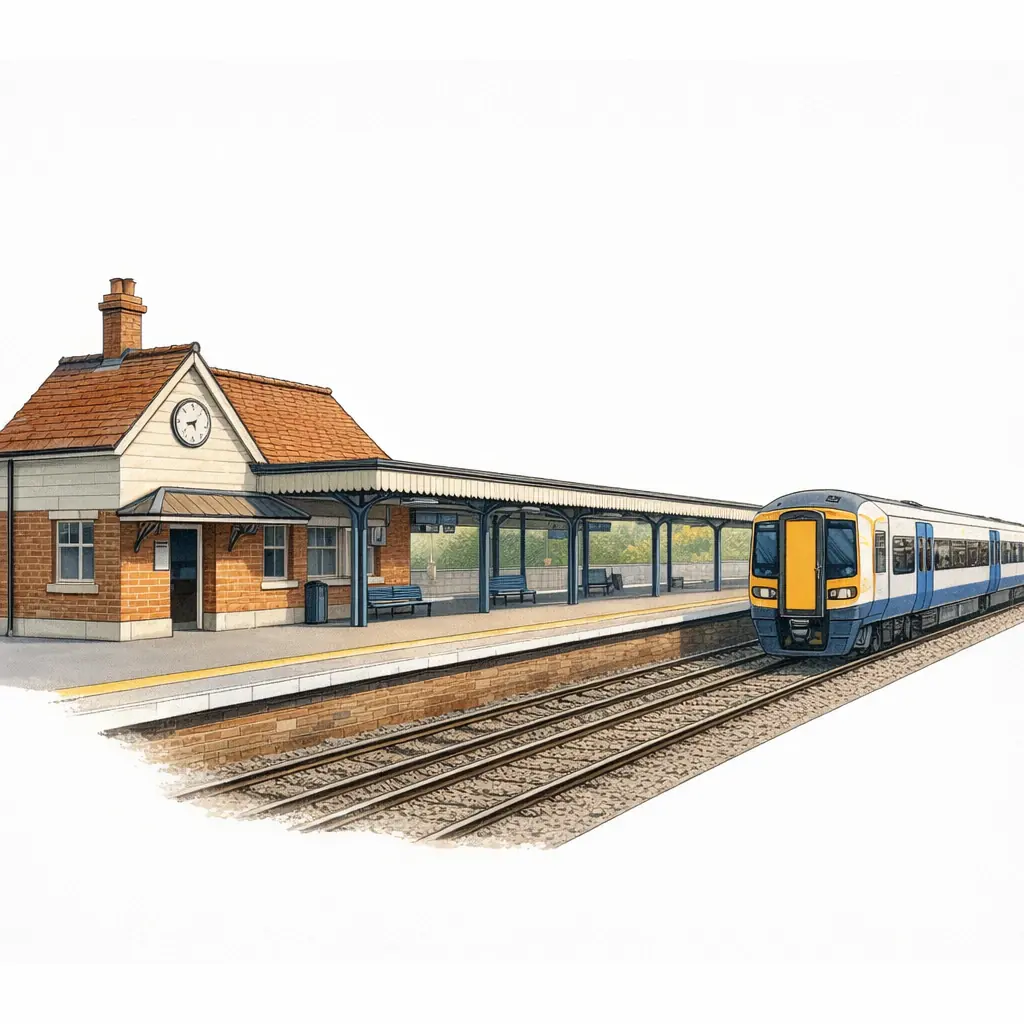
The train station is after the bridge.

The direction game

Kingsbay from the hill: the main street goes down to the harbour and the sea.

Walk down King Street from the bus station to the harbour.

On your left, you pass the post office, then Market Square, then the hotel.

On your right, you pass the bank, then the library, then the car park.

The bank is opposite the post office. The library is opposite Market Square. The car park is opposite the hotel. There is a bus stop outside the library.

At the end of King Street there are traffic lights. Here King Street meets Harbour Road.

Turn left into Harbour Road: the harbour café is on the corner, and the museum is next to the café.

Turn right into Harbour Road: the police station is on the corner. Walk past it and go across the bridge. After the bridge, the train station is on your left and the hospital is on your right.

turn

to start to go left or right

Turn right at the traffic lights for the police station.

left

the opposite of right

Turn left into Harbour Road.

right

the opposite of left

The bank is on your right.

straight on

don't turn; keep going the same way

Go straight on to the traffic lights.

past

go by a place without stopping

Walk past the police station.

along

from one end of a street or road to the other end

Walk along King Street.

across

from one side to the other side

Go across the bridge.

near

not far

The museum is near the café.

Excuse me, how do I get to the museum?

Go straight on along King Street. Turn left at the traffic lights. The museum is next to the café.

Start each direction with a verb: Go, Turn, Walk. Then say where the place is.

  • Go straight on.
  • Turn left / right at ...
  • Walk past ...
  • Go across ...
  • It's on your left / right.
  • It's next to / opposite ...

Plan your email

Your English friend Jonah is visiting Kingsbay on Saturday. You want to meet in town.

Write an email to Jonah. In your email:

• say where to meet

• say how to get there

• say what time to meet.

Write 25 words or more.

What three things must you say?

Where to meet, how to get there and what time to meet.

In the exam you get marks for all three things. Plan each one before you write.

  • where
  • how
  • what time
  • 25 words or more

1 Where to meet

  • Let's meet at ...
  • Meet me outside ...

2 How to get there

  • Take the bus to ...
  • Walk along ... and turn left / right at ...
  • It's next to / opposite ...

3 What time

  • See you at 11.00!
  • Let's meet at half past ten.
Learn this unit
How would you like to learn?

The meeting email in A2 Key

Part 6 of the Reading and Writing paper gives you a situation and three points to cover in 25 words or more. Our own task in that style:

  • “Your English friend Alex is visiting your town on Sunday. Write an email to Alex.”
  • “Say where to meet, how to get there and what time to meet. Write 25 words or more.”

Where: phrases that fix a place

Choose a place that is easy to find, then fix it with a phrase that stays true from any side.

  • Places: bus station, train station, post office, bank, library, museum, police station, car park, bridge
  • next to: “The museum is next to the café.”
  • opposite (across the street): “The bank is opposite the post office.”
  • on the corner of: “The café is on the corner of Park Street and Mill Road.”
  • outside, near: “Meet me outside the station.” “It’s near the bridge.”

How: directions start with a verb

Say the transport first, then give one step per sentence, in order, each starting with a verb.

Left and right depend on which way you are facing, so an email needs a starting point you both know: “From the station, …”. In this recording, everyone is at the post office, so “Turn right” works.

  • Transport: “Take the number 5 bus to the station.” “It’s ten minutes on foot.”
  • Go straight on: “Go straight on to the traffic lights.”
  • Turn left / right: “Turn left at the traffic lights.”
  • Walk along, walk past: “Walk along Park Street, past the police station.”
  • Go across: “Go across the bridge.”
  • End with the place: “It’s on your left, next to the café.”

Narrator "Ask the driver," said the woman at the post office. "He always has lunch at the bus station on Saturdays."

Friend The bus station? Easy. Turn right and walk straight on to the top of King Street.

A model email, line by line

Our own answer to the task, about 40 words:

  • “Hi Alex,” → greeting.
  • “Let’s meet outside the cinema on Sunday.” → point 1: where.
  • “Take the number 5 bus to the station. Then walk along Park Street, past the bank.” → point 2: how, from a known start.
  • “The cinema is on your left, opposite the café.” → a fixed phrase to confirm the place.
  • “See you at 2.30! Jamie” → point 3: what time, then your name.
Learn this unit your way

When plans go wrong: was, were and -ed

For a mix-up, use the past simple: “was” (I, he, she, it), “were” (you, we, they) and -ed verbs. Questions and negatives take “did” and the base verb: “Did you take the bus?” “I didn’t walk.”

The -ed ending sounds like /t/ in “walked”, /d/ in “played” and /ɪd/ in “waited”: an extra syllable only after t or d. Listen for “was”, “typed” and “delivered”:

Friend 1 It was my mistake. I typed Harbour Road, not Harbour Park!

Friend 2 The app says the driver delivered it last Saturday. That was a week ago!

Typical mistakes and how to fix them

Check for these (mistake, then fix):

  • “Turn to left.” → “Turn left.”
  • “Turn left in the traffic lights.” → “Turn left at the traffic lights.”
  • “The café is in the corner.” → “The café is on the corner.”
  • “Go across the Park Street.” → “Go across Park Street.”
  • “ten minutes by foot” → “ten minutes on foot”
  • “We was late. I didn’t walked.” → “We were late. I didn’t walk.”
  • “Turn left.” with no start → “From the station, turn left.”

Your 10-minute routine

Plan for 2 minutes, write for 6, check for 2. Also play the directions game with a parent: direct them from your front door to a place nearby, then check on a map.

  • Task: “A new student wants to watch your football match on Saturday. Write an email: say where it is, how to get there and what time it starts.”
  • Check: where, how and what time? Does each direction start with a verb? 25 words or more?

What comes next

In A2 Key Listening Part 5, you match five people or things to a list of eight options, such as places. Don’t pick the first place you hear: “I wanted to go to the museum, but it was closed, so I went to the library.”

Next: speaking with a partner about transport, then a past simple story from three pictures.

Frequently asked questions

How do you give directions in English?

Start each step with a verb (Go, Turn, Walk), give the steps in order and end with where the place is: “Turn left at the traffic lights. The café is on your right.”

What is the difference between “opposite” and “in front of”?

“Opposite” means across the street, facing it: “The bank is opposite the school.” “In front of” means just outside its front: “Meet me in front of the school.”

Is it “on foot” or “by foot”?

“On foot” is the usual form: “It’s ten minutes on foot.” Other transport takes “by” with no “the”: by bus, by train, by bike.

Flalingo is not affiliated with or endorsed by Cambridge English, the provider of A2 Key and B1 Preliminary.

Learn this unit
How would you like to learn?

What comes next?

One-to-one lessons with a live teacher

Teens at Flalingo work through units like this one-to-one with a live teacher, at their own pace.

Book a free trial lesson