
Flalingo vs ELSA Speak and Other AI English Apps: What's Missing from AI-Only Learning?
AI has quietly reshaped what English practice looks like on a phone. An app like ELSA Speak can listen to a single sentence and tell you, in seconds, which sounds you dropped and how your rhythm compares to a native speaker. That kind of feedback used to need a trained ear sitting across a desk.
This comparison looks first at ELSA Speak and the wider category of AI-only English apps, then at Flalingo, which is built on a hybrid model. Its FLAI engine handles the AI analysis, and a certified native teacher handles the conversation, correction, and pacing that software still finds hard.
Flalingo vs ELSA Speak: At a Glance
How Do AI Pronunciation and Conversation Apps Work?
ELSA Speak is a good stand-in for the whole category, since it is one of the most downloaded speaking apps in the world. At the centre of it sits a speech recognition model trained to score how you sound. Its Speech Analyzer listens to a recording and rates five dimensions (pronunciation, intonation, fluency, grammar, and vocabulary) of your English. You speak, and within seconds you see where a sound was off, where a keyword should have carried more stress, and where filler words or long pauses broke your flow.
Around that engine sits a familiar app experience. Short drills are gamified, so you keep a streak going. Lessons adapt to your level and your target accent, whether American, British, or Australian. A bilingual mode lets beginners start in their first language. More recent versions add AI role-play, where you hold a scripted conversation with a virtual character in scenarios like a meeting, an interview, or small talk, and the app reacts and corrects as you go. For teams, ELSA Business wraps the same technology in dashboards and CEFR mapping so a company can track progress across a workforce.
The design goal is repetition without embarrassment. You can say the same phrase forty times, at your own pace, and no one is waiting on you.
What AI-Only Apps Do Genuinely Well
It would be dishonest to treat these apps as toys. There are three things they do better than most human-only options, and they are worth naming clearly.
Precise, patient pronunciation practice
Sound-by-sound feedback is where AI shines. A human teacher can tell you that your "th" sounds off, but an app can show you exactly which attempt scored 60 and which scored 95, and let you repeat until the number climbs. There is no fatigue and no judgment on the other side.
Availability at any hour
If your only free window is 6 a.m. or the ten minutes before a call, the app is practical. That constant availability is what turns practice into a daily habit, and habit is most of the battle in language learning.
Lower cost to start
Because there is no human on the other end, the price is low. A free tier gets you going, and paid plans stay affordable. The table below sets the two pricing models side by side so the trade is clear.
Prices shift with promotions and region, so check the current figures on the ELSA subscription page and the Flalingo pricing page before you commit.
Where AI-Only Practice Hits a Ceiling
Open-ended conversation stays out of reach
An app role-play follows a script, but a real conversation doesn’t. It interrupts, changes the subject, misunderstands you, and asks you to repair the misunderstanding on the spot. That improvisation is the actual skill most learners are chasing, and it is the hardest thing to rehearse against software that already knows where the exchange is heading.
Feedback without the why
If you keep dropping the past tense under pressure, software marks each instance, but a person sees that it happens when you are nervous and slows the lesson down to fix the root cause, not the symptom.
Motivation runs on streaks, not people
A streak counter can carry you for a while. When progress slows and the drills start to feel like a chore, what tends to keep learners going is a person who remembers last week, adjusts the plan, and expects them to show up. Accountability to a human is a different kind of fuel than a notification.
None of this makes AI apps a poor choice. It marks the edge of what any tool can do on its own. This is the same gap explored in our comparison of Flalingo vs Duolingo, and it points to the idea that the AI is most useful when a teacher is standing next to it.
How Flalingo Combines AI Precision with Human Teaching
Flalingo starts from the position that you should not have to choose between the precision of AI and the judgment of a teacher. Its method puts both in the same loop, and the AI layer is closer to ELSA than most people expect.
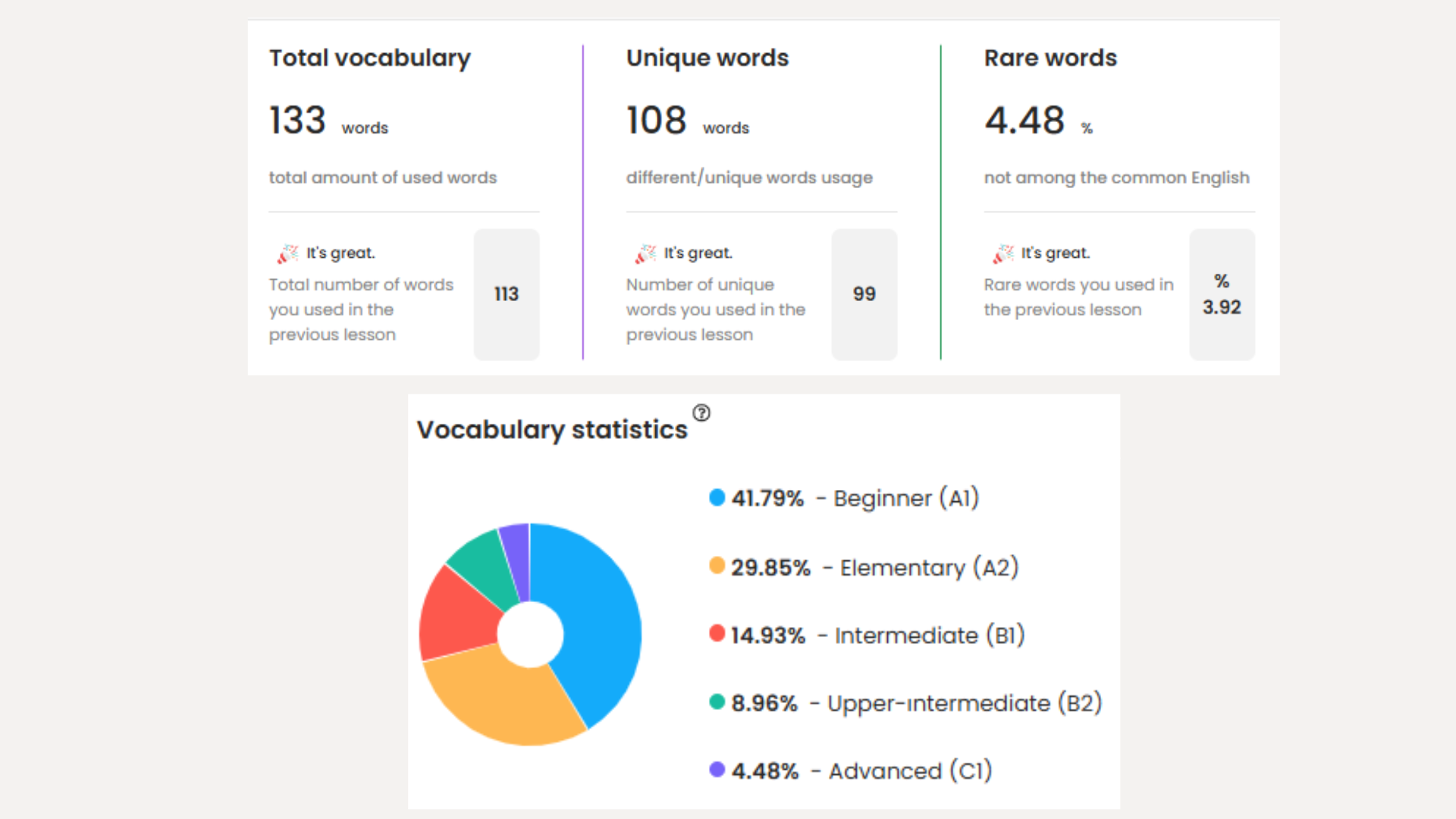
That AI layer is FLAI. After every live lesson, it transcribes the whole conversation with speech recognition, then runs natural language processing over the transcript. It scores the lesson on three axes tied to CEFR: accuracy, meaning grammar, tense, and sentence structure; fluency, measured through words per minute, pauses, and filler words; and lexical range, meaning how varied and level-appropriate your vocabulary is.
That second reader is the difference. Your FLAI report becomes a short action list, and your teacher gets a matching set of targeted suggestions for the next lesson. The measurement is automated. The response is human. There is also a dedicated speaking practice mode, FLAI Speaking, which builds AI conversation drills around the exact weaknesses your live lessons surfaced, so your solo reps aim at your gaps instead of generic content.
Around that core, the human side is built to be consistent, not random:
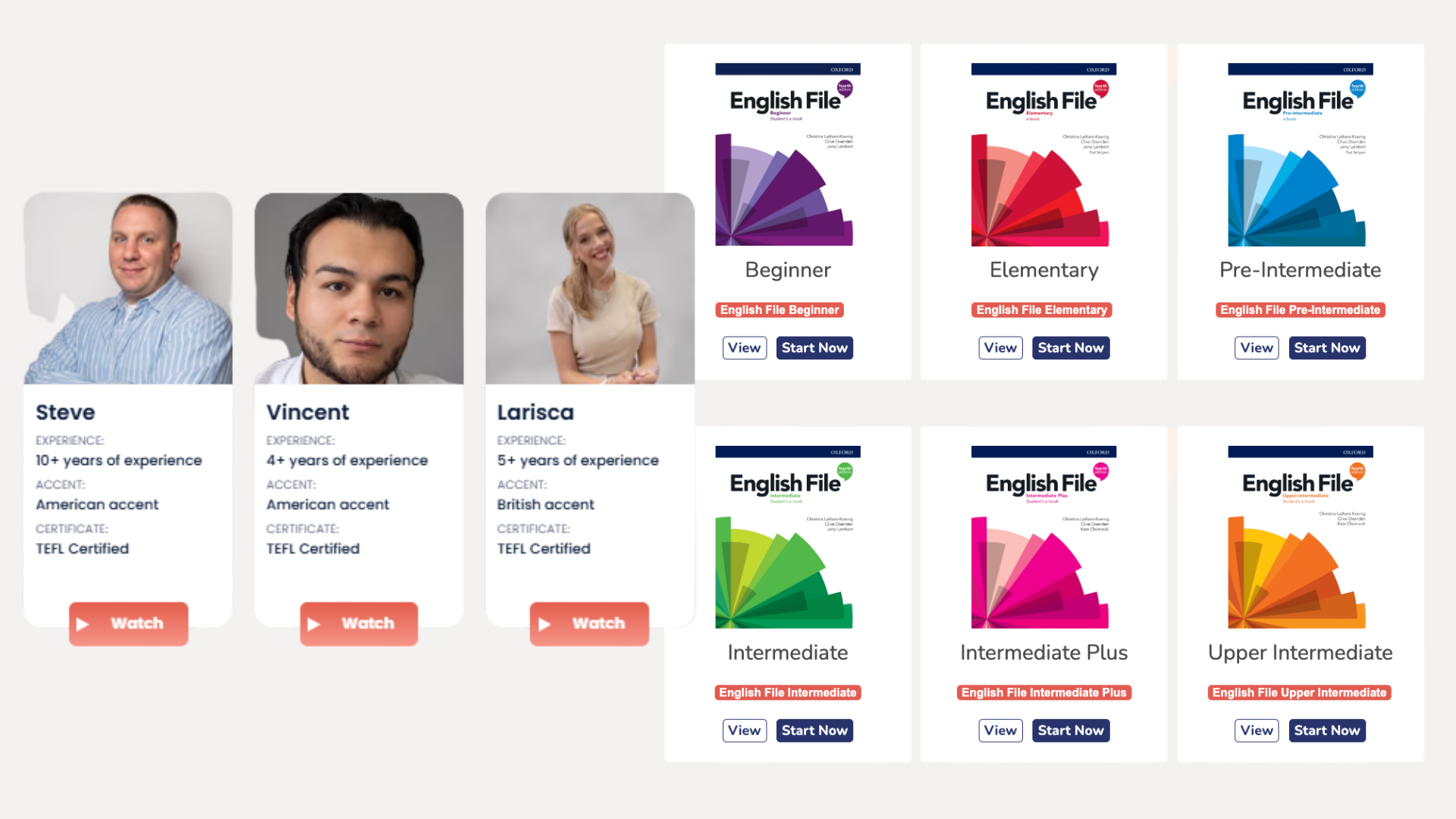
- A Smart Matching algorithm pairs you with a certified native teacher using level, goals, schedule, accent, and personality signals, and it works to keep you with the same teacher over time, which steadies both your confidence and the report data.
- Teachers are selective hires rather than an open marketplace, so pedagogy is a baseline, not a gamble.
- Lessons follow Oxford University Press-supported materials on a CEFR path, so the drills you do in an app are anchored to a real curriculum with measurable level jumps.
- An education advisor tracks motivation and progress alongside FLAI.
The result is that a learner gets the data an ELSA-style app would give, and a person who acts on it. If you want to see how that plays out week to week, our honest Flalingo review walks through the reports and the lessons in practice.
Can You Use an AI App Alongside Flalingo?
Yes, and for many learners, that is the smartest setup. These tools are complements, and pairing them plays to the strengths of each. A simple weekly rhythm can look like this:
- Use an AI app such as ELSA for ten focused minutes of pronunciation drilling on the days between lessons. It keeps your mouth moving and your streak alive.
- Bring the sounds and phrases you drilled into your live Flalingo lesson, where a teacher pushes you to use them in unscripted conversation and corrects what the app cannot see.
- Read your FLAI report after each lesson, then feed its action list back into your app practice, so the two systems point at the same targets.
Flalingo vs AI English Apps: The Verdict
If your goal is cleaner pronunciation, a daily habit, and low-pressure reps at any hour, an AI-only app like ELSA Speak is an excellent and affordable choice. It is one of the best pronunciation trainers available, and there is no shame in starting there.
If your goal is to actually speak, to hold a real conversation, handle the unexpected, and move up CEFR levels with progress you can see, AI alone will take you part of the way and then stall. That is where a hybrid model earns its place. Flalingo gives you the same style of AI analysis through FLAI and pairs it with a certified native teacher who reads that data and adjusts. You keep the precision of the software and add the judgment, improvisation, and accountability that only a person brings.
Combine AI precision with real teaching
Other content that may interest you



I'm Bright. I am a British-Nigerian English teacher with seven years of experience. I create engaging and tailored lessons that build confidence and fluency to support students to achieve their goals. My aim is to unlock the potential of students from different cultures, making the learning process both efficient and enjoyable.
English with Flalingo

Learning English with Flalingo means progressing with an intelligent system that works in an integrated manner.