
Flalingo vs Duolingo: Can an App Replace a Real English Teacher?
If you've been keeping a Duolingo streak going for months but still freeze up when someone asks you something in English, you probably already have some idea about the answer. Apps are great for certain things but not so much for others. This comparison looks at where each method shines, using actual research, so you can figure out what your English really needs next.
Duolingo has created a global habit with its short and fun lessons. On the other hand, Flalingo has a different approach, combining live one-on-one teachers with an AI coach that reviews each session. Both use AI, but the main difference is what drives the learning. When you're choosing between Flalingo and Duolingo, this difference is way more important than any feature list, and it influences everything else that comes after.
Flalingo vs Duolingo at a Glance
Here is the short version before we get into the details.
How Does Duolingo Work?
Duolingo turns language learning into a game. You move along a fixed path of bite-sized lessons, earn XP, keep a daily streak, and climb weekly leagues that run from Bronze up to Diamond. The free version limits how much you can do at once through an energy system, which caps mobile users at a set number of exercises per day before you wait for it to refill, watch an ad, or spend gems to keep going.
The AI conversation tools sit in the top tier. With Video Call, you speak with an AI character named Lily, who replies in real time and remembers earlier chats. Roleplay walks you through scenarios such as ordering coffee or checking into a hotel, then comments on the accuracy and complexity of your answers. Both run on GPT-4. As of January 2026, the Explain My Answer grammar feature became free for everyone, which narrowed the gap between the Super and Max tiers. The plans are layered like this.
Exact pricing shifts with region and seasonal promotions, so it is best to check Duolingo directly for the current rates on each tier.
App-Based Practice vs Human-Led Instruction
Everything else follows from one design choice. Duolingo is built around a recognition loop. You see a prompt, tap or type an answer, and the app tells you whether you were right. It is fast, consistent, and available whenever you want. What it cannot do is watch your face, hear the exact moment your sentence falls apart, and change the plan on the spot.
Human-led instruction reverses that. A teacher notices you dodging the past tense and rebuilds the next five minutes around it. They hear that your grammar is solid, but your pronunciation is holding you back, so they slow down and drill the sound. Reading a learner and responding in the moment is the part of teaching that automated systems still approximate rather than replace. Flalingo keeps a person in that seat and uses AI to sharpen what the person does, instead of asking software to do the teaching alone.
Let’s take a small example. A learner keeps saying “I am agree” instead of “I agree.” An app marks the answer wrong and moves on, and the habit survives because nothing ties the correction to the moment it matters. A teacher hears it, stops, asks the learner to say it a few different ways, and links it to a rule they can carry into the next sentence. Modest as it sounds, that loop of notice, correct, and reinforce is what moves a mistake off the worksheet and into your actual speech.
What Duolingo Does Well
It would be unfair to treat Duolingo as a weak product. For getting started and staying started, few tools match it.
- Habit: The streak, the reminders, and the small daily wins are genuinely good at turning study into routine. Consistency is most of the battle in language learning, and the whole app is engineered for it.
- Vocabulary and grammar recognition: Research backs this up. In a 2025 study published in Language Learning & Technology, 337 Spanish-speaking learners studied English through either Duolingo or classroom instruction over 16 weeks. The Duolingo group actually outperformed the classroom group on general proficiency and receptive vocabulary.
- Access and cost: The free tier is a real product, and the company points to its efficacy research to argue that learners see measurable gains. Even the paid plans are affordable next to private tuition.
- Low pressure: For anxious beginners, tapping through lessons alone removes the fear of speaking in front of a person, which helps some learners begin at all.
Where Duolingo Hits a Ceiling
The same research that praised Duolingo also drew a clear line. In that study, classroom learners made significantly greater gains in listening and productive skills, the ability to use language rather than just recognise it, are where app-only practice tends to slow down. Spotting the right word in a multiple-choice test is not the same as producing it in a live conversation while someone waits for your answer.
- Spontaneous speaking: Scripted roleplays and short AI calls help, but they run on rails. Real conversation is unpredictable, and fluency is built by handling the unexpected in real time.
- Real-time, personal correction: An app can flag a wrong answer. However, it rarely explains why you keep making the same mistake, or notices that your written grammar is strong while your spoken rhythm is not.
- Motivation beyond the streak: Gamification is powerful, but when progress plateaus, a badge does not ask how your week went or reshape the plan to keep you going.
This is less a flaw in Duolingo than the edge of what a self-paced app is designed to do. It is also the exact point where many learners start looking for a Duolingo alternative with a real teacher.
How Does Flalingo Close That Gap?
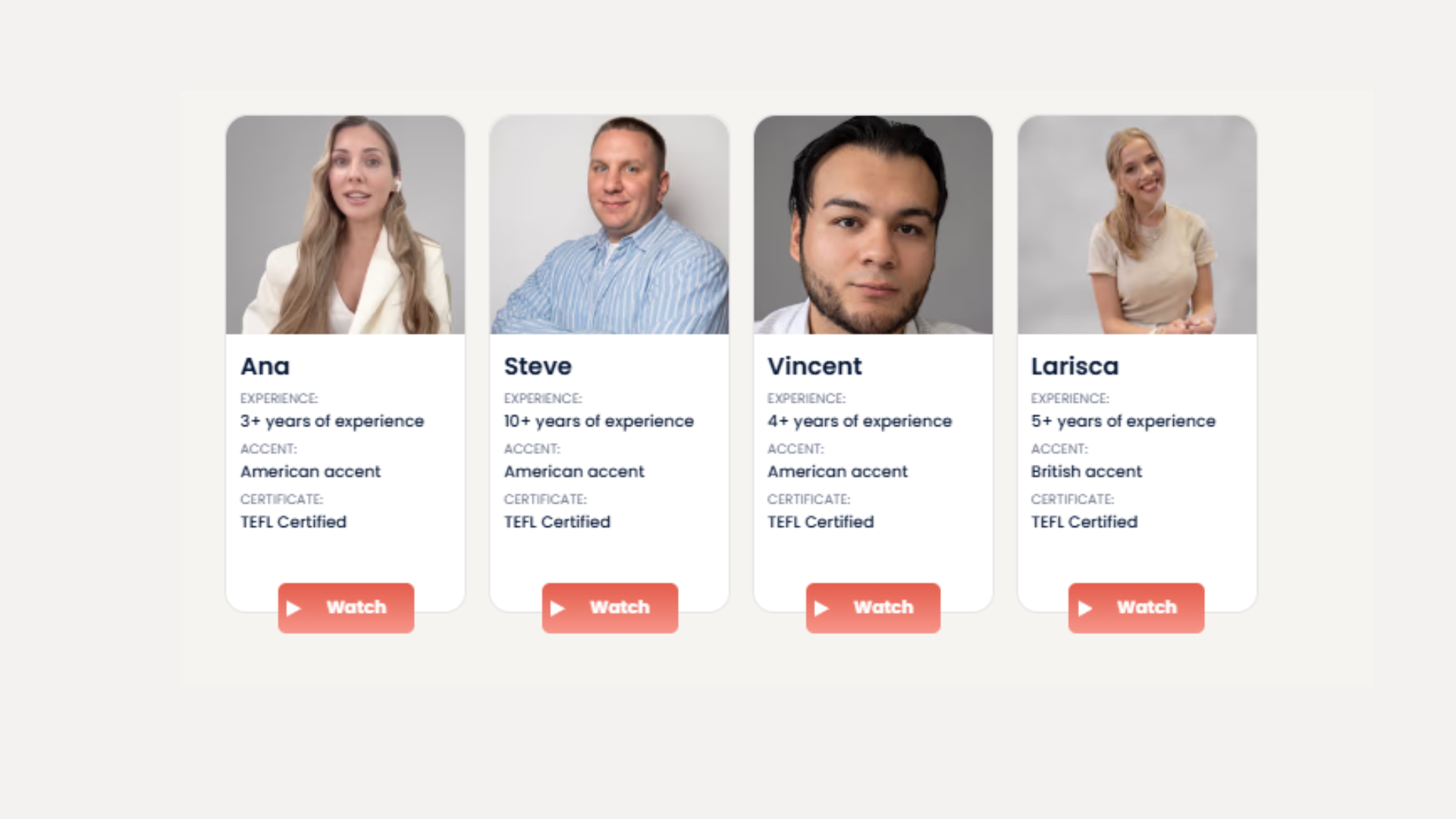
Flalingo keeps what apps do well and adds the human layer they cannot provide. Lessons are one-on-one with a teacher, and the platform is selective about who reaches the classroom. Only about one applicant in 73 is accepted, after multi-stage interviews, sample lessons, and pedagogical and technical checks. Every teacher holds a recognised teaching qualification, and they are tagged by speciality, whether that is IELTS or TOEFL preparation, business English, or young learners, so you work with someone who fits your goal rather than whoever happens to be free. The monitoring does not stop at hiring, and teachers who slip below the standard are moved out.
The matching is just as deliberate. A Smart Matching system reads your level, goals, schedule, accent preference, and even personality across roughly 18 data points, then pairs you with a teacher whose profile lines up with yours. The fit feels personal from the first lesson, and it sharpens over time as the system learns which kinds of teachers bring out your best work.
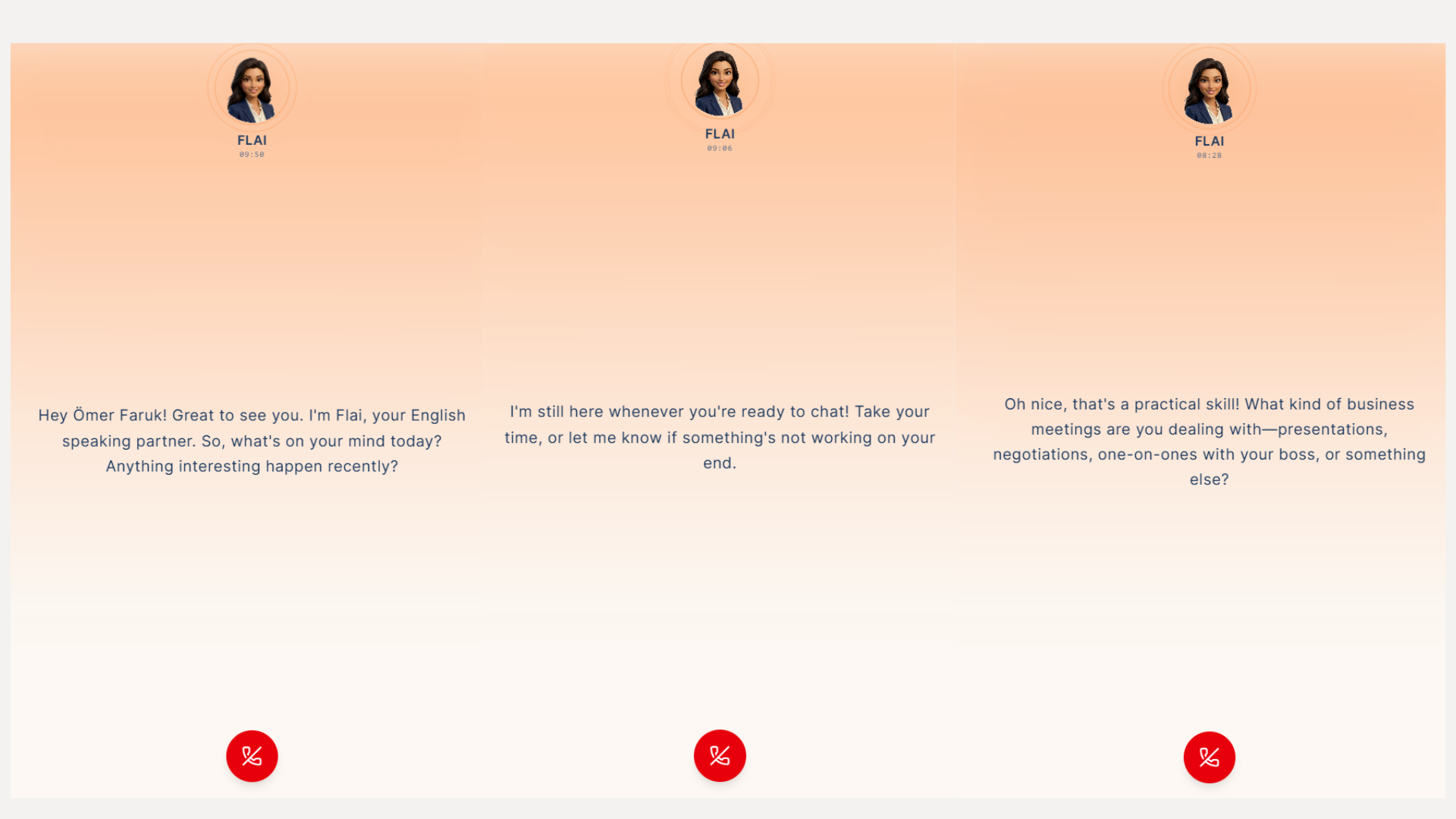
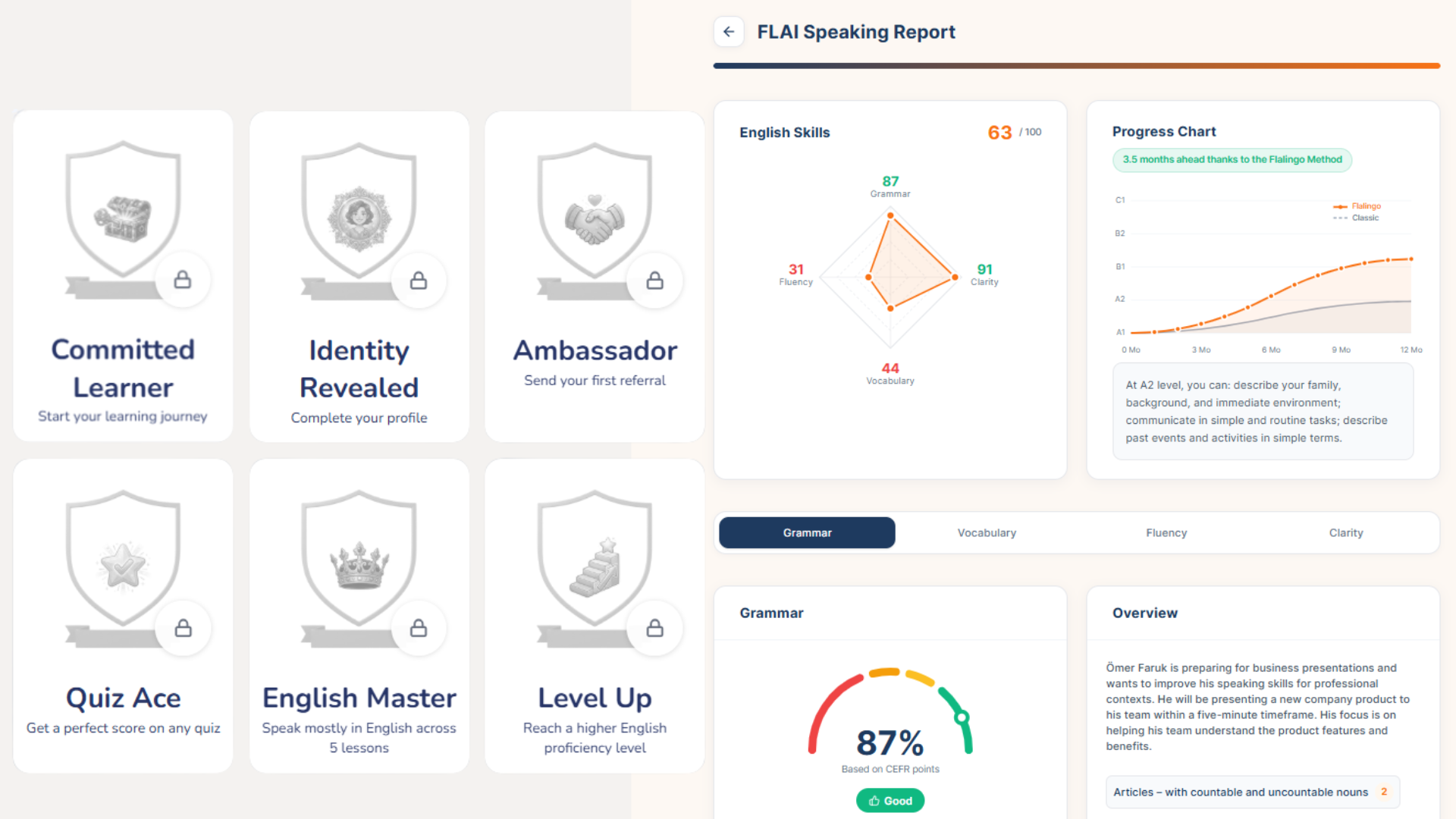
The AI runs alongside the teacher rather than instead of them. After every lesson, FLAI, Flalingo's AI coach, transcribes the conversation with speech recognition and analyses it for grammar, sentence structure, and word choice. It then scores you on accuracy, fluency, and vocabulary range against CEFR levels and produces the reports. One for you, with your exact errors, their corrections, and a short action list, and one for your teacher, showing where you keep getting stuck and how to teach around it.
That data then feeds the practice. Flomework, the platform's exercise engine, takes the specific mistakes FLAI found and builds targeted drills around them. Instead of a generic path, you are drilling the errors you actually made. FLAI Speaking does the same for talking, generating personalised speaking practice with real-time pronunciation feedback aimed at the weak points from your live lessons. So the app-style reps that Duolingo does well are here too. They are simply pointed at your own gaps and backed by a teacher.
Put together, the hybrid is really several layers doing different jobs:
- A live 1-on-1 teacher for real conversation, in-the-moment correction, and a plan that adapts to you.
- FLAI for objective after-lesson feedback scored against CEFR standards.
- Flomework for app-style reinforcement built around your actual mistakes, not a fixed course.
- FLAI Speaking for pronunciation and fluency drills that target what you struggle to say out loud.
- An education consultant who tracks motivation and progress and reshapes the roadmap as your goals move.
Also, Flalingo works to keep you with the same teacher over time, and in practice, a learner can usually rebook that teacher well over 90 per cent of the time. That consistency lowers speaking anxiety and keeps the feedback coherent from week to week because your teacher already knows your history.
If you are weighing more than one option, it helps to compare other AI English apps like ELSA Speak against Flalingo as well, and to browse a wider roundup of the best online English platforms to see where a live-teacher hybrid fits in the full field.
Can You Use Both?
Yes, and many learners should. This is not a decision you make once and defend forever. The two tools do different jobs, and they pair well together. A practical rhythm looks like this.
- Use Duolingo for daily maintenance. Five or ten minutes a day keeps vocabulary warm and the habit alive between lessons.
- Use Flalingo for what an app cannot cover. Live speaking, real-time correction, exam preparation, and a plan that adapts to you.
Think of the app as your gym for reps and the live lesson as your coaching session. The reps keep you fit; the coach makes sure you are training the right things and fixes what you cannot see yourself. Learners who combine steady app practice with regular live lessons often move faster than those who rely on either one alone.
Flalingo vs Duolingo: Verdict
So, can an app replace a real English teacher? For building vocabulary, holding a habit, and finding your feet, an app carries you a long way, and Duolingo is one of the best at it. For speaking with confidence, being corrected in the moment, and pushing past the plateau where recognition stops turning into real use, you still need a human. Flalingo's hybrid model of a live teacher for teaching and AI for precision and data combines both.
Move beyond the app plateau
Other content that may interest you




Hi, I'm Glory. Teaching English is one of the most rewarding experiences of my life as I get to meet people from different cultures and help them express themselves with confidence. At Flalingo, I take care to create pleasant and relaxed teaching environments where students can speak without fear of making mistakes. My greatest happiness is witnessing the moments when my students realise that they are really making progress.
English with Flalingo

Learning English with Flalingo means progressing with an intelligent system that works in an integrated manner.