
Key Considerations in the English Learning Journey for Ages 10–11

Introduction: Why Ages 10–11 Are a Critical Threshold for Language Education
Our children’s education is undoubtedly our most valuable investment. One of the most strategic steps in this investment is foreign language education at an early age. In particular, the ages of 10–11 are widely regarded as a “golden age” for language learning.
This period represents a critical threshold at which parents, through conscious planning, can actively shape their children’s academic and social futures. Children in this age group experience a significant leap in abstract thinking skills. This cognitive development enables them to understand the rules and structure of a language as a system, creating an ideal foundation for grammar instruction.
This critical stage is also the most suitable time to build a solid foundation for internationally recognized proficiency exams such as Cambridge English, particularly at the A2 Flyers or B1 Preliminary levels. Their ability to perceive grammar as a structured system provides an excellent basis for understanding the rule sets and structural knowledge required by these exams.
With systematic instruction, the foundations established at this age become the key to a child’s future academic success and global perspective. However, the true value of this investment depends largely on the quality of the educator—one of the most influential factors shaping the learning process.
Discover the Right English Learning Model for Ages 10–111. Choosing the Right Educator: Not Everyone Who Speaks English Is a Professional Teacher
In English education for 10-year-old children, the most fundamental and decisive step is selecting the right educator. This choice forms the cornerstone of the entire learning journey. A poor start can permanently damage a child’s motivation toward the language and cause this valuable investment to go to waste.
A common misconception among parents is viewing a teacher’s native English proficiency as a sufficient qualification on its own. However, speaking a language and teaching a language require entirely different areas of expertise.
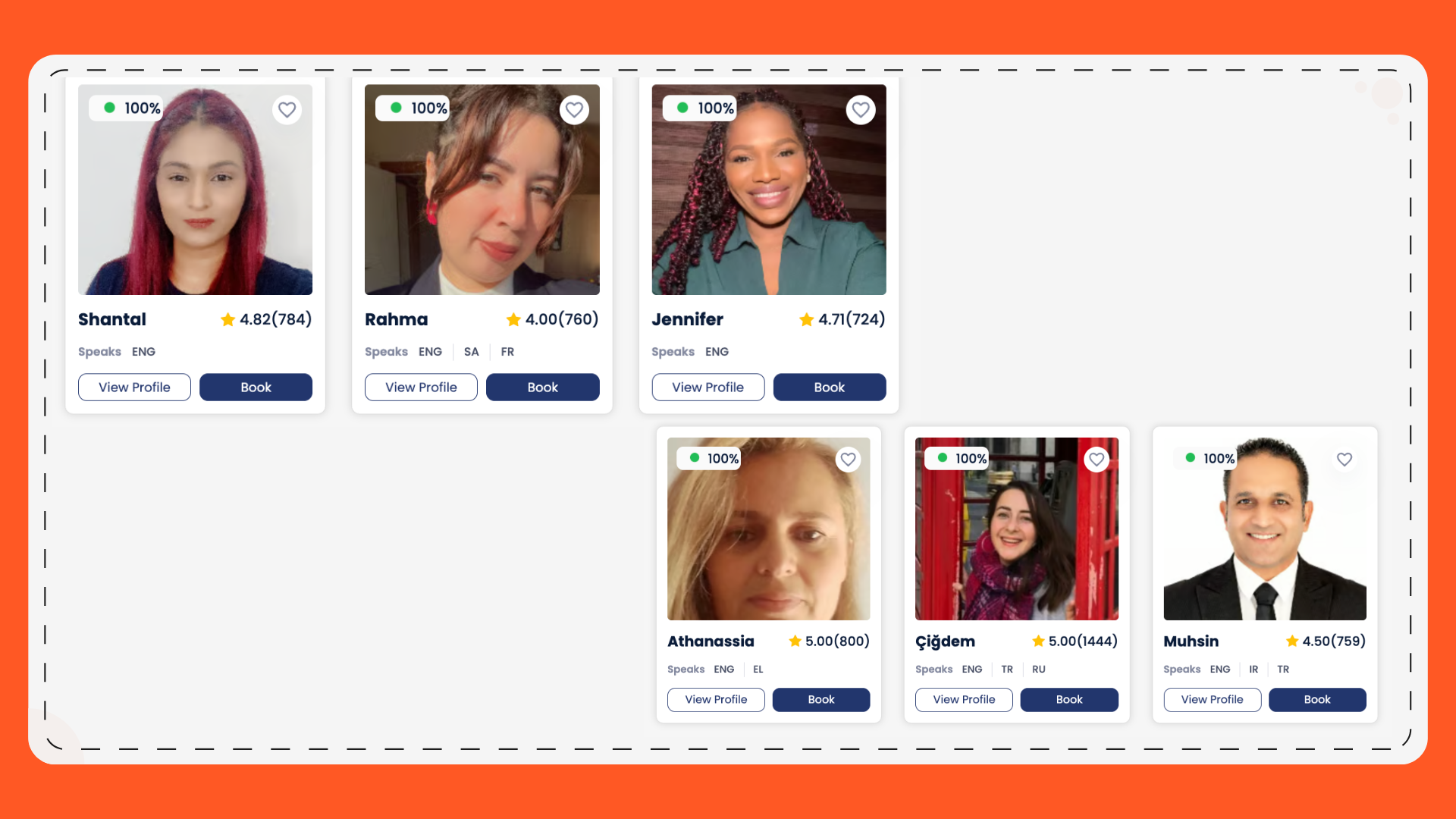
A professional teacher not only knows the language but also possesses pedagogical training, enabling them to adapt knowledge to the child’s level and learning style. At this point, the certifications held by the educator play a critical role.
For example, the fact that instructors at Flalingo hold internationally recognized certifications such as TESOL, CELTA, or DELTA proves that they are professionals who have learned how to teach English. This is the fundamental difference between an uncertified speaker and a teacher capable of shaping your child’s future.
A qualified children’s educator is someone who can skillfully balance two seemingly opposite elements: on the one hand, transforming lessons into interactive and enjoyable experiences that spark a child’s desire to learn; on the other, maintaining academic discipline by staying true to the objectives of the Oxford curriculum and consistently applying a systematic development plan.
The greatest strength of a professional educator lies in their ability to work with teaching materials like an artist. For this reason, alongside the teacher’s competence, the quality of the materials used in lessons plays a decisive role in the success of this investment.
2. Material Quality: Systematic Progress Beyond Random Conversations
The materials used in English education for 11-year-old children directly determine the quality, permanence, and scope of learning. Lessons based solely on random conversations or unstructured practice fall short of developing a child’s language skills in a balanced and comprehensive way. At this point, one of the greatest concerns for parents is that many online platforms focus exclusively on speaking practice.
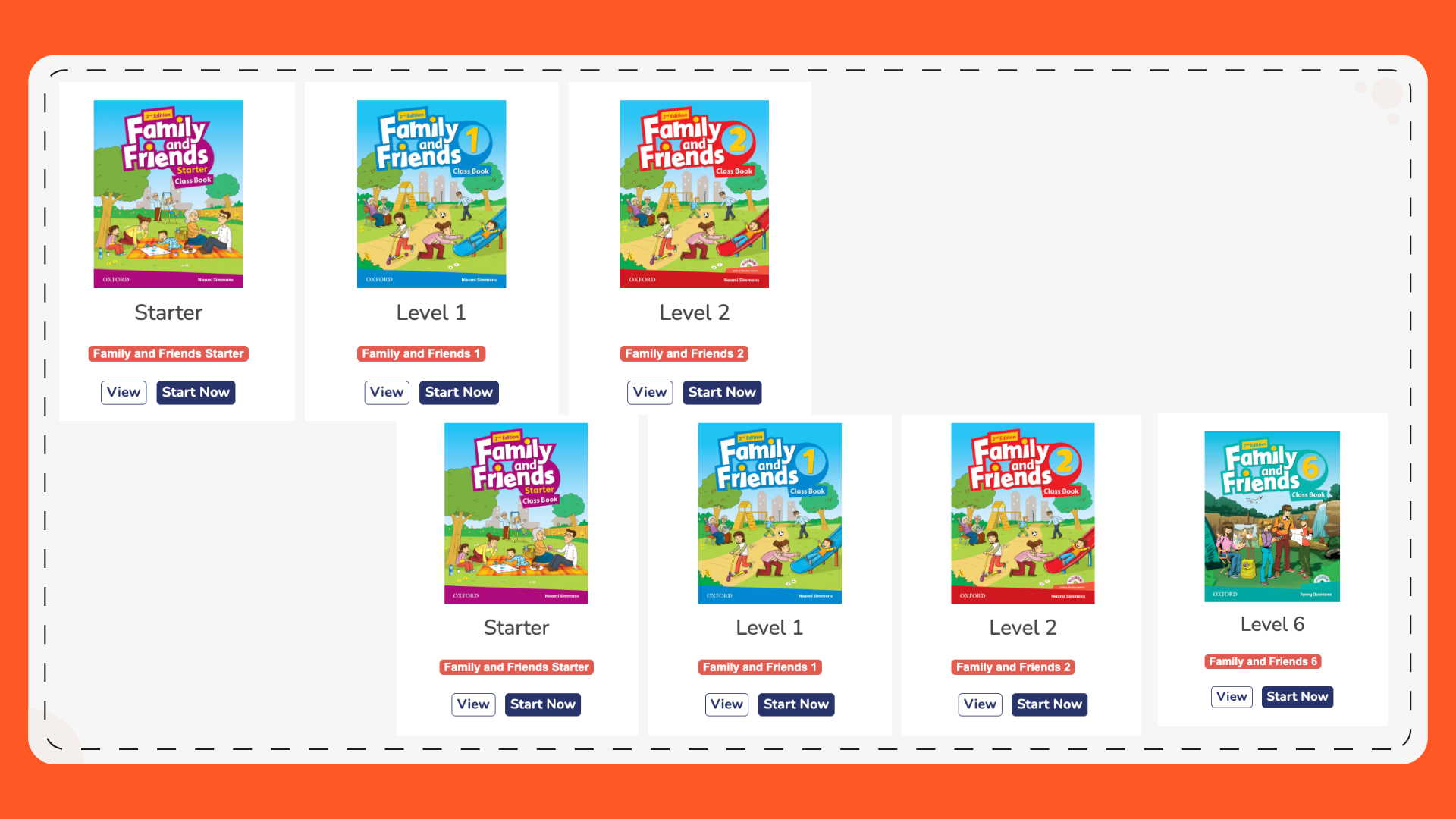
However, for systematic progress, it is essential to use a globally recognized curriculum that targets all four core language skills: reading, writing, listening, and speaking. Flalingo’s collaboration with Oxford University Press offers a concrete solution to this need. The use of well-established series such as English File in English education for children demonstrates that lessons are built on a solid pedagogical foundation.
This approach equips your child with far more than just speaking ability; it provides complete linguistic competence. It enables children to understand written texts at international standards, express themselves effectively in writing, and fully comprehend spoken English. Prepared by one of the world’s most respected educational institutions, these structured materials ensure that your child progresses logically from simple to complex concepts and receives an education aligned with global standards.
For parents, seeing tangible outcomes from a learning process supported by high-quality materials and professional educators is the greatest source of motivation. At this stage, modern technology steps in, making the learning journey measurable and transparent.
3. Progress Tracking and Artificial Intelligence: See the Return on Your Investment
One of parents’ most fundamental concerns is the question, “Is my child really learning?” In an abstract process such as language acquisition, being able to observe progress in concrete terms is critical for understanding whether the investment is truly paying off.
While traditional methods limit progress tracking to subjective teacher feedback, modern technology offers data-driven and clear answers to this question. One of the most innovative solutions in this field is FLAI, Flalingo’s AI-powered assistant.
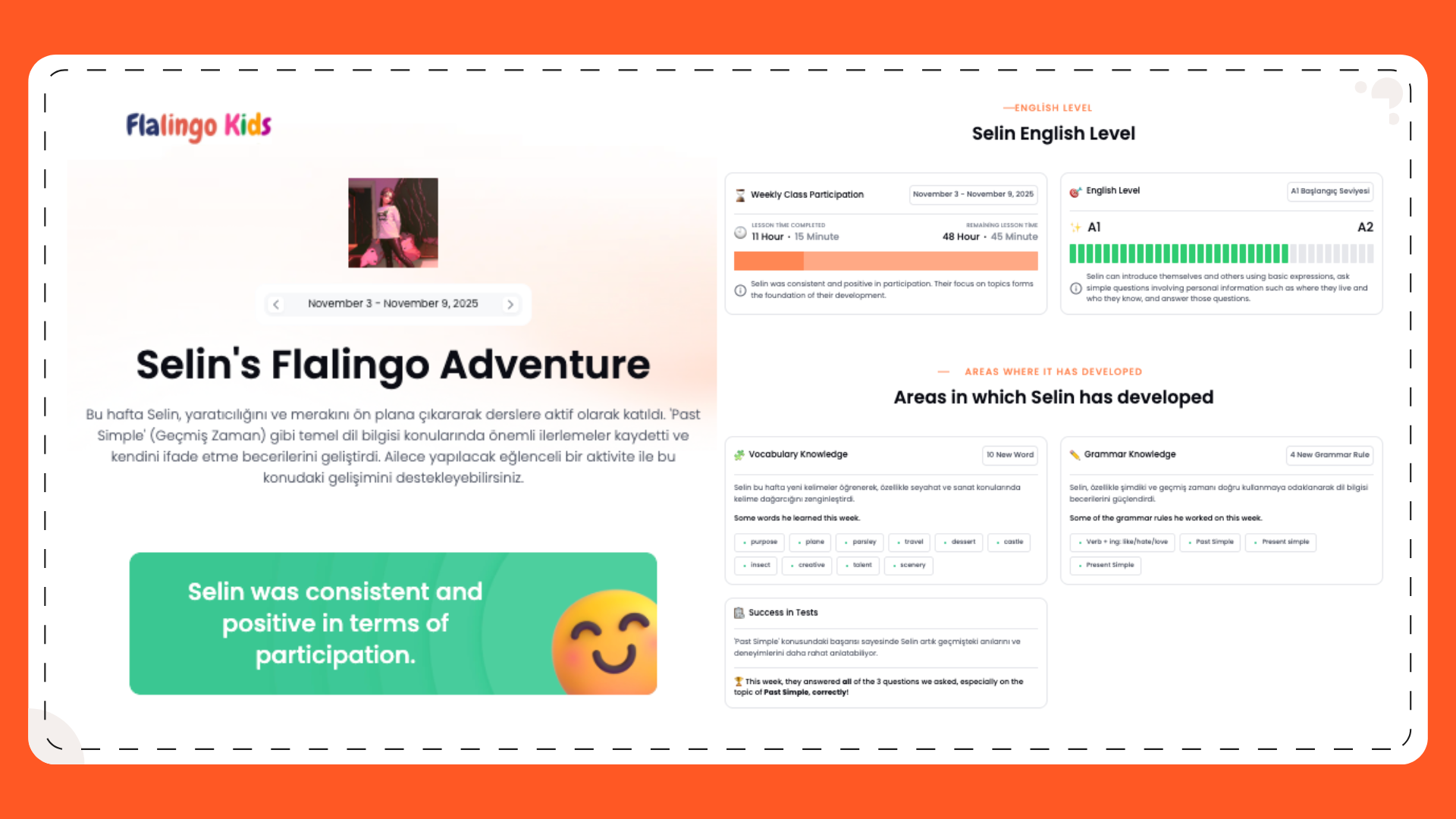
FLAI creates a personalized progress report for each student after every lesson, making the learning process transparent and measurable. Acting like a personal coach, these reports provide clear guidance for both students and parents. The tangible data provided in the FLAI Report include:
- Comprehensive Vocabulary Analysis: An overview of the total number of words used during the lesson, vocabulary diversity, and the percentage distribution of these words across proficiency levels from A1 to C2.
- Precise Grammar Detection: Detailed analysis of specific grammar mistakes and correct usages made during speaking, along with insights into which grammar topics require the most attention.
- Comparative Progress Charts: Visual representations that compare current and previous lessons, clearly illustrating the child’s progress in vocabulary range and speaking fluency through concrete graphs.
These data-driven insights transform English education from an abstract effort into a concrete investment with clearly defined goals and outcomes. However, the true value of the invaluable data provided by FLAI emerges only when guided by the right mentor. When numbers and analyses are combined with the pedagogical intuition of a consistent teacher one who knows the child well and has built a relationship of trust the child’s true potential can be fully realized.
Data-Driven Progress Tracking with FLAI
Comprehensive Vocabulary Analysis
Total number of words used during the lesson, vocabulary diversity, and percentage distribution across A1–C2 proficiency levels.
Precise Grammar Detection
Detailed analysis of grammar mistakes and correct usage during speaking, highlighting areas that require improvement.
Comparative Progress Charts
Vocabulary range and speaking fluency progress are presented through clear, data-based charts comparing previous lessons.
When combined with the pedagogical guidance of a consistent teacher, the data provided by FLAI reveals a child’s true potential.
4. A Consistent Teacher and a Relationship of Trust: Eliminating Speaking Anxiety
One of the most sensitive aspects of the English learning process especially in English education for children is speaking anxiety. Being introduced to a different teacher in every lesson can cause children to experience constant stress as they repeatedly have to reintroduce themselves and adapt to someone new.
This situation may lead particularly shy children to avoid speaking practice and can negatively affect their self-confidence. For this reason, continuing the entire learning journey with the same teacher offers significant psychological and pedagogical benefits.
Flalingo’s model, which allows students to continue lessons with a teacher of their own choice, provides a clear advantage over platforms where a different instructor may be assigned for each lesson.
The relationship of trust built with a consistent teacher directly increases learning efficiency. Key Benefits of Having a Consistent Teacher:
- Personalized Monitoring: Over time, the teacher becomes familiar with the child’s strengths, weaknesses, interests, and learning style. This enables fully personalized lessons that focus specifically on areas requiring improvement.
- A Relationship of Trust: Having lessons with the same person over time transforms the teacher–student relationship into a friendly and supportive bond. This safe and comfortable environment removes the fear of making mistakes and minimizes speaking anxiety.
- Efficiency: Time-consuming processes such as introductions and level assessments at the beginning of each lesson are eliminated. The entire lesson time can be devoted directly to learning and practice.
This trust-based and stable relationship helps the child perceive English not merely as a school subject, but as a living tool of communication that they enjoy using.
Conclusion: Invest in Your Child’s Future Today
Making the right decisions when planning your child’s English education during the ages of 10–11 is one of the strongest steps you can take for their future academic and professional life. In this process, four fundamental criteria stand out as the key factors that ensure success:
Certified Teachers
Expert instructors with strong pedagogical training, holding TESOL, CELTA, and DELTA certifications.
Oxford Materials
Balanced development in reading, writing, listening, and speaking through the Oxford University Press curriculum.
Progress Tracking with FLAI
Vocabulary, grammar, and speaking fluency become measurable through AI-powered reports.
Consistent Teacher Model
Lessons with the same teacher build trust and eliminate speaking anxiety.
Frequently Asked Questions
Why are ages 10–11 a critical period for learning English?
The ages of 10–11 mark a stage when children develop abstract thinking skills and can understand language rules in a systematic way. For this reason, grammar, vocabulary, and speaking skills develop more permanently and effectively during this period.
Is speaking practice alone sufficient for this age group?
No. Education based solely on speaking practice leads to one-sided language development. The integrated development of reading, writing, listening, and speaking skills is essential for children to use English effectively in both academic and everyday contexts.
Why is it important for an English teacher to be certified?
Certified teachers are professionals who not only speak the language but also know how to teach it pedagogically. Certifications such as TESOL, CELTA, or DELTA ensure that instruction is systematic and tailored to the child’s level.
What are the benefits of learning with a consistent teacher?
The consistent teacher model helps children feel secure. Over time, the teacher understands the student’s strengths and areas for improvement, personalizes lessons, and significantly reduces speaking anxiety.
Is online English education effective for ages 10–11?
When supported by the right teacher, a structured curriculum, and progress tracking, online education can be highly effective. Flalingo Kids makes the process measurable through age-specific Oxford materials and AI-powered progress tracking.




As an ESL educator of 5+ years, I am a guide for students and parents. I simplify complex English topics and online course selection for you. My goal is to help you turn learning from a stressful task into an enjoyable adventure.
English with Flalingo

Learning English with Flalingo means progressing with an intelligent system that works in an integrated manner.