Przejdź do treści
Flalingo

Ćwiczenia z angielskiego

Jak opisać zdjęcie po angielsku (B1, niższy średnio zaawansowany): miejsce, ludzie, czynności i znaczenie

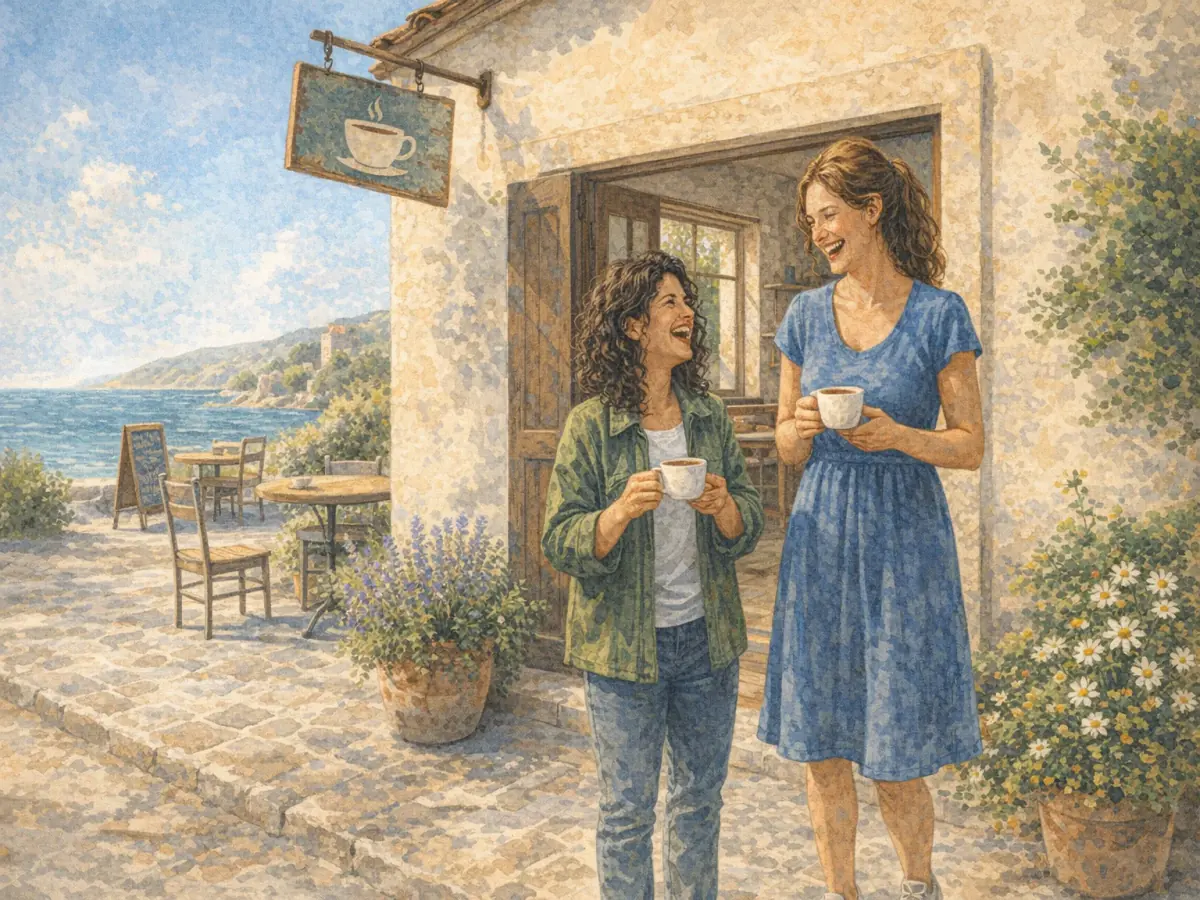
Two women laugh outside their new café on opening morning, each holding a cup of coffee, under a sign that hangs at an angle.

Zwroty na poziomie B1 do opisu zdjęcia po angielsku: there is/are, next to, behind i between, w co ludzie są ubrani i co robią, oraz akapit na 100–130 słów zakończony tym, dlaczego to zdjęcie jest dla ciebie ważne.

Opisz zdjęcie w czterech krokach. Powiedz, co przedstawia: “This photo shows my sister and her business partner outside their new café.” Powiedz, gdzie są ludzie i rzeczy: “on the left”, “next to”, “behind”. Powiedz, w co ludzie są ubrani i co robią, w czasie present continuous: “She’s wearing a green jacket.” “They’re laughing.” Na koniec powiedz, dlaczego to zdjęcie jest dla ciebie ważne. Present simple zostaw na zwyczaje poza kadrem: “She usually works in the kitchen.” To temat na poziomie B1 (niższym średnio zaawansowanym); osoby z pewnym A2 też sobie poradzą. Wystarczy 10 minut dziennie z własnymi zdjęciami.

Dla kogo jest ten artykuł?

  • Dorośli na poziomie niższym średnio zaawansowanym, którzy potrafią mówić o sobie, ale milkną, gdy trzeba opisać obrazek.
  • Osoby przygotowujące się do egzaminu ustnego albo rozmowy z zadaniem opisu zdjęcia.
  • Każdy, kto pokazuje zdjęcia anglojęzycznym znajomym lub współpracownikom i chce powiedzieć coś więcej niż “This is my family.”
  • Za wcześnie: jeśli “She’s wearing…” i “There are two…” są dla ciebie wciąż nowe, zacznij od artykułów na poziomie A2 o czynnościach dziejących się teraz i o tym, gdzie coś leży.
  • Za łatwo: jeśli bez notatek mówisz dwie minuty o zdjęciu i wyjaśniasz, dlaczego jest ważne, przejdź do opowiadania historii w czasie przeszłym.

Otwórz przykładowe strony

Otwórz przykładowe strony

Karty ze słowami

inin

inside an area or enclosed space

Maya is standing in the doorway.

onon

touching and supported by a surface

The camera is on the wooden table.

underunder

lower than and often directly below something

The black bag is under the chair.

next tonext to

at the side of and very near something or someone

Owen is standing next to the woman in the red coat.

behindbehind

at the back of something or someone

The coat is on the rail behind you.

in front ofin front of

further forward than something or someone, facing the same way

The photographer stands in front of the group.

betweenbetween

in the space that separates two people or things

Maya’s aunt can stand between Maya and Owen.

wear / carry / dress

wear takes clothes or jewellery; carry takes bags and cases; dress without an object describes someone’s clothing style

Maya is wearing a coat, carrying a case, and dressing casually this week.

a pair of

a quantity phrase used with plural clothes and footwear such as jeans, trousers, tights, shoes, and boots

I bought a pair of trousers and two pairs of socks.

Rozmowa

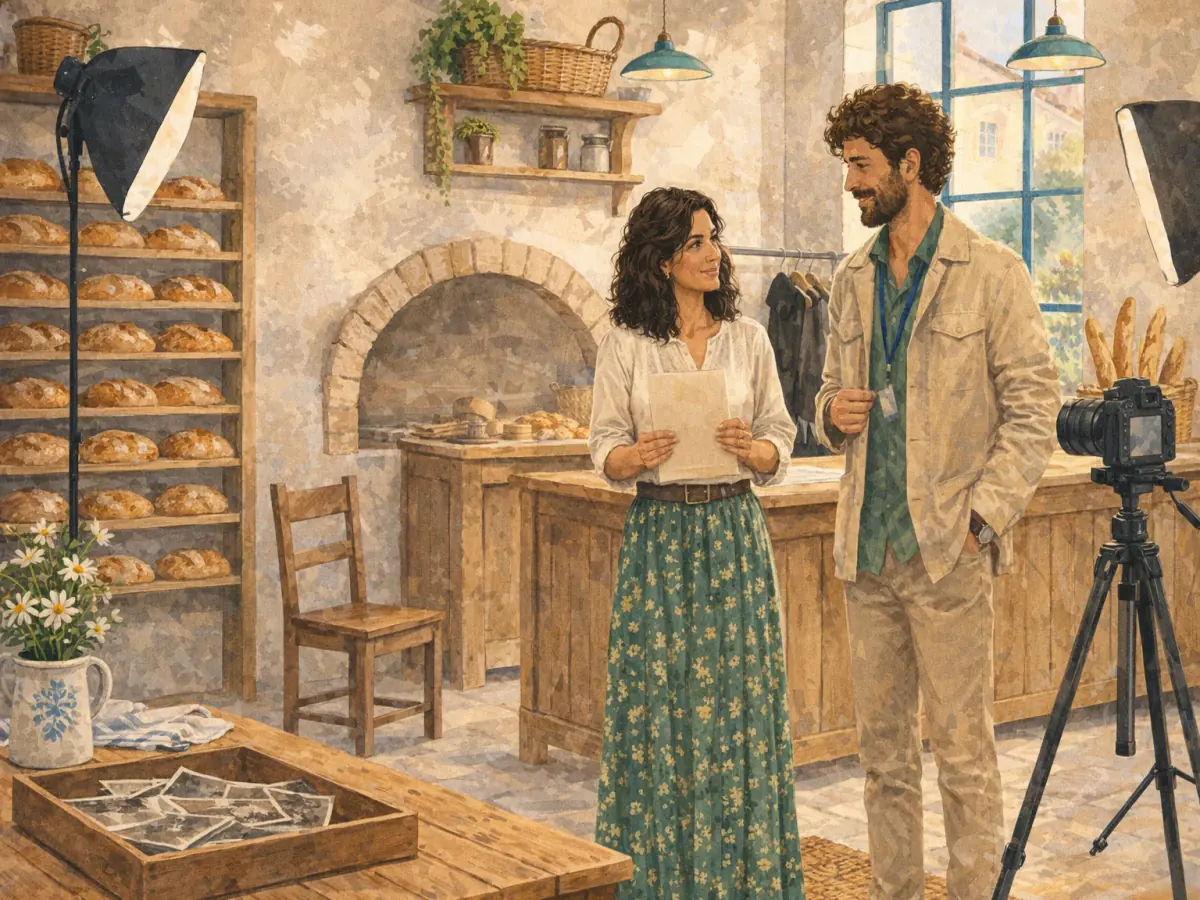
owen The archive photo shows your grandparents in their bakery in 1986. Where does the wooden chair go?

maya It goes next to the counter, not under the window. My grandfather is sitting on it in the original.

owen I’m moving it now. Am I wearing the right jacket?

maya No, you aren’t. He’s wearing a white shirt and a dark coat. The coat is on the rail behind you.

owen Got it. What are you holding in the old photo?

maya A tray of bread. I’m holding the menu at the moment, so let’s swap it.

owen Your aunt usually works at the new bakery. Is she joining us?

maya Yes. She’s parking the car, and then she can stand between us for the final picture.

Konstrukcja zdania

What is different from the old photograph?

The chair is in the wrong place, Owen is wearing the wrong jacket, and Maya is holding a menu instead of a tray.

Present simple gives routine facts; present continuous and place phrases describe today’s scene.

  • usually works
  • is helping today
  • next to
  • in front of

Więcej ćwiczeń

Present continuous: now and around now

Adults arranging clothes and objects for an archive photo recreation.
am/is/are + verb-ing

Use the present continuous for an action happening now

The photographer is moving the lamp.

am not / isn’t / aren’t + verb-ing

Put not after am, is, or are for a negative action now

The models aren’t looking at the camera yet.

Am/Is/Are + subject + verb-ing?

Move am, is, or are before the subject to ask about an action now

Is Owen wearing the original coat?

present simple: routine or fact

Use the present simple for things that happen regularly or are generally true

Owen works in a studio every weekday.

present continuous: temporary or now

Use the present continuous for the current moment or a temporary situation

This month, Owen is helping with an archive project.

There is / There are

Use there is/are to say what exists in a picture before describing actions

There are two chairs next to the window.

about /ə/ · photographer /ə/

The weak sound /ə/ often appears in unstressed syllables

The photographer is standing behind the camera, and about ten people are waiting.

shirt /ɜː/ · skirt /ɜː/

The long central sound /ɜː/ is stressed in words such as shirt and skirt

The woman in the purple skirt is wearing a white shirt.

Write a concise photo description

Two women laugh outside their new café on opening morning, each holding a cup of coffee, under a sign that hangs at an angle.

This photo shows my sister Lale and her business partner, June, outside their new café in Brighton. I took it on the morning they opened last May. Lale is the short woman on the left. She has curly dark hair and she’s wearing a green jacket over a white T-shirt. June is standing next to her in a blue dress and trainers. They both look tired but excited.

Lale usually works in the kitchen, and June manages the customers. In the photo, they’re holding the first two cups of coffee and laughing because the café sign is hanging at an angle. I like this picture because they spent a year preparing the business, and it captures the exact moment their plan became real.

What information makes a photo description complete?

Identify the people, give the time and place, describe appearance and actions, explain the relationship, and say why the photo matters.

A connected paragraph guides the reader from the whole photo to specific people and its personal meaning.

  • This photo shows…
  • The person on the left…
  • is wearing…
  • At the moment…
  • I like it because…
Poznaj ten rozdział
Jak chcesz się uczyć?
Masz już konto?

Darmowe konto otwiera na stałe jeden rozdział.

Najpierw całe zdjęcie, potem szczegóły

Jasny opis idzie od ogółu do szczegółu: co przedstawia zdjęcie, kiedy i gdzie powstało, ludzie po kolei, a na końcu, dlaczego jest ważne. Te początki zdań robią większość pracy:

  • “This photo shows …” – To zdjęcie przedstawia …
  • “I took it last summer at my cousin’s wedding.” – Zdjęcie z zeszłego lata, z wesela kuzyna.
  • “The person on the left is …” – Osoba po lewej to …
  • “I like this picture because …” – Lubię to zdjęcie, bo …

There is, there are i określenia miejsca

Zanim opiszesz czynności, powiedz za pomocą there is/are, co jest na zdjęciu: “There are two chairs next to the window.” Polskie “jest” i “są” dobrze tu podpowiadają: jedna rzecz to “there is”, kilka to “there are”. Potem umieść każdą osobę i rzecz:

  • in (w): “A woman is standing in the doorway.”
  • under (pod): “The black bag is under the chair.”
  • next to (obok): “He’s standing next to the woman in the red coat.”
  • in front of (przed): “The photographer is standing in front of the group.”
  • between (między): “Her aunt is standing between them.”

Present continuous dla zdjęcia, present simple dla zwyczajów

To, co ludzie robią na zdjęciu, dzieje się w tej chwili, więc używaj am/is/are + -ing. Present simple zostaw na fakty i zwyczaje poza tą chwilą. Po polsku “pracuje w kuchni” może znaczyć i “teraz”, i “zwykle”; po angielsku trzeba wybrać. Gdy oba czasy są w jednym akapicie, czytelnik widzi, co jest zwyczajne, a co wyjątkowe w tej chwili.

  • Teraz: “The photographer is moving the lamp.”
  • Zwyczaj: “He works in a studio every weekday.”
  • Sytuacja tymczasowa: “This month, he’s helping with an archive project.”
  • Czasowniki stanu zwykle zostają w simple: “They look tired but excited.”

Krótka rozmowa: odtwarzanie starego zdjęcia

Dwie osoby odtwarzają rodzinne zdjęcie zrobione w piekarni w 1986 roku i sprawdzają, kto co trzymał i gdzie kto stanie. Wsłuchaj się w przejście od “usually works” (zwyczaj) do “is parking” (właśnie teraz).

Owen Got it. What are you holding in the old photo?

Maya A tray of bread. I’m holding the menu at the moment, so let’s swap it.

Owen Your aunt usually works at the new bakery. Is she joining us?

Maya Yes. She’s parking the car, and then she can stand between us for the final picture.

Ubrania: wear, carry i a pair of

Ubrania są prawie na każdym zdjęciu ludzi. Większość kłopotów sprawiają trzy krótkie słowa:

  • wear do ubrań i biżuterii: “She’s wearing a green jacket over a white T-shirt.”
  • carry do toreb i walizek: “He’s carrying a case.” Polskie “nosić” obejmuje i torbę, i okulary; po angielsku torbę się “carry”, a okulary “wear”.
  • dress bez dopełnienia, o stylu: “She’s dressing casually this week.”
  • a pair of do ubrań w liczbie mnogiej: “a pair of trousers”, “two pairs of socks”. Tak jak polskie “spodnie”, angielskie “trousers” nie ma liczby pojedynczej.
  • shirt i skirt wymawiaj z długą samogłoską z “her”: “The woman in the purple skirt is wearing a white shirt.”
Poznaj ten rozdział po swojemu

Opis zdjęcia na 100–130 słów

Akapit na 100–130 słów jest dość długi, żeby zmieścić miejsce, ludzi i jeden powód, i dość krótki, żeby powiedzieć go w mniej więcej minutę. Buduj go w tej kolejności:

  • Co i kto: “This photo shows my sister Lale and her business partner, June, outside their new café.”
  • Kiedy: “I took it on the morning they opened last May.”
  • Każda osoba od lewej do prawej: gdzie jest, jak wygląda i w co jest ubrana.
  • Zwyczaj kontra chwila: “Lale usually works in the kitchen … In the photo, they’re holding the first two cups of coffee.”
  • Dlaczego to ważne: “I like this picture because … it captures the exact moment their plan became real.”

Częste błędy

Każdy łatwo poprawić:

  • “He wears a coat.” To, co widać na zdjęciu, opisujesz tak: “He’s wearing a coat.”
  • “There is two chairs.” Liczba mnoga to “there are”: “There are two chairs.”
  • “She’s wearing a bag.” Torbę się nosi w ręku lub na ramieniu: “She’s carrying a bag.”
  • “a trousers”, “a jean”. Mów “a pair of trousers”, “jeans”.
  • Koniec na wyliczeniu ludzi. Bez ostatniego zdania o tym, dlaczego zdjęcie jest ważne, opis brzmi jak lista.

Plan ćwiczeń: 10 minut dziennie

Weź prawdziwe zdjęcie z telefonu; łatwiej mówić o ludziach, których znasz.

  • 2 minuty: włącz rozmowę, zatrzymuj ją po każdym zdaniu i powtarzaj.
  • 3 minuty: powiedz pięć zdań o swoim zdjęciu: jedno z there is/are, dwa z określeniem miejsca, dwa z czasownikiem z -ing.
  • 3 minuty: napisz akapit w kolejności podanej wyżej i policz słowa: 100–130.
  • 2 minuty: przeczytaj go na głos. Zwróć uwagę na słabą samogłoskę (/ə/) w “photographer” i “about”.

Co dalej

Gdy umiesz już opisać chwilę, opowiedz, co działo się przed nią i po niej: krótką historię z podróży z tłem, punktem zwrotnym i zakończeniem. Potem połącz przeszłe wydarzenia z teraźniejszością, na przykład w tekście o doświadczeniu i o tym, co zmieniło.

Najczęstsze pytania

Jak zacząć opis zdjęcia po angielsku?

Zacznij od całego zdjęcia w jednym zdaniu: “This photo shows …” plus kto i gdzie. Potem powiedz, kiedy zdjęcie powstało, i dopiero wtedy opisuj ludzi po kolei. Gdy zaczynasz od drobnego szczegółu, trudno nadążyć za opisem.

Present simple czy present continuous w opisie zdjęcia?

Present continuous do tego, co ludzie robią na zdjęciu: “They’re laughing.” Present simple do faktów poza tą chwilą: “She usually works in the kitchen.” Czasowniki takie jak look, have i be zwykle zostają w simple: “They look tired.”

Ile słów powinien mieć opis zdjęcia?

Na tym poziomie ćwicz akapity na 100–130 słów, czyli sześć do ośmiu zdań. To wystarczy na miejsce, ludzi, jeden zwyczaj i powód, dla którego zdjęcie jest ważne, a powiedzenie tego zajmuje mniej więcej minutę.

Poznaj ten rozdział
Jak chcesz się uczyć?
Masz już konto?

Darmowe konto otwiera na stałe jeden rozdział.

Co dalej?

Ćwicz dalej z Flai

Flai to aplikacja Flalingo do ćwiczenia mówienia z AI. Oferuje rozmowy głosowe, korekty i raporty z lekcji, które pomagają ukierunkować naukę.

Nauka z lektorem na żywo

Na lekcjach Flalingo ćwiczysz takie rozdziały jeden na jeden z lektorem na żywo.