

How True, False, Not Given questions work
IELTS Academic Reading gives you three long passages, 40 questions and 60 minutes, with no extra time on paper to transfer answers.
The instruction asks: “Do the following statements agree with the information given in Reading Passage 1?” The statements follow the order of the passage, and each has one of three answers:
- TRUE: the statement agrees with the information.
- FALSE: the statement contradicts the information.
- NOT GIVEN: there is no information on this.
Find the place first: anchors and paraphrase
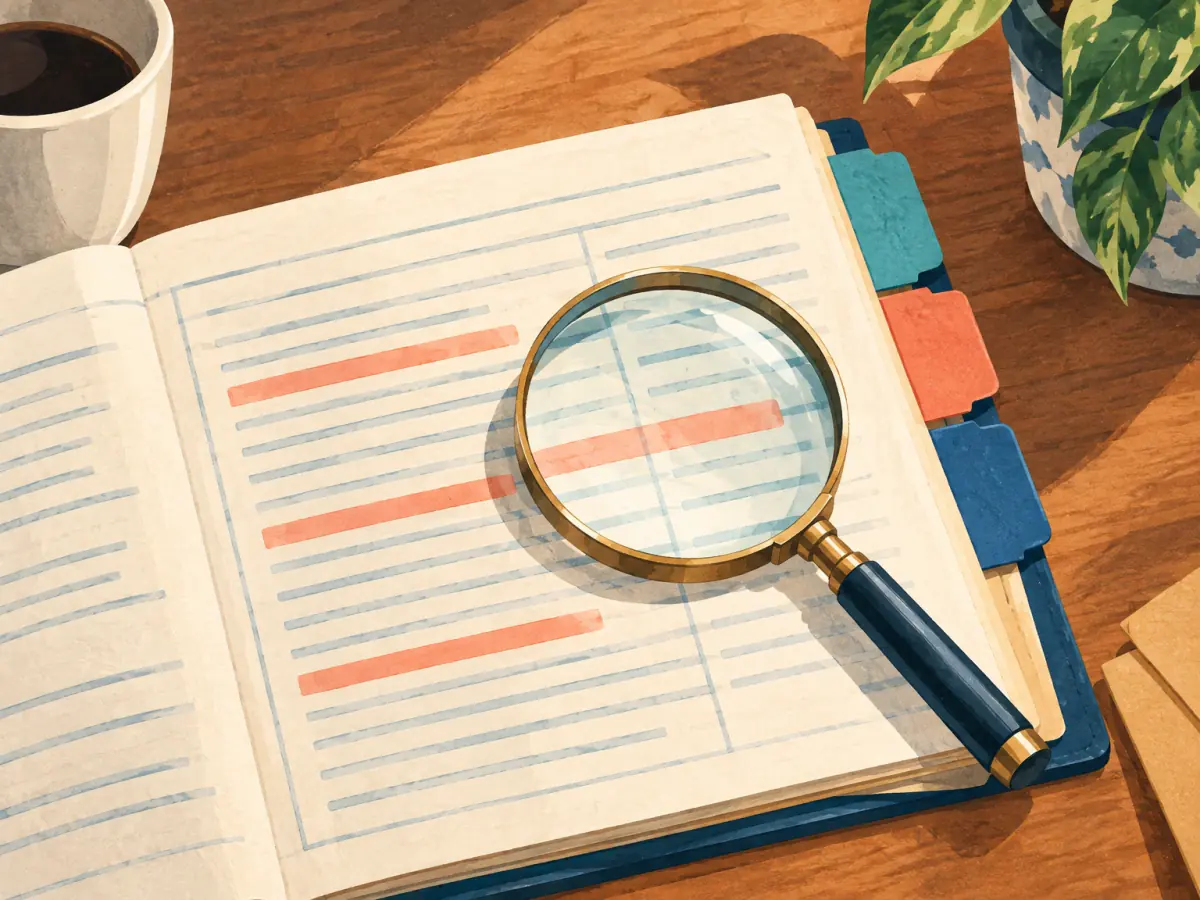
Scan for words that resist paraphrase: names, dates, numbers, technical terms. Then read the whole sentence and the next; the deciding detail is often a few words away.
In a practice text about an archive, the dates 1963 and 1964 lead to a calculator’s tests and a receipt. A date shows where to look, not the answer. Statements usually paraphrase:
- “donated” becomes “given”.
- “attributes the model to her” becomes “identifies her as the probable maker”.
- “with moderate confidence” becomes “supported but not certain”.
False or Not Given: contradiction or silence
Ask two questions in order. Does the passage say anything about this exact point? If not, the answer is NOT GIVEN. If it does, does it agree or conflict? Agreement is TRUE; conflict is FALSE. Something true in real life can still be NOT GIVEN.
Each card on this page has a recording of its example:
- TRUE: “Text: access improved after the move. Statement: The move improved access.”
- FALSE: “Text: sewing machines were booked most. Statement: Drills were booked most.” Only one item can be booked most.
- NOT GIVEN: “Text gives a three-day loan but no renewal count.” A claim about renewals cannot be checked.
Try one: a tool library
Read this extract from a practice passage about a community tool library, then decide.
- “Members may reserve an item for three days. Volunteers inspect returned tools every evening, and a qualified technician checks electrical items each Friday.”
Small words that decide the answer
Read a claim’s limits as carefully as the claim: “expected” is not “happened”, “may” is not “will”. The archive text attributes a calculator to an engineer “with moderate confidence” and “does not claim that she invented every tide calculator”. So “The archive is certain who made it.” is FALSE; “She invented the first tide calculator.” is NOT GIVEN.
Back at the tool library:
- “Sewing machines were the most frequently booked items in the first winter.” TRUE, although the founders expected drills and saws.
- “Members can renew a reservation twice.” NOT GIVEN: the three-day limit is stated, renewals are not.
- “The trustees have confirmed Sunday opening.” FALSE: the trustees “have not announced whether Sunday hours will be introduced”.
Word limits in completion and short-answer tasks
Note, table and short-answer questions also appear. Take the answer from the passage, within the instruction’s limit, such as “NO MORE THAN TWO WORDS” or “A NUMBER”; an answer over the limit or misspelled is wrong.
Predict the form from the gap. For “create a protected ___”, the passage has “a technician creates a protected copy”, so write “copy”. Under “NO MORE THAN THREE WORDS”, “Where will rubber panels be tested again?” takes “a storage building”: three words, because “a” counts.
Mistakes that cost marks
Give every wrong answer one of these causes:
- Choosing FALSE because the passage does not mention something.
- Answering from general knowledge or from what sounds likely.
- Matching one keyword but ignoring the person, time or number.
- Missing a limiting word such as “expected”, “most” or “may”.
- Writing YES or NO for a TRUE, FALSE, NOT GIVEN question: it can be marked wrong.
A 25-minute exam routine
Three or four times a week, with one practice passage:
- Allow 20 minutes for the passage and its questions.
- Underline the anchor and the deciding words before answering.
- Check with the key: for each NOT GIVEN, write what is missing; for each FALSE, copy the contradicting words.
- Write your own TRUE, FALSE and NOT GIVEN statement and explain each one aloud.
- Note academic collocations, such as “historically significant”, “a detailed record”, “reach a conclusion”, “insight into”.
What comes next
Next, take this evidence test to Yes, No, Not Given questions about the writer’s views. Then practise matching features and summary completion, where exact wording matters just as much.